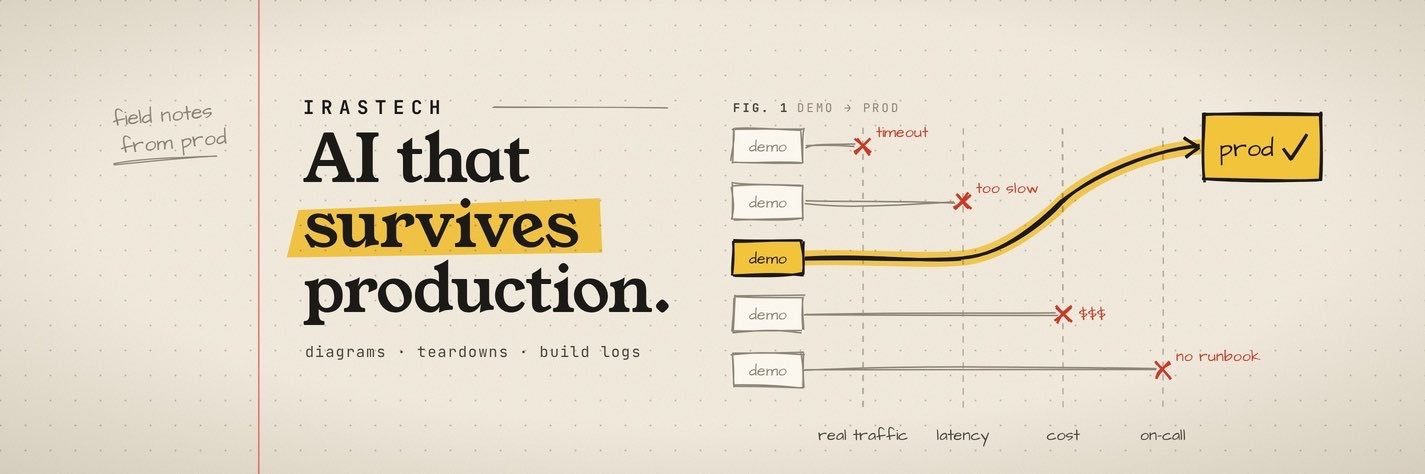
Most AI content is toy demos.
I'm looking for the creators who teach the gold sauce instead. People who solve real problems, show the messy build, and explain what actually survives production.
Drop your favorites below. Building a list worth following.
hooks are the guardrails you put around the model. block a command before it runs, format the file after every edit, no asking the model to remember. not everything should be left to judgment.
models read the start and end of a long prompt best. stanford called it lost in the middle: accuracy drops for anything buried in the center. put instructions first, examples last, and never hide the important part at token 40,000.
the length of task an ai can do alone has doubled roughly every 7 months for 6 years. metr measured it. if your plan for next year assumes last year models, you are planning against a line that already moved.
cache math most people miss: writing to the prompt cache costs 1.25x the normal price, reading it back costs 0.1x. keep your system prompt stable and every repeat request pays a tenth of the input cost.
same model, same weights, different harness: up to 40x difference in tokens per solved task. when people compare coding agents they are mostly comparing the scaffold, not the brain.
anthropic measured their own multi-agent system: it burned about 15x the tokens of a normal chat. token usage alone explained 80% of the performance gap. the agents that look smartest are often just the ones allowed to burn more thinking.
researchers built an mcp tool that only adds two numbers. hidden in its description: a request to read ssh keys and pass them along. the agent obeyed, and the user never saw the real instructions. tool descriptions are attack surface.
there is a reason skills load in layers: about 100 tokens of metadata first, the full instructions only when the task matches. your agent does not need to know everything. it needs to know what exists and where to look.
your context window is not a bucket you fill. chroma tested 18 models and accuracy dropped as input grew, even on a task as simple as repeating words. they call it context rot. the shorter the context, the sharper the model.
claude code tried vector databases for code search and lost to glob and grep. boris cherny confirmed agentic search is just the shell tools you already have. the team built local vector stores and model-based indexing first. plain search won.
@aurorafeng_01@neuralmotion the mansion part is what i want the full story on. biggest founder perk i've gotten so far is a client who pays early without me asking.
@sarker_113@vangrid_io@teneo_protocol my agents fail most when their data is a day old. real time feeds fix half of it, retries and logging handle the rest.