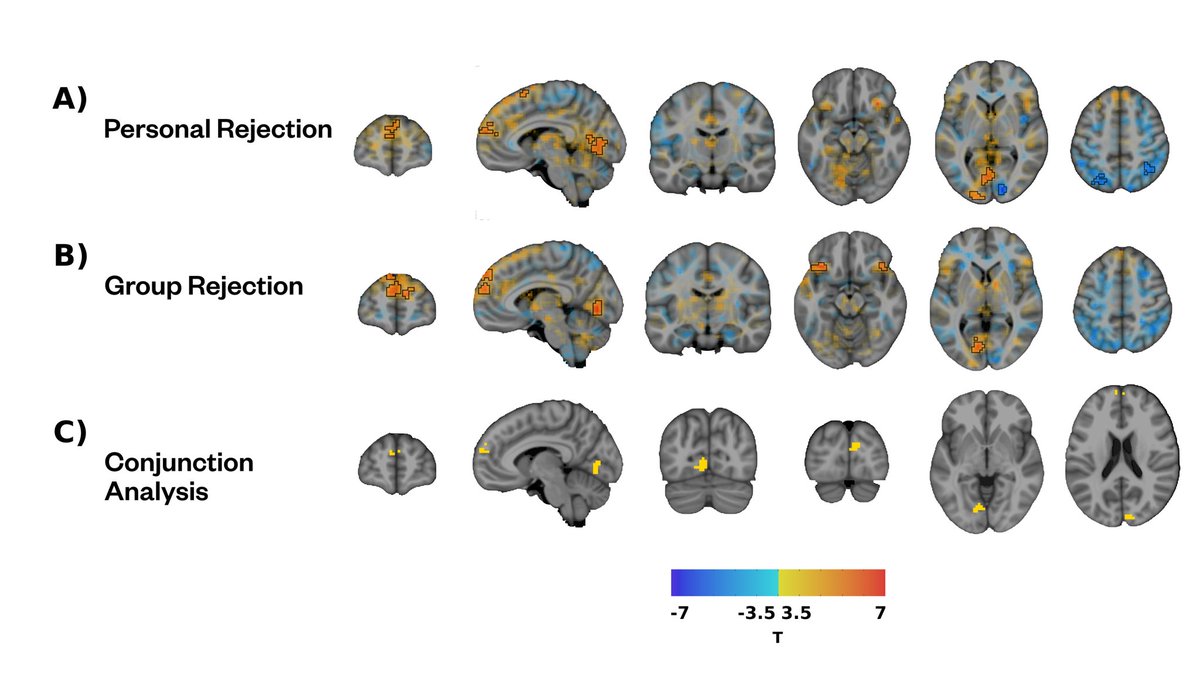
🚨OUT NOW: Why does it hurt when your group is rejected—even if the rejection isn’t about you?
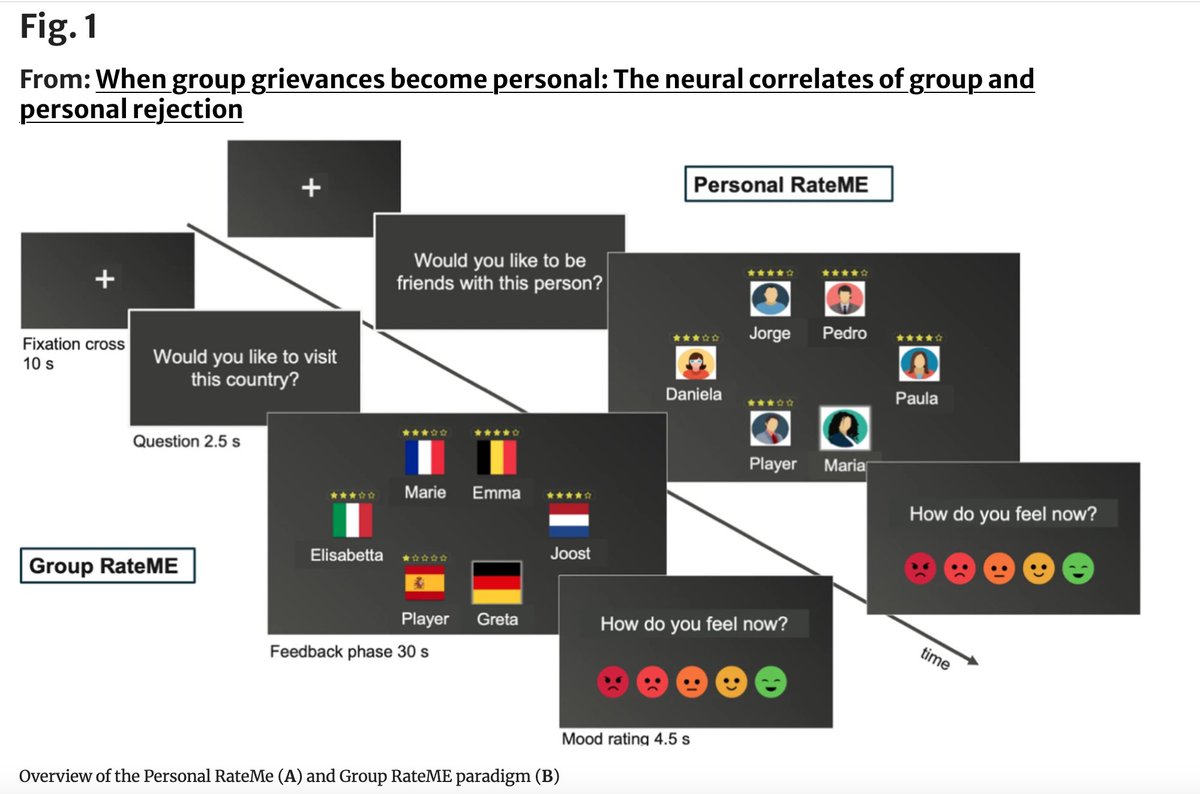
We developed an openly available task RateME to explore how the brain processes group rejection and how it compares to personal rejection. Here’s what we found. 🧵👇
Your brain seems to process the rejection of your group as if it’s happening to you—even if you don't strongly identify with the group. Being a member of the group is enough to experience these feelings.
Download RateME from our Lab's Gitbub , cutomize it, and use it in your fMRI studies (https://t.co/NPH3soR7cd) or implement it directly on Qualtrics in your behavioral studies (https://t.co/j09nbwnbwL)!
Interested in group discrimination?
We developed a new interactive task to study the effects of personal and group discrimination.
RateME is opely available on our Lab's Github and can be implemented on Qualtrics or as an fMRI task.
Check out our new study & try it out! ✨️
Entrevista a @ClaraPretus en el @el_pais sobre los efectos de la desinformación en la polarización y radicalización. Esencial para entender cómo combatir este fenómeno. ⬇️
🧵 Tras 2 semanas sufriendo el tsunami de desinformación, era importante ponerle contexto para entender qué (nos) está pasando y cómo se dan estos episodios en los que los malos aprovechan la tragedia para avanzar su agenda
Nadie mejor que @ClaraPretus 👇
https://t.co/jKMrpXjzJ5
No os perdáis mi conversación con @javisalas sobre el momento de desinformación intensa que estamos viviendo y cómo enfrentarnos a ella.
El acceso a información veraz es un derecho fundamental.
https://t.co/p9wNDFDSG5
My illustration on glial cells was chosen as a finalist for the 11th International Illustration Prize of @illustraciencia and displayed at the Museo Nacional de Ciencias Naturales in Madrid. It was truly an honor to be part of the exhibition and a pleasure to visit it today!
Crowdsourcing is based on the idea that collective judgements from a broad and diverse group of individuals can be more accurate than that of isolated experts.
We present a model that aims to explain how crowds can successfully fact-check partisan misinformation.
🚨Accepted in https://t.co/sDGPsZCeJf
How can we leverage social media networks to combat partisan misinformation?
We explore how crowdsourcing interventions could be implemented at scale to offer a quick first line response to content moderation on social media.
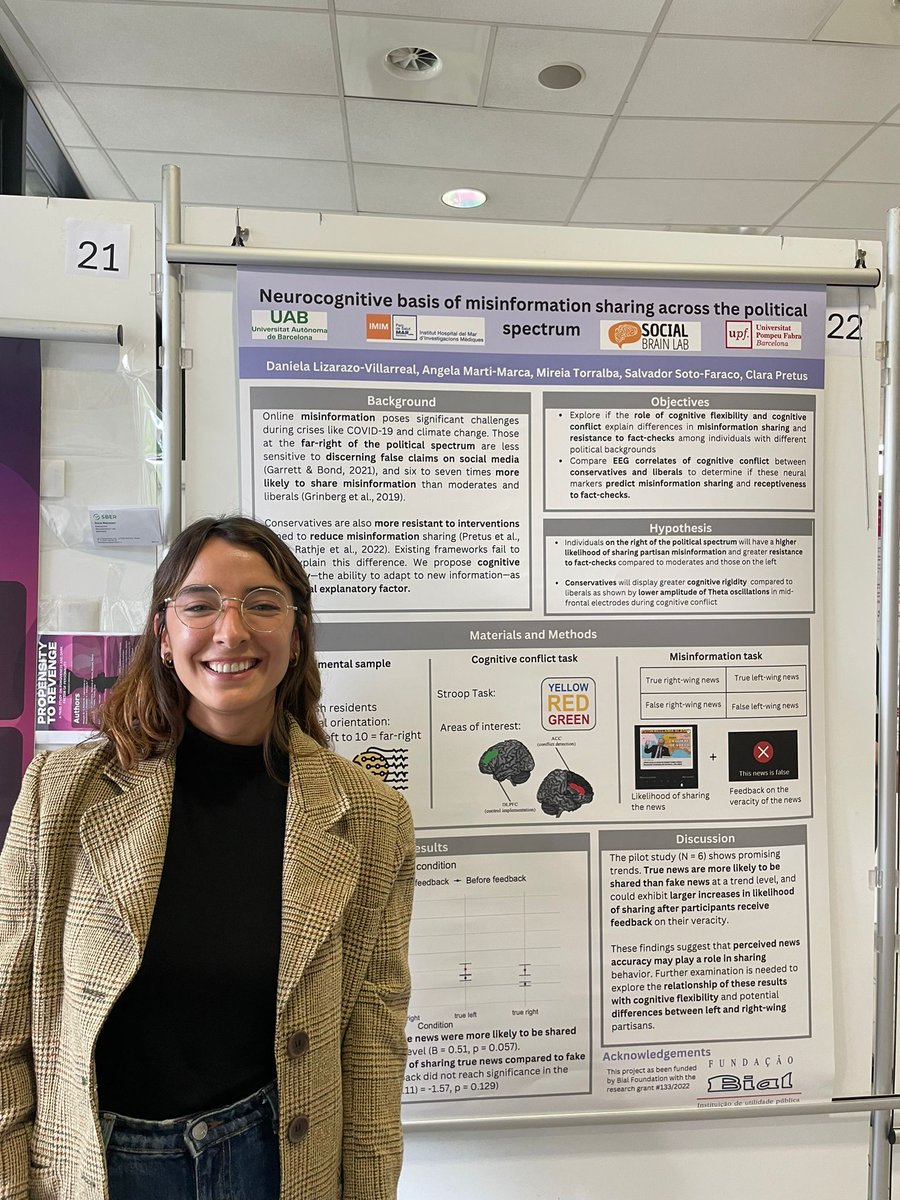
Very proud of my two PhD students @RosaCHendricks and @Danielaliz15236 for presenting their research at their first international scientific conference! @escan2024 @ESCAN_EU 🎉🎉
Follow them to stay updated on their exciting work in misinformation, morality, and AI! ✨
I see academics arguing that we should be extremely risk averse. But avoiding any risk is impossible in science and trying to do so comes with its own risks (eg over-reliance on confirmatory research, temptation to p-hack, challenges at the publication stage, disinterest in research after it’s been published, inability to move beyond stale theories, etc)