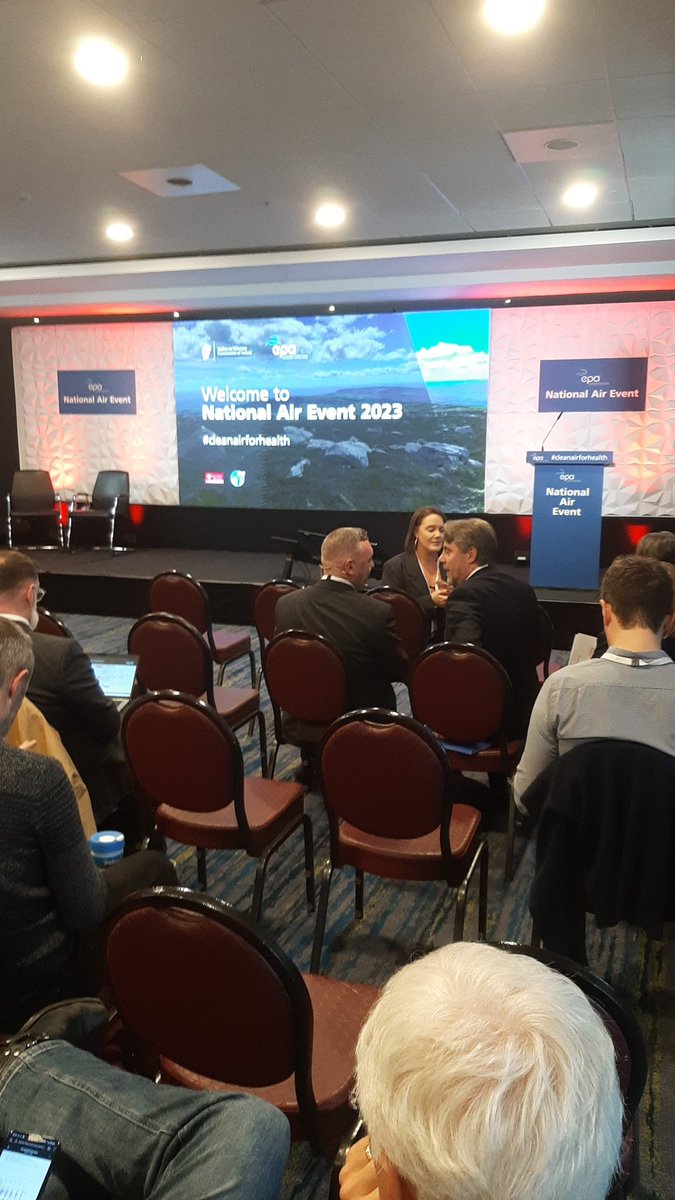
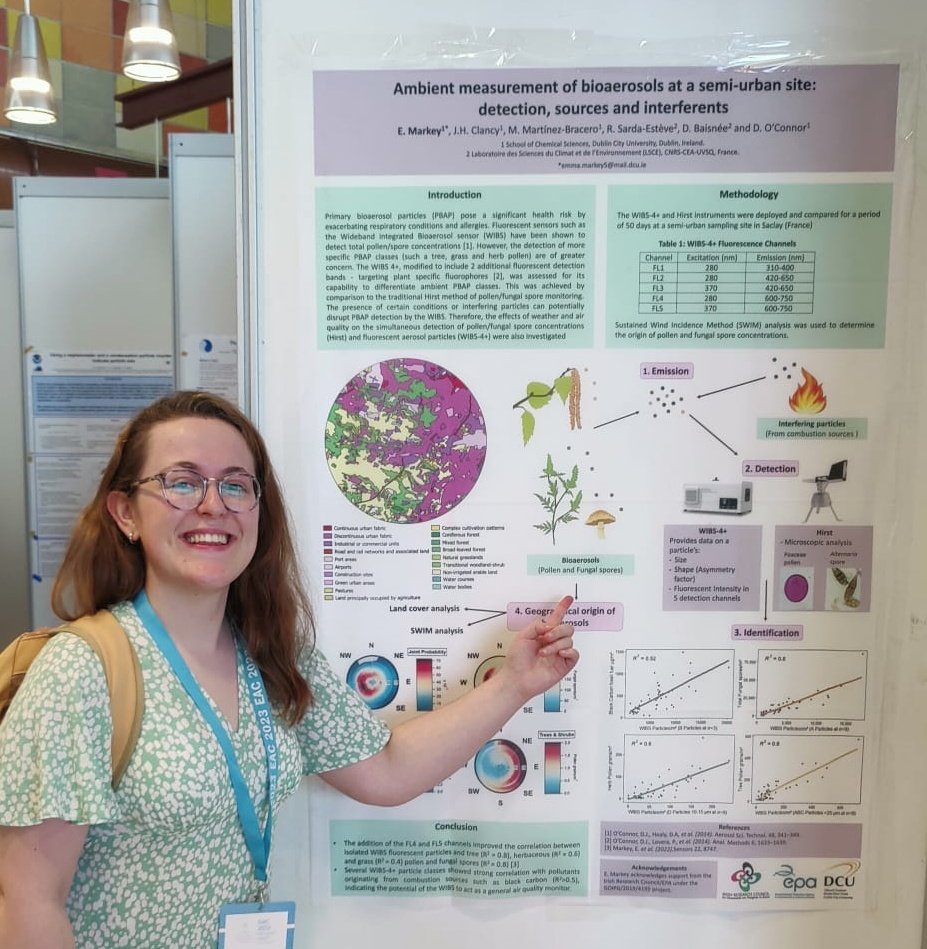
At the @EPAAirQuality national Air event. Looking forward to see the interesting talks and indeed to give my own on the topic of pollen and fungal spores. An air quality problem now and even more so in the future. #pollen#fungalspores#asthma@10Things_ToKnow@SFI
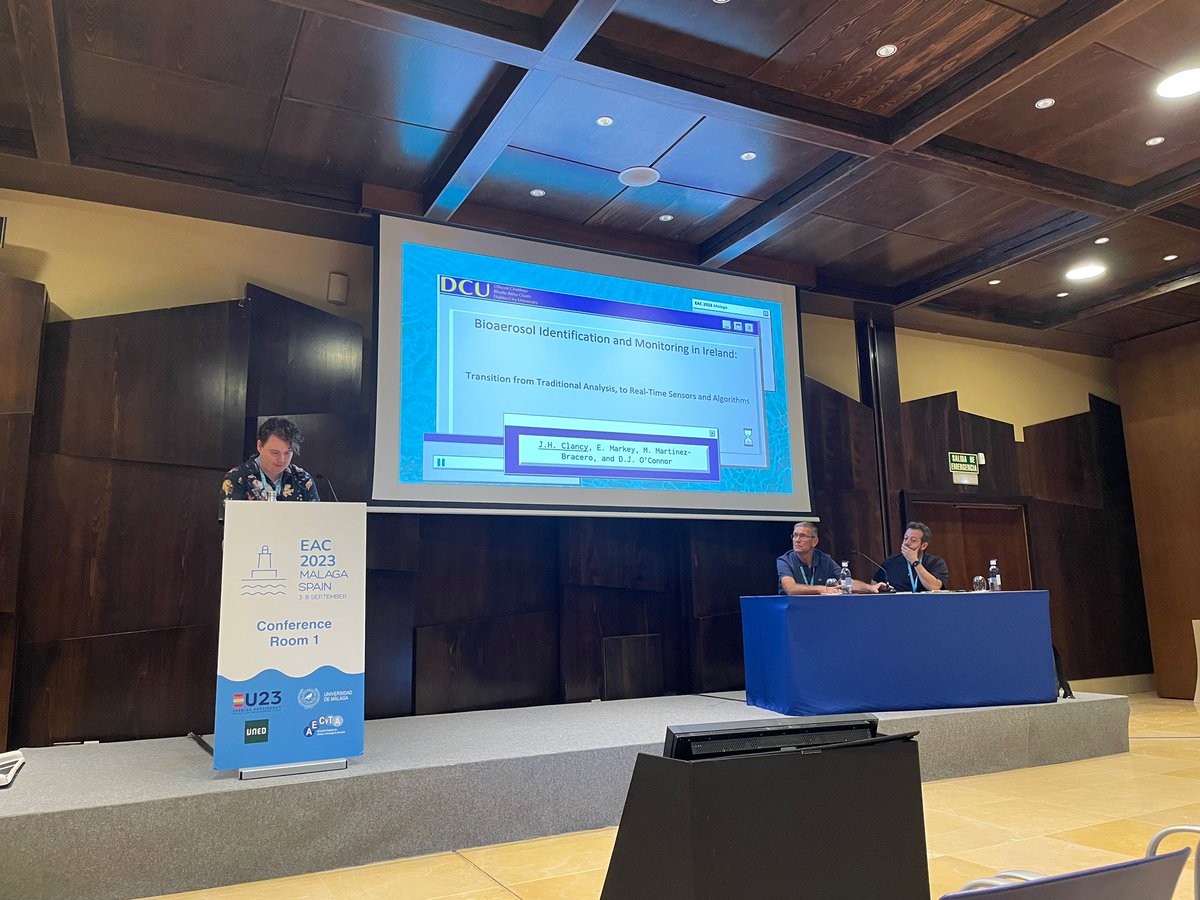
With @JerryClancy10 and his presentation on traditional and real-time monitoring of bioaerosols, we complete our #EAC2023 week in Málaga.
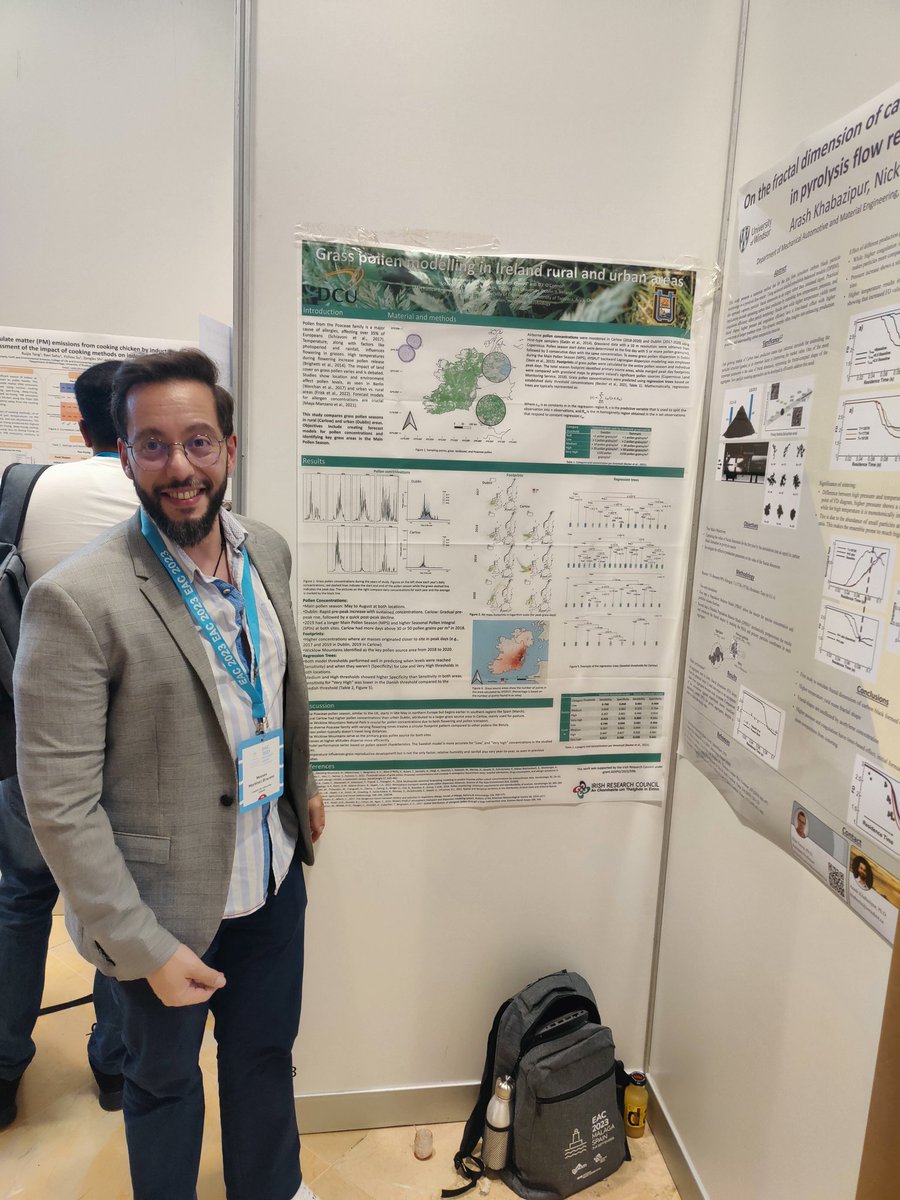
An immense effort from Emma, Moisés, and Jerry representing the team, and it was so great meeting up with colleagues, old and new!
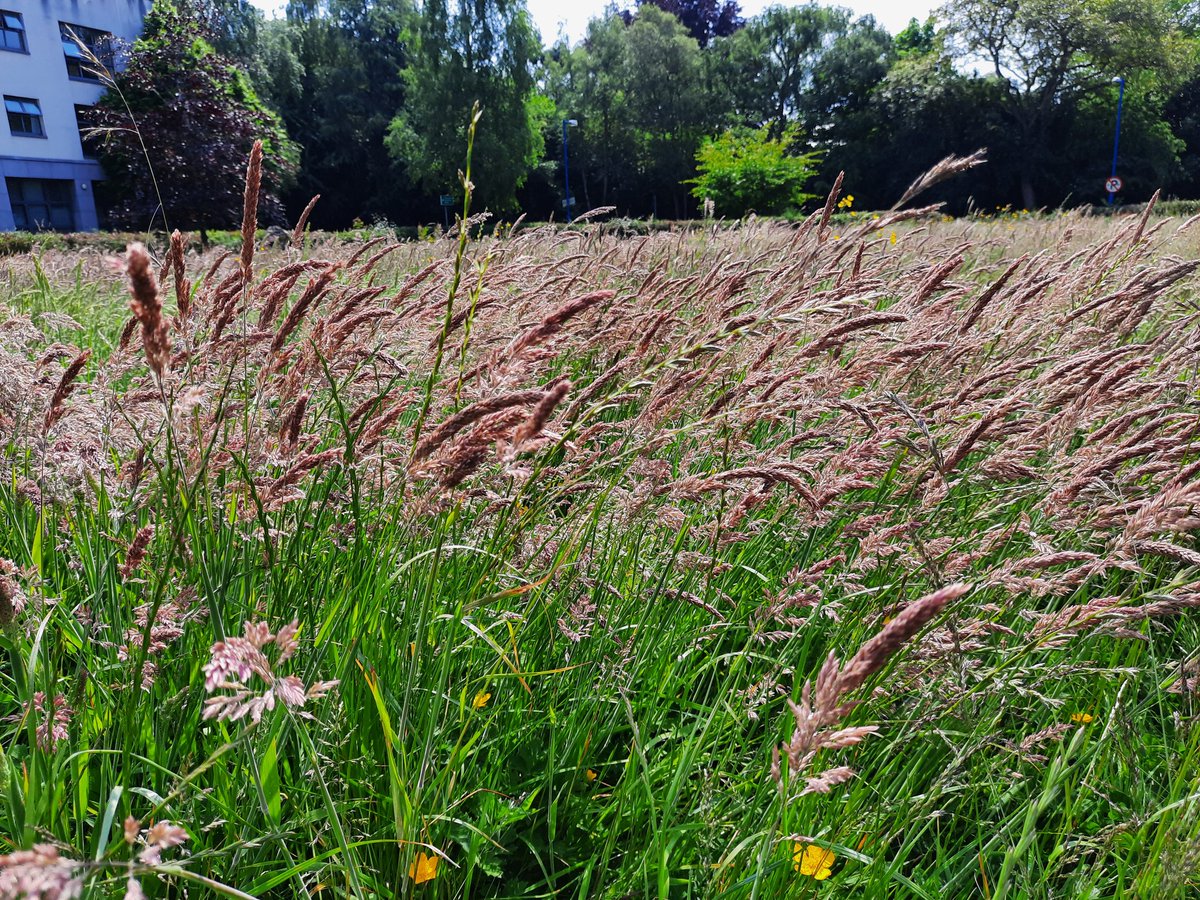
Day two of our #EAC2023 trip and it's @moises_samco turn to present. His poster outlined our attempts to model the concentrations of grass pollen across the island!
So you're telling me for the next few days the pollen will be High and there are risks of thunderstorms?
Hmmm if only there was a fun article detailing all the potential risks to allergy sufferers.... 👀
High pollen and thunderstorms 🤧⛈️
Sounds a lot like the pollen and weather forecasts for a lot of Ireland this week. If you have seasonal allergies or asthma this could be a very dangerous combination!!!
@janlindgren@MetEireann In Dublin, a lot of our birch pollen actually comes from the UK! In the Nordic countries birch pollen allergies are more prevalent due to the fact that there are substantially more local sources, which could potentially lead to more intense allergies if you are exposed
@janlindgren@MetEireann Hmm that is a mystery! I'm not sure I can provide you with an exact answer but the intensity of your exposure is likely an influencing factor. Ireland is a very deforestation country. Pollen allergies here are mainly caused by grass pollen in the summer
@janlindgren@MetEireann Hi! We cannot speak on behalf of the exact threshold values used by Met Eireann but generally the "High", "Medium" and "Low" levels correspond to airborne pollen concentrations (in your case Birch) that are within a set of ranges
@janlindgren@MetEireann Mathematical models can be used in conjunction with weather and environmental data to predict such levels and are easier to interpret than just providing a random number concentration, since threshold levels can change depending on what pollen type you're looking at
@janlindgren@MetEireann Ranges are based off data and studies that show that if say daily birch pollen concentrations are above 30 grains/m3 allergenic reactions will occur (High), less than this would have a potential to cause allergy is some (Medium) and less again are unlikely to cause any (Low)
🎉@DCUChemistry@DCU has had *huge* success in the recent @scienceirel Challenge Funding, with 4 out of 12 awards in the Healthy Environment Challenge being led by PIs from our school! Congrats to @DOC_at_DCU@R2B2_13@PryceGroup and @DCUWater and best of luck going forward! 🎉
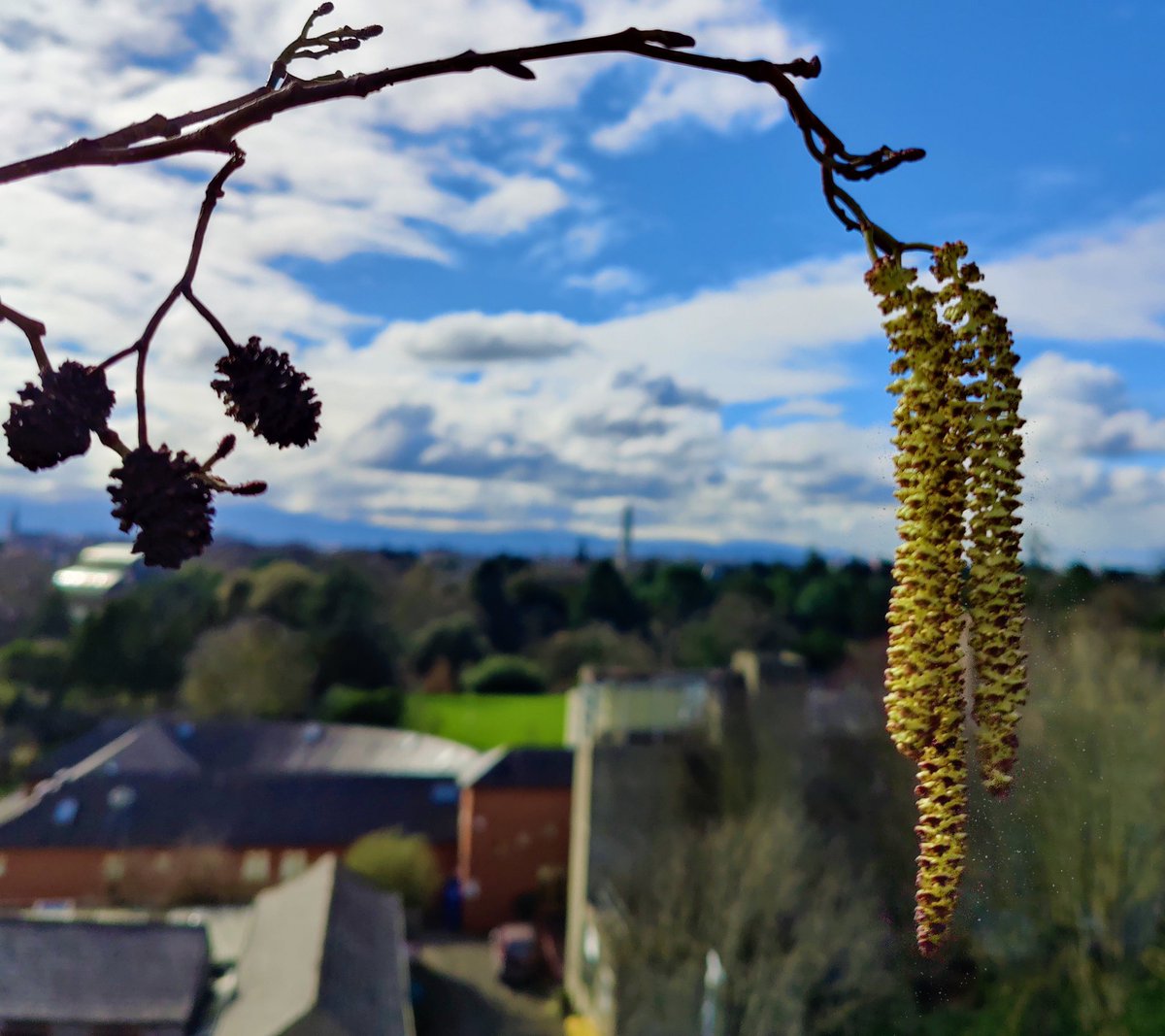
We are delighted that our PhD students @JerryClancy10 and
@Emma__Markey have won the EPA Researchers Photograph of the Year!
Their image, taken atop the @MetEireann HQ on the day of our sampler installation, shows a pollen catkin releasing pollen, with the city as a backdrop.