Factories are still held together by human coordination and traditional, hard-coded assembly workflows.
That’s the bottleneck.
@adarshkulkarni and @mavolpi discuss the future of autonomous manufacturing, robotics foundation models, and why scaling assembly is one of the hardest problems in the real world.
https://t.co/XK4vRdPZ6P
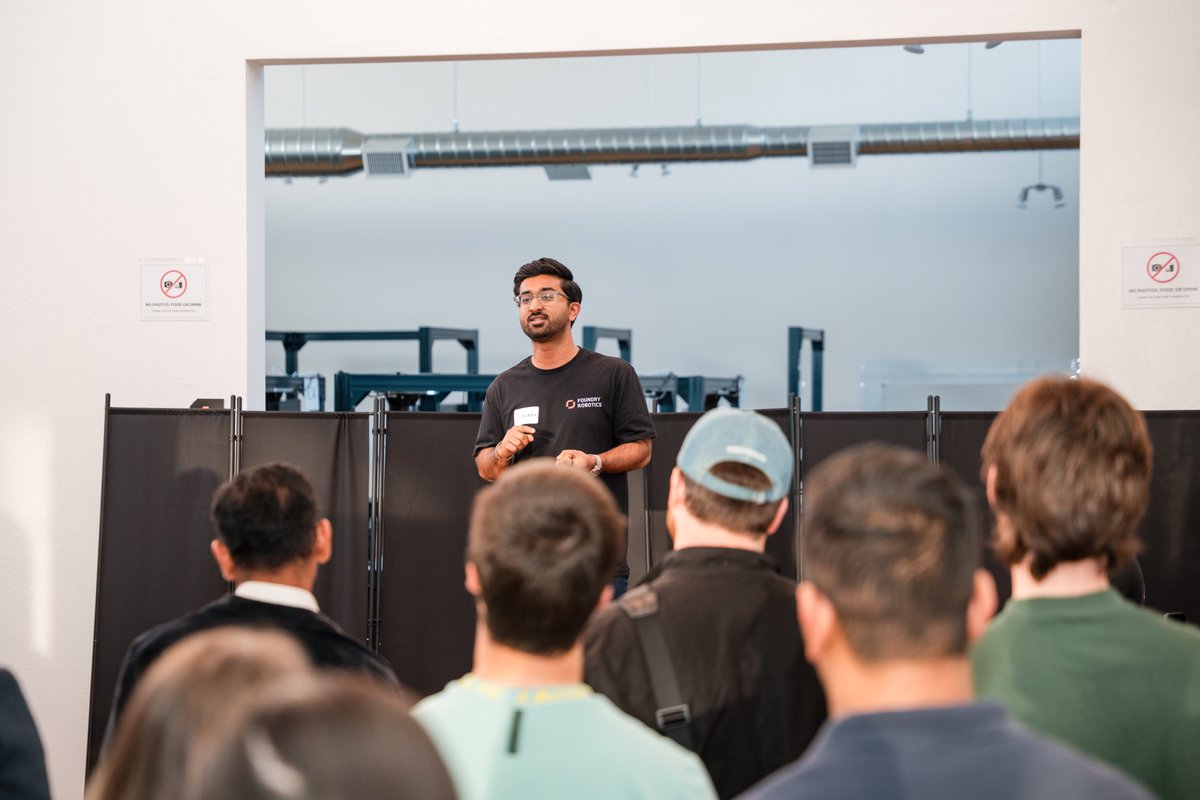
Recently, I had the chance to speak at the @wef about the future of factories and what it will actually take to build autonomous manufacturing systems in the real world.
A lot of people imagine “lights out” factories where humans disappear entirely. That misses the point. We want factories filled with cameras that are reactive, autonomous, and intelligent.
The reality is that today’s robots still need humans to teach them — how to manipulate objects, recover from edge cases, adapt to variability, and operate in dynamic environments.
The bottleneck is no longer whether the core technology works. Robotics foundation models are improving incredibly fast.
The real challenge is scale.
How do you collect enough real-world manufacturing data?
How do you continuously improve robotic behavior across thousands of tasks?
How do you turn robotic learning into a production system, not just a demo?
That’s the problem we’re building around at Foundry Robotics.
We believe the future factory will be human-guided, AI-native, and increasingly autonomous over time — with every assembly cycle making the system smarter.
Still early, but excited for what’s coming next.
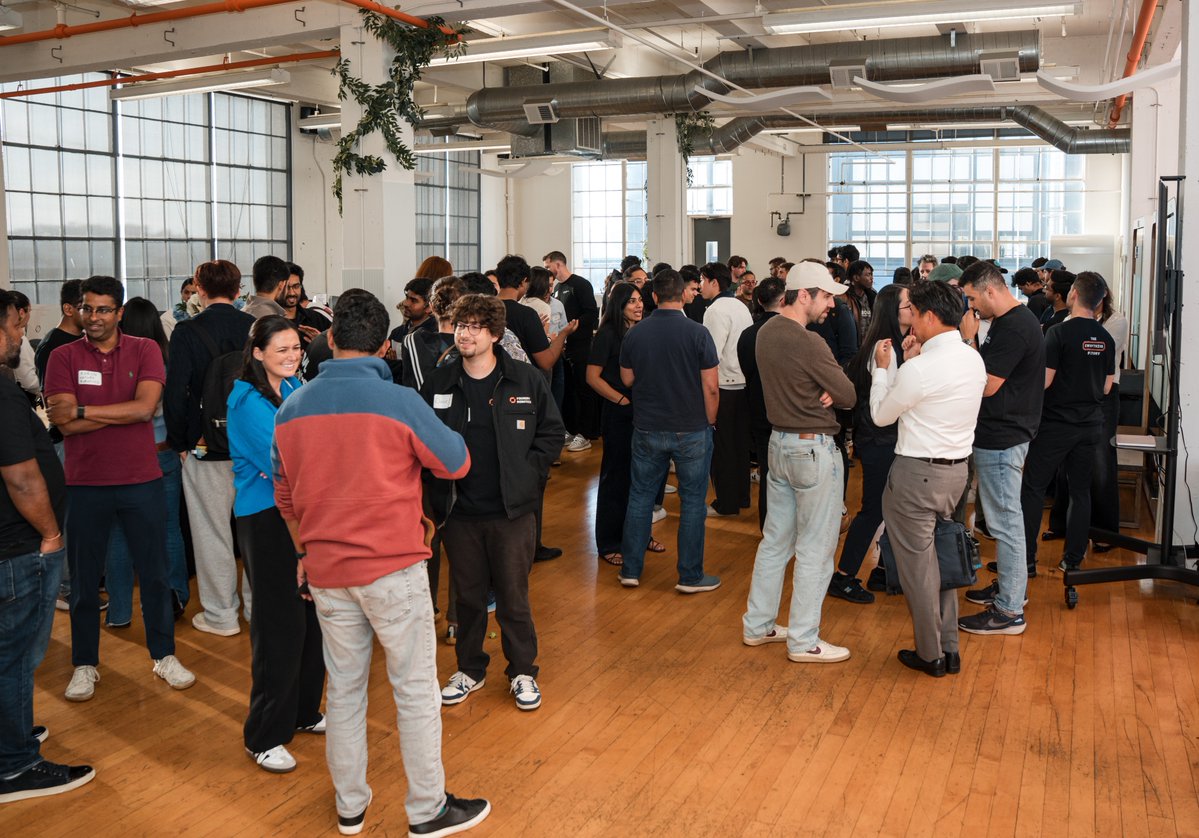
Foundry Robotics opening night ⚙️
21 days before we were taking a sledgehammer to the wall and opening up the adjacent space.
Now it’s a factory floor full of investors, partners, customers, researchers, operators, and future teammates.
A lot more to come.
Learnings from the last month in robotics foundation models:
- steerability is still very important. not just for efficient training, but also for downstream ability to intervene (e.g by humans)
- that steerability is still easiest through language