DBA navigating the world of databases. Keen on connecting with fellow data enthusiasts and expanding my knowledge horizon. Let's talk SQL, NoSQL, and everything
@vivoplt Great idea, store everything in memory. Call this a cache.
Protect it by writing changes sequentially to a file. Call this Write-Ahead Logging.
Write cache snapshots at regular intervals to reduce recovery time and WAL size. Call them checkpoints.
Call this a database ���
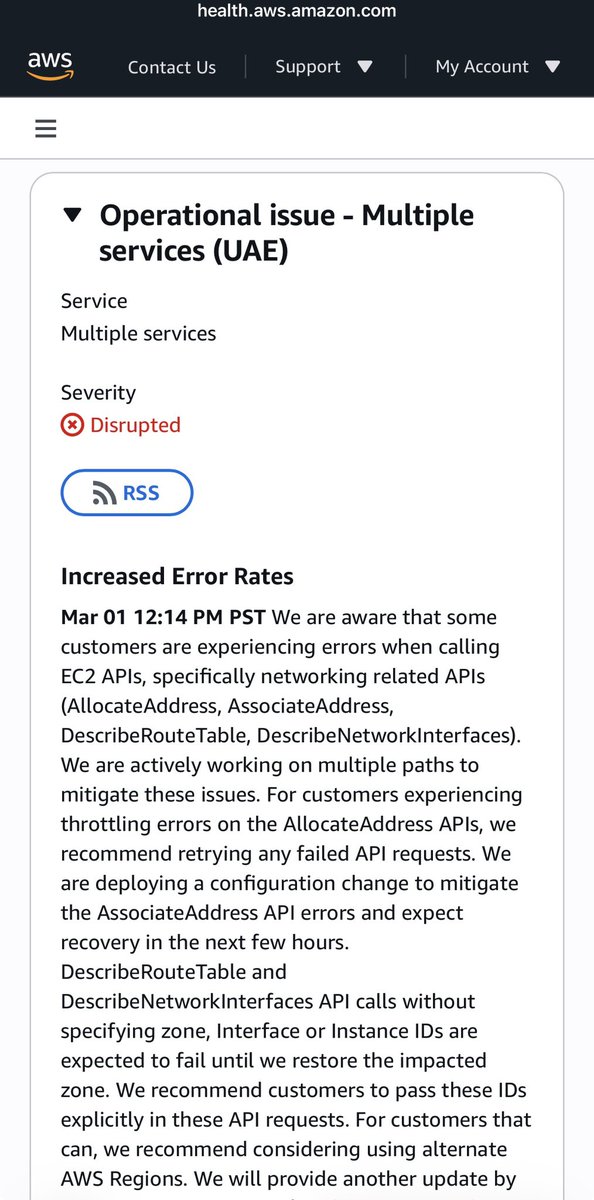
🚨 BREAKING: AMAZON AWS DATA CENTER BOMBED IN UAE
>iran launched retaliatory missile and drone strikes on uae
>strikes hit airports, ports, residential areas
>amazon’s main Middle East data center hit
>ME-CENTRAL-1 just went fully offline
WTF 💀
I've been helping clients with ClickHouse for a few years now, but is always good to make it official :)
View my verified achievement from @ClickHouseDB. https://t.co/IgfgeuYijy via @credly
@itunpredictable @cedar_db Very interesting, would love more information on internals so I can understand how it works and when to recommend it to my clients but did not find this in the documentation
OpenAI’s latest blog on scaling Postgres to 800M users is in my opinion a study in workload management rather than database innovation. They did not truly scale the engine; they built a fortress around it to protect it from their own traffic.
They stopped allowing new tables and moved write-heavy workloads to Cosmos DB. That is offloading, not scaling.
Moving 12-table joins to the application layer is a pragmatic fix, but as a consultant, I see a missed opportunity for better data modeling or horizontal scaling solutions.
Pointing thousands of endpoints to one primary is a classic anti-pattern that could have been solved by domain splitting long ago.
It is a great survival guide for a monolith, but Postgres is capable of much more if you actually scale the engine. #PostgreSQL #Database #SystemDesign @OpenAI
https://t.co/aSnsgFd18x
An interesting point to keep in mind: if your query requires examining a large set of rows and one of your columns is toasted, that means postgres will need to fetch the pages of the tuples and the pages from toast (and decompress them), even if the query does not return the toasted column.
Major deal? Might be for some
A useful reminder when working with PostGIS: just because a query involves a geometry column doesn’t mean a GiST index is the right tool.
Sometimes the real filtering happens on regular columns, and a simple BTREE index can be faster. in some cases, a GiST index can even slow things down.
Always check which part of the query actually drives selectivity before reaching for spatial indexing.
#PostGIS #Postgres #Performance
🚨 Gemini 3.0 Pro - ecpt checkpoint
Holy shit Guys , i want everyone to see this retweet as much as you can to get this to mainstream , i dont ask for this normally
All apps work , apple animation , minimize , tools , browser , and everything literally this is the best we can see AI till date
@OfficialLoganK you have cooked , i wanna see the world when gemini 3.0 drops officially
Just finished a super interesting project using PL/Rust and croaring-rs in RDS PostgreSQL to work with compressed bitmaps to create a very efficient data model allowing very fast searches. PostgreSQL’s extensibility and the ecosystem around it never cease to amaze me.
I will probably write a blog post about it at some point in the near future.
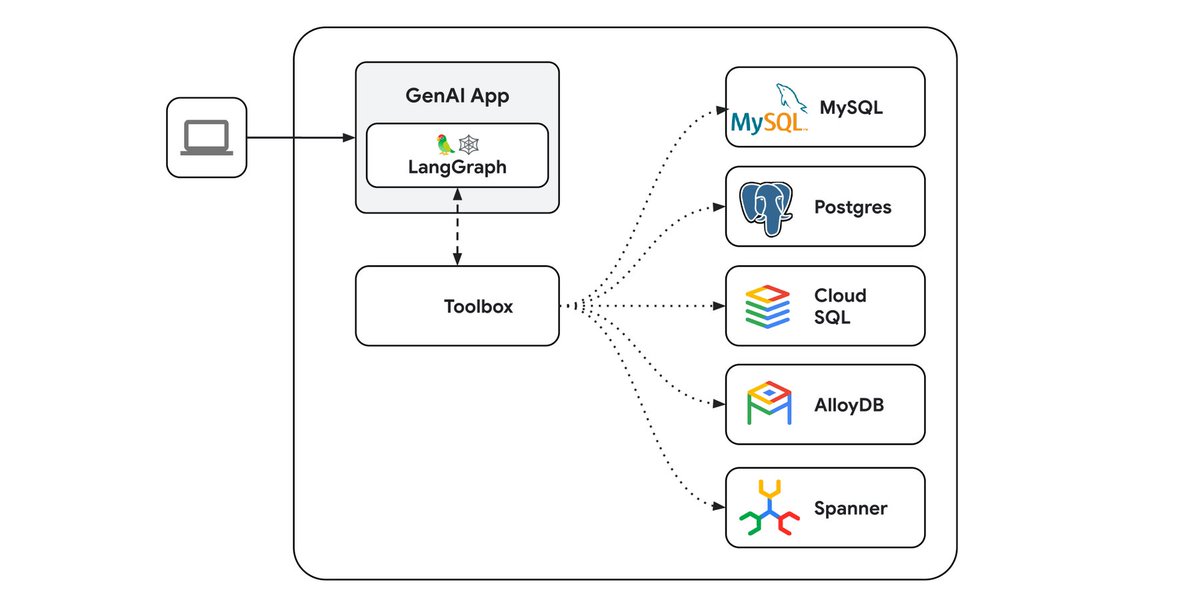
Google Cloud released an open-source Gen AI Toolbox for Databases: a server that exposes SQL queries as callable tools for LLMs via LangChain.
Not an ORM — you define the SQL, wrap it as tools, and let the agent call them. Auth, pooling, and observability are built-in.
Interesting approach to controlled DB access for GenAI workflows.
I'm sure people will misuse it — not sure how yet.
#GenAI #PostgreSQL #MySQL #LangChain #LLMops
https://t.co/P5obSqbfem
One of the most interesting topics I get to work with is data modeling.
Every few years, a new technology emerges, implementing a new type of Data Model, claiming that it will replace SQL. However, history shows that SQL and the relational model adopt the strengths of the contender and continue to be the leading approach for building systems.
That doesn’t mean NoSQL has no place in the world—on the contrary, we’ve achieved amazing results for our clients with NoSQL over the years, often at a lower cost than implementing their solution in the SQL world. But it’s crucial to know exactly what you’re doing with NoSQL—the potential for mistakes is much higher.
Upgrading MySQL to version 8.0 can be a challenge for anyone, testing and addressing possible performance degradation is a critical part in the process.
After doing many upgrades for our clients I love reading about the challenges various organisations face and how they resolve them.
🚗🛻 Upgrading a #MySQL fleet isn’t easy, but @UberEng tackled it head-on with automation and expertise.
When query challenges arose, Percona stepped in, delivering fixes to optimize performance and ensure success: https://t.co/Y55RmAF3wc via @Uber
You might be asking the wrong question here, there are of course options like TiDB and Vitess that are designed to handle that kind of scale but I believe a better question to start with is what are the access patterns to the data? How many writes and reads per second do you want to support? What percentage of the data is frequently accessed on a daily basis by the application?
I would also check that the data model supports the kind of scale and access patterns you need, the best most scalable database in the world won't do you any good with the wrong data model.