I would love for our employed colleagues to pay more attention to what’s going on with the No Surprises Act.
Many of these conversations get so complicated that everyone outside of out-of-network medicine tunes out.
So we assume it doesn’t affect us.
However, you do need to look at how your compensation is set.
Your salary and your dollars per RVU are influenced by surveys and fair market value analyses that examine what other physicians are being paid.
Out-of-network physicians’ ability to negotiate influences payment rates across the market. If you weaken that leverage by eliminating independent dispute resolution, you can put downward pressure on reimbursement.
If that translates into lower physician earnings, those lower numbers can become part of the benchmarking used to set your compensation.
That is why this matters to everyone.
Your salary should not be the default answer to everything that is wrong with healthcare. Advocating for yourself and your compensation is your responsibility.
Being employed does not make this someone else’s problem
@JahangirAsgha10@washingtonpost the blame lies with the government who allows this to occur (largely influenced by the AHA). a hospital isn't going to leave money on the table if there's a legal pathway to it.
agree the article title is misleading.
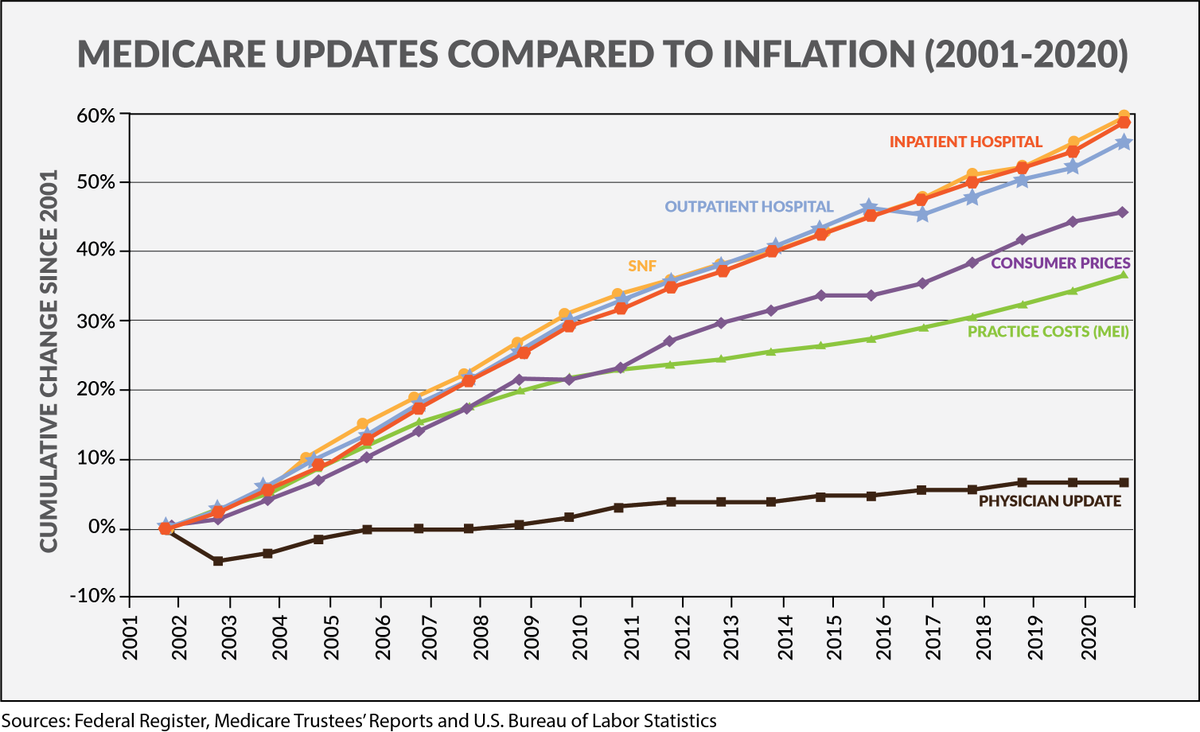
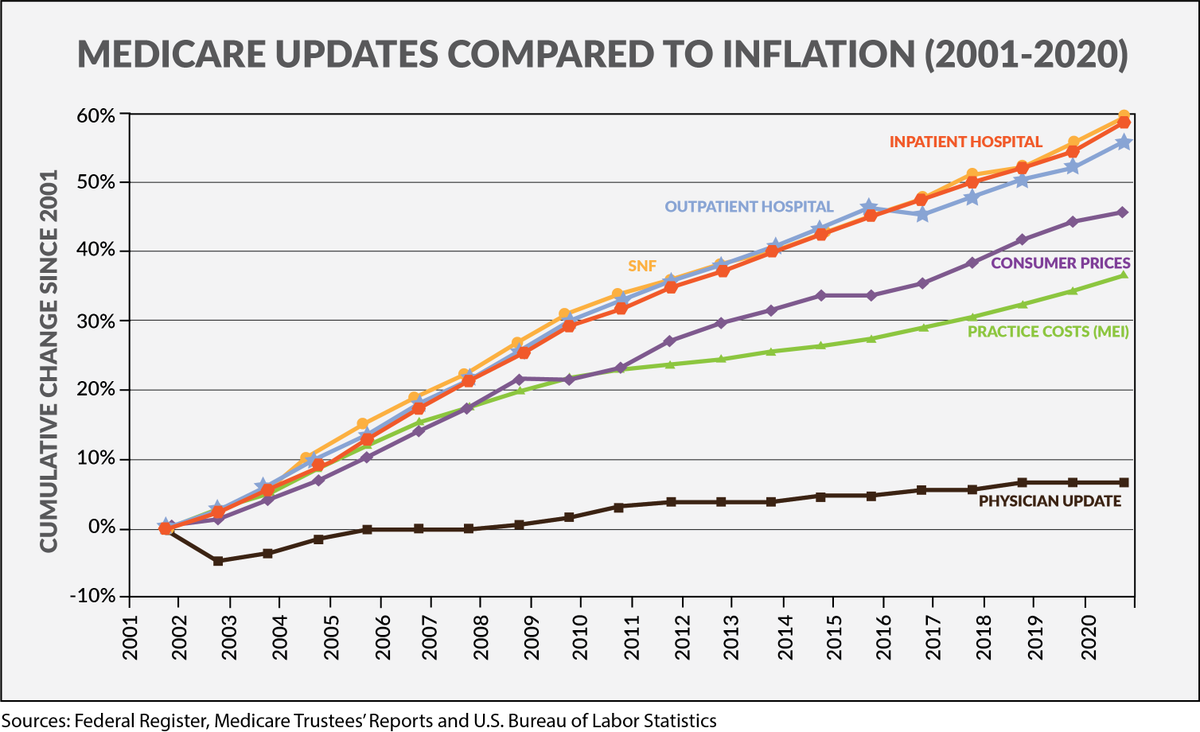
Doctors haven't gotten a raise from Medicare since 1992. They've gotten a 55% pay cut. 📉
In 1992 Medicare paid $31.00 per unit of physician work. In 2026 it pays $33.40. If it had just kept up with inflation, it would be about $74.
Same work. Less than half the buying power.
Meanwhile your mortgage, your student loans, and your kids' tuition kept up with inflation just fine.
You can't control what Medicare pays you. You can control what you do with what's left.
What's your specialty? 👇
Hit follow to learn the personal finance topics you wish you learned in med school.
Sources: Medicare Physician Fee Schedule conversion factor history (AMA/CMS); 2026 = non-APM conversion factor. Inflation adjustment uses BLS CPI-U (1992 annual average → Aug 2026).
#physicianfinance #moneymeetsmedicine #medicare #doctorpay #physicianburnout
@rrbelloff@realdocspeaks@SurgeryCenterOK mass drop out won't happen. 80% of physicians are now employed. we don't have a say in what insurance plans we accept. physician fees are slashed but the facility fees to the hospital continue to increase.
hospitals will need to subsidize their joint surgeons.
Here are some scenarios where CMS proposes to penalize physicians : cc @DrOzCMS
A patient arrives with eye irritation, and the doctor performs a same-day foreign body removal from the cornea.
A patient presents with acute knee pain, and the doctor performs an intra-articular joint injection
A patient presents for a routine skin check, and the physician performs a shave biopsy of an unexpected lesion
An office visit results in a same-day rigid cystoscopy to check for bladder issue
A patient presents with severe foot pain, and the podiatrist performs a same-day avulsion of a nail plate
A patient arrives with acute abdominal pain, is evaluated, and the surgeon performs a same-day emergency incision and drainage of a deep abscess
You don’t need to be affected by this particular proposed rule to say this is a stupid move by CMS .. and it’s also blindingly obvious where this is headed.
@DrDiGiorgio my limited understanding is health insurance companies are only allowed to keep a certain PERCENTAGE of their revenue as profit. so they want the costs to go up, otherwise they can't make more money for their shareholders.