🚀Haven’t heard of @QANplatform yet? Here is why you should pay attention right now. 🧵👇
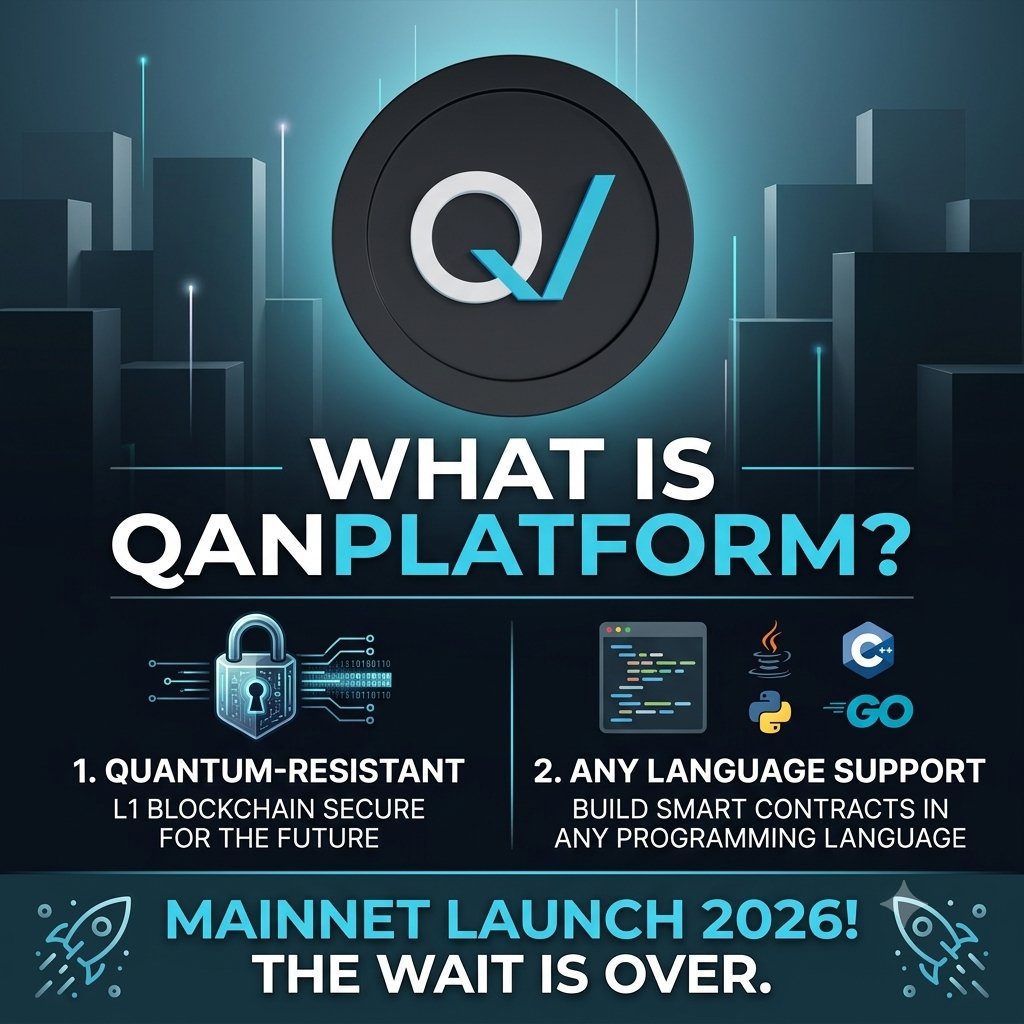
What is QANplatform?
It's a next-generation Quantum-Resistant Layer 1 blockchain.
Why is it a game-changer?
Quantum Security: Traditional blockchains (like Bitcoin or Ethereum) could be vulnerable to future quantum computer attacks. QAN is built from the ground up to be completely secure against them.
Hyperpolyglot Smart Contracts: Developers don't need to learn a new language like Solidity. They can code smart contracts in any major programming language (Go, Java, Python, C++, etc.).
The Big News:
The wait is almost over. The QANplatform Mainnet is officially launching this year, in 2026! 🖥️🔒
Don't sleep on the future of secure, dev-friendly Web3.
#QANplatform #QANX #Crypto #QuantumResistant #Layer1 #Blockchain #Web3
They should ask who has innovation for the emerging market. Everyone will be looking for migration solutions.
@QANplatform has the innovation, and they have worked direct with major players to meet their requirements.
Demand already secured. And the market is guaranteed.
The consensus is the risk exists and you have to prepare before the risk becomes reality.
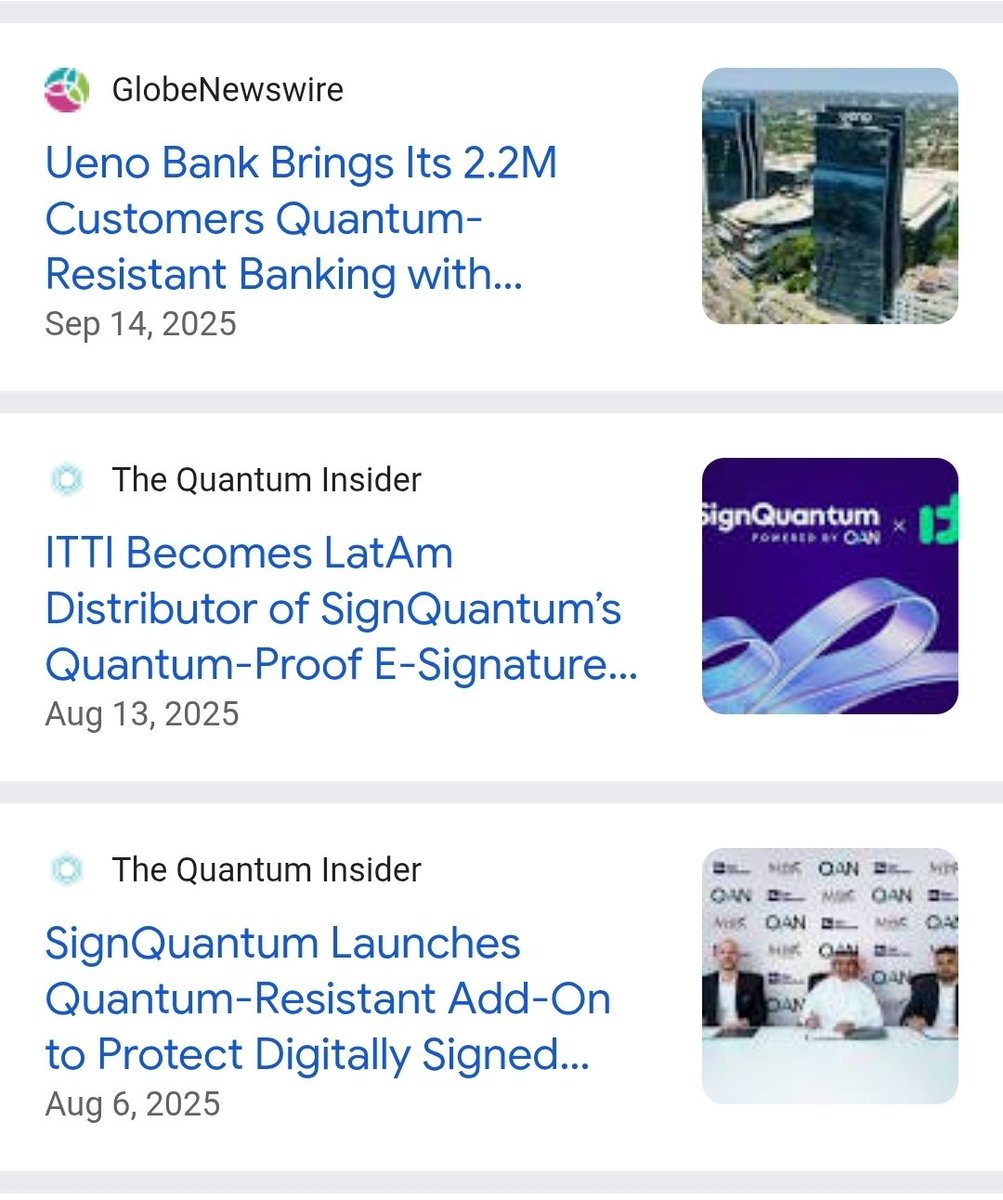
@We_Are_YouChain Looks like you'd appreciate innovation for post quantum migration like we see with @QANplatform and Signquantum. All markets will desperately need these type of innovative solutions. One to look into...
Bitcoin price:
In 2024: $63k
In 2026: $63k
Before Trump: $63k
After Trump: $63k
Before pro-crypto Fed: $63k
After pro-crypto Fed: $63k
Before the US-Iran war: $63k
After the US-Iran war: $63k
Before US stocks ATH: $63k
After US stocks ATH: $63k
The architects of the most secure identity system ever built have never modeled for Q-Day.
Governments, banks, and hospitals are building the next generation of digital identity on blockchain.
The promise is compelling. No more centralized password databases as the single point of breach. Your identity credential is yours. Cryptographically signed. Anchored to a distributed ledger. Verifiable anywhere, by anyone, without asking a central authority for permission.
It is a genuinely elegant solution to a genuinely broken system.
Here is the flaw nobody is writing about.
The architecture of Decentralized Identifiers, DIDs, the technical standard that underpins most enterprise blockchain identity systems, is built on the same cryptographic primitives as every wallet you already know is vulnerable.
Your identity credential is issued by a signing authority. That authority uses a private key. The corresponding public key is written to the ledger. Anyone can verify your credential by checking the signature against the public key on-chain.
It is clean. It is trustless. And in public ledger-anchored DID systems, the dominant deployment pattern in enterprise and government identity infrastructure, it exposes the public key. Permanently.
Now add one more layer that most commentary skips entirely.
Your credential itself, your digital passport, your KYC record, your professional license, your healthcare authorization, carries a timestamp. It was signed at a specific moment. That signature, and the public key used to verify it, lives on a public ledger indefinitely.
Adversaries are already collecting this data today. Not to use now. To use later, once quantum capability arrives. Researchers call this Harvest Now, Decrypt Later archiving encrypted data today with the intent to break its confidentiality once quantum hardware matures.
But there is a second quantum threat model that is less discussed and more directly dangerous for identity systems.
It is called Trust Now, Forge Later.
In the TNFL model, the adversary does not target the contents of a credential. They target the signing key itself. A quantum computer running Shor's algorithm can derive a signing authority's private key directly from its public key which is already permanently on-chain. Once they hold the private key, they can issue entirely new credentials that carry a cryptographically valid signature, indistinguishable from legitimate ones.
The attacker does not rewrite the ledger. The ledger is immutable that does not change. What changes is your ability to trust what is on it.
Every credential issued under the compromised signing scheme, every digital passport, every KYC attestation, every healthcare authorization, now exists alongside forgeries that the verification system cannot tell apart. The identity infrastructure designed to eliminate fraud becomes the mechanism that enables it at a scale no centralized breach ever could.
Because a centralized breach steals records from one database. A Trust Now, Forge Later attack on a public identity ledger collapses the trust model for every credential ever issued under that signing authority. Not by altering what was written. By making it impossible to distinguish the real from the fabricated.
The enterprise blockchain identity infrastructure being built right now is the most comprehensive, most permanently exposed, most difficult-to-patch identity system ever designed.
And most of its architects have never modeled for Q-Day.
The quantum threat is no longer science fiction—it’s arriving much faster than most think. 🛑 If you don't want to get left behind, it's time to look into @QANplatform.
The Mainnet is launching THIS YEAR (2026). There is literally no more time to waste. Prepare for the future now. ⏳💻
#QANX #QuantumComputing #Web3 #Crypto
Y2K had a hard deadline everyone could see on a calendar.
Q-Day has a deadline nobody can fix precisely.
One produced one of the largest coordinated infrastructure efforts in history. The other has mostly produced roadmap slides so far.
@Kansalaisaloite@coingecko@pmjohann I've heard this criticism before and checked the on-chain data, and there's no indication that the team is selling coins 🤷
Can't just freeze, it's a bad term. They can however reach consensus that holders must transition within a given time frame, before it is obvious bad actors could crack wallets?
$QRL $ABEL $CELL $MCM $XX $NXS $ALGO $HBAR $QANX $TRX $USDC $BTC $ETH $ADA $SOL $XRP
Government and finance entities wanting to use Blockchain solutions will have specific requirements going forward.
Qanplatform is meeting those requirements, plus delivering actual innovation to navigate the post quantum transition.
https://t.co/GLDiyEb69A