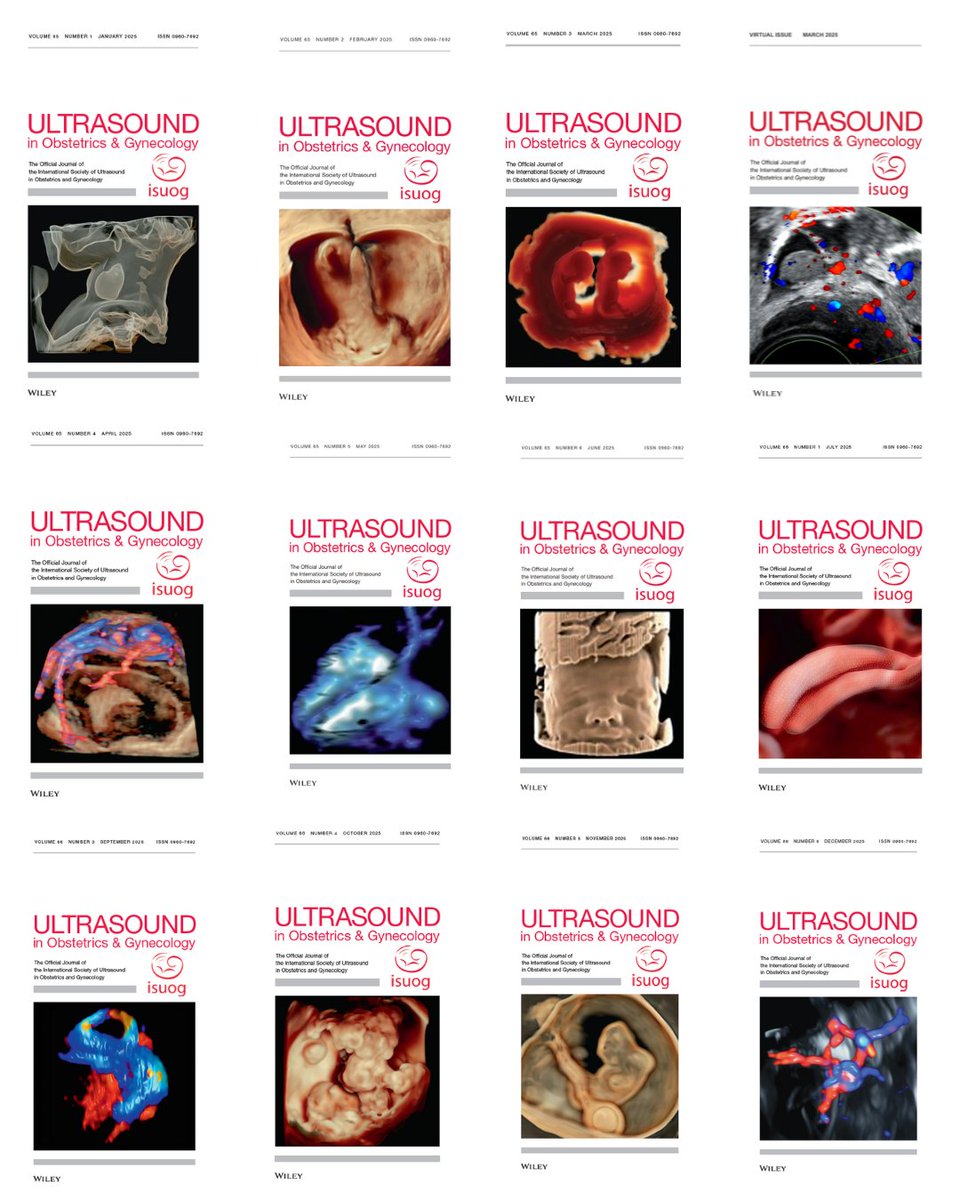
#UOGJournal achieved another impressive 6.3 million downloads in 2025 ✨
🥇 Want to know which articles were the most popular? Take a look at the list on the ISUOG website: https://t.co/7VC9QHI1iE
✅ All articles listed are open-access!
#LoveUltrasound#WomensHealth@WileyHealth
⏳ 𝟵 𝗱𝗮𝘆𝘀 𝘁𝗼 𝗴𝗼.
🗓 𝗜𝗦𝗨𝗢𝗚 𝗹𝗶𝘃𝗲𝘀𝘁𝗿𝗲𝗮𝗺 𝗰𝗼𝘂𝗿𝘀𝗲 — 𝗣𝗼𝗶𝗻𝘁 𝗼𝗳 𝗖𝗮𝗿𝗲 𝗨𝗹𝘁𝗿𝗮𝘀𝗼𝘂𝗻𝗱 𝗶𝗻 𝗢𝗯𝘀𝘁𝗲𝘁𝗿𝗶𝗰𝘀 & 𝗚𝘆𝗻𝗲𝗰𝗼𝗹𝗼𝗴𝘆: 𝗙𝗿𝗼𝗺 𝗔𝗺𝗯𝘂𝗹𝗮𝘁𝗼𝗿𝘆 𝘁𝗼 𝗘𝗺𝗲𝗿𝗴𝗲𝗻𝗰𝘆 𝗦𝗲𝘁𝘁𝗶𝗻𝗴𝘀
📍 Sunday 7 June 2026
I'll be speaking at this one alongside an international faculty — A/Prof. Conrado Coutinho (Brazil) and Prof. Angela Ranzini (USA) among others.
𝗧𝗼𝗽𝗶𝗰𝘀 𝗶𝗻𝗰𝗹𝘂𝗱𝗲
— PoCUS in early pregnancy emergencies
— Intrapartum decision-making
— Postpartum haemorrhage
— Integrating PoCUS findings into real-time clinical workflows
An optional hands-on workshop is available on the following Friday 12 June at Mindray, Watford, UK.
CME accreditation pending · Recordings available to registrants.
Register Now: https://t.co/pey9zFTzuV
#ISUOG #PoCUS #ObGyn #EmergencyMedicine #FetalMedicine #AsmaKhalil
@isuog-international-society-of-ultrasound-in-obstetrics-and-gynecology @mindray
Have a go at June's VISUOG Case of the month!
This case concerns a patient with no living children and three prior miscarriages, the last one three
months ago. She presented for care early in pregnancy at seven weeks of gestation. A PoCUS ultrasound scan was done in the office to confirm the pregnancy.
Take a look at the case on the ISUOG website and consider your diagnosis. https://t.co/Au1eoxzAdq
#womenshealth #loveultrasound #ultrasound #pregnancy #medicalcase
This Sunday! Join Prof. Christoph Frank Dietrich for ISUOG's course on Point of care ultrasound in obstetrics and gynecology: from ambulatory to emergency settings...
📆 7 June 2026
📍Online (livestream)
⭐ Christoph will lead a session on 'An overview of PoCUS for symptomatic women presenting to the emergency department'.
Register now: https://t.co/a39My6cTV6
#womenshealth #gynecology #obstetrics #obgyn #loveultrasound #ultrasound
#ISUOG2026 World Congress topic in spotlight no.4 is ovarian masses: imaging and management...
💡 Why is this a hot topic in 2026?
Scientific Committee member, Francesca Moro says: "Ovarian masses remain one of the key topics at the ISUOG Congress, and this year, important new findings and management strategies will be presented and discussed. Sessions will address the safety of expectant management, including five-year results from the IOTA 5 study, alongside practical insights into less common ovarian masses through illustrative clinical cases. Looking ahead, advances in updated risk models, together with innovations in artificial intelligence and imaging analysis, are expected to further improve diagnostic precision and support more personalised and evidence-based clinical decision-making."
Find out more and register for the Congress: https://t.co/xaskbhDSbz
#gynecology #obgyn #womenshealth #loveultrasound
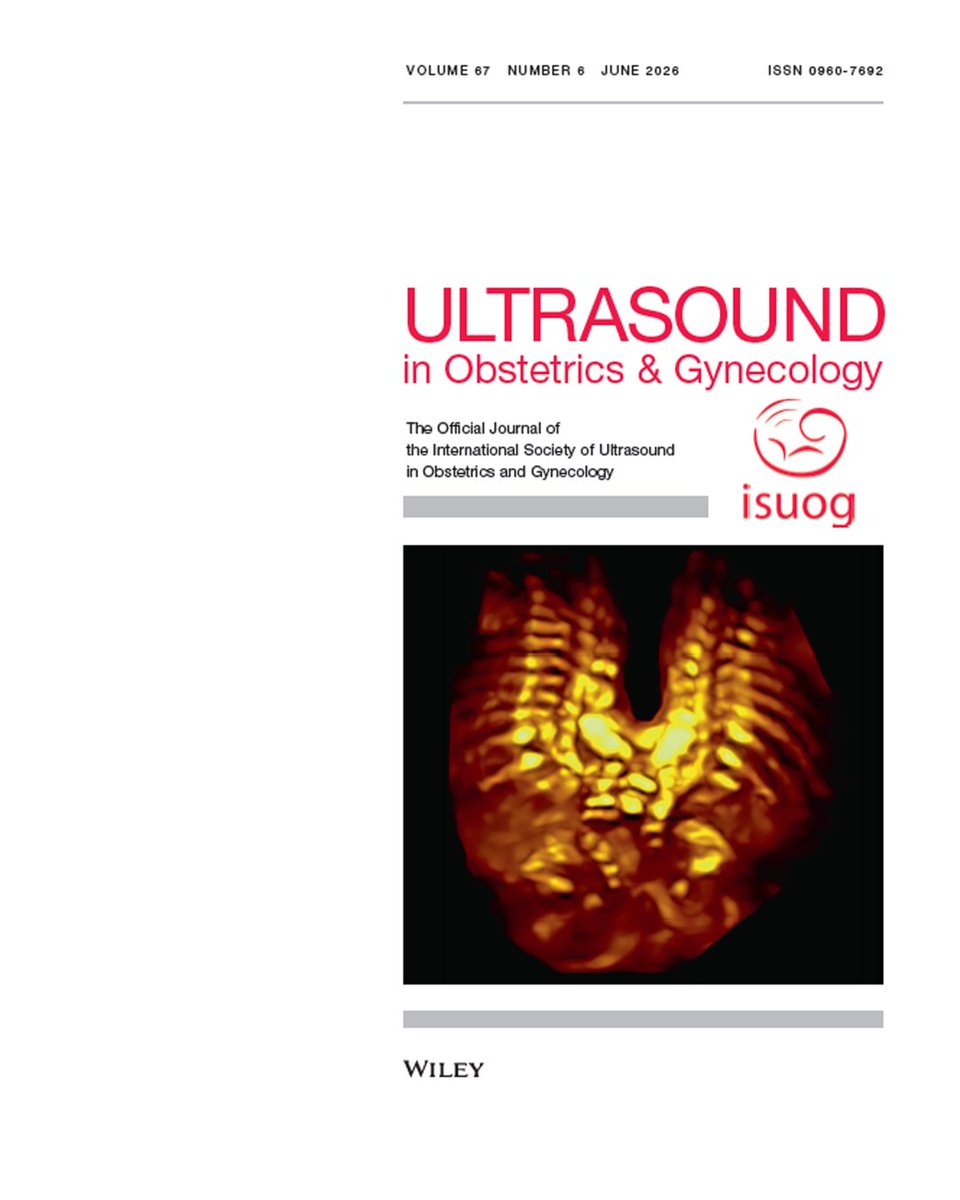
Don’t forget to check out the updated consensus opinion from the IOTA Group on the terms, definitions and measurements to describe the sonographic features of adnexal tumors! This important document is included in the May #UOGJournal and is #openaccess.
Download today! https://t.co/Qe6o1PC0sx
@WileyHealth
#LoveUltrasound #ISUOG2026
ISUOG's most recent Outreach trip to Luxor, Egypt, successfully advanced trainee competencies and strengthened the local educator model, with a scope to improve care for local women and their babies.
🗣️ New Ultrasound Educator and graduate of the program, Mohamed Fawzi Seifelnasr Gaballah, said:
“My participation in the ISUOG Outreach program was invaluable to me. In addition to meeting leading scientists like Dr Titia Cohen and Dr Divya Singh, it enriched my understanding of scientific concepts applicable to research projects within my university. Another significant benefit of the program was learning how to conduct ultrasound examinations for women in a systematic and organised manner, based on scientific evidence and the accumulated expertise of leading scientists, which undoubtedly benefits both the woman and the fetus."
Read the article in full on our website: https://t.co/S9b7c3tP5G
Thank you to our sponsor, @MindrayGlobal.
New #UOGJournal videoclip on the sonographic features of Meigs' syndrome, pseudo-Meigs' syndrome and ovarian cancer.
The Letter to the Editor by Moro et al., delineating the difficulties in differential diagnosis, can be accessed here: https://t.co/QOYZ4uHTuf
@WileyHealth
#LoveUltrasound #ISUOG2026
This week's #ISUOGEducation quiz question comes from A/Prof. Conrado Coutinho🤩 , who will be chairing our course 'Point of care ultrasound in obstetrics and gynecology: from ambulatory to emergency settings', taking place Sunday 7 June.
A 29-year-old G2P1 woman at 30 weeks presents to the emergency department with painful uterine contractions every 7–10 minutes for the last 90 minutes. She has no vaginal bleeding or loss of fluid, and the cardiotocography is reassuring. On speculum and digital examination, the cervix feels closed and of normal length, but she is very anxious about the possibility of preterm birth.
What should be your next step in management?
A. Start tocolysis and administer antenatal corticosteroids immediately
B. Reassure the patient and discharge her without further tests
C. Perform a bedside point-of-care transvaginal ultrasound to measure cervical length
D. Admit the patient for strict bed rest and observation
Comment your answer and come back next week to see if you were right ✨
❗Don't miss your chance to join A/Prof. Conrado Continho and Prof. Asma Khalil live at our upcoming course, Point of care ultrasound in obstetrics and gynecology: from ambulatory to emergency settings. Register here > https://t.co/GKf6PtLa3C
#LoveUltrasound #ISUOG2026 #PoCUS
🌏 On #WorldPreeclampsiaDay we have a very interesting #ISUOGEducation quiz question from Dr Nuruddin Mohammed...
A 37-year-old nulliparous woman presents to a rural health centre for her first antenatal visit at 13+1 weeks of gestation. The setting has limited resources and no ultrasound facility available. First-trimester assessment for prediction of preterm pre-eclampsia was performed by the midwife, obtaining demographic characteristics and simultaneous blood pressure measurements from both arms. The parameters were entered into the Fetal Medicine Foundation software, which calculated her risk for preterm pre-eclampsia as 1:50. The nearest facility for uterine artery Doppler assessment is located at a tertiary referral hospital approximately three hours away.
What is the next step in her management?
A. Classify the patient as being at high risk for preterm pre-eclampsia and initiate intensified antenatal surveillance.
B. Refer the patient to the tertiary referral centre for uterine artery Doppler assessment.
C. Initiate low-dose aspirin (150 mg) at night and continue until 36 weeks of gestation.
D. Reassure the patient and repeat pre-eclampsia risk assessment during the second trimester.
Comment your answer below and check back next week to see if you answered correct!
#preeclampsiaawareness #maternalhealth #pregnancycare #antenatalvisit #healthresources #medicalquiz #FetalMedicine #womenshealth
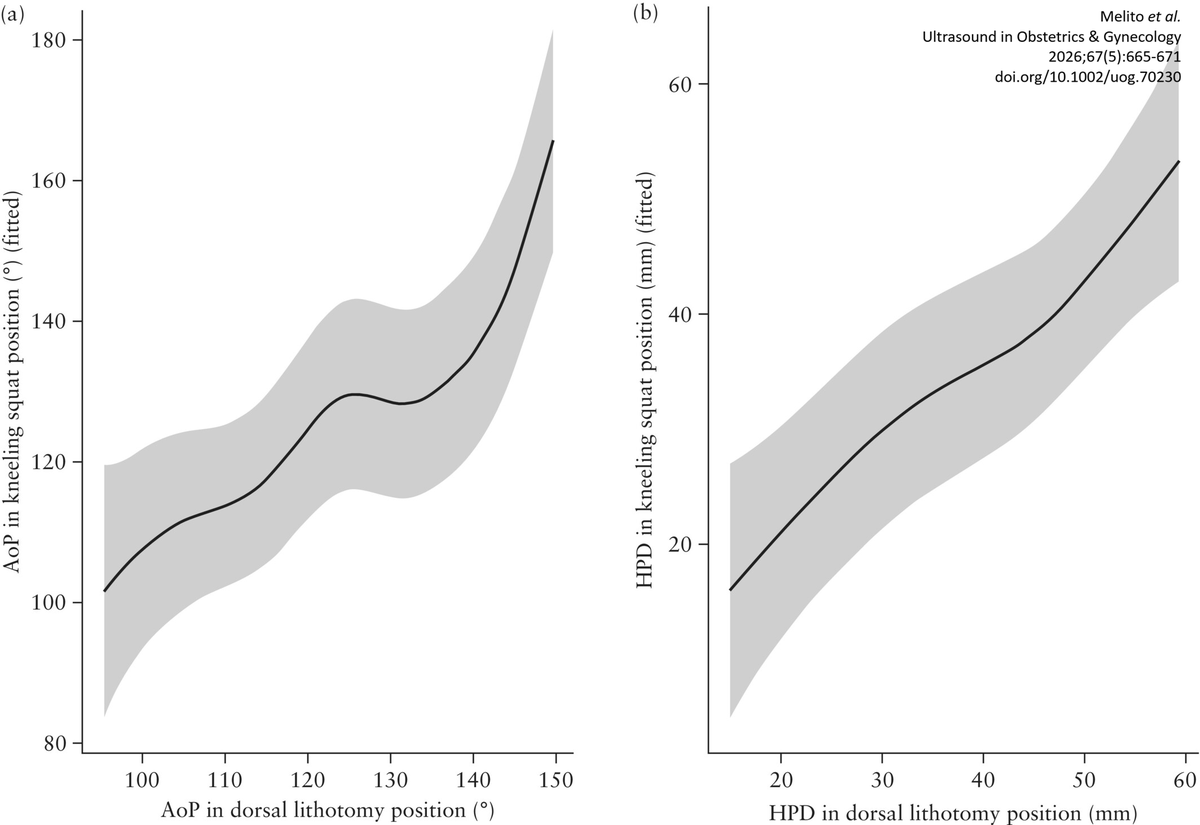
#UOGJournal: In their recent prospective study, Melito et al. report that during the latent phase of the second stage of labor, maternal mobilisation into upright positions, such as the kneeling squat position, is associated with more favourable sonographic indicators of fetal head station in the event of fetal occiput anterior position.
Read the #openaccess study here: https://t.co/May0sqOCVC
@WileyHealth
#LoveUltrasound #ISUOG2026
Ahead of the ISUOG course, Point of care ultrasound in obstetrics and gynecology: from ambulatory to emergency settings, course co-Chair, Prof. Asma Khalil has shared a lovely scan demonstration video. Take a look at the video and see what you can notice...
Course details:
📆 7 June 2026
📍 Online
💡 Want to learn how Asma performs these scans and how she is able to notice subtle anomalies? Attend the bonus workshop to gain practical skills that will advance your capabilities and help you to better serve your patients.
📆 12 June 2026
📍 Mindray office, Watford, UK
Find out more and register now: https://t.co/a39My6cTV6
#obstetrics #fetalmedicine #maternalhealth #womenshealth #loveultrasound #gynecology
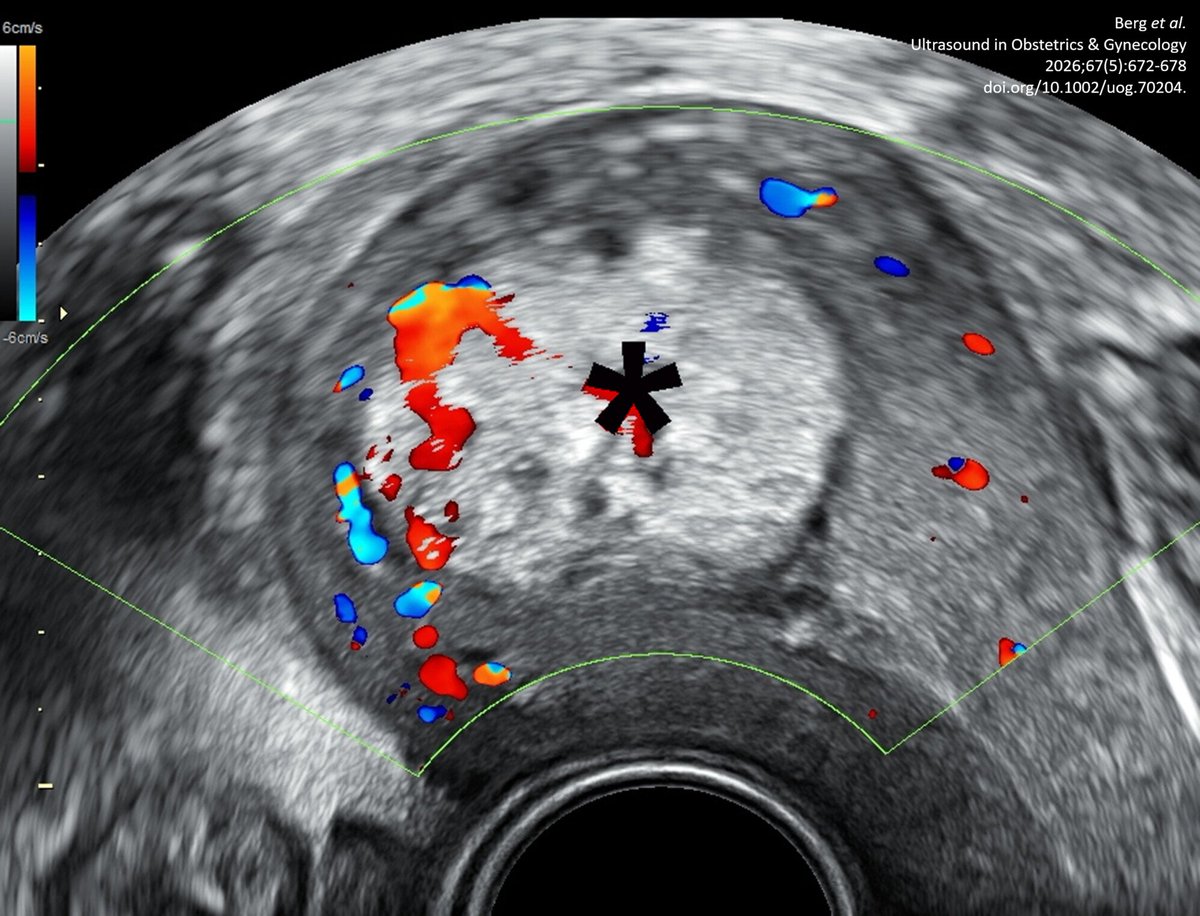
A recent #openaccess case–control study by Berg et al. identifies risk factors for partial placental retention after Cesarean delivery.
Read their conclusions in #UOGJournal today: https://t.co/gbiscRnEY2
@WileyHealth#LoveUltrasound#ISUOG2026
A new international validation study of McClenahan et al. supports the use of the comprehensive four-step IDEA consensus protocol in detecting deep endometriosis and justifies referral for specialist imaging in suspected cases.
Find it now in the #UOGJournal: https://t.co/bF7jCdRkS6
@WileyHealth
#LoveUltrasound #ISUOG2026
Fetal therapy and interventions is the third topic in spotlight for the ISUOG World Congress this September...
This topic will be covered across the following sessions:
⭐ Innovations & simulations
⭐ Frontiers in fetal intervention
⭐ Innovations in fetal intervention
⭐ Optimising fetal therapy: from early intervention to advanced surgical techniques and outcome prediction
⭐ Transforming fetal therapy: from artificial womb technologies to clinical trials in fetal surgery
Find out more and register for the Congress: https://t.co/0n2FANsJ1g
#isuog2026 #loveultrasound #ultrasound #fetal #fetaltherapy #medicalcongress #fetalintervention #obstetrics #medicalinnovations #medicalresearch #healthcare #pregnancycare
Hadi et al. describe and classify the morphological patterns of lateral ventricular border irregularities and discuss possible etiologies in their #openaccess study included in the May issue of the #UOGJournal.
Check it out today and view more of their images here: https://t.co/0UwZxqdV2L
@WileyHealth
#LoveUltrasound #ISUOG2026
The meta-analysis of Tan et al. in the May #UOGJournal finds that induction of labor, with oral misoprostol or vaginal dinoprostone, results in comparable rates of vaginal delivery and composite perinatal and maternal adverse outcomes.
Read the #openaccess article here: https://t.co/y3k0Koj7iY
@WileyHealth
#LoveUltrasound #ISUOG2026
New #UOGJournal video clip from the updated IOTA consensus statement on the terms, definitions and measurements to describe the sonographic features of adnexal tumors.
Don’t miss the Consensus Statement by Timmerman and collaborators, which can be found here: https://t.co/7fdYGx5UAm
@WileyHealth
#LoveUltrasound #ISUOG2026
The May issue of #UOGJournal features a few articles aligned with #PreeclampsiaAwarenessMonth. This includes the prospective study of Chinese women by Lin et al., which reports that compared with low-risk women who do not develop pre-eclampsia (PE), high-risk women with or without preterm or term PE exhibit distinct cardiac maladaptation profiles from early to late gestation.
These findings may offer insight into the different pathophysiological mechanisms underlying PE subtypes and could help inform risk stratification.
Read the #openaccess article here: https://t.co/OiEh0RFAhq
@WileyHealth
#LoveUltrasound #ISUOG2026