Welcome to the ITCR Training Network! We are working to scale and democratize access to informatics training across the cancer research community and beyond.
Welcome to the ITCR Training Network! We are working to scale and democratize access to informatics training across the cancer research community and beyond. Find out more at our website: https://t.co/JwLwo7hnRB
Applications are now open for the NIEHS-funded Data Science for Environmental Health (DaSEH) short course!
Help us study data science education🍎
💻 Online Portion: June 8-12, 15-18
🧑🏫 In-Person Codeathon: June 29 - July 1
Apply by March 15, 2026 at https://t.co/kfPfiUsMiW
Applications are now open for the NIEHS-funded Data Science for Environmental Health (DaSEH) short course!
Help us study data science education🍎
💻 Online Portion: June 8-12, 15-18
🧑🏫 In-Person Codeathon: June 29 - July 1
Apply by March 15, 2026 at https://t.co/kfPfiUsMiW
We appreciate your use of our free research and bioinformatics resources. If you’re interested in sharing your thoughts, you’re invited to take our survey: https://t.co/rq2d2efbb1
The ITCR Training Network (ITN) https://t.co/JwLwo7hVH9 develops training materials for informatics and research.
We have a short survey ~3-9 min about your experience & preferences for learning as a researcher.
Link: https://t.co/rq2d2efbb1
New webinar series!
We're launching a quarterly introduction to Xena for bulk sequencing data webinar series
📅 First webinar: June 5, 2025
🕙 10am–12pm PT
🔗 https://t.co/fHRlPKeZmb
More dates coming soon!
Great blog post describing the recent @itcrtraining cancer informatics workshop held at @MoffittNews This was a fantastic event with great attendance from the next generation of cancer data scientists! #NCIITCR
https://t.co/Fu8jrSDu1c
“Every Dot is a Person”: in this Cracking the Cancer Code podcast episode, we talk to people whose lived experiences with cancer are represented in data. Very special thanks to Christina Sisti,
Johanna Kenney, & Grace Waller for their time + vulnerability. https://t.co/J95gN93ea1
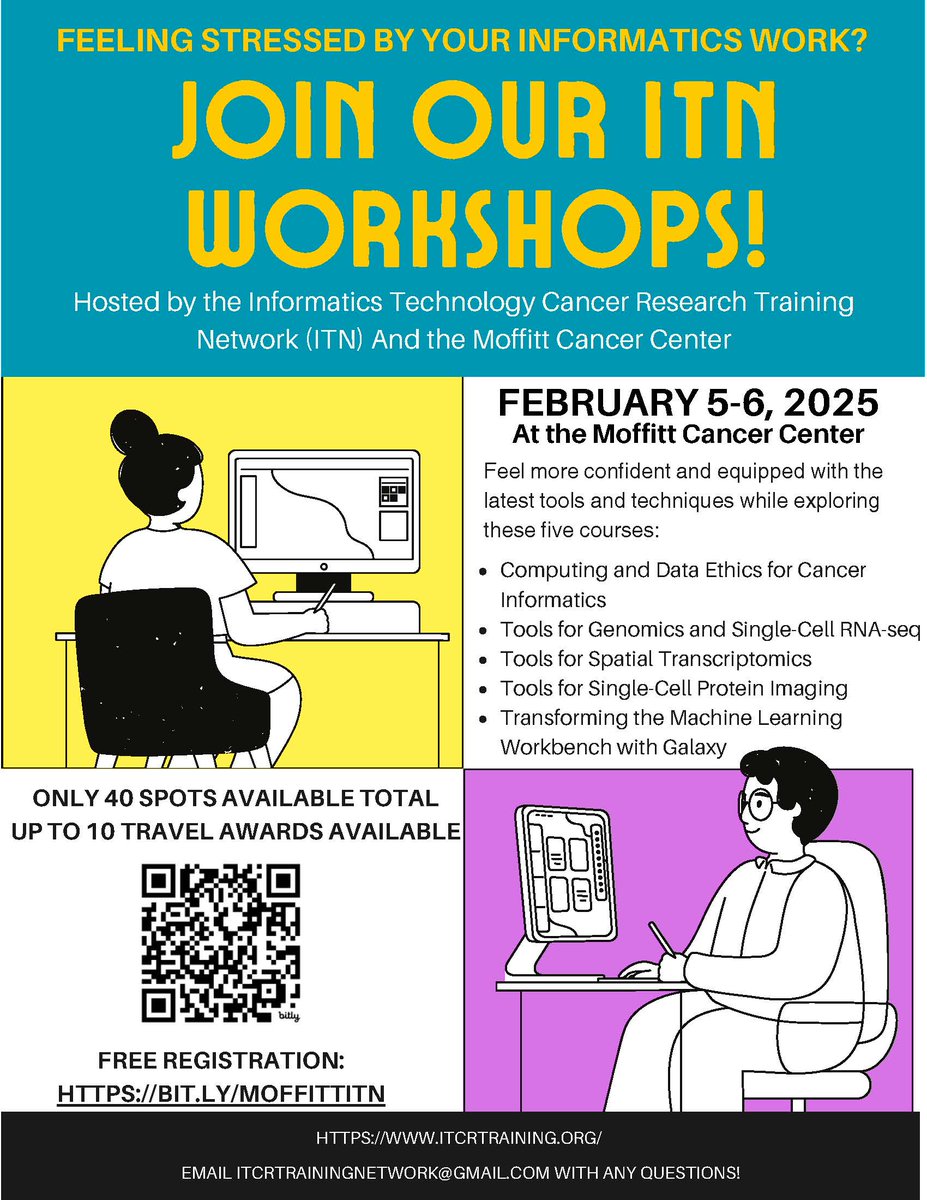
The ITCR training Network will be hosting a free bioinformatics workshop series Feb 5-6th. See the registration link (https://t.co/8R3dj8Nemy) and attached flier for more information. A limited number of travel scholarships are available.
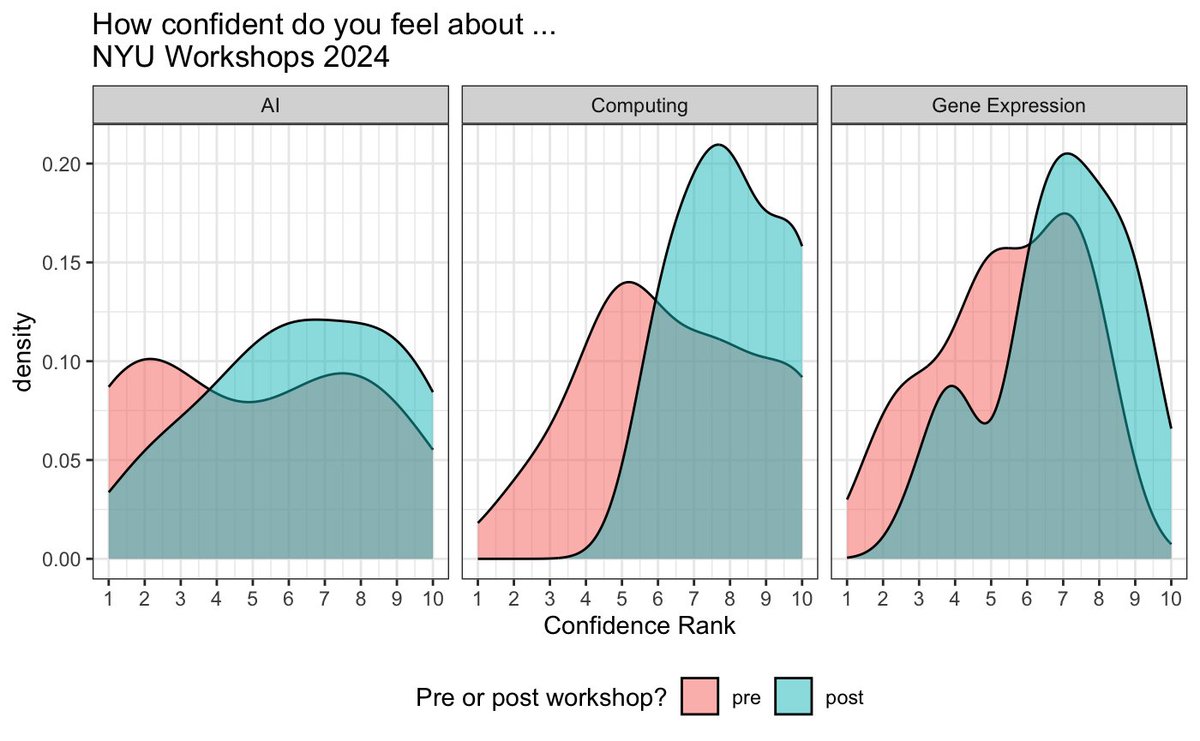
We enjoyed delivering workshops at NYU two weeks ago -- described on our blog (https://t.co/sMgvRxXqxV) -- by the end of workshops, participants reported increased confidence about understanding gene expression data, utilizing computing resources, and using AI within their work.
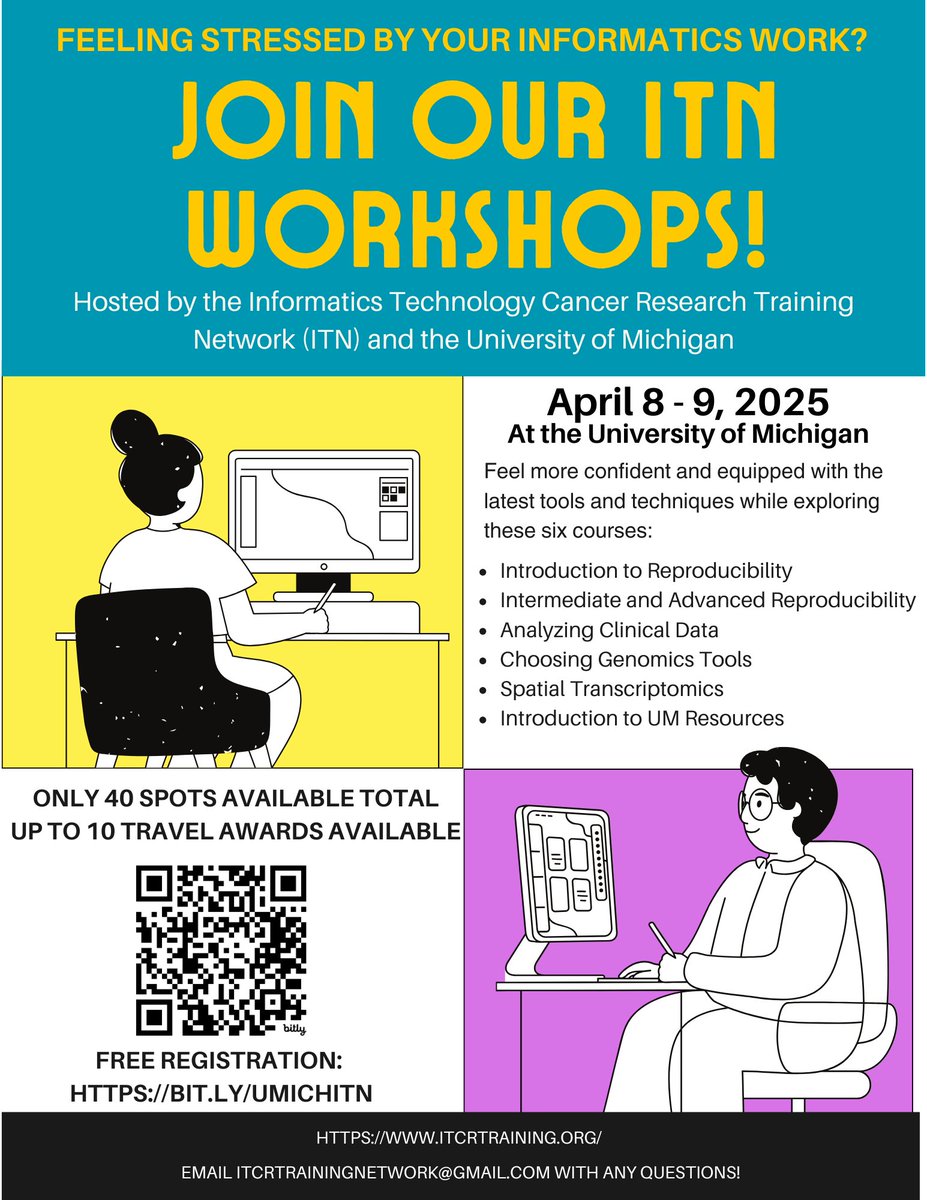
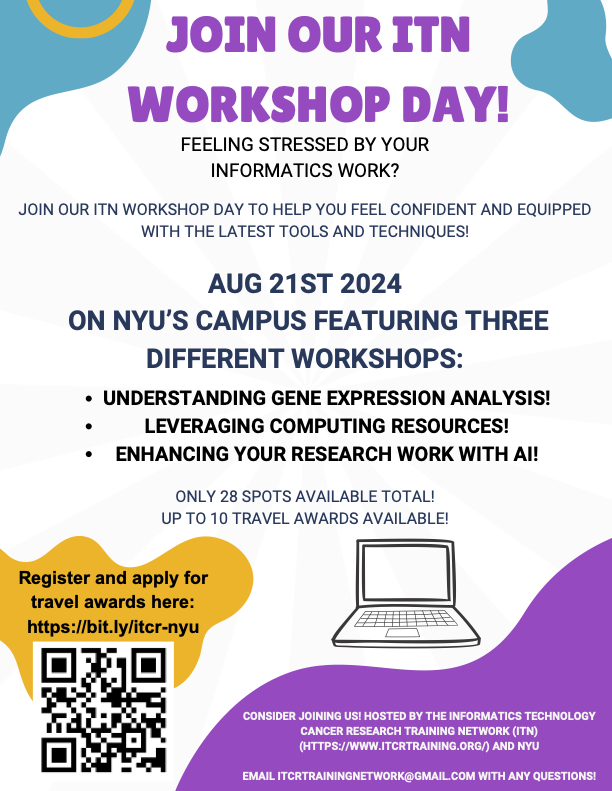
Biomedical researchers and students at NYU and surrounding institutions -- we're hosting 3 workshops on Aug 21 about understanding gene expression analysis, leveraging computing resources, and enhancing your research work using AI. Consider joining us!
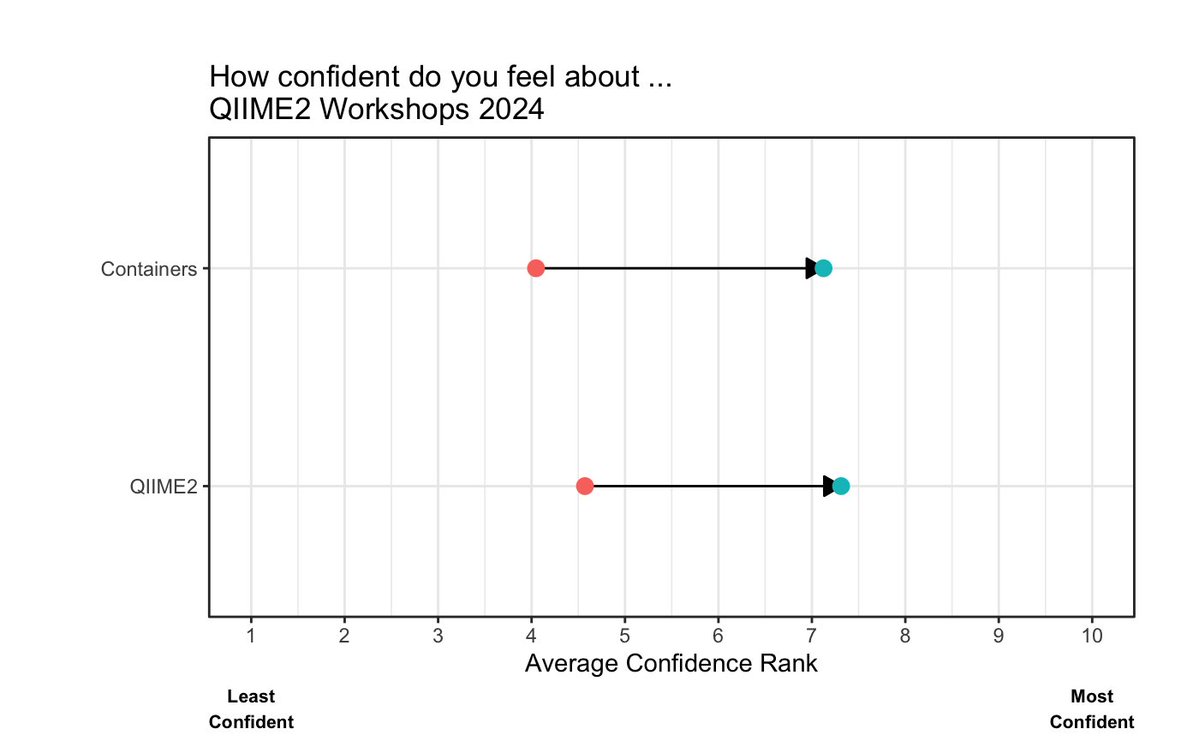
We enjoyed co-delivering workshops with @gregcaporaso and his group at NIH last week -- described on our blog (https://t.co/m1DEX0ylGs) -- with attendees reporting an increase in confidence for using both QIIME2 and Containers by the end of the workshop series
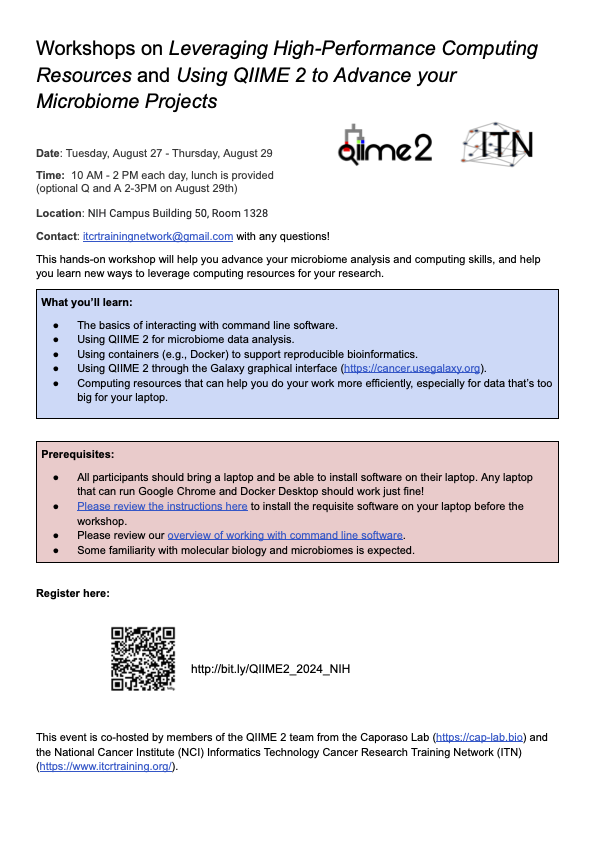
We're co-hosting a series of workshops on computational tools for microbiome research Aug 27-Aug 29 at the NIH Campus. Register here! https://t.co/7zapPU2IIo
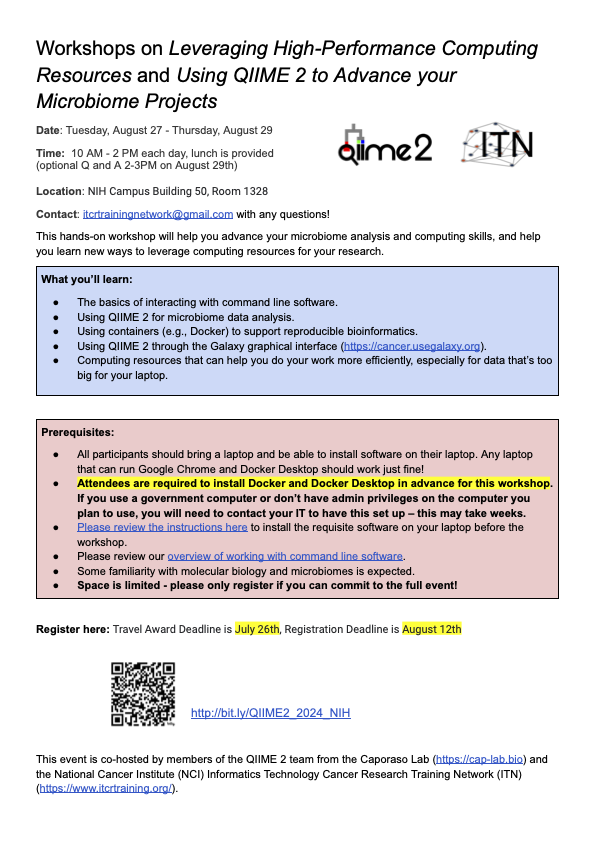
We're co-hosting a series of workshops on computational tools for microbiome research Aug 27-Aug 29 at the NIH Campus. Register here! https://t.co/7zapPU2IIo
Additionally, there will be a virtual workshop Sept 26 on Containers and GitHub for Lab Leadership. While open to all, this workshop is tailored to PIs and lab leadership. Also register here! https://t.co/1SPd8tkNjp
We're hosting workshops at the Annual ITCR Meeting in person in Indianapolis!
- 2 Trainee workshops (Sept 16): Reproducibility & GitHub + Docker & Containers
- A workshop for getting started with spatial transcriptomics data (Sept 22)
Register here! https://t.co/1SPd8tll8X
The AI in Research Work workshop will aim to answer questions like
- How can I use AI efficiently and responsibly for my research work?
- What should AI NOT be used for in cancer informatics research?
- Which large language models are best suited for certain research tasks?
The Computing for Cancer Informatics workshop will aim to answer questions like
- What is high powered computing/clusters?
- How do I get high powered computing to work for me?