MUMBAI MUST LEARN TO HOLD ITS RAIN - Mumbai pumps its monsoon rain out to sea, then runs short of water. Big drains aren't enough: buildings and neighbourhoods must slow, hold and reuse rainwater. Madhav Pai and Lubaina Rangwala write.
https://t.co/Jp3nI88wHt
WOMEN WANT JOBS. ARE THE JOBS BUILT FOR THEM? Women want formal work. India's 70% target for 2047 will be met only when entry-level jobs, and the transport, housing and childcare around them, let women take them and stay. Gayathri Vasudevan writes.
https://t.co/0OpYWW58FO
ANTIBIOTIC RESISTANCE THREATENS HEALTH AND LONGEVITY - Nearly a million deaths a year are linked to antibiotic resistance. Slow, costly diagnostics are a big reason. India needs its own diagnostic innovation and stewardship to keep these drugs working.https://t.co/q9dRh4udoR
BEYOND SIX PERCENT: FOLLOWING SCHOOL MONEY TO THE CHILD - A study of five states' school budgets over seven years finds money left unspent, rupees counted differently from state to state, and RTE payments far below what states spend on their own pupils. https://t.co/tONKlPM7Mv
NOT SOMEONE ELSE'S MONEY: In the November edition of book reviews and interviews, a conversation with @pranaykotas, co-author of Fiscal Fables along with Sarthan Pradhan, about why every rupee that the government spends is worth our attention. https://t.co/hhnJUxveHq
"THE STOMACH GIVES ME NO CHOICE" - Street vendors who report symptoms of heat stress don't see themselves at risk. Without shade, water, toilets or income security, vendors are left choosing between their health and their next meal. https://t.co/CU2YWHR8YD
THE CLOCK STARTS FROM THE MOMENT OF DETENTION - Supreme Court has ruled that the 24-hour deadline to bring an arrested person before a magistrate runs from the moment they are detained, not from the time the arresting agency chooses to record the arrest. https://t.co/FNYoOKesFT
HOW INDIAN MANUFACTURING CAN FIND ITS MOJO (AGAIN) - Manufacturing's share of the economy keeps falling. Incentive structures favouring services in taxation, regulations, investments and human capital allocation, are a big part of the reason. https://t.co/g6I8Bbl4OR
CHALLENGES OF INFORMALITY IN DELHI'S MASTER PLAN - The new Master Plan recognises informal housing and livelihoods more than any plan before it. But that recognition on paper must be matched by enforceable commitments. https://t.co/L1BodtCZHT
FROM THE ARCHIVES
India's New Growth Recipe - Large Indian firms are yet to become global champions. Given the global headwinds, India should focus on improving the competitiveness of these companies so they can tap into large external markets.
https://t.co/NRXdUgfHVV
REFORMING THE EASY PARTS, DUCKING THE HARD ONES: The Tribunals Reforms Act fixes some of what the Supreme Court has long flagged, but leaves the rest untouched. What the new law changes, what it doesn't, and why one unresolved word in it still matters. https://t.co/e1hdBwLBzN
THE COST OF DATA CENTRES - Some reports are clearly exaggerated, but we still need to be mindful of the harms that can result. Rahul Matthan argues that India’s draft policy rewards efficiency but says nothing about mitigating these concerns.
https://t.co/A47j80p1WJ
CONSTITUTIONAL ISSUES MUST REMAIN ITS CORE PRIORITY, SAYS SUPREME COURT - Two judges agree that references to Constitution Benches take far too long. They have asked the Chief Justice to explore a permanent five-judge bench for constitutional questions.
https://t.co/nFrDCJ5Kbs
INDIAN MEGACITIES NEED LOCALLY ANCHORED DATA INSTITUTIONS - Fast-growing metropolitan regions need independent, locally anchored, data-driven institutions embedded with local governments, built to outlast electoral cycles and guide long-term development. https://t.co/rn9HrDeBFr.
THE SILENCT SYNDICATE IN HEALTHCARE - In his new book, Ameer Shahul argues that big finance has quietly captured Indian healthcare, serving markets rather than patients. How did that happen, and what does it means for a system we all eventually depend on? https://t.co/i6ju0TgyGi
FLOODS IN ASSAM PUT ADOLESCENT GIRLS AT GREATER RISK: A new study finds that recurring floods leave lasting marks on adolescent girls, from lost schooling and healthcare to menstrual hygiene gaps that current disaster response rarely addresses.https://t.co/Q7X5OyFJnS
AS CYBERCRIMES RISE, TRUST AND CONFIDENCE IN RESPONSE IS LOW - A nationwide survey finds cybercrime now touches a growing share of households, yet most victims never report it, and those who do face a process with little chance of recovering their money.
https://t.co/KX4HR7cwDI
IS INDIAN STEEL COMPETITIVE, OR JUST PROTECTED? - India became the world's second-largest steel producer while posting profits well above the rest of Indian manufacturing. How much of that rests on cheap ore and tariff walls that could easily come down? https://t.co/WGOTUVpJMX
GROUNWATER CRISIS: CHANGING TRACK OR SCALING? - In Karnataka's hard-rock terrain, decades of drilling ever-deeper borewells have meant losing sight of the shallow aquifers and local knowledge that sustained this landscape. Small towns might cope better.
https://t.co/6NB9dInA2M
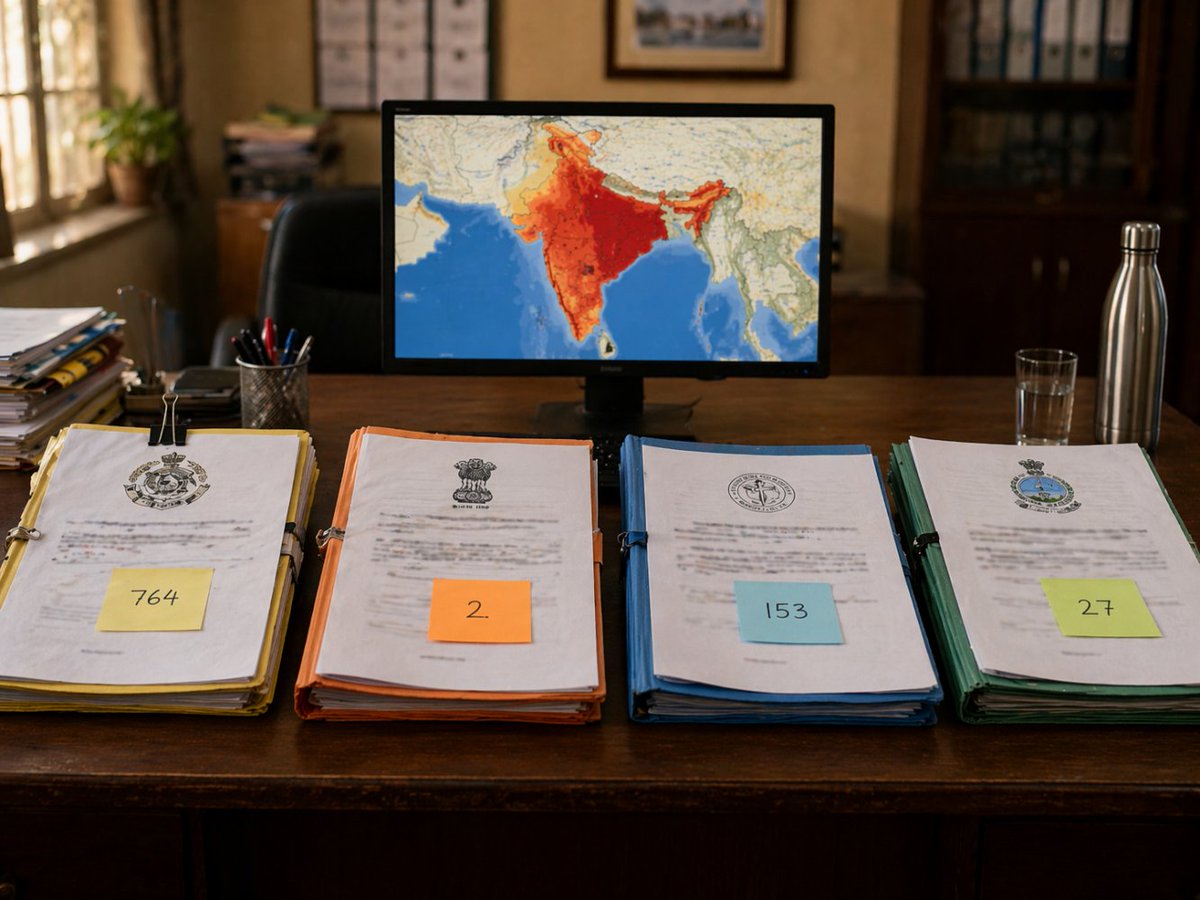
HOW MANY PEOPLE DIE OF HEAT? DEPENDS ON WHO YOU ASK - India has at least four official counts of heat-related deaths, and they routinely disagree by a factor of two or more. Rakesh Dubbudu traces why the numbers diverge so sharply. https://t.co/3W7obHpaiT