Creator of Opportunity Economics: empowering you to rebuild capitalism for opportunity and a stronger democratic, pluralistic constitutional republic +Tech+AI
Use federal resources to help working people, small businesses, and communities build wealth. Don't wait for capitalism to collapse or accept rigged markets: organize the economy around creating opportunities for everyone. https://t.co/ClNJEEjtOI
@jonbrooks A literal gift. Bank accounts stuffed with generational wealth accelerating the wealth divide. Not the sarcastic debt that has to be repaid. We exist in a soft money economy.
A 1913 dollar is worth three cents today. So what?
Nobody holds a dollar for 113 years. Nobody in 1913 was paid in 2026 wages or bought 2026 goods. A dollar isn't a gold coin you bury in the yard; it's a measurement system for coordinating who does what work and who gets what stuff. Asking what a 1913 dollar buys today is like complaining that an inch from 1913 doesn't cover as much of a modern highway.
The number that matters is what people can buy with what they earn, and what they can do with what they save. Wages rose over that century. Savings go into bank accounts, bonds, homes, and businesses that pay a return. A steady, modest decline in cash purchasing power pushes money toward use and investment instead of hoarding.
The chart undercuts its own story. The dollar lost roughly half its purchasing power in the first decade, while still tied to gold. Its biggest "gain" came during the Great Depression, when prices collapsed along with jobs, farms, and banks. Hard money didn't protect ordinary people. It gave them deflation and bread lines.
Money mechanics feel backwards for a reason. After 1971, when Nixon ended gold convertibility, the US moved to a soft money economy, and the household intuitions most of us carry stopped applying to the federal government.
A household earns, then spends. The federal government spends first, creating dollars when it pays for things, and taxes afterward. Taxes don't fund federal spending; they manage inflation and create demand for the dollar.
A household in debt is poorer. When the federal government runs a deficit, the private and foreign sectors gain exactly that amount in financial assets. The "national debt" is savings sitting in the safest asset on earth.
A household that pays off its debt is better off. If the government retired every Treasury bond, it would pull that safe asset out of the financial system and push savers into riskier bets.
A household's debt grows because it overspends. The national debt grows because Congress underspends: it budgets for interest on maturing bonds and never for principal, so the principal rolls over. Congress could pay it off anytime. It doesn't have to.
The real constraints are real resources and inflation, meaning whether we have the workers, materials, and capacity to back what we spend. Running out of dollars isn't one of them.
That's what a three-cent-dollar cartoon hides. The real questions are whether wages keep up, whether we're building productive capacity, and who the public's money-creation tool gets pointed at. For fifty years, the answer to that last one has been asset holders.
https://t.co/J7eQH81bzQ
The credit card metaphor is hard money thinking, and it doesn't fit a soft money economy.
A cardholder borrows dollars someone else issues. Since Nixon ended gold convertibility in 1971, the US government issues the dollar, and its bonds are payable in dollars only it can create. Before 1971, foreign governments could drain our gold and we could actually run out. Now we can't. Nobody has to "allow" the government to pay.
The rollover is real, and it comes from underspending. When bonds mature, Congress budgets for the interest and never for the principal, so the principal rolls into new bonds. That's a choice. Congress could appropriate the principal and pay off the debt anytime.
We don't have to, and we shouldn't. In a soft money economy, Treasury bonds are investor products the government offers, not a household's unpaid bills. They absorb excess dollars, help manage interest rates, and give banks, pension funds, and savers the safest asset in the world. Every dollar of "national debt" is a dollar of private-sector wealth. Paying it all off would pull that safe asset out of the financial system.
The real risks are inflation, if spending outruns what the economy can produce, and currency instability, if the world loses confidence in how we manage it. Running out of money isn't on the list. That's why the demographic point cuts the other way: a shrinking workforce is a real-resource problem, and the answer is investing in capacity, which we keep skipping while we panic about debt.
https://t.co/2tllZxLlEl
You don't need a grand plan to explain this. You just need to ask who gets paid.
When Treasury yields rise, the federal government pays more interest to bondholders. Those bonds are held mostly by banks, funds, and the wealthiest households. Higher rates mean a bigger stream of risk-free, government-backed income flowing to people who already own the most, and much of it ends up in stocks and other assets. The bottom half of the country gets the other side of the trade: pricier mortgages, car loans, and credit card balances.
Then comes the second payoff. A rising interest bill becomes the "debt crisis" story, and that story gets used to cut Social Security, Medicare, and anything else built for ordinary people. The government that can always pay its bondholders suddenly "can't afford" you.
That's how socialism for the wealthy works. Public money flows up freely under names like "monetary policy" or "emergency response," while the household-budget myth gets applied only when working people ask for something.
As for "resetting the monetary order," watch that one closely. A move back toward hard money doesn't free anyone. It hands control of money to whoever holds the commodity, and that has always been a small, concentrated class. The dollar is a public tool. The question is who it's pointed at, and for fifty years the answer has been the same: aspiring authoritarians and oligarchs, and now we’re here.
https://t.co/KUwmLz6rCM
I see a problem too, just a different one.
This post treats the federal government like a household that has to collect $3.1 trillion in income taxes before it can spend anything, then watch interest eat more than half of it. That logic fit the US before 1971, when foreign governments could redeem dollars for gold and we could actually run out. Since Nixon ended convertibility, the federal government issues the dollar, and its bonds are payable in dollars only it can create. Tax receipts don't sit in a pot that interest drains first. Congress appropriates, Treasury pays.
The debt keeps growing because Congress budgets for the interest on maturing bonds and never for the principal, so the principal rolls into new bonds. That's a choice. Congress could appropriate the principal and retire every bond whenever it wanted.
It shouldn't. That $40 trillion is somebody's savings: pension funds, banks, retirees, foreign central banks. Treasuries are the safest asset in the world and the collateral the credit system runs on. Every dollar of "national debt" is a dollar of private-sector wealth, and the interest is income paid to those savers.
The real limits are inflation and real resources: workers, materials, productive capacity. Those deserve a serious argument. Whether the issuer of the dollar can find dollars doesn't.
The crisis is that we keep making 2026 decisions with gold-standard reasoning, and skipping the infrastructure, education, and capacity that would grow the economy.
https://t.co/0sYw3jowVG
It's a little ironic to see a conservative asking for an FDA for polling. If a Democrat proposed a federal agency to regulate political speech about public opinion, the same crowd would call it censorship and demand it be shut down.
This post follows a familiar pattern: everything is rigged, nothing can be trusted, and no one offers a way to make it better. That's not reform. It's giving up and asking everyone else to do the same.
There are ways to tell good polls from bad ones, and they don't take a new agency.
Check whether the pollster belongs to the AAPOR Transparency Initiative, which requires members to disclose who sponsored the poll, how people were sampled, the question wording, and the margin of error. Look for the full methodology, not just the headline number. Pew Research Center publishes all of this with every survey. Check pollster ratings that grade firms on their track record. Look at averages across many polls rather than one outlier. And notice who paid for it. An internal campaign poll is marketing, not research.
Do that homework and the "pure fiction" polls are easy to spot.
Telling people nothing can be believed has become a go-to tactic of the Trump era. It doesn't make anyone smarter. It makes them easier to ignore. When ordinary people stop trusting any measure of what the public thinks, their collective voice gets weaker, and the only people who benefit are the ones with the money and power to act without it.
That's who this narrative serves, whether he means it to or not.
Yes, and I'd go a different direction than a ban.
Bans get gamed. Spouses trade, blind trusts see plenty, and crypto and private deals slip through. Meanwhile the real problem stays hidden: officials act on information the rest of us can't see.
So flip it. Make their trades a public good.
Every trade by an official or their family gets disclosed immediately, not within 45 days as the STOCK Act allows now.
Require a waiting period between disclosure and execution, so the public can act on the same information before they do. Publish it all as open market data anyone can use.
People already build funds that track congressional trades. Make that easy, fast, and complete. If a senator sees something coming, the rest of us see it too.
That turns insider advantage into public information. It's the same principle that should run all of government: transparent, accountable, and answerable to the people. Hiding the conflict doesn't fix it. Exposing it does.
I'd caution against using "billionaire" as the test. Anyone, rich or not, can back billionaires, wave the flag, or reach for authoritarian power. Wealth isn't the pattern to watch. Power is.
Being MAGA has meant being an enthusiastic fan of tearing down the institutions that protect us: cheering as agencies were gutted, officials fired for reporting bad numbers, and power pulled into one man's hands- checks and balances diminished.
That's the perspective that has to change.
So don't waste energy rallying against billionaires. They'll never go away, and they'll never stop trying to dominate the rest of us. Fight instead for what keeps them in check: strong institutions, room for many voices, power shared across states and communities, and government that's transparent and answers to the people. Vote for whoever stands for that, and hold them to it.
That's the real reason your gas costs $4.89. The war with Iran sent oil soaring. Diesel just passed $6, which raises the price of everything trucks deliver (AAA). Meanwhile Chevron posted its biggest quarterly profit ever (Reuters). And when asked if Americans' finances were pushing him toward a deal, Trump said: "Not even a little bit."
That's what unaccountable power looks like. One man starts a war, the costs land on Main Street, and the profits land with people who already own the assets. Nothing checks it, because the checks were what got torn down.
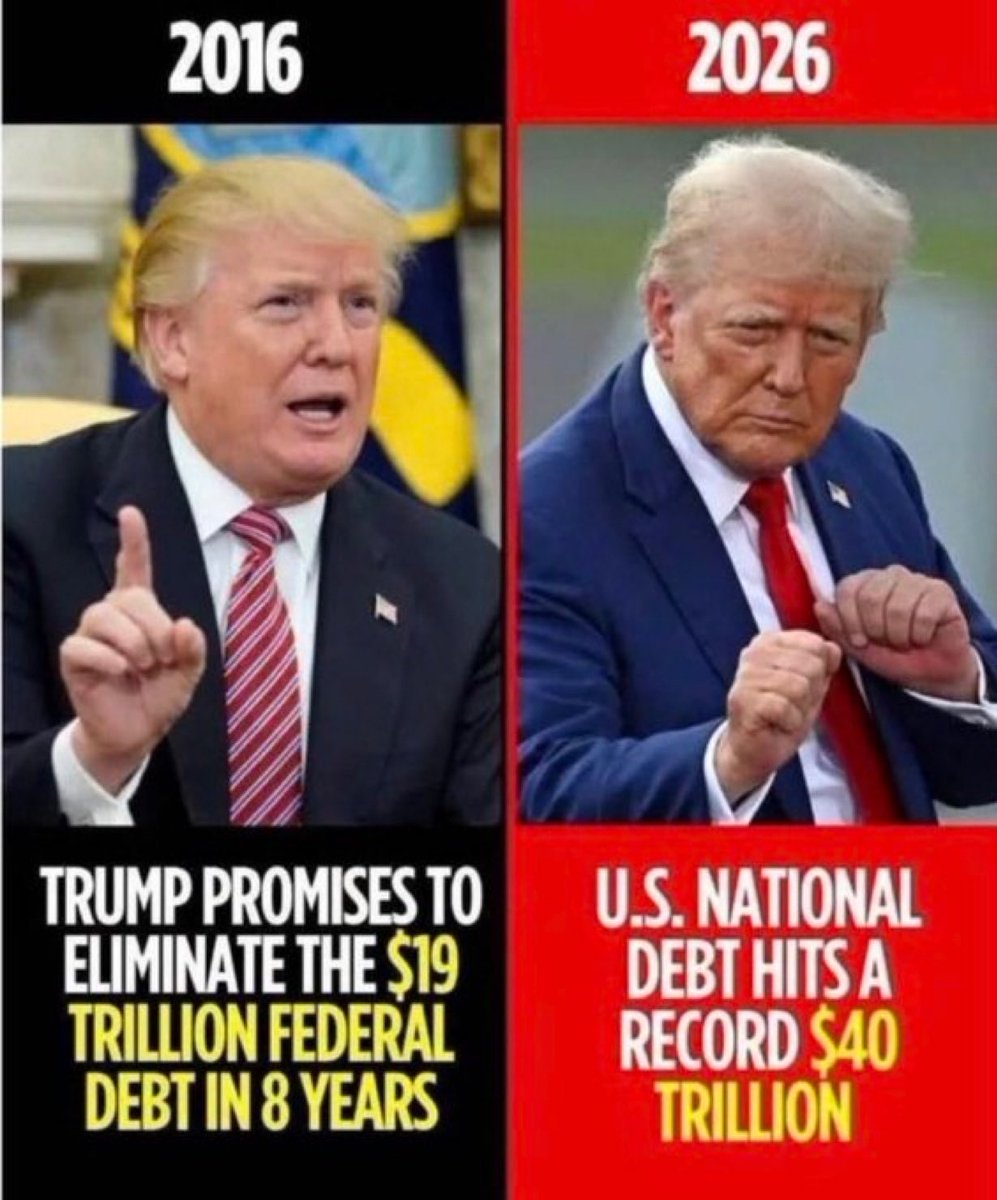
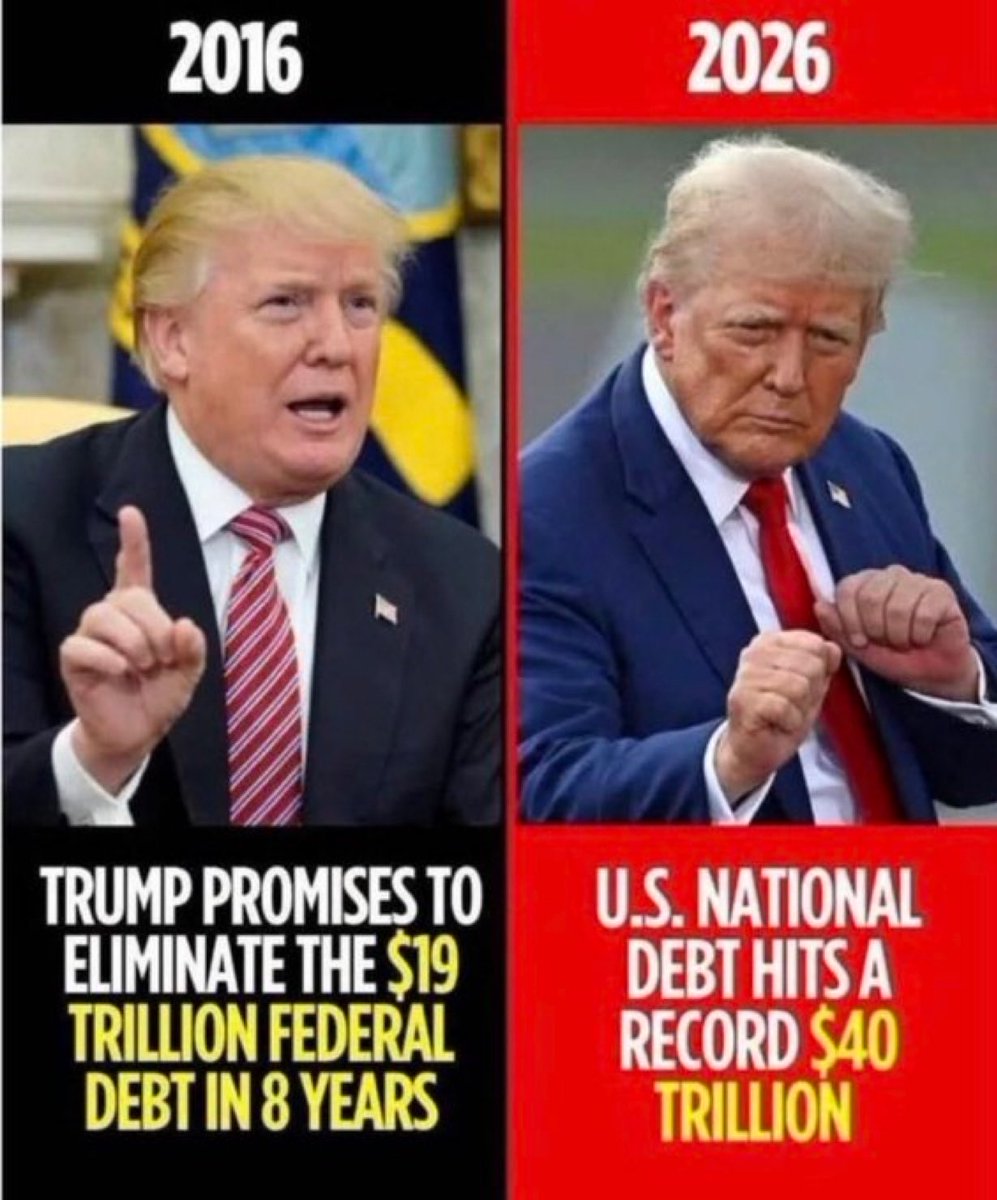
He promised to erase the debt. It passed $40 trillion. The dollars got created; they just didn't go to you.
The question now isn't who's rich. It's who answers and is accountable to you.
The top 10% of households saw income rise 1.7% to about $261,300, while the bottom 10% slipped to around $20,000 (Census via Nexstar). The median rose; the floor fell.
It doesn't count asset gains. The Census figure excludes capital gains from stocks, and the S&P 500 rose 16.39% in 2025, its third straight year of double-digit gains (CNN). Where the biggest money was made isn't in this number at all.
It's last year's number. It doesn't include the Medicaid and food assistance cuts in the One Big Beautiful Bill (CNN), or this year's gas and oil spike from the Iran war (CNN). Diesel just passed $6 (AAA).
And it isn't all paychecks. Household income includes Social Security, pensions, and unemployment benefits. Full-time men saw no boost in earnings at all (Census via CNN).
Now look at the graphic. He promised to eliminate the debt; it passed $40 trillion. The government created trillions of new dollars. The question is where they went.
The top gained, the bottom lost ground, stocks posted another double-digit year, and the cuts to the people at the bottom haven't even shown up in the data yet.
A record median doesn't mean wage earners are winning. It means the averages are hiding who’s losing. The winners are the wealthy, oligarchs and authoritarians.
One man? Backed by oligarchs and foreign powers.
He governs as if he alone holds power: executive orders posing as legislation, cabinet posts handed to media personalities with no expertise, and a Supreme Court that granted him broad immunity for official acts.
"A Congress that won't move"? His party controls both chambers. They haven't blocked him. They've stepped aside.
Meanwhile he ends programs, fires the civil servants who run them, wrecks our relationships abroad, and uses the bully pulpit to demonize Americans who oppose him.
He's polluting the information landscape too. His regulators handed CBS to the Ellisons, Trump-allied billionaires, then approved their bid for Warner Bros. Discovery without requiring a single concession. That puts CNN and CBS News under one owner. Trump has said he wanted CNN in the Ellisons' hands. At the same time, he and Congress cut funding for public broadcasting, starving the local stations that are the only newsroom left in many communities.
All while enriching himself and his billionaire backers and lying about it.
He isn't fighting the swamp. He is the swamp.
You're not wrong. Trump has promised a health care plan for a decade:
Oct. 2017: Tweets that great health care will come soon after the tax cuts.
June 2019: Tells ABC he already has "the concept of the plan" and will announce it in two months or less.
Late June 2019: Moves the goalposts. The plan will come after the 2020 election, if Republicans win the House and keep the Senate and White House.
July 19, 2020: Tells Fox News Sunday he'll sign a "full and complete health care plan" within two weeks.
Aug. 2020: Two weeks pass. No plan. He promises an executive order on preexisting conditions, again in two weeks. It never comes.
End of Aug. 2020: His next deadline passes. Still no plan.
Sept. 2020: His press secretary says the plan is coming within two weeks.
Oct. 2020: Trump walks out of a 60 Minutes interview. His press secretary hands Lesley Stahl a giant binder and says it's his health care plan. Inside: executive orders and laws already passed. No plan.
Sept. 2024: Asked on the debate stage whether he has a plan, he says he has "concepts of a plan."
Jan. 2026: The White House finally releases the "Great Health Care Plan." It's a brief framework. A White House official calls it a "broad direction" for Congress, not a specific path. It doesn't replace the ACA.
Ten years. Countless deadlines. One heavy binder. One fact sheet.
Sources: KFF Health News, Washington Post, CNN, CBS 60 Minutes, ABC News, USA Today.
This is the result of 50 years of neoliberal economic policy, but it's also exactly on strategy for Trump: feed the asset holders, starve the wage earners. Inflate existing asset prices, then force wage earners to sell what they own through austerity-induced financial hardship.
He said it out loud. At a Cabinet meeting on January 29: "I don't want to drive housing prices down. I want to drive housing prices up for people that own their homes." (AP)
And who does he think should be priced out? "We're not gonna destroy the value of their homes so that somebody that didn't work very hard can buy a home." (HuffPost)
His answer for buyers isn't cheaper homes. It's lower interest rates from his Fed pick (USA Today), which lets people borrow more and pushes prices even higher.
Affordability for everyone means building, not bidding. Use federal dollars to finance construction at scale, including public and social housing that stays affordable permanently. Tie federal funds to zoning reform so towns allow more homes, duplexes, and apartments. Stop private equity and big investors from buying up starter homes. And pair any help for first-time buyers with new supply, so the help goes to families instead of into higher prices.
When supply grows, prices stabilize, and homeowners still build equity over time. The only people who lose are the ones counting on scarcity.
Record-unaffordable homes aren't a failure of Trump's housing policy. They are his housing policy.
Debt totals miss the point. The federal government issues the dollar, so every president's deficits added dollars to the economy. The question that matters is who got them and what they did with them.
Obama's deficits came mostly from the 2008 collapse. The Recovery Act went to unemployment benefits, infrastructure, and aid to states to keep teachers and first responders on the job. The ACA expanded Medicaid and subsidized health coverage.
Biden's pandemic dollars went to relief checks, unemployment benefits, and the expanded Child Tax Credit, which pushed child poverty to a record low in 2021 (Census). That's money created for people who spend it on food, rent, and bills.
Trump's dollars go somewhere else. His 2017 tax law cut the corporate rate from 35% to 21%, and companies poured the windfall into stock buybacks. The One Big Beautiful Bill extends and expands those cuts, weighted toward the top, and pays for part of it by cutting Medicaid and food assistance. The CBO found the poorest households come out behind and the richest come out ahead (CBO).
When new dollars land with people who already own assets, they don't get spent on groceries. They buy stocks and property and push those prices up. The top 10% own roughly 90% of stocks (Federal Reserve). Add Trump's constant pressure on the Fed for lower rates, which inflates asset values further.
Every president created dollars. Obama and Biden aimed them at people whose incomes collapsed. Trump aims them at people who already own the assets.
That's not an accident. It's the Trump agenda: enrich himself and his supporters, and in exchange, hollow out the institutions that serve the public. Gut the agencies. Fire the officials who report inconvenient numbers. Put government further out of reach of ordinary people. Cut Americans off from the rest of the world.
Concentrated wealth and weakened institutions go together. That's how you set the stage for authoritarianism.
https://t.co/d2Jm89HqeO