confident in my skills than ever, and I'm excited to start sharing more of my work.
The design below is one project where I intentionally applied many of the lessons I learned.
Case studies are coming soon. 🚀
It's been over a month since I last posted.
The break wasn't planned, but it was exactly what I needed.
This year, I joined the HNG Internship, and one lesson completely changed how I think about design:
Knowing design principles isn't the same as applying them.
I could
I work with. I knew I needed to slow down before burnout caught up with me.
So I stepped back.
Over the past month, I've been learning, unlearning, and rebuilding my design foundation. I wanted to become a better designer, not just a busier one.
Today, I feel more
I find it really weird that all my life in Church i was told that when you pray you also take actions
If you pray to pass you also have to read
If you pray to get rich you also have to work
But somehow we are told to pray for Nigeria and not hold our leaders accountable
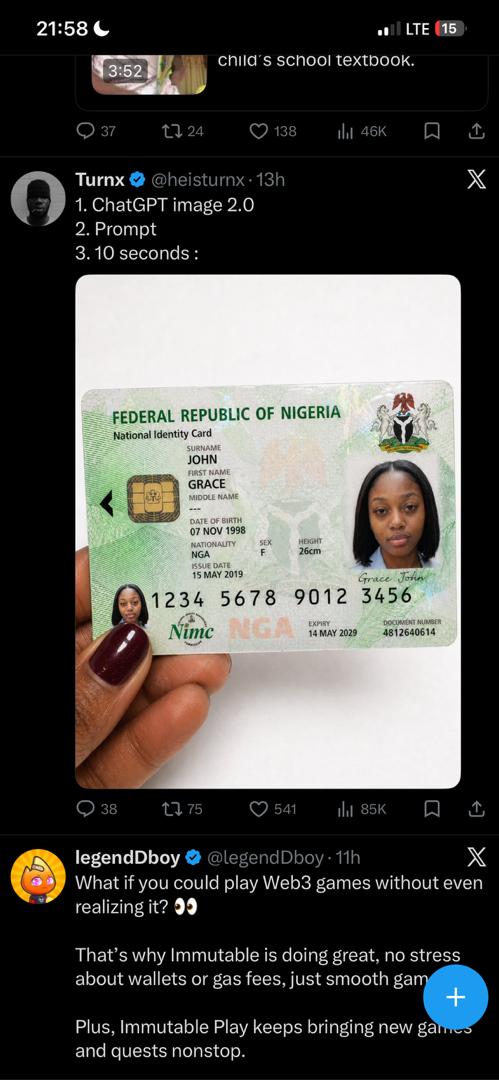
@heisturnx you must take down all the posts. How can you build an AI influencer around a real person that didn’t give you consent in the first place? You think blocking us will solve this issue?
@nimc_ng@PoliceNG
This person is teaching people how to generate fake IDs with a real person’s name and image. I have politely reached out to him to refrain from doing so and take down the post but he has refused and even insulted me.
This is not how AI is supposed to be used.
@nimc_ng@PoliceNG@GreatIfe_SU
Last night, my neighbour sent me this image of @heisturnx post, because he thought I was the one in the AI made NIN card. I could have overlooked it if it wasn't my name and surname the poster has been using.
Officially a Product Design diploma holder 🎉
Grateful for the 40% scholarship from @hackSultan, amazing tutors, and the @AltSchoolAfrica community.
This journey shaped me and I’m just getting started.
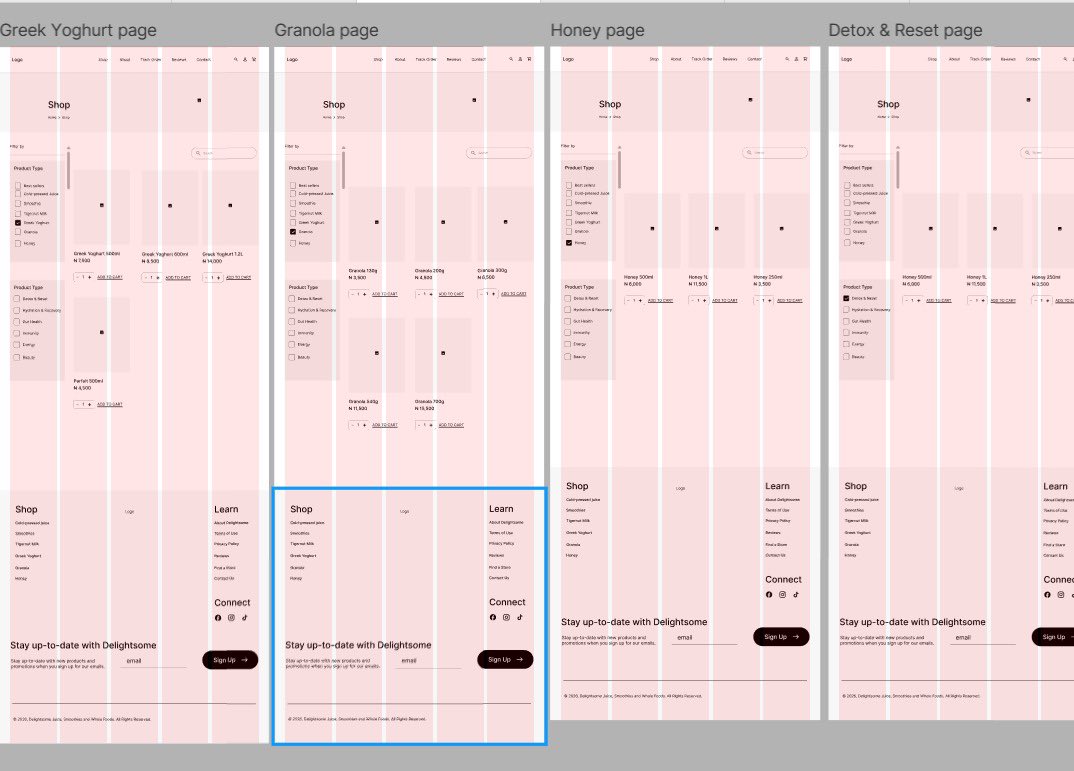
Right now I’m working on the wireframes for their website redesign.
What started as curiosity turned into a real project.
Sometimes when things feel overwhelming, the best thing you can do is pause… and build.
High-fidelity designs and case study coming soon.
A few weeks ago, I felt like I was falling behind.
Every day there was a new AI tool, a new feature, a new update.
It felt like if you blinked, you were already behind.
I started feeling like I needed to learn all the AI tools just to stay relevant.
It was overwhelming.
🧵
I gave Claude one prompt.
It built me a full app architecture. For every single screen.
Sitemap. User flows. Microcopy. Error states. Empty states.
UX designers, save and repost this to help any UX Designer struggling to understand how to design a full product end to end. 👇
Don’t miss to hit the follow button if you want to get more insight on how to 10x your workflow.
The prompt 👇
You are a Senior UX Designer and Information Architect with 10+ years of
experience designing complex digital products. I need you to generate a
complete UX architecture document for my product.
---
PRODUCT CONTEXT
- Product name: [NAME]
- Product type: [Web app / Mobile app / Both]
- Industry: [e.g. Fintech / Health / E-commerce / SaaS]
- Target users: [Describe your primary user, who they are, their goals,
tech comfort level]
- Core problem it solves: [1–2 sentences]
- Key user actions (the 3–5 things users must be able to do): [List them]
- Any known competitors or inspiration: [Optional]
---
WHAT I NEED YOU TO GENERATE
1. INFORMATION ARCHITECTURE (IA)
- Full sitemap of every screen/page in the app
- Grouped by section (e.g. Onboarding, Dashboard, Settings)
- Hierarchy shown clearly (parent → child pages)
- Navigation structure (bottom nav / sidebar / top nav, recommend which
and why)
2. USER FLOWS
Generate step-by-step user flows for these core journeys:
- Onboarding & account creation
- Core action flow (the main thing the user comes to do)
- Settings & profile management
- Error recovery flow
For each flow: show every screen the user touches, the decision points,
and what happens on each path (success, error, edge case).
3. FULL SCREEN-BY-SCREEN BREAKDOWN
For EVERY screen in the app, provide:
- Screen name
- Purpose (what the user is trying to do here)
- Key UI elements on the screen
- Primary action (main CTA)
- Secondary actions
- Navigation options available
4. MICROCOPY FOR EVERY SCREEN
For each screen, write the actual copy for:
- Page/screen title
- Subheading or supporting text
- CTA button labels
- Input field placeholder text and labels
- Tooltip or helper text (where relevant)
5. ERROR STATES
For every screen or action that can fail, write:
- The error scenario (what went wrong)
- Error message headline (short, clear)
- Error body copy (explain what happened + what to do)
- CTA label to recover (e.g. "Try Again", "Go Back", "Contact Support")
Cover at minimum: form validation errors, network/connection errors,
permission denied, session expired, payment failure (if applicable).
6. EMPTY STATES
For every screen that can appear empty (no data yet), write:
- Empty state illustration description (what to show visually)
- Headline
- Supporting copy
- CTA to help user take their first action
Cover: first-time user empty states AND zero-result search/filter states.
7. LOADING & TRANSITION STATES
For key screens, describe:
- What loading state looks like (skeleton screen, spinner, etc.)
- Loading copy if any (e.g. "Getting your dashboard ready…")
- Transition message after a completed action
(e.g. success toast, confirmation screen)
8. STRUCTURAL RECOMMENDATIONS
Based on the product type and user goals:
- Recommend the best navigation pattern and why
- Flag any screens that might cause confusion or drop-off
- Suggest any flows that could be simplified or merged
- Identify where progressive disclosure should be applied
- Call out any accessibility considerations per screen
---
OUTPUT FORMAT
Structure your response like a UX specification document with clear
headings for each section. Use tables where it helps clarity
(especially for microcopy and error states). Be exhaustive, I want
this to be thorough enough to hand directly to a developer or use as
a Figma annotation reference.






![desgnwitkinsley's tweet photo. I gave Claude one prompt.
It built me a full app architecture. For every single screen.
Sitemap. User flows. Microcopy. Error states. Empty states.
UX designers, save and repost this to help any UX Designer struggling to understand how to design a full product end to end. 👇
Don’t miss to hit the follow button if you want to get more insight on how to 10x your workflow.
The prompt 👇
You are a Senior UX Designer and Information Architect with 10+ years of
experience designing complex digital products. I need you to generate a
complete UX architecture document for my product.
---
PRODUCT CONTEXT
- Product name: [NAME]
- Product type: [Web app / Mobile app / Both]
- Industry: [e.g. Fintech / Health / E-commerce / SaaS]
- Target users: [Describe your primary user, who they are, their goals,
tech comfort level]
- Core problem it solves: [1–2 sentences]
- Key user actions (the 3–5 things users must be able to do): [List them]
- Any known competitors or inspiration: [Optional]
---
WHAT I NEED YOU TO GENERATE
1. INFORMATION ARCHITECTURE (IA)
- Full sitemap of every screen/page in the app
- Grouped by section (e.g. Onboarding, Dashboard, Settings)
- Hierarchy shown clearly (parent → child pages)
- Navigation structure (bottom nav / sidebar / top nav, recommend which
and why)
2. USER FLOWS
Generate step-by-step user flows for these core journeys:
- Onboarding & account creation
- Core action flow (the main thing the user comes to do)
- Settings & profile management
- Error recovery flow
For each flow: show every screen the user touches, the decision points,
and what happens on each path (success, error, edge case).
3. FULL SCREEN-BY-SCREEN BREAKDOWN
For EVERY screen in the app, provide:
- Screen name
- Purpose (what the user is trying to do here)
- Key UI elements on the screen
- Primary action (main CTA)
- Secondary actions
- Navigation options available
4. MICROCOPY FOR EVERY SCREEN
For each screen, write the actual copy for:
- Page/screen title
- Subheading or supporting text
- CTA button labels
- Input field placeholder text and labels
- Tooltip or helper text (where relevant)
5. ERROR STATES
For every screen or action that can fail, write:
- The error scenario (what went wrong)
- Error message headline (short, clear)
- Error body copy (explain what happened + what to do)
- CTA label to recover (e.g. "Try Again", "Go Back", "Contact Support")
Cover at minimum: form validation errors, network/connection errors,
permission denied, session expired, payment failure (if applicable).
6. EMPTY STATES
For every screen that can appear empty (no data yet), write:
- Empty state illustration description (what to show visually)
- Headline
- Supporting copy
- CTA to help user take their first action
Cover: first-time user empty states AND zero-result search/filter states.
7. LOADING & TRANSITION STATES
For key screens, describe:
- What loading state looks like (skeleton screen, spinner, etc.)
- Loading copy if any (e.g. "Getting your dashboard ready…")
- Transition message after a completed action
(e.g. success toast, confirmation screen)
8. STRUCTURAL RECOMMENDATIONS
Based on the product type and user goals:
- Recommend the best navigation pattern and why
- Flag any screens that might cause confusion or drop-off
- Suggest any flows that could be simplified or merged
- Identify where progressive disclosure should be applied
- Call out any accessibility considerations per screen
---
OUTPUT FORMAT
Structure your response like a UX specification document with clear
headings for each section. Use tables where it helps clarity
(especially for microcopy and error states). Be exhaustive, I want
this to be thorough enough to hand directly to a developer or use as
a Figma annotation reference.](https://pbs.twimg.com/media/HDCys-oWgAAY1Zh.jpg)


