NVIDIA earnings just confirmed that the AI infrastructure boom is STILL accelerating despite months of slowdown fears🚨
Here’s what it means;
The market was heavily focused on whether AI spending from mega-cap tech companies was beginning to cool off after the massive run-up over the past year.
Instead, NVIDIA effectively confirmed the opposite.
Demand for AI chips and infrastructure remains extremely strong, with companies like Microsoft, Meta, Amazon and Google still aggressively racing to build AI dominance.
The biggest signal was not even the earnings beat itself — it was the forward guidance.
NVIDIA telling markets to expect even stronger revenue ahead suggests the next wave of AI infrastructure spending is already underway, particularly around Blackwell chip deployment and large-scale AI data center expansion.
This is important because NVIDIA has effectively become the heartbeat of global AI liquidity and capex flows.
If NVIDIA keeps growing at this pace, it means corporations are STILL spending enormous amounts of capital on AI infrastructure rather than pulling back.
That weakens the growing narrative that the “AI bubble” was beginning to fade.
It also reinforces the idea that AI remains one of the strongest themes driving equity markets, liquidity flows and broader risk appetite globally right now.
ELON MUSK MOVING CLOSER TO A SPACEX IPO🚀
According to Axios, internal discussions around a potential SpaceX IPO are reportedly gaining momentum as the company’s valuation and strategic importance continue exploding.
Why this matters:
SpaceX is no longer just a space company.
It has become:
- a critical defense contractor
- a global satellite infrastructure provider
- a major AI and communications player through Starlink
- and one of the most strategically important private companies in the world
The market impact could be massive.
A SpaceX IPO would likely become one of the biggest public offerings in history and could attract enormous institutional demand across:
- tech
- AI
- defense
- communications
- and infrastructure-focused capital
The bigger picture:
Markets are increasingly rewarding companies controlling real-world infrastructure tied to:
- AI
- connectivity
- energy
- defense
- and global data networks
And SpaceX now sits at the center of all of them.
FINAL DRAFT OF U.S.–IRAN AGREEMENT REPORTEDLY REACHED🚨
Iranian State media says the final draft of a U.S.–Iran agreement has been finalized with mediation from Pakistan and could be officially announced within the next few hours.
Why this matters:
Markets have been heavily focused on:
Middle East escalation
oil supply risks
Strait of Hormuz stability
and inflation pressures tied to energy markets
A confirmed agreement could rapidly shift:
oil prices
bond yields
dollar strength
and broader global risk sentiment
The biggest thing markets will now watch:
Whether the final terms include long-term guarantees around:
Hormuz access
sanctions relief
and Iran’s nuclear program.
DETAILS OF THE U.S.–IRAN DRAFT AGREEMENT ARE NOW EMERGING
According to Iranian State-linked reports, the proposed deal reportedly includes:
🔴 An immediate and comprehensive ceasefire across all fronts
🔴 Mutual commitments to avoid targeting critical infrastructure
🔴 Guaranteed freedom of navigation through the Persian Gulf and Strait of Hormuz under a joint monitoring mechanism
🔴 Gradual sanctions relief tied to Iranian compliance
🔴 Negotiations on remaining unresolved issues beginning within seven days
Why this matters:
If confirmed, this would represent one of the biggest geopolitical de-escalations markets have seen in years.
Markets are now watching whether this evolves into a durable framework — or simply a temporary pause in tensions.
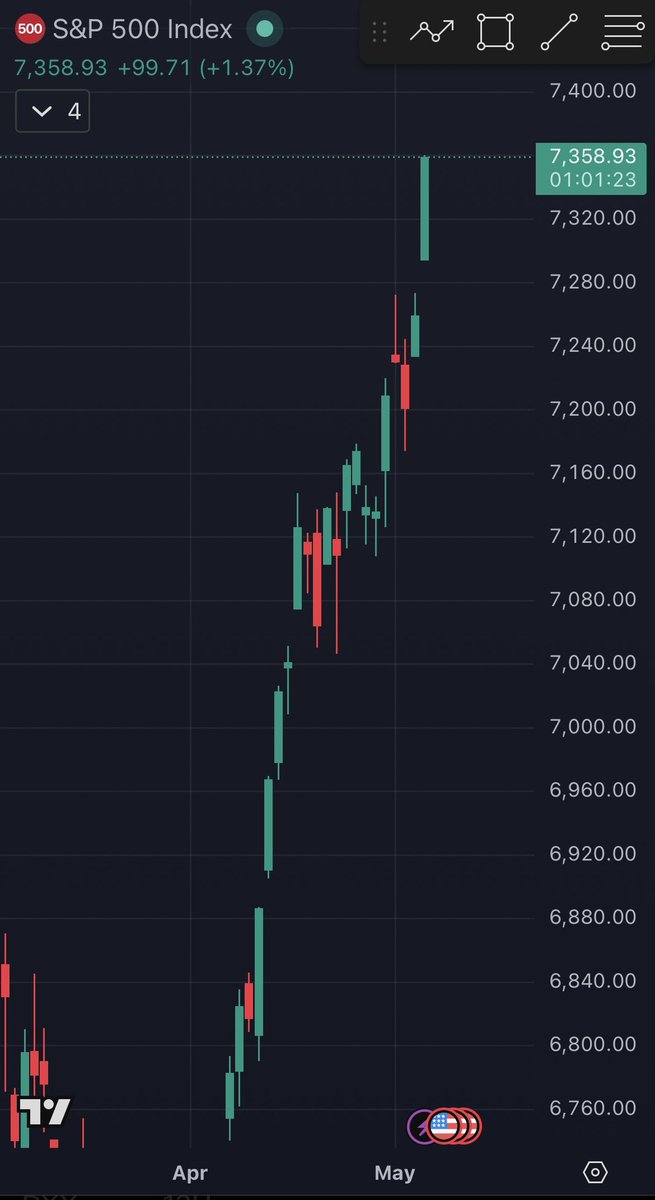
A US–Iran peace deal would likely trigger an immediate relief rally across stocks and crypto as oil prices fall, yields ease, and inflation fears cool as we are seeing happen now on the back of fresh reports of a deal.
But inflation doesn’t reset overnight.
The market reacts first. The economy reacts later.
Oil futures will likely continue drop in the coming hours as the geopolitical risk premium unwinds, but gasoline prices, shipping costs, airline fuel, manufacturing and food prices usually take weeks or even months to normalize.
Historically:
• Oil markets react immediately
• Energy prices stabilize over 1–2 months
• Headline inflation improves over 1–3 CPI prints
• Core inflation can take 3–9 months to fully cool
That’s because higher energy costs ripple through the entire economy before eventually fading.
The Bottom line:
A deal would probably be bullish for risk assets and disinflationary overall in the short term, but the inflation damage already done would still take months to fully unwind.
FOMC MINUTES JUST DROPPED 🚨
A CLEAR MESSAGE: THE FED IS NOW FAR MORE WORRIED ABOUT STICKY INFLATION THAN MARKETS MAY REALIZE
The April FOMC Minutes revealed a Federal Reserve that is becoming increasingly cautious about cutting rates too early as inflation pressures continue building across the economy.
The biggest concern throughout the minutes:
Energy-driven inflation from the Middle East conflict is beginning to spread deeper into the economy.
Officials specifically highlighted:
- rising shipping costs
- higher airfares
- supply chain disruptions
- fertilizer inflation
- and increasing technology-sector prices tied to the AI boom.
This is important because the Fed is no longer just talking about temporary oil inflation.
They are now openly discussing the risk that inflation could become embedded across wages, pricing behavior and broader business costs.
The Minutes also showed a significant shift in tone around rate cuts.
Markets had previously expected easier policy later this year, but the Fed now appears much more hesitant.
In fact:
- several officials suggested rates may need to stay higher for longer
- a majority warned inflation could remain above 2% for an extended period
- and many participants even discussed the possibility that additional tightening may eventually be needed if inflation stays elevated.
At the same time, the Fed acknowledged growing downside risks in the labor market.
Officials noted:
- slowing hiring
- weaker job availability
- rising business uncertainty
- and concerns that AI adoption could reduce future labor demand.
This is creating a difficult balancing act for the Fed:
▶️ Inflation remains too high
▶️ Energy prices are adding pressure
▶️ Growth is still holding up
▶️ But labor market risks are slowly rising underneath the surface
One of the most important parts of the Minutes was the discussion around liquidity and financial stability.
The Fed specifically highlighted:
- elevated asset valuations
- growing leverage in hedge funds
- private credit stress
- and risks tied to highly leveraged Treasury trades.
That matters because liquidity conditions across the financial system are becoming increasingly fragile beneath the surface even while equities remain near highs.
The broader message from these Minutes:
The Fed is not close to aggressively easing yet.
And unless inflation cools meaningfully or the labor market weakens sharply, markets may need to continue adjusting to a higher-for-longer liquidity environment.
🚨 IRAN SIGNALS IT IS READY FOR DIRECT CONFRONTATION
Iran’s Supreme Leader Mojtaba Khamenei has reportedly issued new orders to the country’s armed forces, telling them to prepare to “firmly confront adversaries.”
Iran’s military leadership says any move by the “American-Zionist enemies” will be met with a response that is “swift, severe and decisive.”
What stands out most right now is that Mojtaba still hasn’t made a public appearance.
The messaging is escalating, but it’s all happening through state channels and military commanders behind closed doors.
Markets should be paying attention because every step higher in rhetoric raises the risk of another oil and volatility shock.
🚨 Israel reportedly believes the chances of a new deal with Iran are fading fast.
According to Channel 12, Israel has told the US that if the war reignites, strikes must immediately target Iran’s full energy infrastructure within the first 24 hours.
Reports also suggest several Arab nations are backing the idea of hitting Iran’s energy sector.
Markets are now staring at a scenario where oil infrastructure becomes the next major battleground.
ETF FLOWS TELL THE REAL STORY🚨
Last week wasn’t about money leaving crypto — it was about where it rotated. BTC ETFs saw +$153.87M in inflows while ETH, SOL and XRP all recorded outflows. That’s not bearish on crypto overall — it’s defensive positioning.
Institutions are still allocating capital, but instead of taking risk across alts, they’re concentrating into Bitcoin as the most liquid and safest exposure. This is classic risk-off behaviour during periods of macro uncertainty.
The result is liquidity compression — capital tightens around BTC, driving dominance higher while altcoins get starved of flow. And since alts rely on excess liquidity and risk appetite, they tend to underperform in this environment.
Bottom line: liquidity didn’t leave the market — it rotated, concentrated, and became defensive, favouring Bitcoin until conditions shift.
Coinbase just unlocked something big in Australia👇
Coinbase is now enabling crypto access for self-managed retirement funds (SMSFs).
That’s ~664,000 funds controlling over AU$1 TRILLION.
Let that sink in.
This isn’t retail punting memes.
This is long-term, sticky capital getting direct access to crypto inside retirement structures.
And here’s the shift most people are missing:
Retirement money doesn’t trade narratives…
It allocates.
Slowly. Systematically. Over time.
That’s the type of liquidity that builds markets, not just pumps them.
Zoom out:
OKX already moved into this space
Regulation in Australia is getting clearer
The U.S. is opening retirement systems to crypto as well
This is not a one-off headline.
It’s infrastructure being built for capital to flow in.
Everyone’s watching price…
But the real story is access.
And access is expanding fast.
BREAKING🚨
The US and Iran are reportedly nearing a 14-point agreement to end the war and restart broader nuclear negotiations.
The proposed deal reportedly includes:
• Iran pausing uranium enrichment for 12–15 years
• The US lifting sanctions and releasing billions in frozen Iranian funds
• Restrictions around the Strait of Hormuz being eased
• A ceasefire followed by a 30-day negotiation period
If confirmed, markets will likely view this as a major de-escalation event.
Why this matters for crypto:
Less tension in the Middle East could reduce fears of oil supply disruptions and another inflation spike.
That would ease pressure on bond yields and reduce the need for central banks to stay aggressively hawkish.
In simple terms:
Lower geopolitical stress generally pushes investors back toward risk assets.
That’s the type of environment where BTC and crypto tend to perform much better.
BREAKING🚨
Just minutes after reports claimed the US and Iran were nearing a deal to end the war and reopen the Strait of Hormuz…
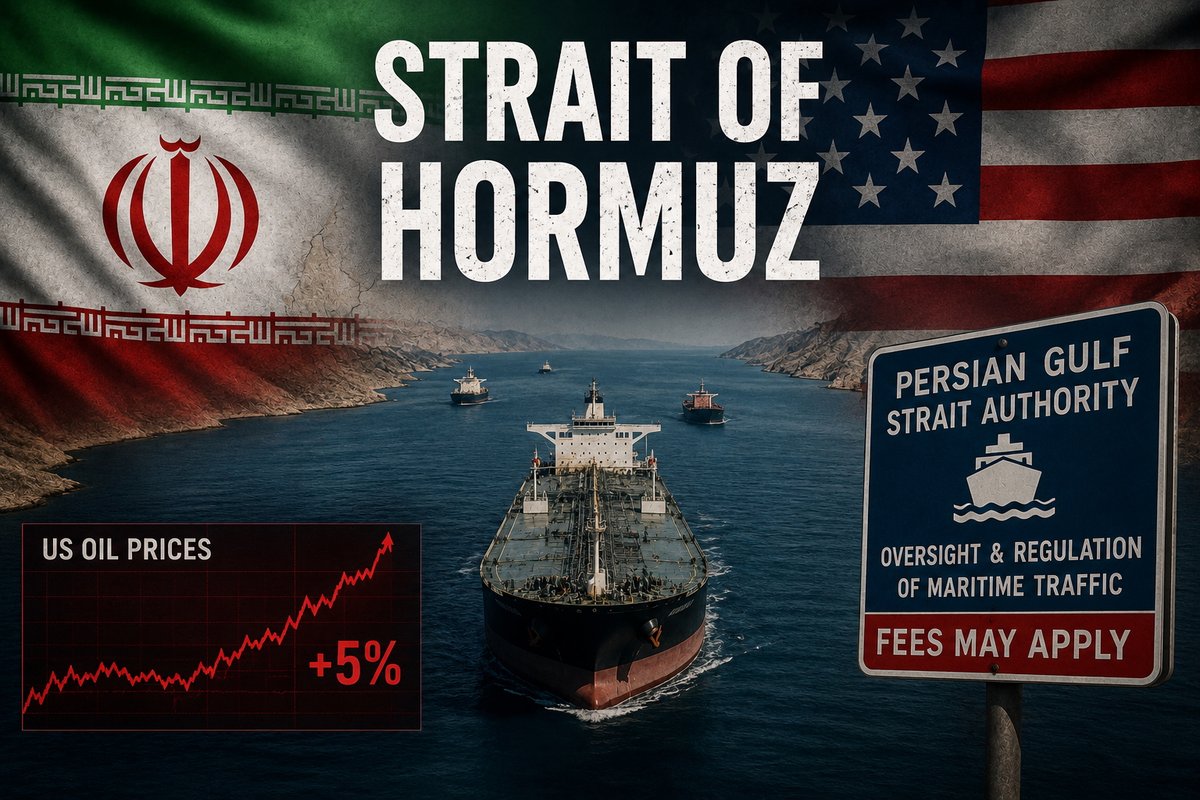
Iran launched a new website called the “Persian Gulf Strait Authority” to oversee all traffic moving through the region.
According to reports:
• Ships may now be charged for safe passage
• Vessels could receive instructions and regulations directly via email
• Iran appears to be preparing a more formal control structure around Hormuz transit
Markets immediately reacted.
US oil prices have already bounced more than +5% from today’s lows.
The Strait of Hormuz is one of the most important oil routes on Earth.
Any sign that Iran could tighten operational control over the region raises fears of higher energy costs, rising inflation, and more pressure on global markets.
That’s usually not great for crypto in the short term because it pushes investors toward defensive positioning and increases uncertainty around interest rates.
Bitcoin holding strong during this type of macro stress would actually be a very important signal.
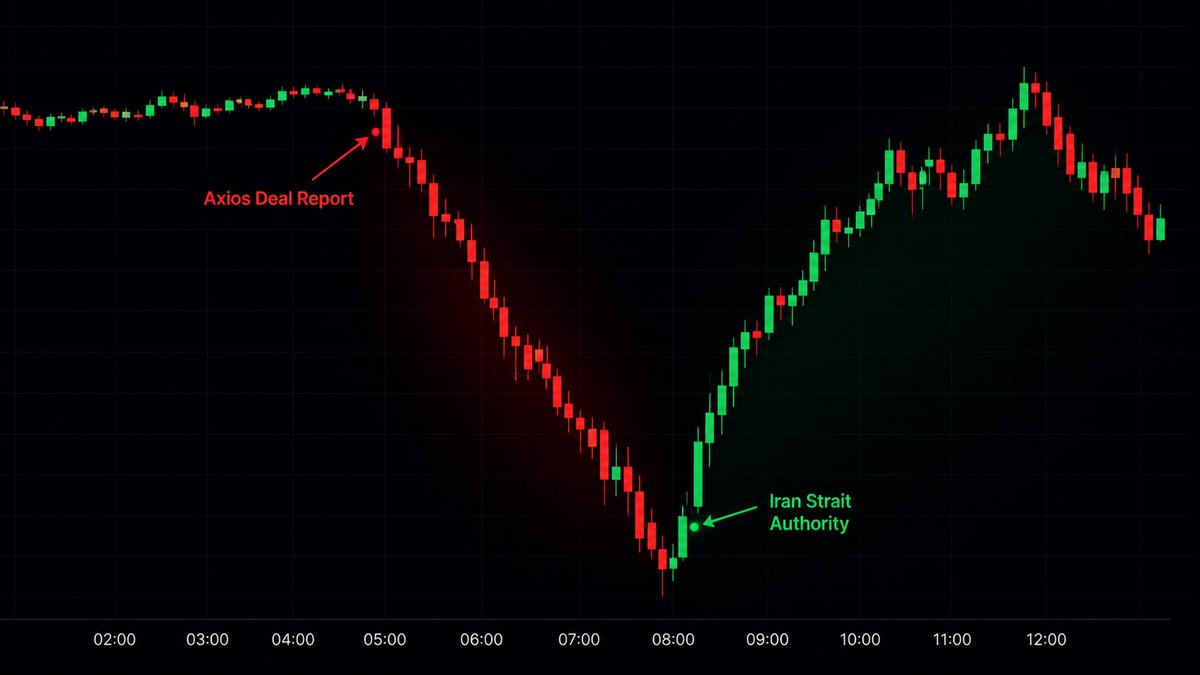
This is EXACTLY why todays entire breakout just round-tripped.
Markets ripped higher on the Axios report claiming the US and Iran were close to a deal to end the war.
Oil collapsed -12%.
Risk assets pumped.
Crypto squeezed higher.
But then the market realized something important:
The geopolitical risk never actually disappeared.
Iran launching the “Persian Gulf Strait Authority” immediately after the report signaled they are still preparing to control and monetize Hormuz traffic — one of the most important oil chokepoints on Earth.
So suddenly the market had to reprice the possibility that:
• oil supply disruptions are still on the table
• inflation risks are still alive
• bond yields can still move higher
• and central banks may stay tighter for longer
Crypto initially reacted to the “peace deal = lower oil = lower inflation” narrative.
But once oil violently reversed +8%, the entire macro trade reversed with it.
This wasn’t just crypto volatility.
This was the market repricing macro risk in real time.
For years, Michael Saylor built his entire identity on one idea:
Never sell Bitcoin.
Last night, that narrative cracked.
On Strategy’s Q1 2026 earnings call, he admitted the company will likely have to start selling.
That’s a complete shift from what he’s been preaching since 2020.
Here’s the reality behind it:
Strategy now holds 818,334 BTC at an average price of $75,537
→ That’s $61.8 billion deployed over nearly 6 years
With Bitcoin sitting around $81K, the entire position is only up about 7%
That’s roughly ~1% per year
Meanwhile:
S&P 500 averages ~10% annually
Bitcoin itself is up 700%+ over the same timeframe
So what went wrong?
They bought aggressively at every level — no pacing, no cost control.
That pushes your average higher and higher… until there’s no margin of safety left.
Now layer in the real pressure:
Strategy issued a preferred stock (STRC) paying 11.5% annually
That’s $1.5 billion in dividends they must pay every single year — regardless of market conditions.
And when Bitcoin dropped from $87K → $68K in Q1:
→ Strategy posted a $12.5 billion loss
→ The biggest in company history
This is the trap:
When you mix conviction with leverage and fixed obligations, you lose flexibility.
And now Saylor is being forced to do the one thing he said he never would…
Sell Bitcoin to fund a structure his own company created.
US private payrolls came in at 109K for April, higher than the 99K estimate.
This matters for crypto because the Fed watches the labor market closely when deciding whether to cut rates.
A stronger jobs market = less pressure for immediate rate cuts.
That’s a double-edged sword for crypto:
• Strong economy supports overall risk appetite
• But higher-for-longer rates can slow capital flows into BTC & alts
So the market now shifts back to one key question:
Does this delay the next wave of monetary easing?
Not outright bearish for crypto — but not the weak economic data bulls would be hoping for either.
🚨 JUST IN:
Saudi Arabia has reportedly suspended U.S. access to military bases and restricted use of its airspace, according to NBC citing anonymous U.S. officials.
The report also claims Trump reversed plans for shipping operations through the Strait of Hormuz with Operation Freedom.
If true, this is a major escalation signal.
The market is no longer just pricing oil risk.
It’s now pricing the possibility of shifting alliances and reduced U.S. operational flexibility in the Middle East.
Expect volatility across:
• Oil
• Bonds
• Equities
• Crypto
Hormuz remains the key macro battlefield.