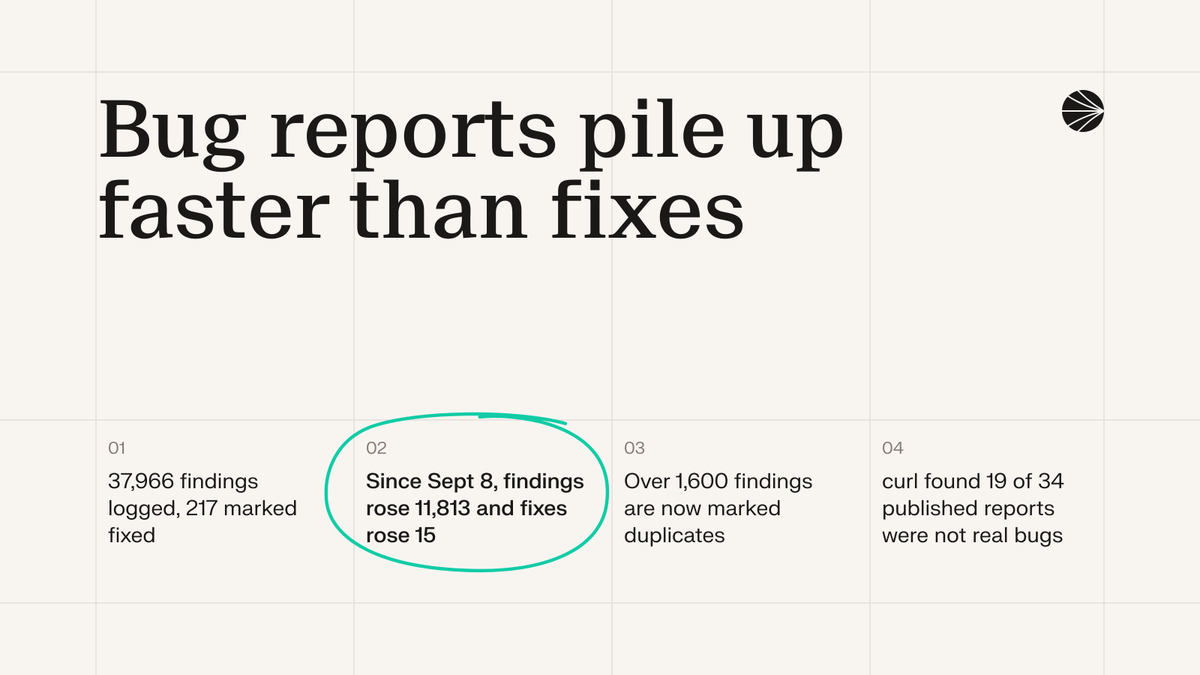
When an AI tool flags a security bug in your code, reproduce it before you fix or report it. Of 34 Anthropic reports the curl project (a widely used download tool) has published so far, 19 turned out not to be real bugs.
An AI that finds thousands of security bugs only makes software safer once someone fixes them. Anthropic's bug-hunting project has logged 37,966 findings since April, and its own public ledger marks 217 of them fixed.
We think the scarce skill moved from finding bugs to checking them. Anthropic said in October its scanner was bottlenecked on people to check findings. Over 1,600 findings are now marked duplicates.
An AI work plan can look finished and still be wrong. In today's NextWork project, Claude can only see Gmail and Google Calendar, so its neat plan for tomorrow misses the 1pm QA deadline sitting in a Google Doc.
On your own project, try the sentence and read the full git diff before you commit. Expect about 1.5 times the output tokens. On a teammate's repo, leave it out, because a "no drive-by refactors" rule only partly held it back.
Telling an AI coding agent "this codebase is yours" changes what it does to your code. In Anthropic's tests, that one sentence made Claude Fable 5.2 merge repeated code in about half its tries, up from under a tenth without it.
We think this makes reading a diff, the list of lines an agent changed, the skill worth practising now. With the sentence, the model changed how an existing feature works in 1 try in 6 to 10, and its own summary often left the small edits out.
Three Claude Code sessions built three features at once, each in its own git worktree (a separate copy of the code). In today's NextWork project, the second merge broke the page because two of them edited index.html.
If your computer has no GPU, run the project's check_cpu_readiness.py script first. Then try its 30 billion number Nemotron model instead of the big one. It's a 15GB download, and the README reports 25 to 60 tokens a second on CPU.
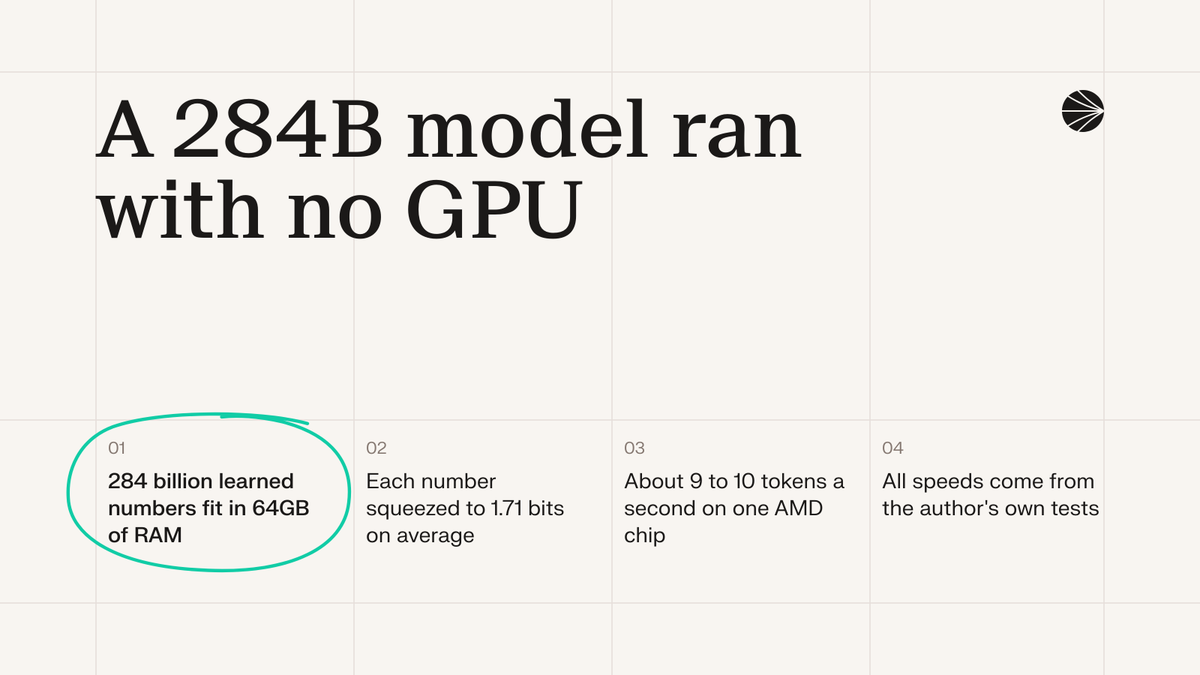
An AI model with 284 billion learned numbers just ran on a computer with no graphics card. An open source project called llama-modchip fits DeepSeek V4 Flash into 64GB of memory and writes about 9 to 10 tokens (word pieces) a second on one AMD chip.
Most AI learning skips the skill on show here, and we think that's a mistake. The author trained nothing new. They worked out where every gigabyte sits and how a CPU reads it, and that moved a 284 billion number model off rented GPUs onto one desk.
Most people turn a whole lecture into flashcards. In today's NextWork project, @joshwoodward's Gemini Notebook quizzes you on a 299-page Harvard AI deck, and only your wrong answers become cards. This run got 2 of 10.