New article!
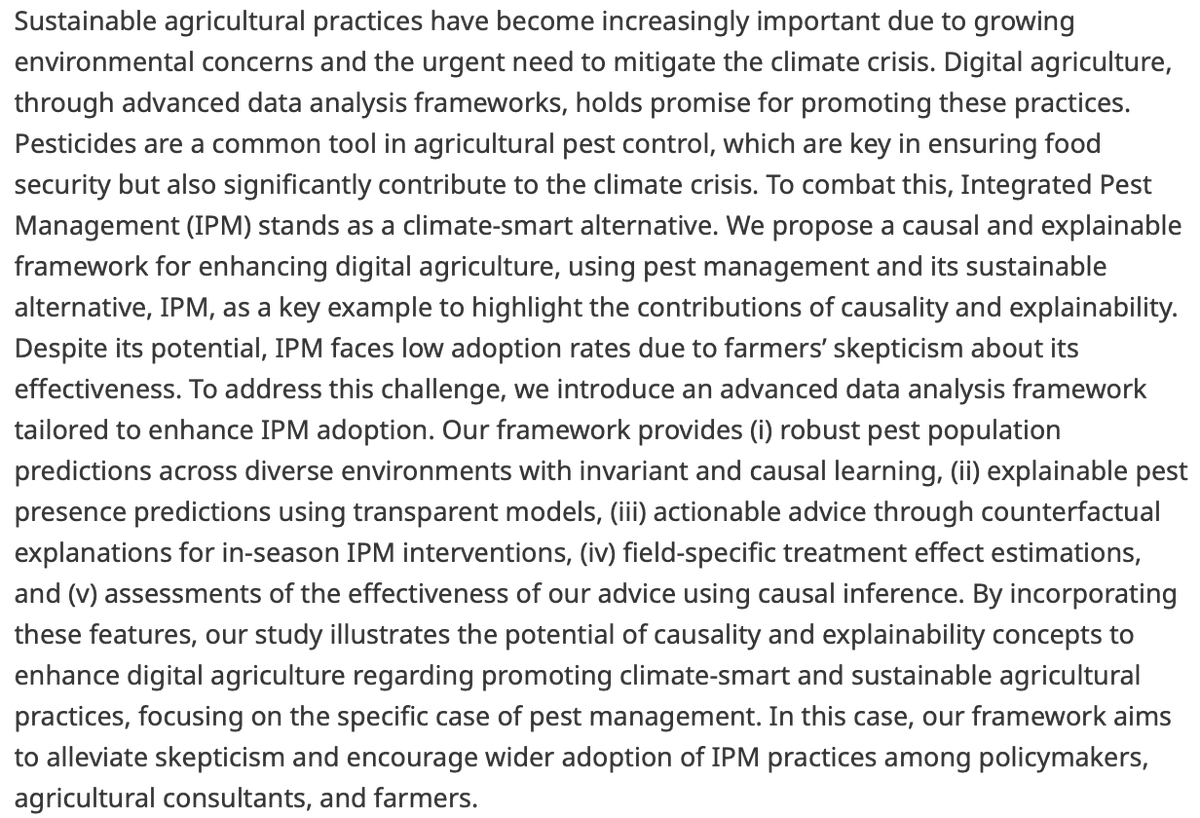
Leveraging causality and explainability in digital agriculture
👉 https://t.co/23vcLgFKeh
By @itsoumas, Vasileios Sitokonstantinou, @giannarakisg, Evagelia Lampiri, @christos_edward, Gustau Camps-Valls, Charalampos Kontoes & Ioannis N. Athanasiadis
#agriculture
I co-organize with @giannarakisg our 2nd Causal Data Science Athens meetup. If you're curious about how causal inference powers LLMs, join us! Join us at @medcollege1 , sponsored by @HP ,IntelligenciaAI, and @beyond_center
https://t.co/HdAg6yNoxE
The wildest thing I learned at the Stanford Sleep Medicine Center is that there isn't a cure for insomnia. There's no magic pill they can give you. The solution to start sleeping well again is "cognitive behavioral therapy", the gist of which is simply to *regain confidence in your ability to sleep*.
If you think about this for a little bit, you realize just how widely applicable that is. You may be waiting for an external solution to your problems. A magic pill. But most of the time there is no such thing -- the fix is in yourself. The remedy is for you to *regain confidence in the power that your own actions have to effect change in your life*. Realize that you have agency. You can *do stuff*, and the stuff you do can change your circumstances -- in fact, it can completely rewrite your life.
The problems you face have solutions. Look at them, break them down, take that first step. If it doesn't work at first, adjust, repeat -- succeed. There will be no deus ex machina -- you have to do it yourself.
You probably knew this once, just like you once knew you could simply go to bed and sleep until morning. You just need to remember.
#AgML - the machine learning for agricultural modelling research team of @AgMIPnews gathers today in Wageningen, for a three-day workshop! Looking forward to welcome 35+ participants in person from four continents, and further more from all around the world! Welcome @WUR#AI4ag
#Proud My team @WUR joins the @ClimateChangeAI Workshop #NeurIPS2023 with2⃣ great posters on AI for #agriculture! #AgML#AI4Ag
Ilias Tsoumas on trustworthy #pest management with causal ML!
Omar Younis on optimizing crop breeding with reinforcement learning!
Livestream📺⬇️
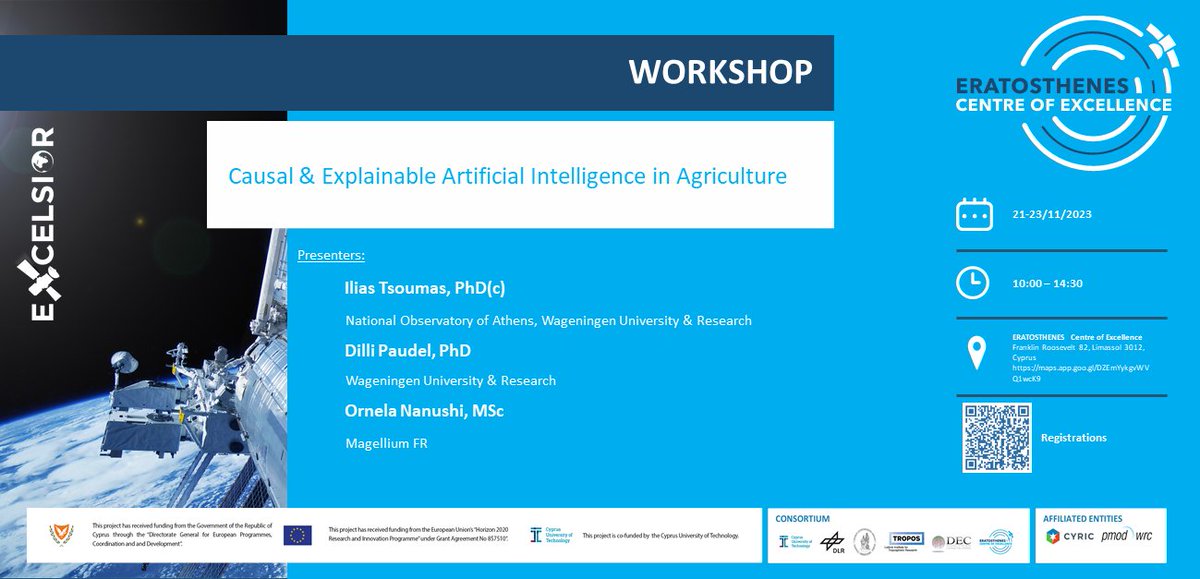
🌱 Join us next week for a deep dive into Causal and Explainable AI in Agriculture!
👤 Presenter: Mr. @itsoumas, @beyond_center,Wageningen University & Research
📆 :21-23.11.2023 and🕒: 10:00-14:30
📍 Location: @ERATOSTHENESCoE, Limassol, Cyprus
👉Reg:https://t.co/yyeYo9m0c9
Did you know that people tried to prove central limit theorem for over two centuries, first starting with de Moivre (1733), then almost a century after by Laplace who both used binomial distribution.
Then it was Poisson who worked on this theorem, and Chebyshev (1890–1891) who gave a rigorous demonstration of it in the middle of the nineteenth century.
At the beginning of the twentieth century, the Russian mathematician Liapounov, Aleksandr Mikhailovich (1901) created the generally recognized form of the central limit theorem by introducing its characteristic functions.
Markov, Andrei Andreevich(1908) also worked on it and was the first to generalize the theorem to the case of independent variables.
In 1924 Kolmogorov started to become interested in research in Probability Theory and in 1928 he was able for the first time to formulate necessary and sufficient conditions of the Law of Large Numbers that escaped other best mathematicians of the time for many decades.
It has taken the best mathematicians almost two centuries to prove conditions for LLN and prove CLT.
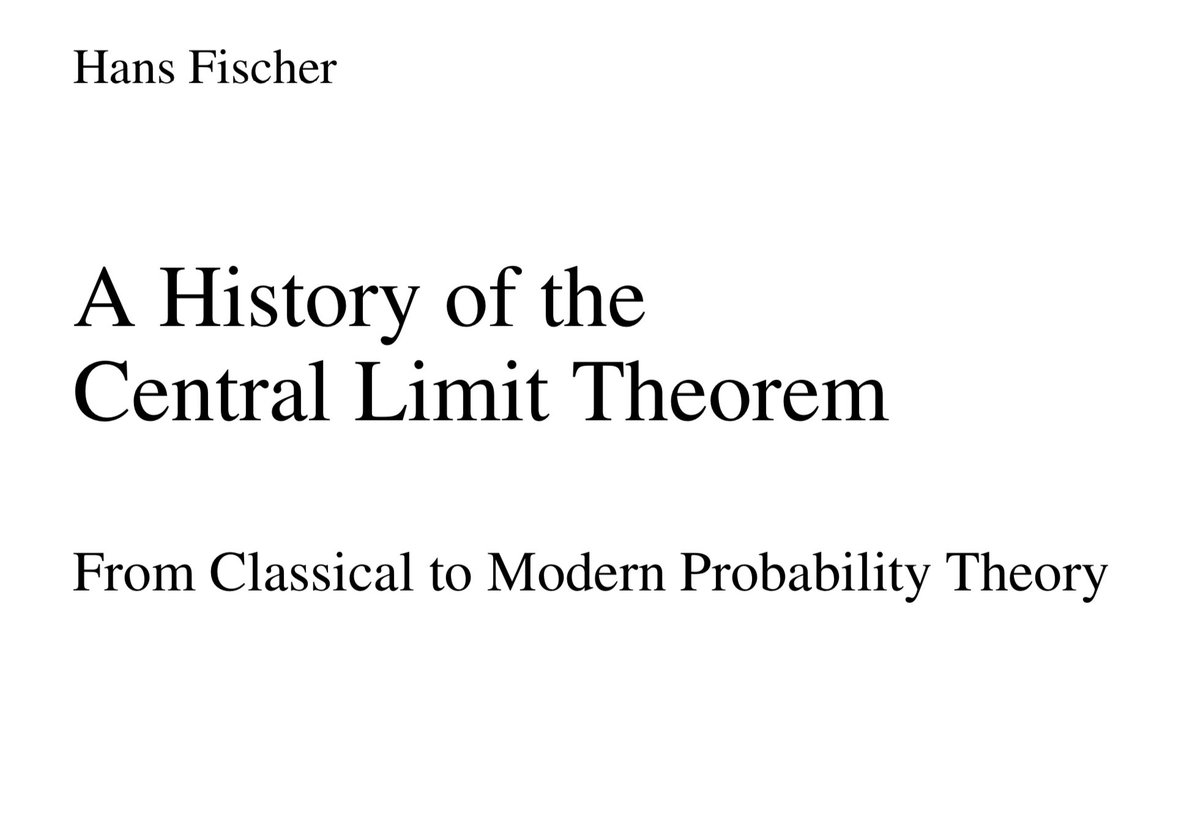
In fact there is almost 500 (!) pages book describing the history of CLT.
https://t.co/UcjmVxs9f2
#statistics #machinelearning #gaussian
This paper has the right idea: use symbolic logic for discrete reasoning and lean on deep learning models for perception and common-sense intuition. https://t.co/9lP8eDZKkO
I expect to see a lot more progress along these lines in the coming months / years.
Come to check our poster and discuss it, Sunday 6-8pm AAAI-23-Conference.
paper: https://t.co/IPtsb5ARan
code & data: https://t.co/eTgjc3hc5e
@RealAAAI@beyond_center @giannarakisg @inathens#Causality#MachineLearning
See you in DC.✈️🏃♂️👨💻
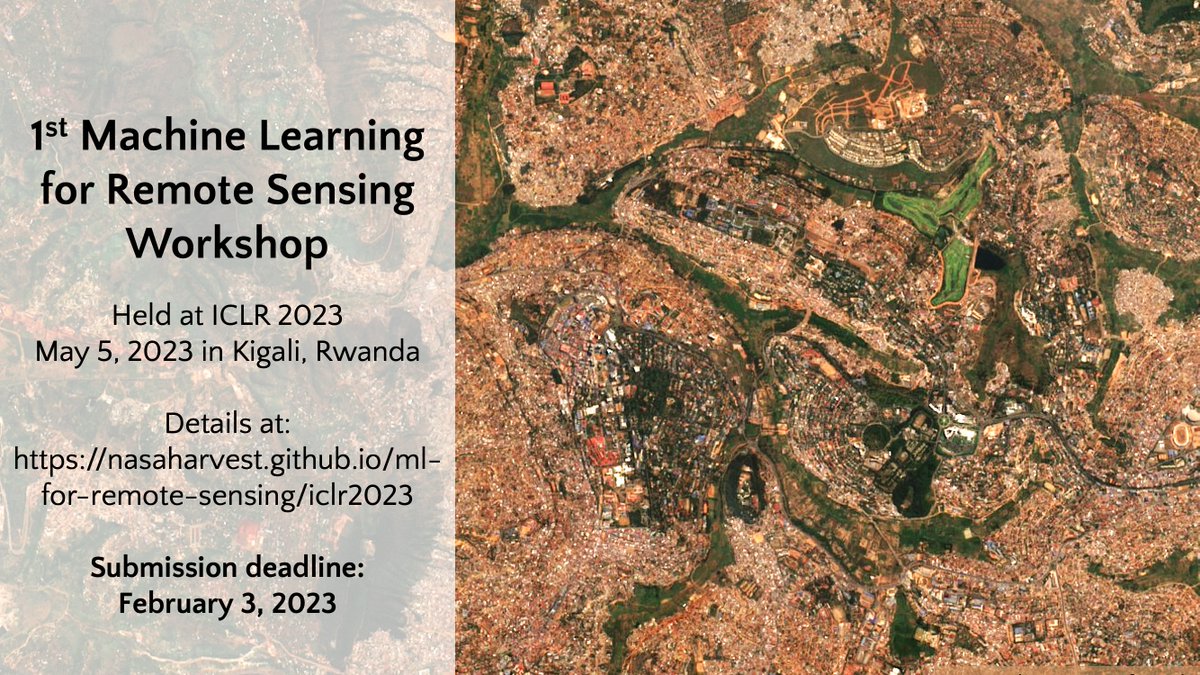
Details are posted for the 1st Machine Learning for Remote Sensing Workshop to be hosted at @iclr_conf, May 5 in Kigali. We look forward to your submissions and participation. See you in Kigali! #ICLR2023
- Website: https://t.co/pOmZbDMSbe
- Submission deadline: Feb 3, 2023
Matrix multiplication is not easy to understand.
Even looking at the definition used to make me sweat, let alone trying to comprehend the pattern. Yet, there is a stunningly simple explanation behind it.
Let's pull back the curtain!
I am sure readers are eager to view this week's harvest of new causal Inference papers. Here they are : https://t.co/lOyu9ltGeN. I haven't had a chance to search for breakthroughs, perhaps our readers can alert us of any.
Are randomised trials answering clear & useful questions? We conducted this review of published trials to find out https://t.co/ZO2GacCZ90 @bmj_latest
I remain cold, silent, skeptical and somewhat surprised at any attempt to do causal analysis without (1) the First Law (2) the Ladder of causation (3) Back-door criterion etc. etc. It's like shopping in a strange city without a city map. You may find a few bargains, but ...
Causal Machine Learning (CML) is exploding 💥 as a research direction.
Here are a few VERY recent perspectives/surveys/reviews on the topic that you MUST check out for being on top of the literature!
A thread 🧵
I believe it came about to prevent people from assuming that you can get similar results by doing post-treatment randomization. IOW, to emphasize that an RCT entails two steps: randomization and forced intervention.