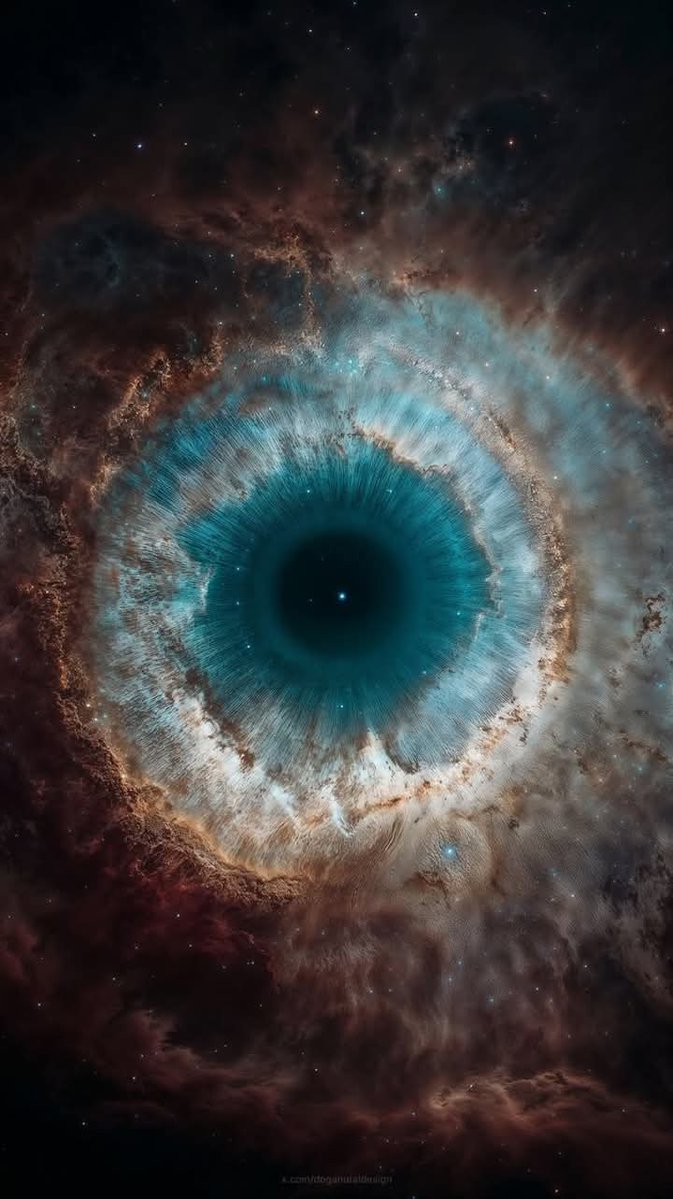
This image shows the Helix Nebula, also known as NGC 7293 or Caldwell 63. Located in the constellation Aquarius, it is one of the closest planetary nebulae to Earth.
Here are some interesting facts about the Helix Nebula:
The Helix Nebula is about 650 light-years from Earth.
The nebula was discovered by Karl Ludwig Harding, probably before 1824.
The Helix Nebula forms when a dying star sheds its outer layers as a wind of gas, then turns into a white dwarf.
Although it looks like a circle, the Helix Nebula is actually elongated, but because of its position in relation to Earth, it appears to be a circle.
The blue-green light in the center of the nebula comes from oxygen atoms glowing due to ultraviolet radiation from the very hot central star.
The Helix Nebula also has knots of gas called "cometary knots" because they resemble comets.
The Helix Nebula can be seen with binoculars or a telescope, and perhaps even with the naked eye if viewing conditions are good.
The Helix Nebula is a beautiful example of how stars die and leave behind an amazing legacy in the universe.
Dirty lightning, also known as volcanic lightning, occurs when volcanic ash particles collide, generating static charges that discharge as lightning within the volcanic plume.
The Aurora showed up this last weekend when I wasn’t expecting it! I was trying to capture the massive storms that went through both North and South America and got a nice surprise. The Aurora appeared right at sunset over the Northern US and Canada.
I‘m also fascinated by just how many satellites are orbiting the Earth at any given moment. There’s so much to share with you all!






![Rainmaker1973's tweet photo. Arches National Park
[📸 Elliot McGucken] https://t.co/4DUoDeNoZC](https://pbs.twimg.com/media/GwIh9tOXgAAKuUq.jpg)