I watched a PhD student use NotebookLM to do in 3 hours what took me 3 months.
I asked him how. He showed me his setup. I have not studied the same way since.
Here is exactly what he did.
He did not use NotebookLM as a search engine.
He did not type questions like "explain this concept."
He uploaded an entire field.
12 textbooks. 40 research papers. Every review article published in the last 5 years on his
topic. All uploaded at once. Into a single notebook.
Then he asked one question that changed how I think about learning:
"If you could only teach this subject using 7 sentences — one for each core idea — what
would they be?"
Not a summary. Not an overview.
Seven sentences. For the entire field.
NotebookLM produced them. He read them.
He asked a follow-up:
"For each sentence, what is the single experiment or paper that proved it was true?"
Now he had the skeleton of an entire field — and the exact evidence underneath each bone.
Then he did something nobody told me about.
He uploaded his own notes alongside the source material.
Then asked:
"Where am I wrong? What have I misunderstood compared to what the literature actually says?"
The system found three misconceptions he had carried for two years. Two of them would
have cost him his PhD defense if they had gone uncorrected.
He called this the Misconception Audit. He runs it on every subject before any exam, any
paper submission, any conference presentation.
Then the final step.
"Generate 10 questions a hostile expert would ask someone who claims to understand this
field. Then answer each one using only the sources I uploaded."
He was not studying to pass.
He was studying to survive interrogation by the smartest people in the room.
He passed his qualifying exam on a subject he had started studying 11 days before.
I have been studying the wrong way my entire life.
Here is his exact setup if you want to replicate it:
1. Upload the entire field — not one source
2. Ask for the 7 core sentences
3. Find the evidence under each one
4. Run the Misconception Audit on your own notes
Survive the hostile expert interrogation
The information was always available.
The framing was the unlock.
He passed his qualifying exam on a subject he had started studying 11 days before.
I have been studying the wrong way my entire life.
Here is his exact setup if you want to replicate it:
1.Upload the entire field — not one source
2. Ask for the 7 core sentences
3. Find the evidence under each one
4. Run the Misconception Audit on your own notes
Survive the hostile expert interrogation
The information was always available.
The framing was the unlock.
Not every ANA-positive patient has lupus.
Many disorders can closely mimic SLE, including Sjögren disease, MCTD, drug-induced lupus, viral infections, adult-onset Still disease, ANCA-associated vasculitis, sarcoidosis, tuberculosis, infective endocarditis, and fibromyalgia.
Recognizing the clues against SLE is just as important as recognizing the clues for it.
Which lupus mimic has challenged you the most in practice?
#Rheumatology #Lupus #SLE #AutoimmuneDisease #MedEd #FOAMed #RheumTwitter #MedTwitter #ClinicalReasoning #InternalMedicine @IhabFathiSulima@docakx
VASCULITIS MIMICS
Not every purpura is vasculitis.
Before labeling a patient as having primary vasculitis and initiating immunosuppression, consider important mimics such as infective endocarditis, cholesterol embolization syndrome, antiphospholipid syndrome, thrombotic microangiopathy, calciphylaxis, atrial myxoma, fibromuscular dysplasia, levamisole-associated vasculopathy, septic emboli, and malignancy-associated vasculitis-like syndromes.
Recognizing the red flags can prevent diagnostic errors, unnecessary immunosuppression, and potentially life-threatening consequences.
Which vasculitis mimic have you found most challenging in clinical practice?
Infographic by Dr. Aravind Palraj
#Rheumatology #Vasculitis #ANCA #MedicalEducation #MedEd #FOAMed #InternalMedicine #Nephrology #ClinicalReasoning @IhabFathiSulima@docakx #AutoimmuneDisease #MedTwitter #RheumTwitter #MedX #Medicine #MedEdCommunity
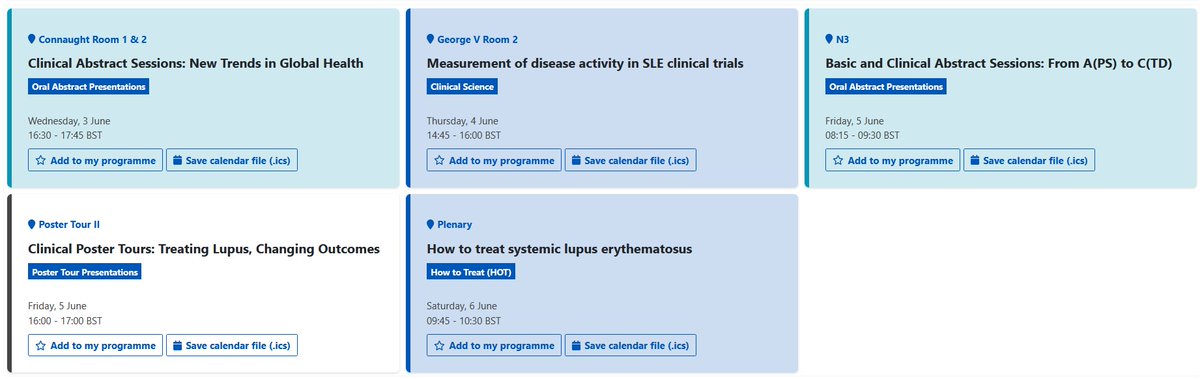
✅ Thank you @eular_org for the opportunity to chair most #lupus sessions at #EULAR2026 this year 🙏 please come say hello - this is an additional opportunity to build meaningful collaborations 🌏🌎🌍
@Lupusreference@SLEuroSociety Indeed, a huge step forward in bringing #SLE focused in-depth education to clinicians and scientists from a variety of bacgrounds! Thank you for this valuable initiative!
✅ Today is the start of the 8th @SLEUROSOCIETY Advanced Workshop on #Lupus. I'm very happy to have initiated this series of events, providing in-depth training about #SLE to the next generation of lupus specialists over the years 👍 This time we are meeting in Stockholm 🇸🇪
The most dangerous number in medicine is not a bad p-value.
It is a rescued p-value.
FDA says Tavneos’ pivotal AAV trial went from p=0.1025 to p=0.0132 after post-unblinding readjudication.
Now CDER proposes withdrawal.
This is a trial-integrity earthquake.
#MedTwitter #Nephrology #Vasculitis #ANCA #ClinicalTrials #DrugSafety #EvidenceBasedMedicine
✅ Do you have relapsing #polychondritis? Did you participate to our study about the main domains of life impacted by the disease? If so, you can discover the FULL RESULTS of the 274 participants in our most recent paper by the RP group of @ERN_ReCONNET at:https://t.co/OvkNxNFvIJ
✅ The final version of the #SLAKE paper, the Systemic #Lupus Assessment of essential Knowledge instrument, is now published online at https://t.co/NLKpdWwnHd
Thank you all for your support and your participation 👍
Got the #SLEuro blues? 😓
You can now revisit all of our SLEuro congress coverage, including key session highlights and expert insights from our Steering Committee.
Watch the full series on our website 🔗https://t.co/FItzYVJTuO
✅ Happy to report that we have successfully COMPLETED the #Lupus#BrainFog Severity Scale (#LBFSS) study. THANKS TO ALL OF YOU WHO HAVE PARTICIPATED 🙏 Data analysis shows VERY ROBUST performance for measuring brainfog & perceived #cognitive symptoms 🧠 More...soon!
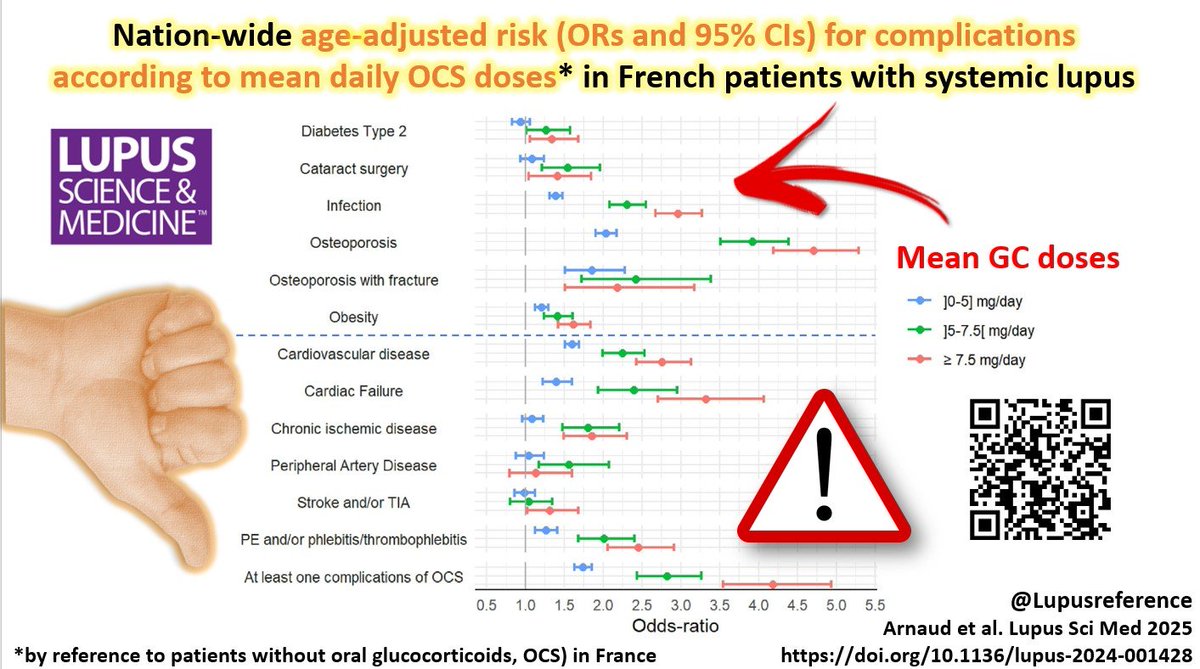
✅ The talks, sessions, symposia I gave at the European #Lupus Meeting #ELM2026 by @SLEuroSociety had ONE thing in common, which is consensually agreeing that we are using too much corticosteroids in #SLE
Check https://t.co/cuUxbrIefe for more
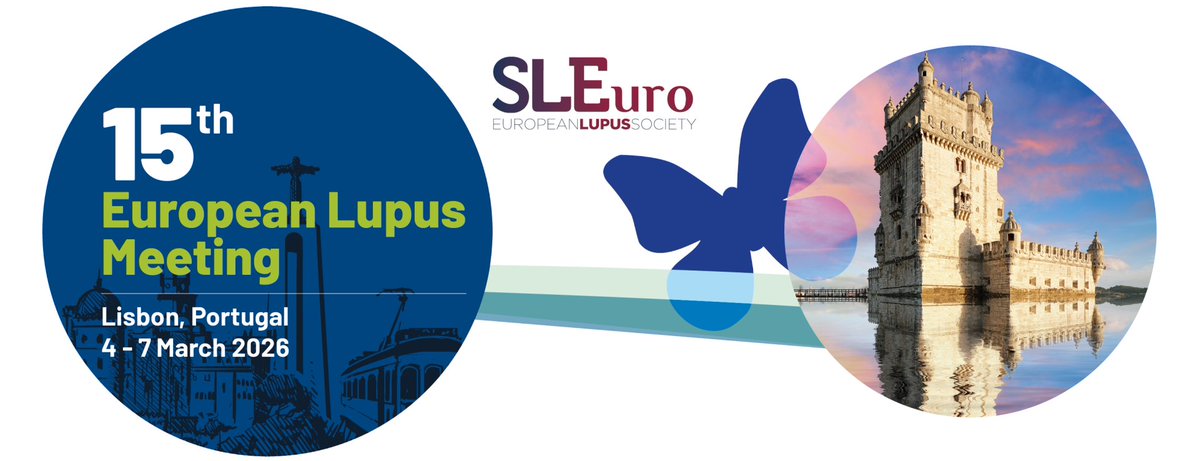
✅ This concludes the amazing European #Lupus Meeting 2026.
Participants have praised the perfect combination of great science, top #SLE experts, patients, in a humane-size venue where interactions between participants were easy.
✅ Key messages from the 'early #Lupus diagnosis' fishball at #ELM2026
- Early diag particularly important for non-severe patients (because severe often diag quickly)
- #Redflags/education for GPs is key
-Access to care/rethinking pathways
-Role for biomarkers (e.g. ANA+IFN)
@TiffanyAndLupus@LupusEurope ✅ Thank you Tiffany 🙏 My goal is to give the #Lupus community the 'tools' to assess #cognitive issues in #SLE as this is very impactful and neglected. 1st with the #LBFSS, to assess #brainfog & perceived cog. dysfunction and soon with #COGNILUP to screen for actual dysfunction.
✅ After MANY HOURS of work on my freetime, I am happy to share that #COGNILUP, the online free platform to test #cognition in #Lupus is going in the right direction 👍 More about it at @SLEUROSOCIETY meeting in Lisbon!
@Lupusreference Indeed, #neuropsychological testing is a highly underserved area in the evaluation of #SLE , not to mention that even when test results are available, their specificity and therapeutic implications are not always clear.