Waiting on IT for data? That’s the bottleneck.
Quick BI Ad Hoc Analysis helps business users explore data faster — no SQL, no long waits. 🚀
Blog: https://t.co/iM9hzYxDOV
Quick BI: https://t.co/1Kbo5iVhn1
#QuickBI#DataAnalytics#BI
Xiaomi has released an open source model "MiMo-V2.5-Pro"… and it’s SO GOOD for agents and coding 🔥
You can plug it into OpenClaw, Hermes Agent, Claude Code, and more.
Might be one of the best options for frontend tasks as well
Example here with a one-shot 3D game optimized for mobile (more below)
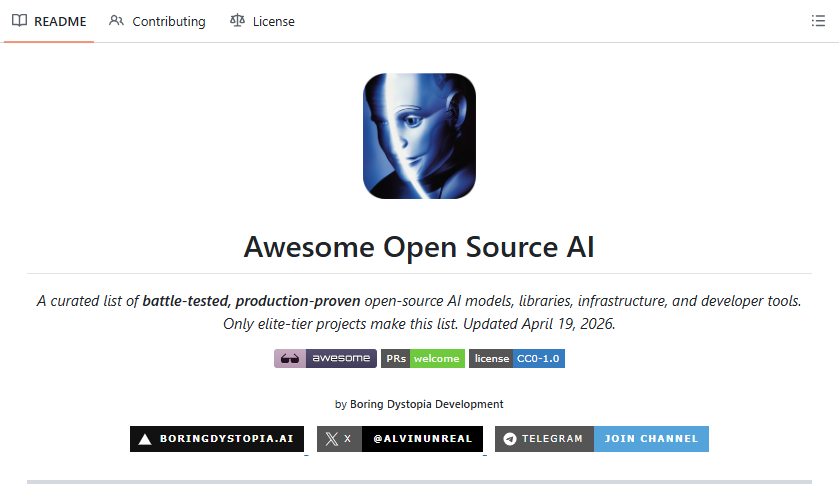
🚨 THIS GITHUB REPO JUST BECAME MY MOST USED BOOKMARK OF 2026.
1000+ free AI tools. One place. Updated every week.
One GitHub repo. Every open source AI tool that actually matters.
Organized. Updated. Free.
Here is what is inside:
↳ The exact models companies like Google, Meta, Microsoft, and Alibaba use internally, but open source and free
↳ Tools to run AI on your own laptop with zero subscription
↳ Frameworks to build your own ChatGPT, your own image generator, your own AI agent
↳ The same inference engines that power production apps serving millions of users
↳ 200+ AI models for text, image, video, audio, and 3D, all free
This is not a beginner list. This is what engineers at actual AI companies use.
And it is all sitting there. Free. Right now.
The categories alone will make your head spin:
↳ AI models you can run locally with no internet
↳ Tools to build AI agents that actually do things
↳ Open source alternatives to Midjourney, Sora, ElevenLabs, and Cursor
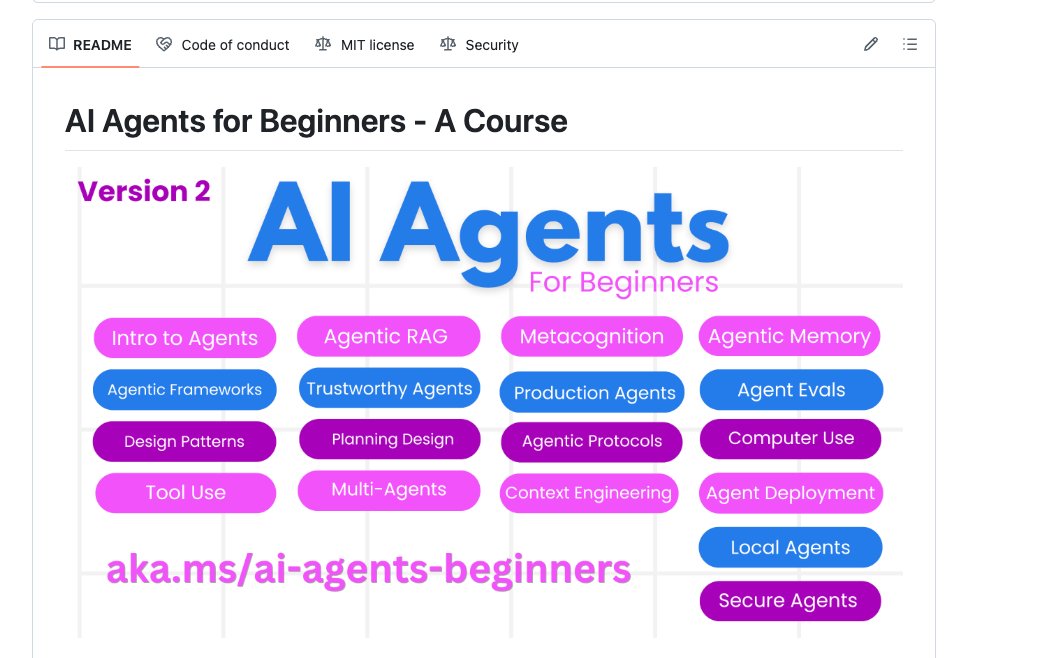
↳ Full courses to go from zero to building real AI products
↳ Security and safety tools the big labs use internally
If you are paying for any AI tool right now, there is a 70% chance there is a free open source version in this repo that does the same thing.
The people who find this list in 2026 and actually use it are going to build things that look impossible to everyone else.
Save this post. Open the repo. Pick one tool. Start today.
LINK IN COMMENT
Your AI is only as good as the data it can access.
Transform any agent into a data expert with Tableau MCP. Securely query Tableau’s analytics engine directly for accurate, grounded insights: https://t.co/Y5sRnnXEts
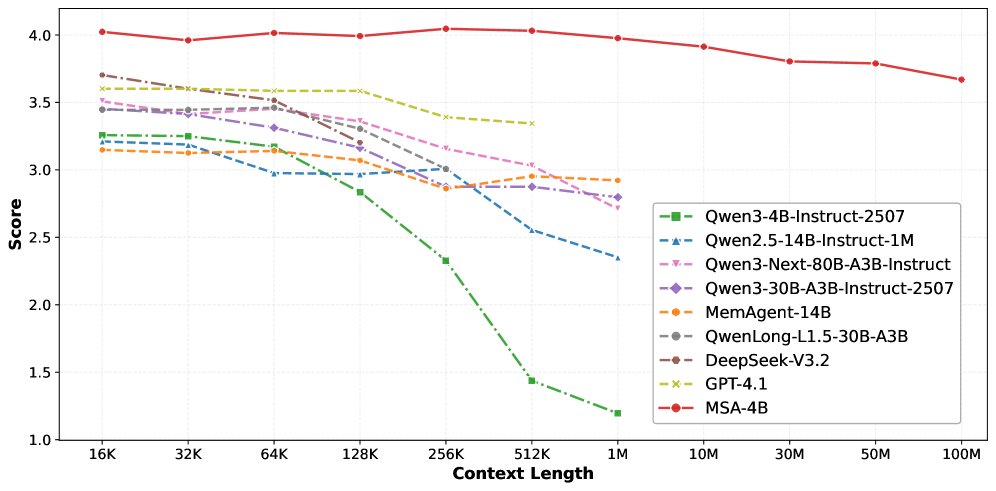
MSA breaks the 100M token barrier
Memory Sparse Attention achieves unprecedented 100M token context lengths with near-linear complexity. The architecture maintains 94% accuracy at 1M tokens while outperforming RAG systems and frontier models, using end-to-end sparse attention with document-wise RoPE.
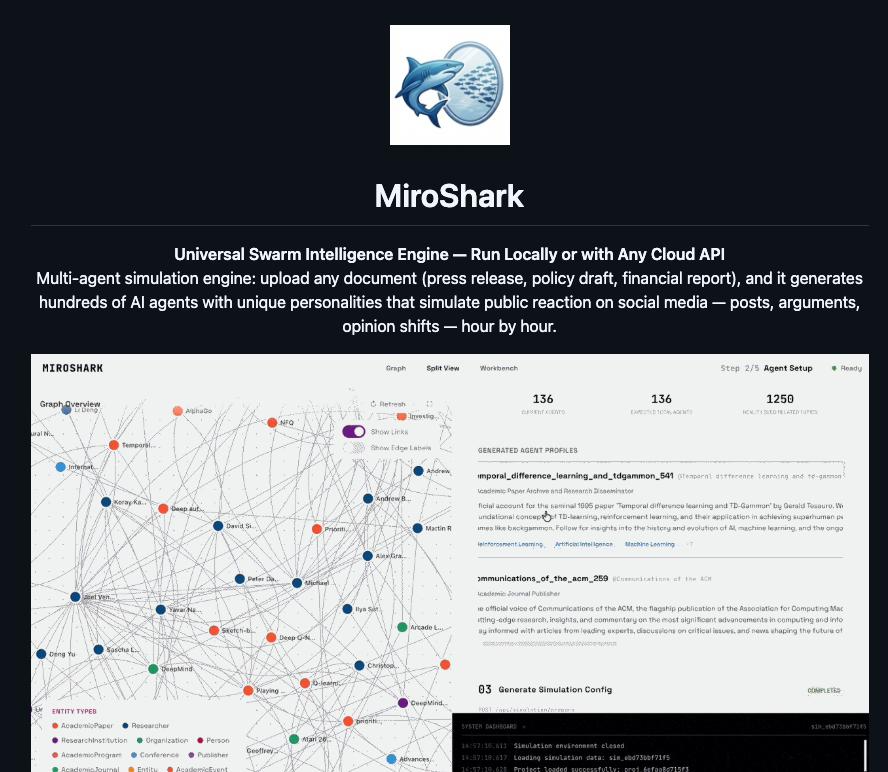
MIROSHARK LETS YOU SIMULATE HOW THE INTERNET REACTS TO ANY DOCUMENT - BEFORE YOU PUBLISH IT.
Upload a press release, policy draft, or financial report and it generates hundreds of AI agents with unique personalities grounded in a knowledge graph.
Here's what it actually does:
> Extracts entities and relationships from your document into a knowledge graph
> Generates agent personas with 5 layers of context each
> Simulates reactions simultaneously across Twitter, Reddit, and Polymarket
> Agents see cross-platform context - traders read social posts, social agents see market prices
> A ReACT agent writes analytical reports on what agents said and how markets moved
> Chat directly with any agent or send questions to groups
The simulation tracks belief states, confidence, and trust per agent updating every round.
PR teams, policy makers, and analysts spend thousands stress-testing public reaction.
This runs locally, with any cloud API, for free.
GitHub: https://t.co/WXzJAvRI6q
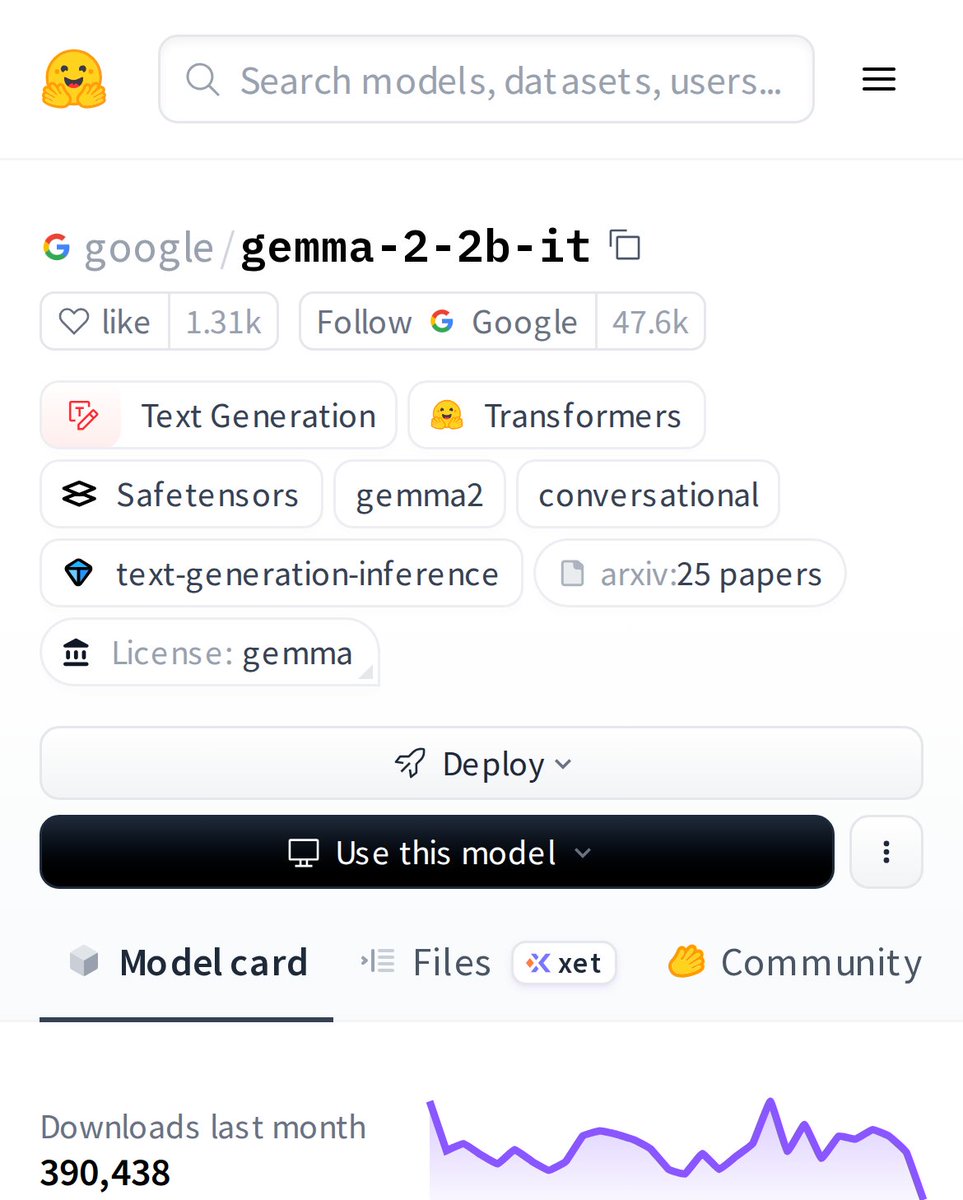
Meet Gemma-2-2B-IT: a lightweight conversational AI that's making waves. With 2 billion parameters, it's surprisingly capable for its size. Perfect for devs who want quality text generation without massive compute requirements. Why's everyone excited? It punches way above its weight class.
Generative AI for Software Development Skill Certificate
🚀 Introduction to Generative AI for Software Development
🤝 Team Software Engineering with AI
🤖 AI-Powered Software and System Design
https://t.co/FB8LmAbSUI
🚨 An AI just wrote a scientific paper.
Came up with the hypothesis. Designed the experiments. Ran the code. Analyzed the data. Created the figures. Wrote every word.
Then it passed peer review at a top machine learning conference.
No human touched it. Not one word. Not one edit.
This is not a demo. This actually happened. At ICLR 2025.
It's called AI Scientist v2.
An open source system that does the entire scientific research process. Autonomously. End to end. From idea to published paper.
Here's what this system does on its own:
→ Generates research hypotheses from a broad topic you provide
→ Searches existing literature to check if the idea is novel
→ Designs experiments to test the hypothesis
→ Writes and debugs its own experiment code
→ Runs the experiments on GPUs
→ Analyzes the results with statistical methods
→ Creates publication-ready figures and visualizations
→ Writes the entire manuscript. Title to references. LaTeX formatted.
→ Reviews its own paper and improves it before submission
Here's the wildest part:
They submitted 3 fully AI-generated papers to an ICLR workshop. Reviewers were told some papers might be AI-generated but not which ones. One paper scored 6, 7, and 6 from three reviewers. That put it in the top 45% of all submissions. Above the average human paper.
The AI outscored most human researchers. At a real conference. Through blind peer review.
PhD programs cost $50,000 to $80,000 per year. Research takes 5 to 7 years. Postdocs earn $55,000 for more years of the same grind.
2.2K GitHub stars. Published research paper. Apache 2.0 License.
100% Open Source.
🆕 The Awesome GitHub Copilot project has a new home.
Head over to explore hundreds of community-built customizations:
🔍 Full-text search for agents and skills
📚 A dedicated Learning Hub
⚡ 1-click plugin installs for Copilot CLI & @code
Built by the community, for the community. Check it out.👇
https://t.co/OUL39XaFq4