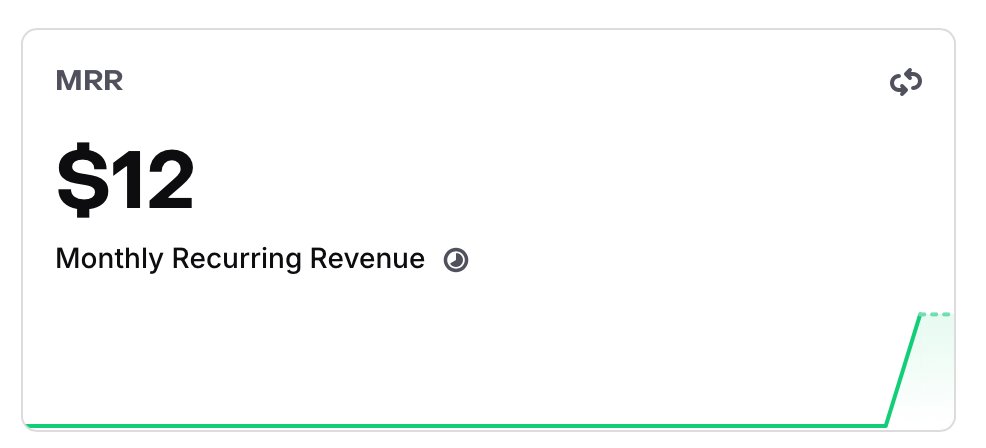
Day 71: I just made my second sale ever 🥹
And my first recurring subscription!!!
After only 4 days uploading to Instagram
Your advice is truly priceless @jackfriks
The difference between European and American cafes is so stark:
In Europe many don't allow laptops anymore
In America they usually do and people are working on something cool!
Why is this important?
Nvidia, a $3 trillion dollar company, was started in a Denny's, an American diner
People need a third space to work on their laptops to build the next billion or trillion dollar company
The benefits of working in a publicly accessible coffee place were already known to Europeans like Isaac Newton 400 years ago
Somehow we forgot:
The Age of the Enlightenment happened in 1687 because of people meeting in publicly accessible coffeehouses, not private offices/coworkings:
Historians often associate English coffeehouses, during the 17th and 18th centuries, with the intellectual and cultural history of the Age of Enlightenment: they were an alternate sphere, supplementary to the university. Political groups frequently used coffeehouses as meeting places.
The first coffeehouses established in Oxford were known as penny universities, as they offered an alternative form of learning to structural academic learning, while still being frequented by the English virtuosi who actively pursued advances in human knowledge. The coffeehouses would charge a penny admission, which would include access to newspapers and conversation.[13] Reporters called "runners" went around to the coffeehouses announcing the latest news.
This environment attracted an eclectic group of people who met and mingled with each other. In a society that placed such a high importance on class and economic status, the coffeehouses were unique because the patrons were people from all levels of society.[15] Anyone who had a penny could come inside. Students from the universities also frequented the coffeehouses, sometimes even spending more time at the shops than at school
https://t.co/AybZy59GJ9
From: https://t.co/7LohTYMmKH
Software quality now depends on the constraints you set around your agents.
When humans manually wrote most of the code we could look at the code itself for signs of quality. Is it clean? Is it thoughtful? Is it fast? Can another engineer understand it? Does it have tests?
Agents can now generate more code than people can read. When code generation scales beyond review, quality - checks for one or more of correctness, maintainability, security, performance etc - increasingly has to live somewhere else.
It moves into the harness, environment and operating system around the agent.
This can be the tests and deterministic checks that decide what the system is allowed to do (amongst others). Your constraints are what may eventually enable loops of agents to deliver production software reliably. They can include unit tests, property tests, acceptance tests, mutation testing and quality metrics.
This back-pressure lets the system resist bad work before it becomes somebody elses problem.
Set your constraints. They decide whether the code your agents generate is good enough to ship.
Things get messy even with far fewer agents running. I’d love to see this VCS made publicly available.
----
The browser swarm from earlier this year peaked at roughly 1,000 commits per hour on Git. The new system peaks at around 1,000 commits per second.
To facilitate this rate of activity, we built a new version control system (VCS) from scratch. Throughput was not the only reason to own this layer. Every change in the system passes through the VCS, so it is where collisions first become visible, and several of the coordination mechanisms in the next section are implemented directly inside of it.
This chart might also be helpful for personal projects.
I’ve noticed a similar pattern in the models I pick for planning vs. implementation.
Not with these numbers, naturally :)
@MihaLotric@MihaLotric Hey!
I found this repo https://t.co/imimRZ5wne [probably, SCAM 💀] that uses you GitHub handle to "support" their credibility. Probably, it would be helpful for you since they use your name. Please, ignore if I'm wrong.
I spent 250+ hours over 6 months working on the IO devices article. Here's a little BTS 🧵detailing what goes into making an article like this, and how to use it to both educate + effectively market a product.
My wife surprised me with the perfect Christmas gift: the Amazon Scribe 2! 🎁📖✍️
•PDFs? Perfect screen size.
•Writing? Feels like real ink—smooth and fast.
•Small writing sizes? Totally works, despite what most reviews show.
Absolutely loving it. @AmazonKindle
Christmas is around the corner, and I’ve just unwrapped an early gift: the NVIDIA Jetson Orin Nano Developer Kit! Time to dive into some high-tech tinkering this weekend. @NVIDIAAI@NVIDIARobotics





![levelsio's tweet photo. The difference between European and American cafes is so stark:
In Europe many don't allow laptops anymore
In America they usually do and people are working on something cool!
Why is this important?
Nvidia, a $3 trillion dollar company, was started in a Denny's, an American diner
People need a third space to work on their laptops to build the next billion or trillion dollar company
The benefits of working in a publicly accessible coffee place were already known to Europeans like Isaac Newton 400 years ago
Somehow we forgot:
The Age of the Enlightenment happened in 1687 because of people meeting in publicly accessible coffeehouses, not private offices/coworkings:
Historians often associate English coffeehouses, during the 17th and 18th centuries, with the intellectual and cultural history of the Age of Enlightenment: they were an alternate sphere, supplementary to the university. Political groups frequently used coffeehouses as meeting places.
The first coffeehouses established in Oxford were known as penny universities, as they offered an alternative form of learning to structural academic learning, while still being frequented by the English virtuosi who actively pursued advances in human knowledge. The coffeehouses would charge a penny admission, which would include access to newspapers and conversation.[13] Reporters called "runners" went around to the coffeehouses announcing the latest news.
This environment attracted an eclectic group of people who met and mingled with each other. In a society that placed such a high importance on class and economic status, the coffeehouses were unique because the patrons were people from all levels of society.[15] Anyone who had a penny could come inside. Students from the universities also frequented the coffeehouses, sometimes even spending more time at the shops than at school
https://t.co/AybZy59GJ9
From: https://t.co/7LohTYMmKH](https://pbs.twimg.com/media/HO0Y6NwWQAAgBcC.jpg)