Since they arrived on the scene, I've reported from about a dozen different FPV drone positions. When you have a true flying ace in the goggles, a crack team, and plenty of drones, the result is something special.
Our report with the Signum battalion:
https://t.co/ONewJxoECZ
European Commission turned off air conditioning for floors 1 to 7. Commission President @vonderleyen's office is at 13th floor, and her management is at floors 8 and above 👇
“All animals are equal, but some animals are more equal than others.”
— George Orwell (“Animal Farm”)
_
In the 1970s, David Premack wondered if a chimpanzee could be taught to ask a question. He taught Sarah 130 plastic word-tokens. She answered his questions easily. After years of work, she had never asked one of her own. Sixty years later, no signing ape has.
A four-year-old human asks about 25 questions an hour. Paul Harris at Harvard counted them: kids ask their parents around 40,000 questions between ages two and five.
Premack even worked out a method for teaching an ape to ask. Hide a snack the chimp expects. Wait for her to sign "where is it." He never bothered running it on Sarah. She spent her sessions answering his questions, never asking her own. A normal kid, he pointed out, asks "what that? who making noise? when Daddy come home?" on a loop.
Washoe the chimpanzee, the first one taught American Sign Language, knew 250 signs. She could request food. She could sign her name. She once saw a swan and called it "water bird," a sharp invention for an animal she had no sign for. She never asked what the swan was, or where it came from, or anything else.
Koko the gorilla knew about 1,000 signs. Kanzi the bonobo understands more than 3,000 spoken English words. Nim Chimpsky, Herbert Terrace's chimp at Columbia (named to mock the linguist Noam Chomsky), strung 125 signs into more than 20,000 combinations. His longest stretch was "give orange me give eat orange me eat orange give me eat orange give me you." He never asked a thing.
Joseph Jordania, a researcher in Melbourne, thinks this is the line between us and them. To ask a question, you first have to know that the person across from you knows something you don't. Apes do not seem to get to that step, even after a lifetime of being talked at by humans.
Human kids cross that line around their fourth birthday. Apes never do.
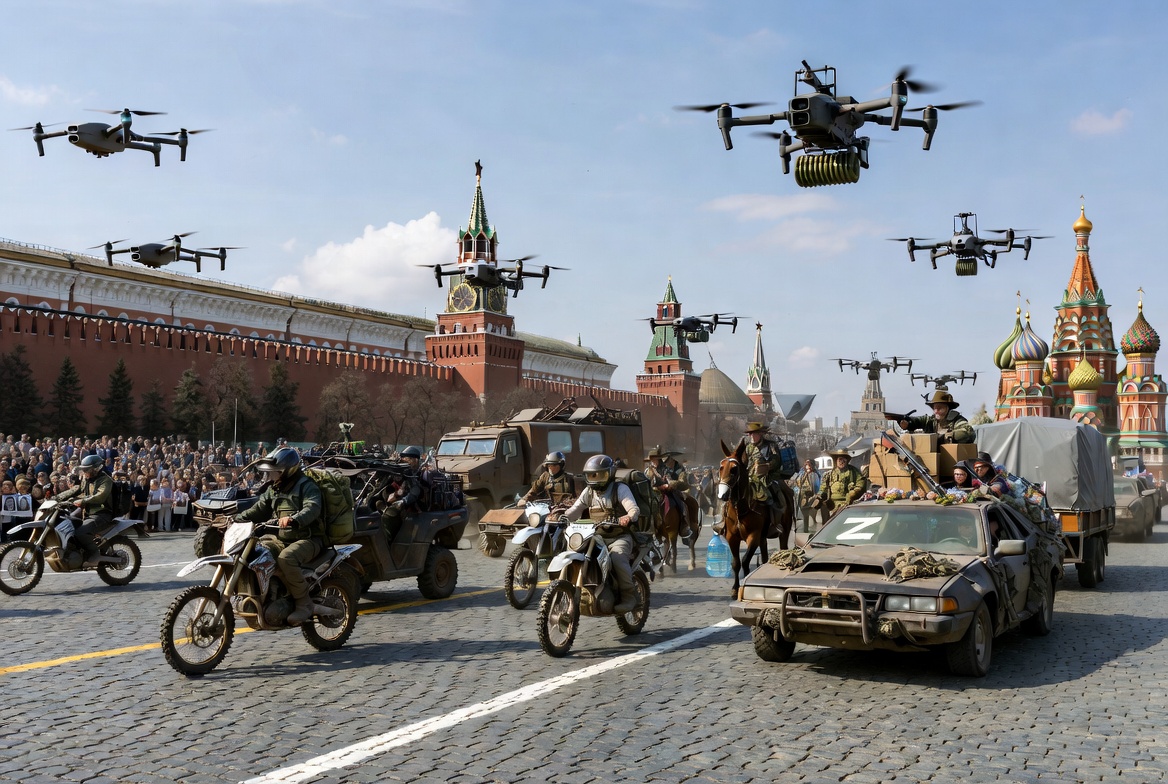
1/ If yesterday's Victory Day parade had been a true reflection of Russia's frontline army as it is now, it would have been a chaotic display of battered vehicles, motorbikes, exhausted soldiers on crutches, and donkeys. A Russian warblogger imagines how it could have been. ⬇️
Ukrainian jets just did something that should have been impossible.
On 14 April, they dropped American GBU-39 glide bombs on a Russian drone depot at Donetsk airport—a target 40 km behind the front line. The bomb only ranges 40 km from low altitude, meaning the launching MiG-29s either flew high over Russian-held territory or flew low and got close.
A year ago, both were suicide. On 14 April, both came home.
The reason is a methodical campaign that destroyed 492 Russian air defense systems between June and early March. "Collapsing the layered defensive architecture that the Russian integrated air defense doctrine depends upon to function," as https://t.co/WA9n68BIJh put it.
It's also why Russian Shahed strikes, once trending toward 7,000 a week, have flat-lined at 1,500. Ukraine is blowing the drones up before they fly. https://t.co/UCXko8W4E1
To be truly fluent in English,
you must know your shits
Dogshit: Very poor quality
Bullshit: Not true
Horseshit: Nonsense
Apeshit: Rambunctious
Batshit: Insane
Chickenshit: Cowards
Ratshit: Poor quality
No shit: Obviously
Holy shit: Unbelievable
Hot shit: Very good
Dipshit: Total dumbass
Tuff shit: Take it or leave it.
Jack shit: Nothing
The shit: Perfection
1/ Goldman Sachs analysts report that the biggest oil crisis in history is about to hit globally, with profound and highly destructive consequences. A new report asks ""Are We Running Out of Oil?", and concludes that the answer is yes. ⬇️
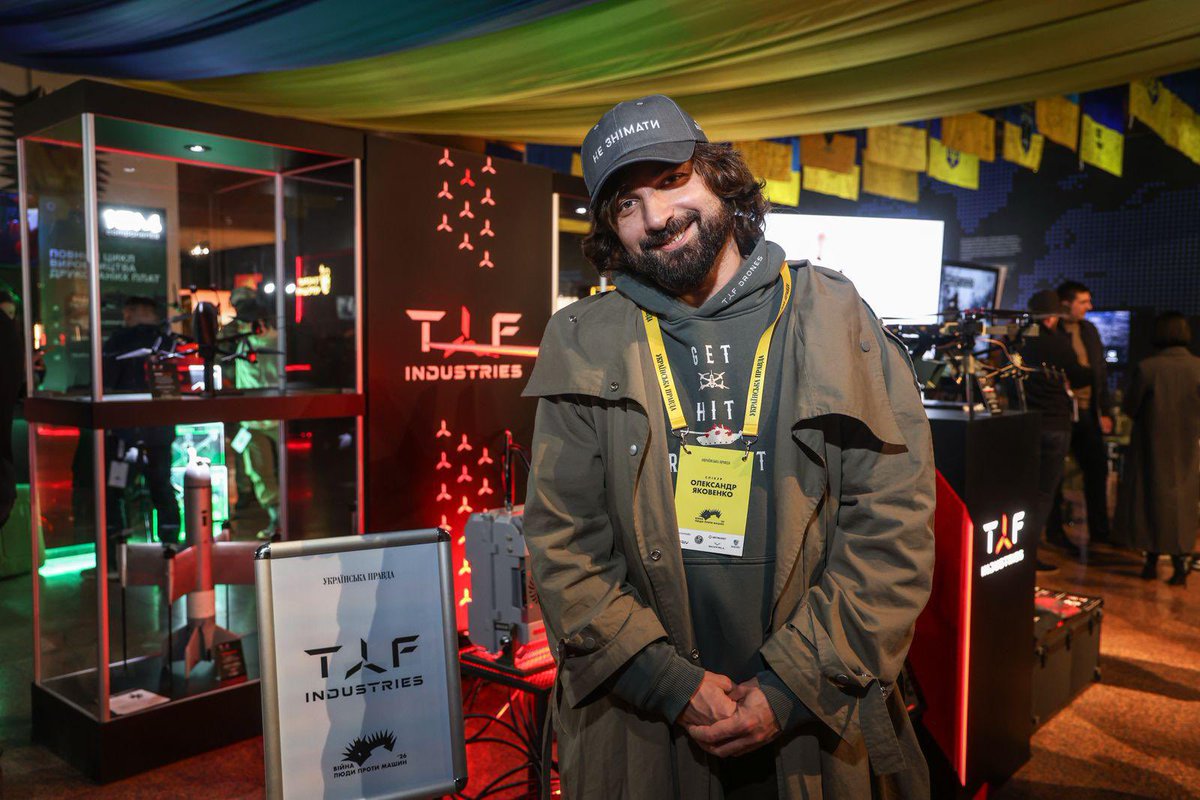
Dear Mr. Armin Papperger, CEO of Rheinmetall,
When you referred to Ukrainian drone manufacturers as “Ukrainian housewives with 3D printers” you revealed just how deeply the European defense establishment still fails to understand the nature of modern warfare.
This is not about emotion. It is about battlefield reality. Here are the facts your industry refuses to acknowledge:
In 2025 alone, Ukrainian drones carried out 819,737 confirmed strikes. They caused 90 percent of all Russian combat losses, more than all other weapons systems combined.
TAF alone produces up to 100к FPV drones monthly. In any given 90-day period, my company’s products alone achieve more confirmed strikes than your entire fleet of equipment has across its full combat history in every conflict. And most importantly, I built this company and achieved these results in two years, not fifty. Think about that.
Our drones generate more kinetic effect in three months than your flagship platforms have in half a century.
Why? Because the battlefield has changed, and your business model has not.
•Russian electronic warfare has made GPS-guided Western munitions such as Excalibur and GMLRS nearly ineffective.
•Expensive and complex systems designed for wars with air superiority and traditional peer-to-peer combat have become easy prey for drones costing $500, attacking them from above.
•The cost-to-effect ratio has been turned upside down: one 120 mm Rheinmetall shell or one anti-tank missile costs more than a dozen of our drones, and yet our drones still win.
This is not a “Lego game.” It is industrial Darwinism in real time. We iterate every week. We print parts in basements and ship 100к strike systems per month, while your engineers still require three to five years and hundreds of millions of euros in certification costs for even a minor upgrade.
The war in Ukraine is not a temporary anomaly. It is the first true drone-industrial war. And it has already proven that outdated European platforms, no matter how expensive or “serious” they may seem, are becoming less and less relevant unless they integrate the very technologies you mock.
So when you say, “this is not innovation,” I hear something else: “We do not want to admit that the future is being written in Ukrainian workshops, not in Düsseldorf boardrooms.”
#MadeByHousewives is trending for a reason. Because these “housewives” destroy more enemy equipment every month than entire European armies do in full campaigns. And they do it while your industry continues to sell 20th-century solutions at 21st prices.
The invitation remains open, Mr. Papperger. Stop laughing at the kitchen table. Come and learn how tomorrow’s war is actually being fought. Because the next time someone asks, “Who needs tanks in the age of drones?”, the answer may be simpler than you think: Whoever still believes in 1979 will lose to whoever is building in 2026.
With respect, but with facts,
Oleksandr Yakovenko “Ukrainian housewives”
Founder TAF
Musk is throwing $25 billion at a single chip factory. TeraFab. Biggest industrial bet anyone's ever made, and the numbers don't work according to pretty much every analyst who's looked at them.
Meanwhile one company in a small Dutch town — ASML — still makes the only lithography machines that actually matter. But Musk isn't trying to beat TSMC at their own game. The play is collapsing the whole design-to-packaging loop so Tesla can iterate on silicon 5 to 10 times faster than everyone else. That gap gets wider every cycle. Everyone else is still buying general-purpose chips off the shelf.
*** thanks to @DavidCarbutt_ and team for the edit.
In Eastern Europe communists tried very hard to erase cultural differences between classes and this left some lasting social consequences, which is why today there aren't such strong class distinctions in the way people speak.
This is actually a very interesting topic and explains some of the cultural and political differences between Western Europe and Eastern Europe today.
For example one of the things that communists did in Eastern Europe was that they tried to "mix" social classes together, like for example when they built those huge apartment blocks they deliberately housed people from various social backgrounds in there. Their ideal was to have workers, (former) peasants, bureaucrats, teachers, intellectuals etc. all living together in the same buildings, same neighborhoods. Communists also purged the old elites from power, so members of old elites would end up mixed with people of lower classes in this way.
One specific example of this I can think is years ago I was listening to an interview with the president of UEFA (governing body of European football) Aleksander Čeferin, who is from Slovenia, and he revealed that his father was a prestigious lawyer but their neighbor was a cleaning lady, and their apartments were of exactly same size. This is what communists in Eastern Europe were pushing for, having people of (former) elite living next to working class.
Because of this, certain cultural differences between classes were erased, including the way people speak. People who grew up in the same city or region would develop the same accent regardless of their social background. There would be no accent associated with elite, because such cultural elite no longer existed, the communist officials who were the new "elite" generally came from lower classes. Of course educated people would generally have a richer vocabulary but they would still speak more or less the same as lower classes in terms of accent, pronunciation, intonation of words etc.
It's still like this today, in Eastern European countries (at least the ones I'm familiar with) you don't have anything equivalent to "posh accent" or Received Pronunciation or whatever it's called in Britain. In Britain this accent is associated with upper classes, especially in some exaggerated version, and few people in the country speak like this in daily life. It's not regional but related to specific class. In Eastern Europe, accents are regional, people from the same region speak the same regardless of their class. Of course there is a need to learn standard pronunciation of the national language for education purposes and to be better understood by people from other parts of the country, but this is not some snobbish class thing. Some rural dialects might be looked down upon, but those are regional differences, not class differences.
So yes, there are very few distinct class markers in Eastern Europe in terms of accent and the way people speak, especially in terms of their economic class background. I think this is largely due to communists aggressively purging the culture of upper classes.
The interesting thing is that the attempt of communists to erase cultural differences between classes had some completely unintended consequences. One could easily argue that this strengthened the sense of nationalism in the Eastern European countries, because it erased many distinctions between people within the same nation, and basically integrated the nation more strongly. Before communists took power, Eastern European countries still had many internal divisions, remnants of old ruling classes, different ethnic groups, large rural populations etc. But communists made these societies much more homogeneous in every way. So even though they were trying to build something completely different, they just ended up concluding 19th century nationalism, but in an even more radical way than it was done in Western Europe.
As a result of this, Eastern European countries are more nationalistic and socially conservative today, there simply isn't a strong enough upper class that would be associated with cosmopolitan liberalism. Ironically, the communists made Eastern Europe more "reactionary", as they would say, in the long term.
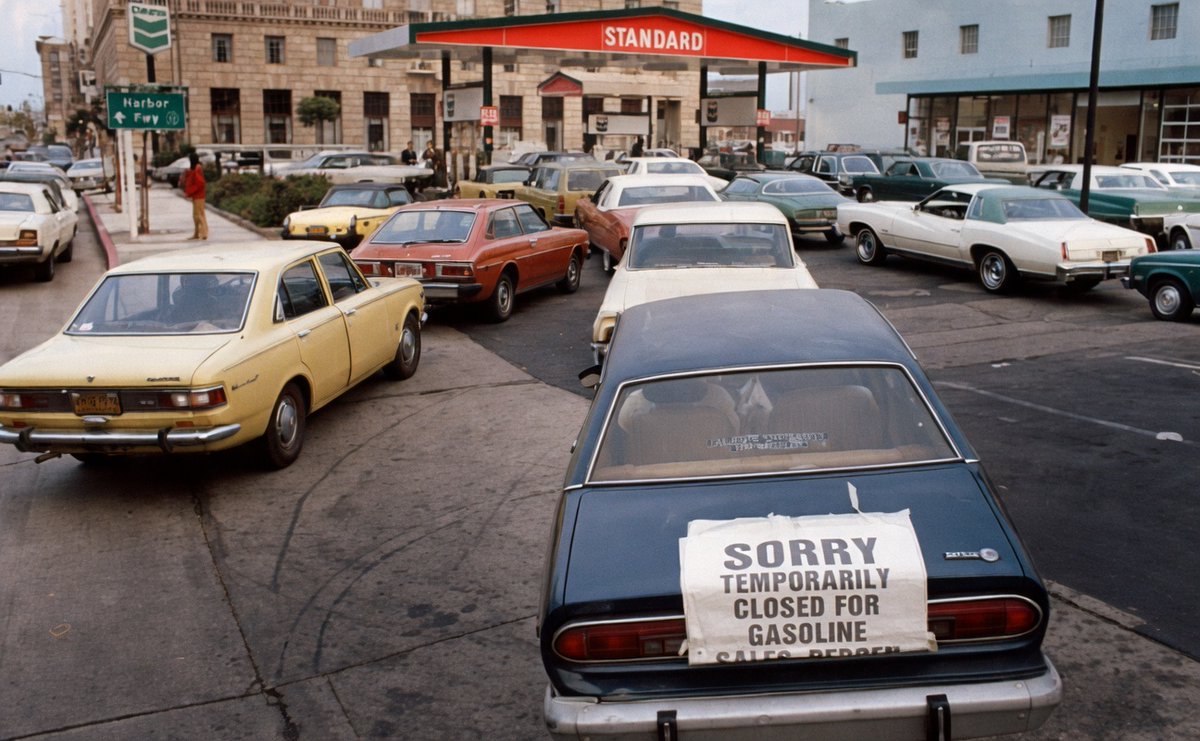
1/ Has Donald Trump accidentally recreated, in an even more severe form, the energy crisis that doomed Jimmy Carter's presidency? A comparison with the 1979 oil crisis shows worrying parallels with the current situation. ⬇️
Lebanon is a perfect model of what happens when two civilizations share geography without sharing a political philosophy.
It’s a small country, same language, same food, same weather, same ancient history. No walls. No checkpoints.
But each community, Christian and Muslim, lives behind invisible civilizational lines. They don’t mix in political life, educational life, or social life.
These lines have existed since the Ottomans, and they hardened after the civil war.
The Christian areas built their society around a European-influenced political culture: secular schools, mixed-gender social norms, individual rights, and a relatively open civic space.
The Muslim areas built "Islamic society".
The result is not “diversity," but dual sovereignty inside one state.
In 2023, the country literally split into two time zones during daylight-saving time, one Muslim and one Christian. Neighbors who live in the same building had different times. It was an honest reflection of two separate civilizational logics refusing to follow the same clock.
Lebanon is a failed state because it tried to fit two incompatible political visions under one flag.
The West is repeating Lebanon’s experiment but pretending it will end differently. There is no historical precedent for that working.
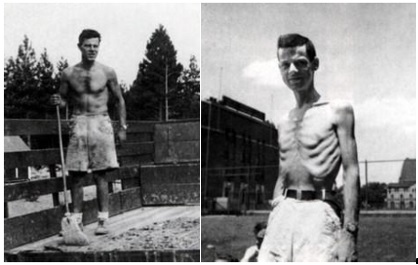
The craziest study ever - The Minnesota Starvation Experiment
32 young men were put on a 40% calorie-restricted diet for 6 months, while staying physically very active
They lost 25% of their body weight by the end of it
Here's what this study contributed to longevity research
Iran’s plan is failing. Its ability to dispatch missiles & drones has been reduced by 95% after just 15 days of Israeli & American strikes. It has also used around 40% of its missile stockpile and lost 100s more on the ground. 47 years of "Death to America" ends in humiliation.
While the whole of the Middle East, assisted by the US, Israel and some NATO countries whine about failed efforts to destroy 200 Iranian drones, Ukraine just casually hit another all time record, destroying almost 2000 in 24 hours.