Por 3er año consecutivo, Chile no reporta muertes en lactantes menores de 1 año por virus respiratorio sincicial. Un antes y un después!.. Gracias a la estrategia nacional de prevención contra el VRS con anticuerpo monoclonal (nirsevimab)
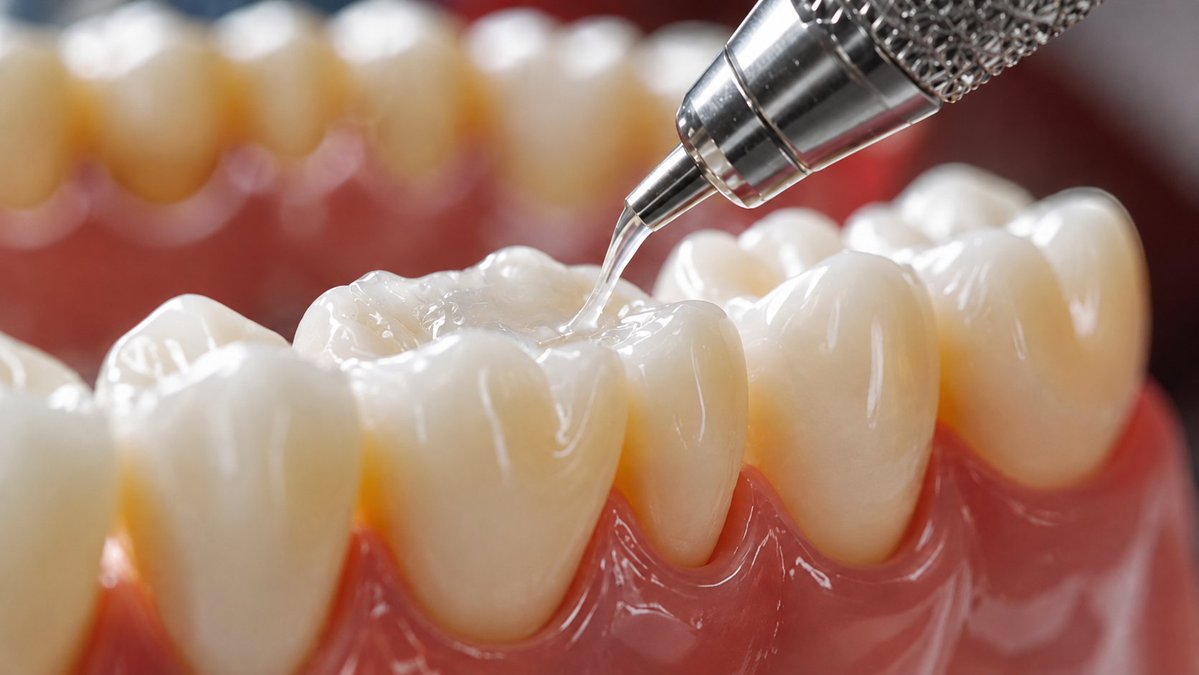
🚨 BREAKTHROUGH: Scientists at the University of Nottingham have developed a new enamel-repairing gel that starts restoring teeth in just 2 WEEKS.
This could replace fillings and change dental treatment worldwide, with use expected around late 2026–2027.
Here is how it works and when you can get it.🧵
Interesting article today in The Washington Post.
https://t.co/Oue0aqSk09
A new study following >5,000 older adults for six years found that routine vitamin D supplementation was associated with slightly faster cognitive decline—but importantly, this was seen in people who already had normal vitamin D levels.
This is observational. It does not prove that vitamin D supplements cause cognitive decline.
But it raises a fascinating question:
Is taking vitamin D in a pill biologically equivalent to making vitamin D in your skin from sunlight?
No.
Marion Nestle, emerita professor of nutrition at NYU, told the Washington Post:
“I vote for short exposures of skin to sunlight, especially during the summer.”
There is an important physiological distinction here.
With UVB exposure, vitamin D is produced in the skin through a naturally regulated photochemical process. Continued UV exposure does not simply produce unlimited vitamin D—excess previtamin D3 and vitamin D3 can be converted into inactive photoproducts.
An oral supplement bypasses that cutaneous pathway.
That does NOT mean vitamin D supplements are necessarily bad. They are extremely useful when indicated, particularly in deficiency.
But it illustrates a principle I think medicine sometimes forgets:
Route matters. Physiology matters. Context matters.
And sunlight is not merely a vitamin D delivery system.
It simultaneously interacts with nitric oxide, circadian biology, immune signaling, mitochondria, and potentially many pathways we haven't even discovered yet.
We often try to isolate one molecule from nature and put it into a pill.
Sometimes that works beautifully.
But we shouldn't automatically assume the pill reproduces the physiology of the original stimulus.
Maybe the question shouldn't always be:
“What supplement replaces sunlight?”
Maybe we should also ask:
What are we losing when we replace sunlight with a supplement?
Recent studies suggest that popular supplements like vitamin D, omega-3s and glucosamine may not be beneficial for aging brains and could even accelerate cognitive decline.
The findings are preliminary and mainly come from observational studies. https://t.co/m99ZsQWo85
Fetal exposure to paracetamol is associated with altered markers of ovarian development and reduced uterine volume in girls: the COPANA study https://t.co/H1sYUSb0iE
En USA quieren hacer una ley parecida a la nuestra con respecto a los tratamientos reproductivos.
Mandated State-Level Surveillance of Assisted Reproductive Technology — An Emerging Threat in the United States | New England Journal of Medicine https://t.co/r6nUTqF1dR
Intrauterine human chorionic gonadotropin administration before embryo transfer (IHABT): an individual participant data meta-analysis of randomized controlled trials https://t.co/wdRaiDqjS6
Spontaneous ovulation and corpus luteal activity in natural proliferative phase frozen embryo transfer protocol with natural progesterone as luteal phase support: A prospective study
https://t.co/cIftK8xzuV
Ultra-processed foods are linked to reduced fertility and embryonic development First study to look at combined impact of diet in both men and women
https://t.co/cUmjPVQewE
¡MÁS NOTICIAS DE ESTAS POR FAVOR! 👏👏👏
OVACIONAN LOS RESULTADOS DE UN TRATAMIENTO PARA EL CÁNCER DE PÁNCREAS
Aplausos, una ovación de pie y una reacción de alegría poco habitual para un congreso médico marcaron la presentación de los resultados del estudio RASolute 302, que mostró una supervivencia sin precedentes para pacientes con cáncer de páncreas metastásico tratados con daraxonrasib durante el congreso anual de la Sociedad Estadounidense de Oncología Clínica (ASCO).
Los resultados fueron publicados en simultáneo en la revista New England Journal of Medicine, una de las publicaciones médicas más prestigiosas del mundo.
El ensayo fase 3 incluyó a 500 pacientes de América del Norte, Europa y Asia que ya habían recibido una primera línea de quimioterapia para cáncer de páncreas metastásico. Los pacientes fueron asignados al azar para recibir daraxonrasib o una segunda línea de quimioterapia.
El cáncer de páncreas metastásico tiene muy pocas opciones terapéuticas después de la primera línea. Con los tratamientos actuales, la supervivencia en segunda línea suele rondar los 6 o 7 meses y pocos pacientes sobreviven más de un año.
La supervivencia global mediana fue de 13,2 meses con daraxonrasib, frente a 6,7 meses con quimioterapia. El riesgo de muerte se redujo un 60%.