Because my wife has her salary account with @TheOfficialSBI, about a year ago some local SBI officials almost fell over themselves trying to persuade her to take a credit card.
She kept resisting, but eventually agreed on one condition: she would decide whether to activate it after receiving the card. We were specifically told that there would be no fee if the card was not activated, and that there would be no charges during the first year in any case.
The card arrived. She never opened it. It remained sealed in the original envelope for almost a year.
Then, one evening few days ago, she suddenly received a message saying that ₹3,538 would be auto-debited from her account the next day.
She immediately contacted the official who had persuaded her to take the card. The official was equally surprised and even visited our home to see for herself that the card was still sealed in its original envelope. My wife had never activated or used the card.
The official helped her connect with SBI's online helpline, where she was assured that the amount would be reversed within a few days. The next day ₹3,538 was deducted from her account.
Today, five days after, however, my wife received a message saying that her request for annual fee reversal of ₹2,999 had been approved.
So what happened to the remaining ₹539 that was deducted?
Even the SBI official who helped us has no explanation for this deduction.
What kind of “dadagiri” is this, @SBICard_Connect?
First, you charge a customer for a card that was never activated or used. Then, when the customer complains, you reverse only a part of the amount deducted -without explaining the balance.
This is simply not acceptable.
@TheOfficialSBI@SBICard_Connect, please take cognisance of this matter immediately, explain the ₹539 deduction, and ensure that the entire amount deducted is refunded.
A bank cannot build customer trust by making customers fight to get back money they should never have been charged in the first place.
@FinMinIndia@RBI@jaagograhakjago@jagograhakjago
'हम तो भूखे मरकर भी देख लिए, तीन-चार दिन खाना नहीं मिलता था...'
गेस्ट इन द न्यूज़रूम में आए रघुबीर यादव ने सुनाया अपने संघर्ष के दिनों का किस्सा. ये भी बताया कि म्यूज़िक ने उन्हें इन दुश्वारियों में कैसे संभाला. ऐसे ही और क़िस्सों के लिए देखिए पूरा एपिसोड https://t.co/ankzrEt587 पर.
26 सितंबर | दोपहर 12 बजे
GITN | Raghubir Yadav
Across the country, thousands of truck drivers park their vehicles on highways in a shockingly careless manner. Every night hundreds of vehicles hit such dangerously parked vehicles.
In 2023 alone, 5,636 people died in India in crashes involving parked vehicles.
Next time you see a truck dangerously parked or stranded on a highway, please don’t simply drive past. Call 1033 or 112 and ask them to get it removed. That one call may save lives.
Please RT.
It may sound harsh, but in a way, Jamui reflects a large part of our society. Put a helpless, defenceless couple in a similar situation, and far too many perverts living among us would behave the same way.
Nirbhaya and the many similar crimes since then are not merely isolated incidents. They tell us something about the society that we have created.
And we all know this is not about this government or that government. It is about our society. It is about us.
Nirbhaya was not the first. Jamui will not be the last. That’s the unfortunate reality.
#Jamui
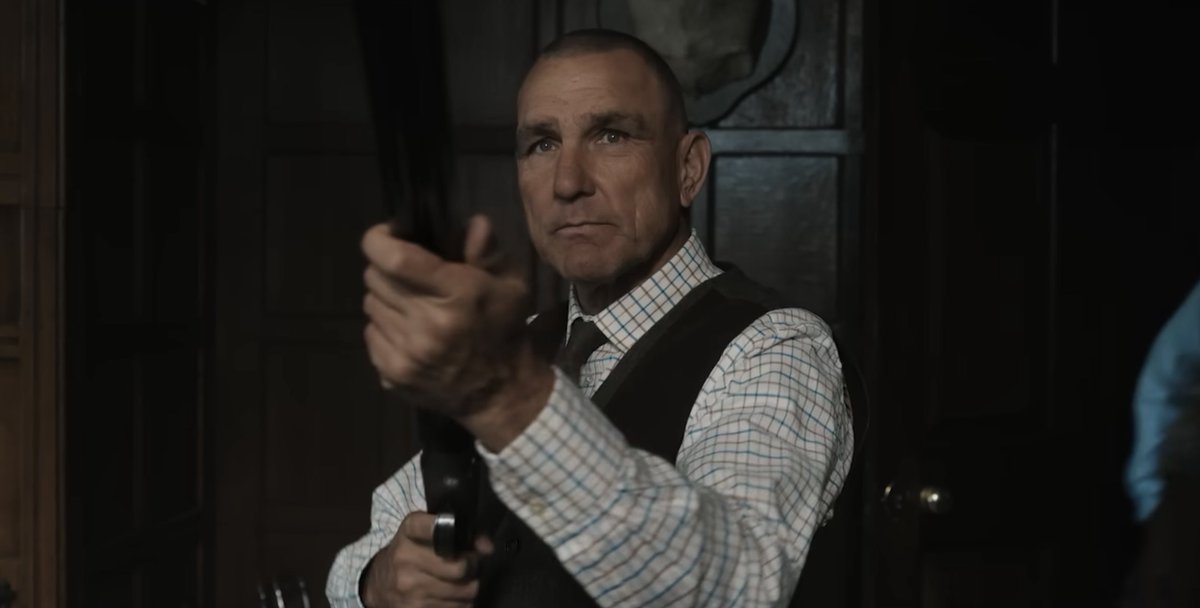
Almost three decades of his fruitful collaboration with Guy Ritchie. From "Lock, Stock..." to "The Gentlemen Season 2". It's so cool to see an entire episode devoted for his British Rambo-like character, the trusted lieutenant of the main guy.
The most expensive part of a hospital bill may never touch the hospital at all.
A patient admitted for care has no way of knowing whether the price on a medical consumable reflects its actual cost or a markup fixed long before it ever reached the ward. That gap in information is, at its core, a public health issue.
A survey of hospital consumables in Maharashtra found an IV infusion set with a trade price of ₹11.05 carrying a printed MRP of ₹325 ; a markup of 2,841%. A syringe procured at ₹6.75 carried an MRP of ₹57.20. A catheter procured at ₹29.41 carried an MRP of ₹310.
These are not elective purchases. Patients cannot compare prices, seek alternatives, or question a number printed on a box while receiving care and the MRP itself is often fixed upstream by manufacturers and distributors, disconnected from the trade price by a wide, unexplained margin. The result is a system where the party bearing the cost has the least information to evaluate it.
The regulatory gap is structural: scheduled medicines are capped under the Drugs (Prices Control) Order, 2013. Most medical devices and consumables are not leaving both the pricing and the information around it almost entirely unmonitored.
A review of these findings and clear guidelines on the permissible gap between trade procurement price and declared MRP have been recommended to the Department of Pharmaceuticals and the NPPA ; a step toward closing not just a pricing gap, but the information gap patients are left to bear alone.
#PublicHealth #GoodGovernance #Leadership #TukaramMundhe
https://t.co/Ye9CVzr8qU
WTF is wrong with us? Is this how we treat a war veteran?
This man is a decorated hero who fought the historic Chat Wars at the Battle of Baghpat. And today, we make him stand in queues for some stupid government scheme...
🙏 Sabhi X users se meri dil se request hai, please meri baat @iamsrk Sir tak pahucha dijiye. Mere abbu Saudi Arabia me kaam karte the aur 4 March 2026 se unse koi contact nahi ho pa raha hai. Hamara pura parivaar bahut pareshan hai. Please meri help kar dijiye 🙏🏻 @iamsrk@Saudi