Pro Farmer Podcast: @HillariMason, @iwatchcorn and @wlwatts break down last week’s WASDE, a surging dollar, the export pace, firm basis and what to expect when Trump, Putin and Xi meet in Shenzhen...
https://t.co/HyoeP3Vtcz
Spencer Langford, @iwatchcorn and @wlwatts discuss favorable harvest weather, firm basis and fund positioning, along with what to look out for in this week's Cattle on Feed Report.
https://t.co/NTMu6zAUPT
The photo of the bottom of a hot wheels car over the decades is making the rounds. People don’t consider how hot wheels has maintained an affordable prices over the years. Natural to think some of the details would go away to keep prices low
I put together a piece on Friday's crop production report, namely, looking at the objective yield data. A lot of head scratching with this report given the anecdotal yield reports so far this year but I still believe we will see a sizeable drop from where USDA is at now.
https://t.co/dHyRz7iQyy
What makes it more puzzling. The ear counts for irrigated and non-irrigated were both down from previous counts. Both declining and all-state numbers increasing implies a shift in the ratio of irrigated/non to more irrigated acres. Implied ratio says there's 3.8% more irrigated acres in October vs September. Look at FSA data and the % irrigated shift between the two months is 0.3%.
In this week's podcast: @iwatchcorn and @wlwatts discuss western Corn Belt harvest delays, a break in the weather and quality concerns. Spencer Langford previews what to watch for in Friday's Crop Production and WASDE reports.
https://t.co/AKMjqbhqM4
Smash burgers catch some heat but when cooking a quick dinner for a family of five they’re hard to beat. Happy national burger day to all who celebrate
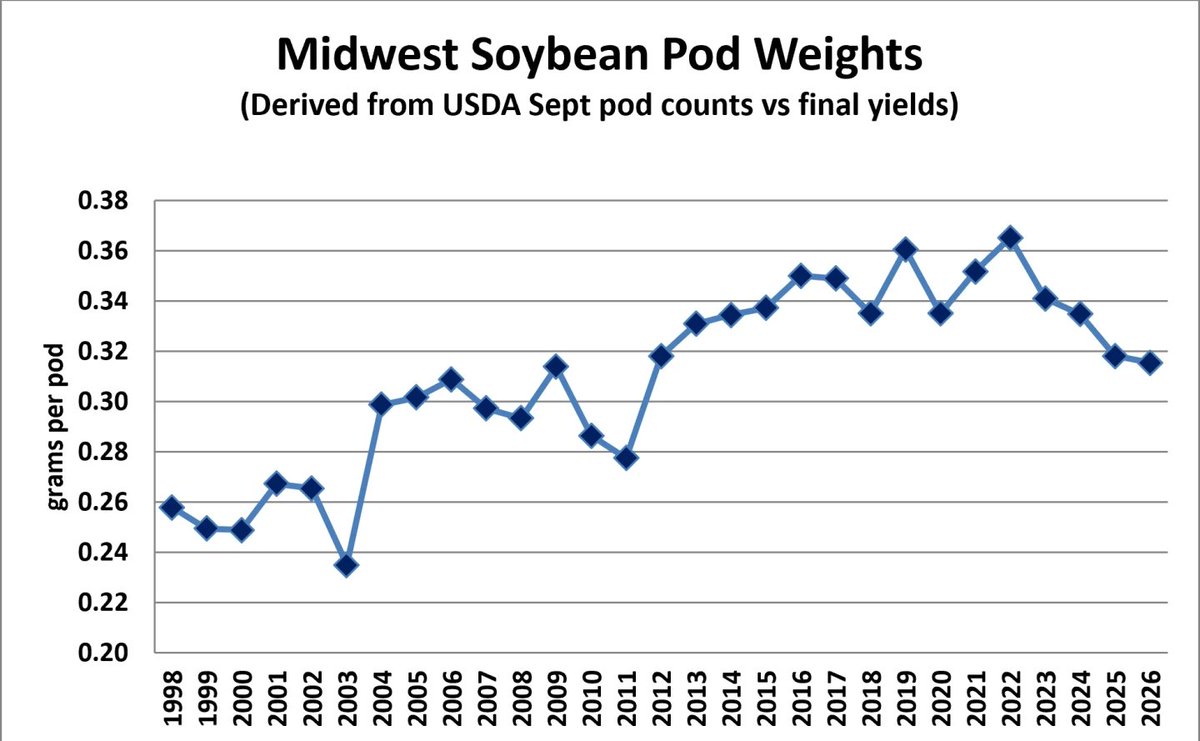
Lower pod counts found on Crop Tour contrasted with USDA’s higher figures — here’s what the math says about the potential for a record soybean crop.
https://t.co/WMGS8mp4Aw
September objective yield data backs up Crop Tour findings of blank stalks and smaller ears, but USDA’s ear weight assumptions still don’t reflect the full extent of crop stress.
https://t.co/N9cp1QFPYr
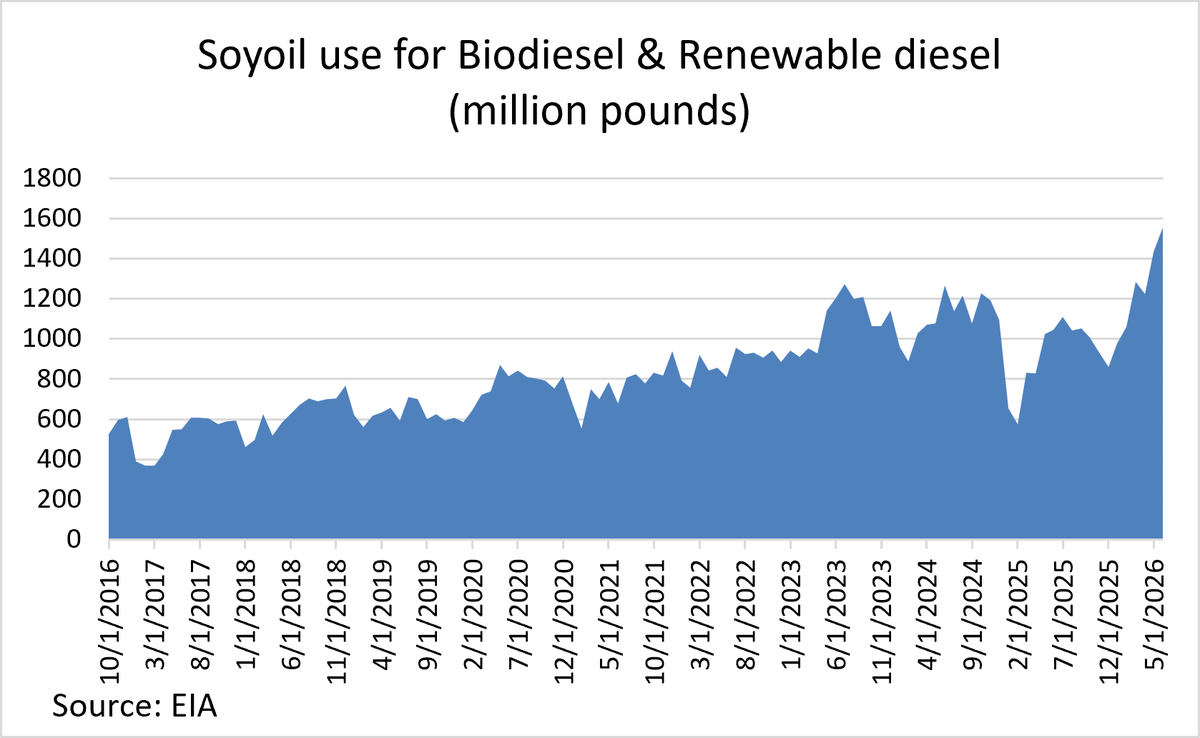
@SethMeyerMU Thanks Seth, that’s helpful. Still working to wrap my head around RVOs, how soyoil and other feedstocks work into it and how SREs can affect it. Looking at the economics of renewable diesel production and use may not be having as much of an effect as I thought.
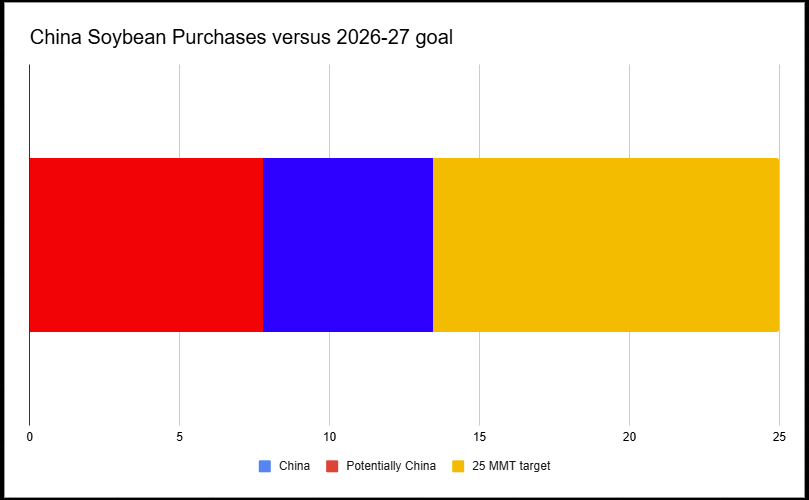
China has bought roughly 7.778 MMT of soybeans so far for the 2026-27 marketing year. That is just shy of a third of the total expected for the marketing year. Daily sales have become the norm rather than the exception, but daily volumes are generally just a couple cargoes. If unknown destinations is included, the total jumps to 13.443 MMT, over half the expected total. While a good chunk of those are likely eventually going to China, not all of them are.