@cooldtp There are different memory areas, with your scripting focus $.summary() could be more relevant, e.g. to find leaks in permanent or long running targetengines.
@cooldtp That feature was implemented for CS3 (2004?) and barely touched since. Do you need such long XML documents on a regular basis? How is performance with IDML or tagged text?
@ThomasPhinney@Adobe@InDesign Scripting has the same problem, the different types don't show in the font name. For a clean find+change, I had to use a plug-in. Not yet implemented for variable fonts, for lack of an example.
@ThomasPhinney@Adobe@InDesign InDesign differentiates font families by type, where kOpenTypeCFFFontType and kOpenTypeTTFontType both show as OTF. Very confusing. The icons are worse, showing VAR or SVG even though these are not different types.
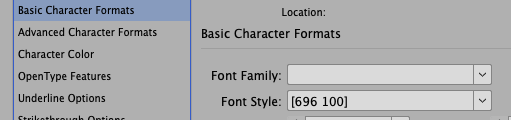
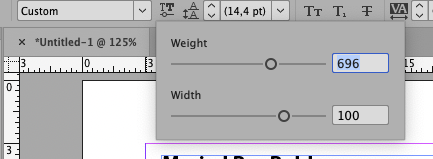
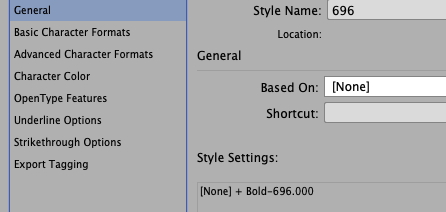
@ThomasPhinney@Adobe@InDesign When I change the weight to 696, the font style dropdown shows custom, but within a character style, it lists the axes and a different name as description.
@ThomasPhinney@Adobe@InDesign The axes are all combined into the same font style name attribute. Not really new, stylistic sets are also combined into one attribute.
@ThomasPhinney@Adobe@InDesign Huh, OTF vs TTF variable fonts? Or do you mean old non-variable ones? There it can get even worse. E.g. multiple incompatible OTF types. Also gotchas when using "document fonts". Took me a while, and scripts have no chance.
It took a while to build momentum, but the https://t.co/iwdkTqjmwj instance is now generating a steady stream of type, lettering and design related content. The community feed is so focused that I mostly don’t feel the need to follow individual members.
Twelve years ago, a young type designer created a rudimentary font based on a photocopy of the Kangxi Dictionary. Within months, it was on everything from restaurant menus to propaganda posters.
https://t.co/nmyFhlyt5b
Traditional Tatar literature is virtually inaccessible for modern Tatars for a similar reason. Till the 20th c we used to be a Persianate culture, so being "educated" implied a decent knowledge of Farsi (at least) and Arabic (ideally). You needed to be at least bilingual
@TiroTypeworks@TiroTypeworks If the stylistic set uses gsub to a composite glyph with the original as comp., could that new glyph have a different kern?