🎉We are thrilled to share that WEA Japan is on The Block.🗞️
Next stop: Asia. We're rolling out stablecoin payment pilots in Vietnam, Thailand, Malaysia, and Singapore to bridge the gap between blockchain innovation and daily commerce.
Read more about our global expansion: https://t.co/p37JqCkXkH
LATEST: 🇯🇵 Japan's ruling party has approved a plan to build a next-gen financial system on AI and blockchain, with support for tokenized deposits and JPY stablecoins.
The number of $NETX required to be in the top 50 holders keep increasing.
A couple weeks ago, the bar was around 60k $NETX.
Now you need atleast 80k. While some mfs are selling, there are others who are obviously buying and taking advantage of the current price.
@netx_world
⚡️ Japan is tokenizing government bonds.
24/7 trading and stablecoin settlement could go live as early as this year.
Japan has one of the world’s largest bond markets.
If this works, tokenized bonds could become a global standard. 🚀
Japan’s payment infrastructure is entering a new era 🇯🇵🌏
At the recent #Netstars business conference, discussions around JPQR Global and stablecoin payments highlighted a major shift:
🌟Unified QR payment networks across Asia are beginning to connect — opening the door to seamless cross-border commerce and more connected digital payment experiences.
👉Read more: https://t.co/oVDJ66EbHS
Today, JPQR Global mainly supports inbound payments, allowing overseas visitors to use their local payment apps in Japan.
🚀 But the long-term vision goes much further: connecting payment ecosystems across countries while building stablecoin-compatible infrastructure for real-world commerce.
As outbound payment capabilities continue to expand, the network is expected to first unlock access to:
🇮🇩 40M+ merchants in Indonesia
🇰🇭 4.9M+ merchants in Cambodia
As a Web3 solution partner supporting @Kouhou_NSS StarPay-X vision, WEA is helping bridge stablecoin payments with real-world retail infrastructure — enabling compliant on-chain payment experiences for everyday users and merchants.
We believe the future of digital payments will not be isolated blockchains or closed payment apps, but interoperable financial networks connecting merchants, users, wallets, and payment providers globally.
#WEA also welcomes collaboration opportunities with payment partners, merchants, and commercial facilities interested in advancing real-world stablecoin adoption together.
#JPQR #StarPayX #Stablecoin #Web3Payments #NETX #Web3
🚀 Japan’s stablecoin payment rollout continues to gain momentum.
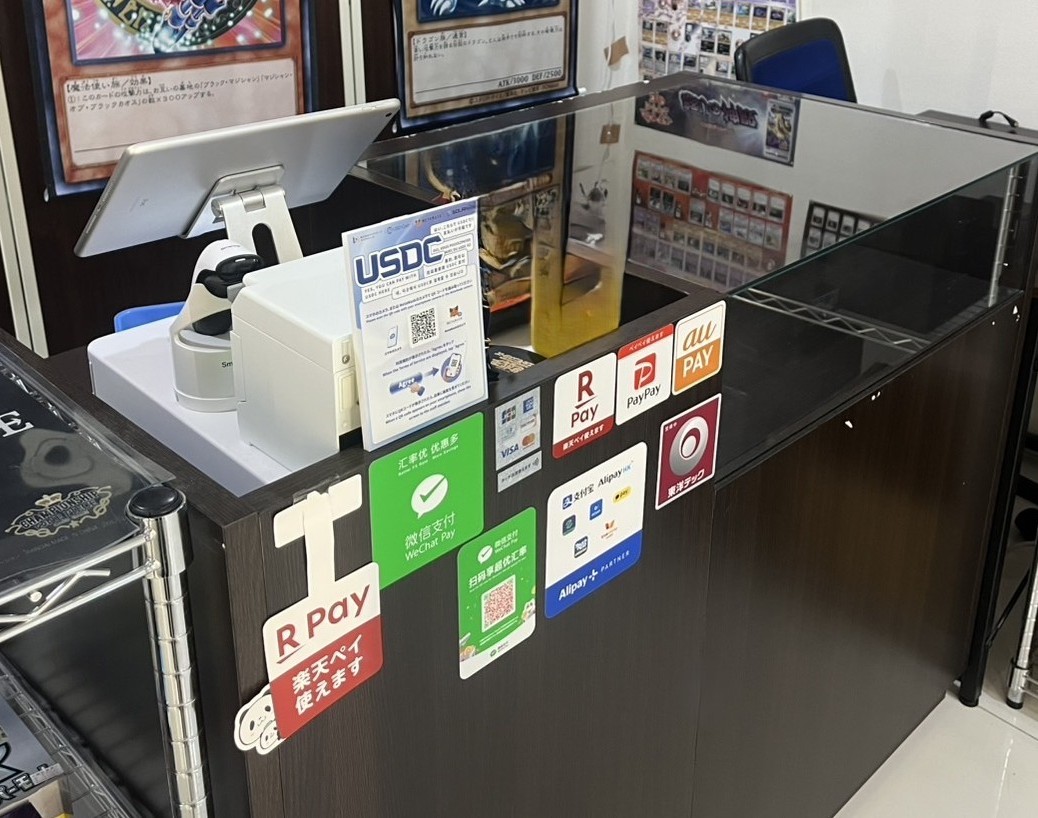
Following the first $USDC payment pilot at Haneda Airport, @Kouhou_NSS has now entered the second phase of in-store demonstrations with TCG BW Himeji, located near the iconic Himeji Castle in Hyogo Prefecture.
Unlike an airport environment, this phase focuses on a high-frequency retail setting — where repeat customers, daily foot traffic, and real purchasing behavior can better demonstrate the real-world viability of Web3 payments.
Why this matters:
• Tests stablecoin payments in everyday local commerce
• Evaluates higher transaction volume and repeat usage
• Builds the foundation for broader merchant expansion across Japan
From travel hubs to city retail, this is how adoption scales. 🇯🇵
As a Web3 solution partner, WEA is proud to support the future of seamless digital payments alongside ecosystem partners.
📍TCG BW Himeji
If you're visiting Japan this May, stop by and experience the next generation of payments. 🚀
#Stablecoin #Japan #Payments #USDC #WEA #Netstars #NetX
Gen Adachi: Haneda's USDC pilot came in 10x above expectations. 📈
Travelers self-selected with almost no marketing. 🛫
Here's why airport retail is the proving ground for stablecoin payments. @teamz_inc@thejollyherring
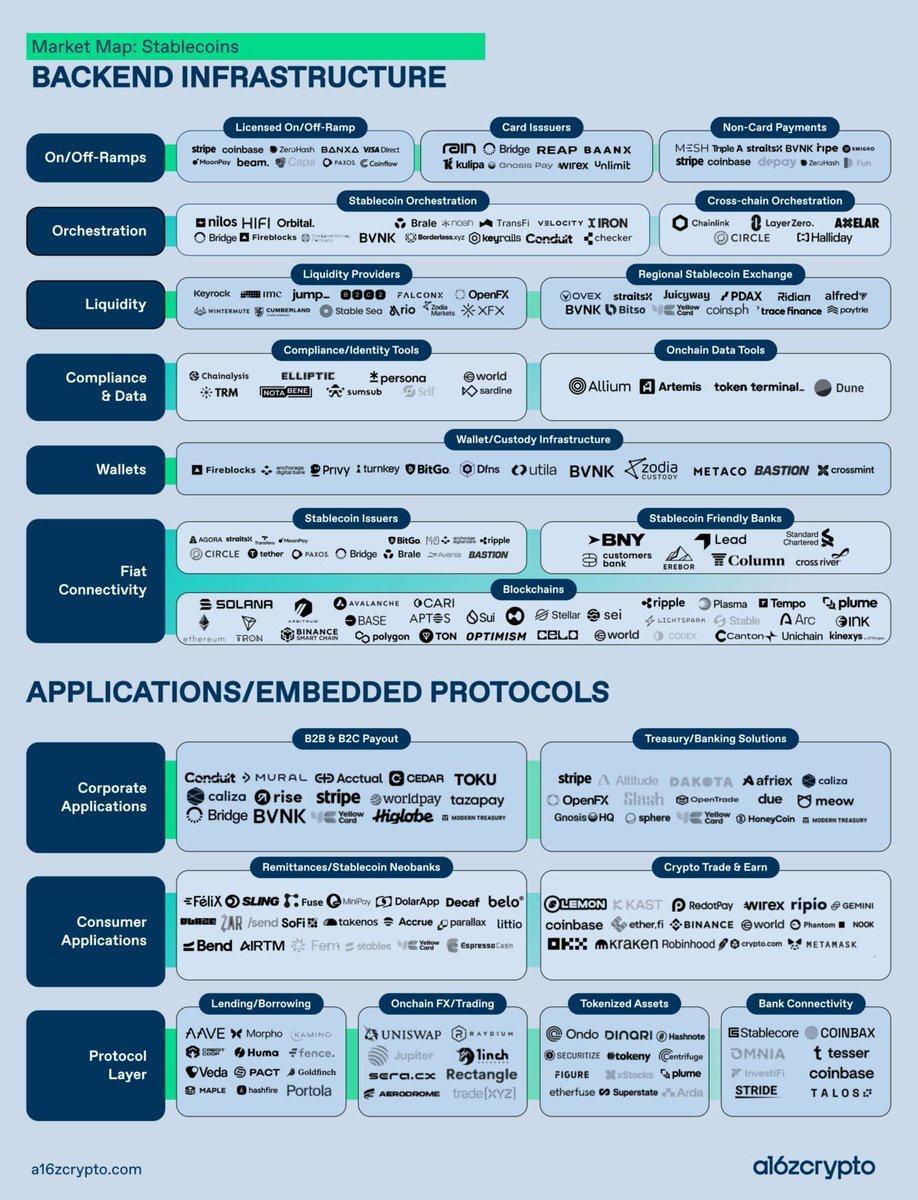
⚡️ JUST IN: According to @a16zcrypto, stablecoins are becoming the core infrastructure of a new global financial system, driving a shift toward onchain banking, payments, and credit.
A compelling presentation by Gen Adachi (@Kouhou_NSS) at BCCC Collaborative Day
⚡️The key insight is that unlike most crypto payment narratives, users do not need to understand stablecoins at all. They can seamlessly pay for goods through StarPay X with zero friction.
This is what real mass adoption looks like. User behavior remains unchanged, yet the underlying system is fully upgraded.🔄
We are working closely with ecosystem partners in Japan to bring stablecoin payments into real world scenarios. #NETX is focused on delivering trusted computing at the infrastructure layer to support this shift.
#Japan is just the starting point. If it proves successful here, it can scale globally and become a template for #Web3 adoption. 🇯🇵🌐
Looking ahead, NETX Network integration will further enhance the payment stack, bringing stronger scalability and verifiability to the system.
Stay tuned for more updates ahead!🚀
@WEAJapan
#NETX #Web3payments #stablecoins
Real-world signals are getting stronger.
From concept → to actual usage.
🌟As shared by #Netstars in this interview, the Haneda Airport $USDC pilot delivered 10× higher-than-expected usage in just two weeks — with users actively choosing #stablecoins for everyday payments.
What matters isn’t just the technology.
It’s how seamlessly it fits into existing systems:
→ Pay with USDC
→ Settle in JPY
→ No change for merchants
👀This is exactly the gap being solved.
As a Web3 solution partner in the StarPay-X initiative led by @Kouhou_NSS, WEA is building the infrastructure to bridge Web2 payment networks with on-chain value — making stablecoin payments usable in real-world scenarios.
From airports → to cities → to global adoption. 🌏
Bridging Web2 ↔ Web3, step by step.
Exciting to see the #USDC payment pilot at Haneda Airport exceeding expectations.
Stablecoins are rapidly moving from concept to real world adoption, and Japan is becoming a leading launchpad.🇯🇵 ✈️
🔥#NetX is proud to provide the underlying infrastructure supporting this pilot, and we will continue working with partners to accelerate #Web3 payments globally.🌏
Stablecoins are entering everyday life…
$NETX FYI, the test pilot was only tested at 2 stores at Haneda Airport.
Assuming he meant $4m yen ($25k USD), now multiply this by 350k (since there are 700k terminals).
That would equal 25k*350k = 8.7 billion in only a month...
All powered by $NETX.
@netx_world@WEAJapan
What most people miss: In Japan, prestige infrastructure like Haneda Airport and Netstars don't touch their financial core systems without FSA approval.
We spent nearly 6 months earning it. First and still the only FSA-approved flow of its kind. The regulation isn't the barrier -- it's the moat.
And we're just getting started.
#LetsGoNetX
Stablecoins as infrastructure isn't a talking point when you're going to settle real transactions through 700K+ merchants.
BCCC Collaborative Day on April 21 -- the conversation is shifting from "can it work" to "how do we scale it." Please stay tuned.
#WEA#NetX
$NETX nice clean breakout and retest. The fun is just starting. Things can pick up really fast from here.
It took $OM 8 weeks of slow uptrend after breakout before going parabolic.
Coincidentally, $NETX mainnet launch is also in about 8 weeks 👀
Repricing event in June⌛️
Claude Managed Agents: agents running sandboxed software to deliver services, brain decoupled from execution.
We wrote about exactly this architecture in AgentCity.
Now multiply it. Millions of owners. Millions of agents. No single party in control. How do they govern themselves? How do they build something bigger?
AgentCity's answer: Separation of Power. Autonomous agents build collaborations as smart contracts — codified agreements between agents, just as contracts govern relationships between humans. Agents don't talk directly to each other. They talk to their contracts — self-defined, automatically executed law on-chain.
Each agent runs its own software in its own environment. When it interacts with a contract, it submits its results, its identity, and the Merkle tree of its entire software environment for integrity verification. The contract validates — not the other agent.
This creates a fabric of agent interaction contracts on the #NetX chain: transparent to humans, carrying settlement history and reputation, governing an autonomous economy where trust is structural, not assumed.