🧭 Is Google Chrome being challenged here? 🤔
It’s wild to think about how many browsers have come and gone.
Internet Explorer ruled by default but aged poorly.
Safari quietly held its own in the Apple ecosystem.
Then Chrome appeared out of nowhere in 2008 — fast, minimal, and suddenly everywhere.
Others tried to carve niches, Firefox for open-source, Opera for innovation, Brave for privacy... but Chrome stayed dominant.
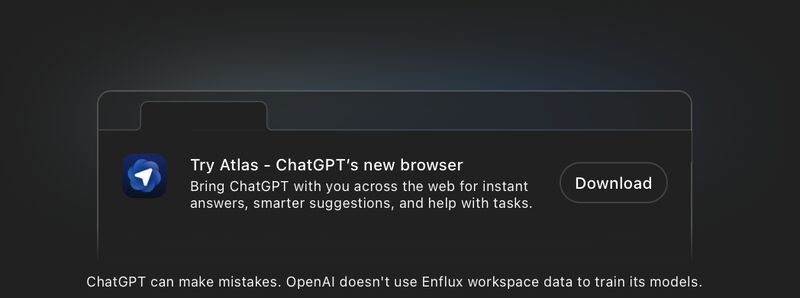
And now, Atlas by OpenAI
We’re entering the era of AI-integrated browsers, like ChatGPT Atlas, where your assistant is built right into the browser. You can summarize pages, automate research, even let it navigate the web for you.
So it makes me wonder:
👉 Will Chrome follow with a full Gemini integration to defend its lead?
👉 Or are we watching the start of the next big browser shift — one where AI becomes the reason people switch?
Every browser revolution started with one big change in how we interact with the web.
This might be that moment again.
When will Chrome follow Suit?
A project we're working with has received an offer for Binance Alpha.
We have our thoughts around how successful this has been on other projects, but are looking for more insights and data?
Curious if someone has data around:
- Generated Buying Pressure from the launch
- Probability to get listed on Binance Futures/Binance Spot
Any other insights or data is appreciated.
CC: Farhad F.
Most fundraising advice for token projects is useless.
It’s either too surface-level or completely disconnected from how capital actually moves.
Meanwhile, we’re seeing a wave of TradFi capital flowing into DeFi.
Millions are being deployed into tokenized real-world assets, and more traditional competitors are entering the Web3 space with bigger teams and cleaner decks.
Founders are told to “build in public” - but no one shows them how to structure a raise that fits their token model, unlock schedule, and market timing.
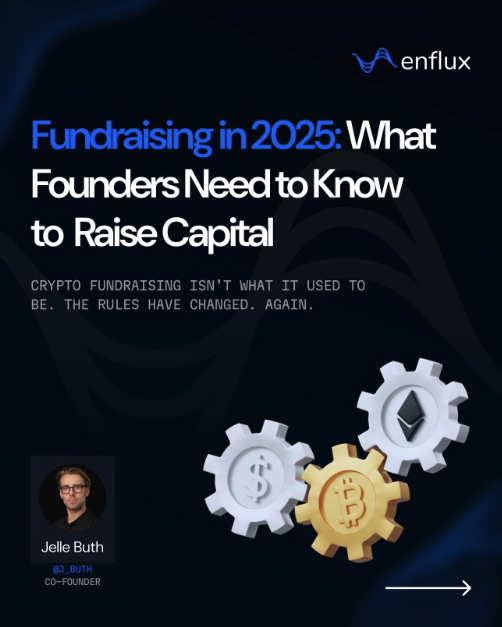
Our team and I work with projects at every stage, and we keep seeing the same gaps, so we put together a full guide that shares :
1️⃣ Different fundraising methods based on your stage
2️⃣ What to prepare before reaching out
3️⃣ How to turn visibility into real investor momentum
4️⃣ And how to avoid the common mistakes we see every cycle
If you're raising capital, or plan to, this will save you months of time.
Full Guide 👉 https://t.co/MeMFleVxIl
You don’t win by being right.
You win by staying neutral.
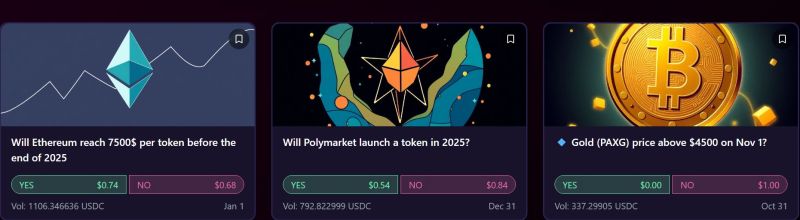
So how do you market make a prediction market like “BTC: up or down”?
It sounds simple, but the mechanics rely on having a clear reference price from platforms like Polymarket or Kalshi. With that in place, market making becomes a speed game where the goal is to stay as delta-neutral as possible.
If Polymarket shows a 57% probability that BTC will go up, we price the “Yes” side slightly below that and hedge using BTC perpetuals on another exchange.
It is the same structure we use when market making on venues like Hyperliquid while hedging on Binance.
We are not trying to predict the outcome, we are quoting around a known price and neutralizing exposure as fast as possible.
In this setup, it is all about execution.
Not about having an opinion or taking a directional bet.
It comes down to speed, structure, and precision.
When there’s no price to follow, you become the price.
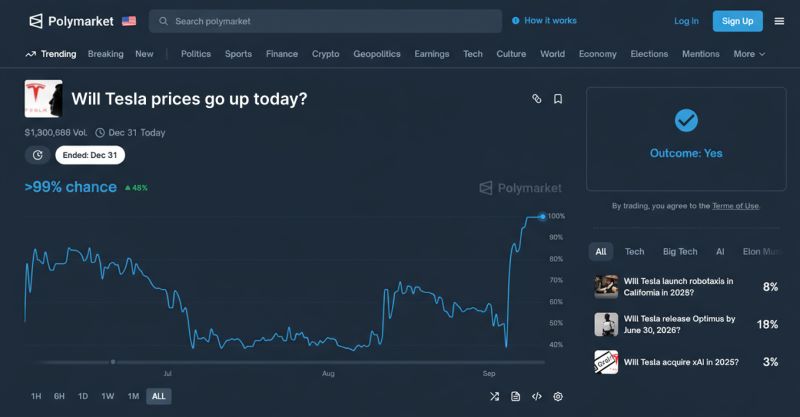
Take a market like “Will Tesla go up today?”
There’s no Tesla up/down market on Polymarket. No reference price to anchor your quotes. But there is enough historical data to build a model, and that’s where things get more interesting.
In these cases, market makers have to create their own fair value.
We typically combine three inputs:
➤ Black-Scholes to account for time to expiry and expected volatility
➤ Predictive models trained to estimate directional movement
➤ Market consensus based on how others are currently pricing the risk
It becomes less about speed and more about accuracy.
Your edge comes from how well you can price uncertainty without taking on excessive exposure.
In these markets, you are not quoting around the price.
You are building it.
The real market-making trilemma
You can’t have all three.
🔹 Tight spreads
🔹 Treasury growth
🔹 Clean inventory management
Without demand or hedgeable markets, it doesnt work.
MMs can optimize execution.
They cannot create demand.
Market making only works when the token does.
We’ve never come close to running out of runway.
But we’ve seen how it happens, and how fast it collapses:
Here's how to avoid the death spiral:
- Maintain a lean burn rate
- Align token unlocks with actual market demand
- Establish organic buy-side activity early
- Do not rely on market makers to simulate liquidity
- Structure your go-to-market assuming low external attention
Runway is not about how much you raise.
It’s how long you can execute without begging for attention.
Not every project deserves market making.
There are moments where we intentionally step back.
When a token is being manipulated, with price moving 30 to 40 percent in minutes, we are not going to chase that move with tighter spreads or higher bids.
That is not market making. That is exit liquidity.
We focus on balancing three things: quality execution, price integrity, and downside protection.
If you are building a token, make sure you understand what real market making looks like.
It should support the price, not distort it.
We just witnessed history.
Trump’s 100% China tariffs triggered the largest liquidation event in crypto to date. Over $19B USD was wiped in a single day.
It was bigger than FTX, bigger than Luna, and bigger than Covid.
For Web3 founders, this was a structural reset.
We have not seen a wipeout of this scale since early March.
And, honestly events like this are necessary.
They flush out excess, remove unstable participants, and create space for more sustainable growth.
This is a reminder for every founder in the space: Cycles do not reward momentum, they reward discipline.
Heading into 2026, the teams that will outperform are the ones operating with precision.
This was the biggest liquidation in crypto history, but also the fastest recovery.
The market added over $250 billion in value since the crash.
We are going so much higher.
This graphic shows what many in crypto already suspect:
CEX founders are now launching DEXs.
@binance → @Aster_DEX@Bybit_Official → @OfficialApeXdex@HTX_Global → @SunPerp_DEX
@coinbase → @avantisfi
Centralized exchange teams are entering the decentralized space. Many are adapting their infrastructure and experience to launch new onchain platforms.
But one project stands apart: @HyperliquidX .
🚫 It was not launched with a large funding round
🚫It was not driven by the narrative
✅ It was built from scratch by engineers who understand how to design performant onchain systems.
As someone who leads a market-making firm and works across CEX and DEX environments every day, the difference is clear.
Hyperliquid is ahead of the curve.
Most DEXs today are just CEX spin-offs with a new coat of paint.
🔹 @Hyperliquid is different.
No CEX legacy. No VC backing. Not built on narrative.
Just a performant product that delivers.
They’re ahead of the curve.
Because the liquidity and exchange exposure of your token now directly influences how much you can raise.
A token listed on Coinbase or Binance can borrow more under the same structure than a token listed only on DEXs.
It’s a creative solution for teams that don’t want to sell tokens outright.
But the terms matter. A lot.
🔹 The LTV depends on your liquidity
🔹 The real cost isn’t just the interest, it’s the option spread
🔹 Structured terms can be hard to renegotiate if the market moves
We’re seeing more of these emerge weekly, some good, some mediocre...
If you're navigating this, or just want to understand this better, feel free to reach out to Enflux and the team should guide you through this.
▶A project deposits $100K worth of tokens as collateral
▶They borrow $50K (50% LTV ratio)
▶A call option (e.g. 10% above current price) and put option (e.g. 10% below) are embedded
▶The counterparty (usually a market maker or VC) profits from option execution
▶A flat interest rate (typically 4-5%) is also charged
This structure isn't new, but it's getting alot of traction, fast.
The question is, why now?
Raising capital without giving up tokens?
It’s already happening.
It’s a hybrid between a loan, an option, and a private OTC deal, allowing projects to borrow against their native token while still preserving upside (and have runway).
Here’s how it usually works 🧵
Market makers keep crypto markets alive 🫀
Without market makers, tokens face wide spreads, thin liquidity, and poor execution. Even strong demand will not fix that.
A real market maker:
➤ Posts passive orders on both sides of the book
➤ Adjusts those orders in real time as conditions shift
➤ Absorbs inventory risk to keep trades flowing
Here’s a typical example:
- “I’ll buy 1,000 tokens at $99.”
- “I’ll sell 1,000 tokens at $101.”
That $2 spread is calculated, managed, and constantly adjusted to reflect risk and real conditions.
Spreads are constantly adjusted based on volatility, volume, and risk.
Most of the real work happens behind the scenes through systems that update quotes, rebalance exposure, and keep the market functional.
That’s what separates a real market maker from someone just placing trades.
Market makers are not here to take your money. ⚠️
We are here to keep your token liquid, visible, and tradable.