Every student learns that correlation does not imply causation. Few learn the converse: absence of correlation does not imply absence of causation.
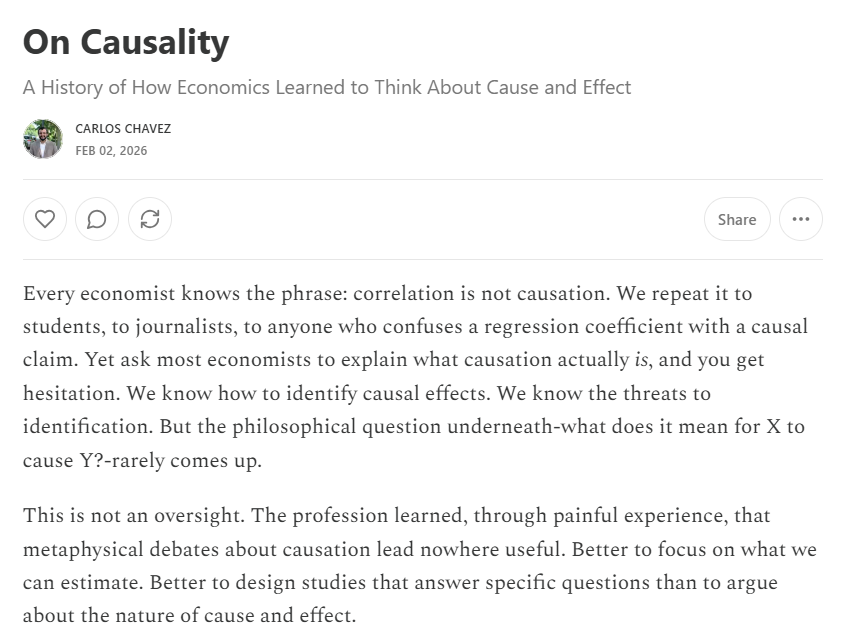
This essay traces how economics came to think about causality. The story involves philosophers, statisticians, econometricians, and computer scientists. It spans three centuries and at least two methodological revolutions. And it remains, in important ways, unfinished. Link: https://t.co/U5YePoE4yD
Governments are looking to open source as a way to regulate AI, assuming that openness will result in better transparency, security, and competition. But those assumptions seemed to be based more on theory than evidence.
New evidence shows that while open source can be a tool for accountability and security, but under specific conditions depending on how models designed, maintained, and governed.
Read the full analysis from @cpeukert on our blog: https://t.co/KtvWfdY4nn
I'm hiring a postdoc to do work on tech and labor topics.
Particularly interested in someone with Census / Special Sworn Status.
JOE listing here: https://t.co/OMLdDIdj5R
Web browsers are the biggest market you never thought about. In a new paper (with @j_haese), we study what happened in the open source community when Microsoft moved to Chromium as the core technology for their web browser Edge.
Excited to share our new paper on how Microsoft's adoption of Chromium for Edge led to increased contributions, higher security patching activity, and shifts in market share. Key insights for tech firms considering open source software strategies!
Web browsers are the biggest market you never thought about. In a new paper (with @j_haese), we study what happened in the open source community when Microsoft moved to Chromium as the core technology for their web browser Edge.
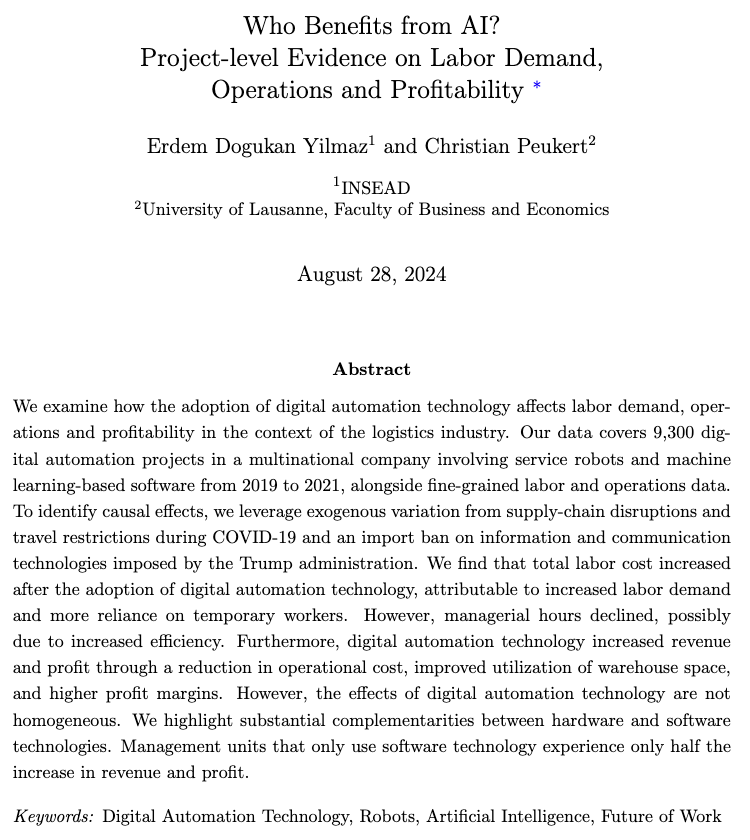
New paper: We study the effects of the global rollout of robots and AI in a major logistics company (with @e_dogukanyilmaz). The link to the paper is below.
🎓“It’s a milestone, a moment of celebration along the way of a PhD."
We spoke with @j_haese, the first laureate of the Basil Cousins' Award about what receiving the Award meant for him: https://t.co/DT58BbEXdC
Finally out, with @luisaguiarw@HannaneJonas @hannes_ullrich @cpeukert
Returns to Data: Evidence from Web Tracking
https://t.co/ptbg1pSObZ
#Webtracking data are essential for consumer profiling that enables targeted advertising & content delivery.
1/6
🎉 New #PLAMADISO talk alert! 🚀
Check out @cpeukert’s insightful talk on “#Strategic Behavior and #AI Training #Data"! 📊🤖
📹 Watch now: https://t.co/XKirImM0Tk
📄 Read the paper: https://t.co/WSOxPA02kx
🔗 Joint work with F. Abeillon @j_haese @KaiserFraenzi @Staub_a_lex 🚀🚀
🎓Call for Proposals (CfP) Open for OFA Symposium 2024 at Harvard now open until 7 August
Theme: 'Open Source in the Global Digital Economy'
✍️Submit proposals at https://t.co/NJb7pOIAaE
Topics include economic value, market regulation, funding, tech role
This past semester I was tasked to teach a course on Data Science for Economist at @EmoryEconomics
Some of the materials I have used in the course can be found here: https://t.co/zOdrd5UkVv
I‘ve leveraged a good amount of work from the greats @grant_mcdermott and @tyleransom
🚨NEW PAPER! Excited to share our latest research on how creators strategically respond when their works are used for training AI models. We provide large-scale evidence on the supply-side effects of generative AI. Important implications for AI policy debates!
New paper: “Strategic Behavior and AI Training Data” (in short : 👩🎨 vs 🤖). We provide evidence on the tension between rightsholders (#Copyright) and #AI developers. With Florian Abeillon, @j_haese, @KaiserFraenzi and @Staub_a_lex.
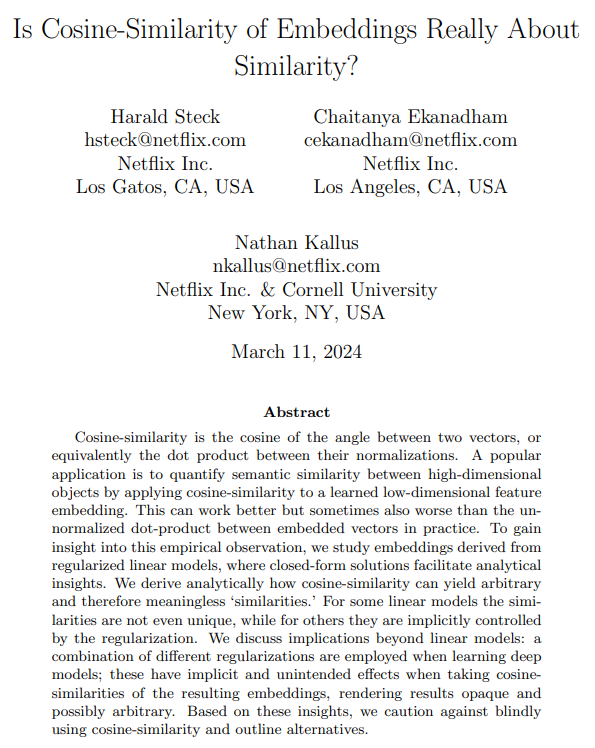
Is Cosine-Similarity of Embeddings Really About Similarity?
Netflix cautions against blindly using cosine similarity as a measure of semantic similarity between learned embeddings, as it can yield arbitrary and meaningless results.
📝https://t.co/rbtsmXQ19s
On 9 March, some things might change:
1. you can message from Whatsapp to Telegram
2. in the App Store you can buy directly from the provider or competing platform
3. Amazon no longer ranks own products at the top of a search
Why? The Digital Markets Act (DMA) goes live…
1/
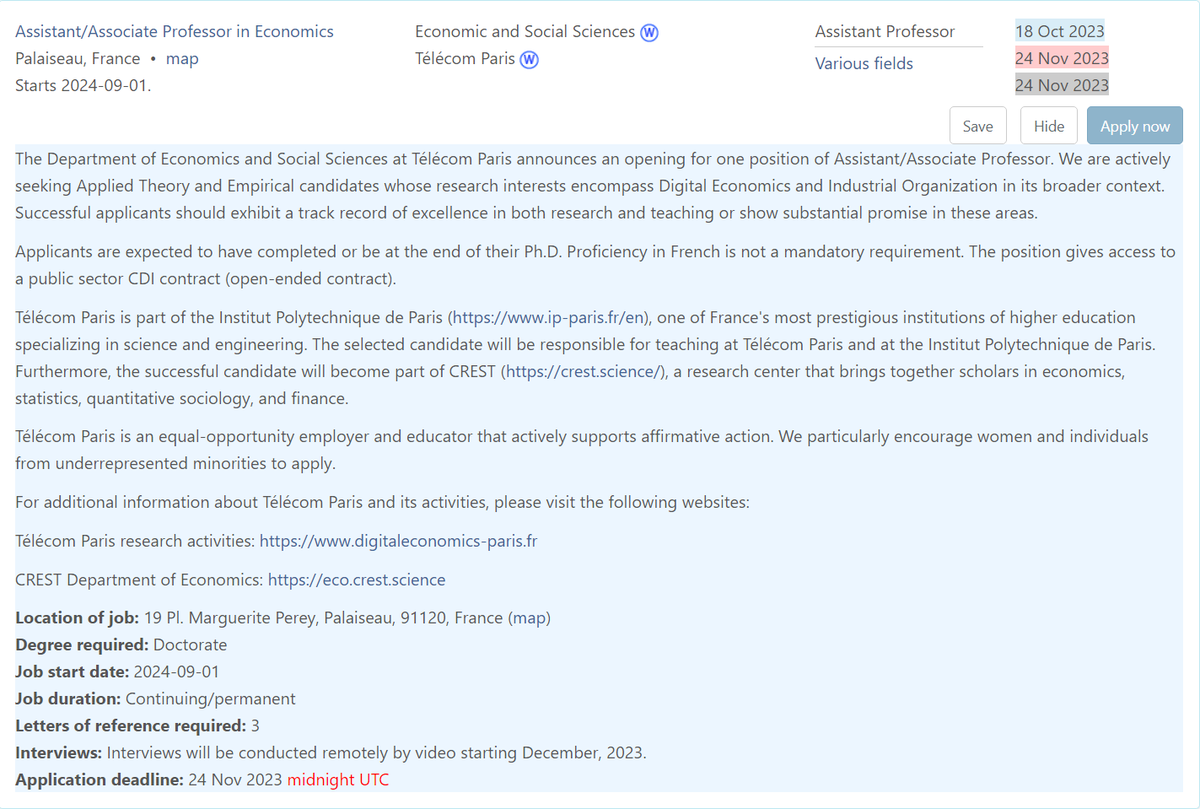
@EconJobMarket 📣Assistant Prof position @telecomparis📣
We are seeking candidates (Theory and Empirics) with research interests in Digital Economics and Industrial Organization.
Join our team! If you have some questions, DM us here!