Yesterday, I wrote about how, for decades, South Africa has been systematically and slowly destroyed—economically, institutionally and socially. Some people asked me what the final stage of this systematic decline actually looks like.
The answer is not dramatic at all. In fact, it’s very familiar.
The South Africa that people dreamed of building in 1990 has been slowly collapsing into a permanently unstable, low-trust society where the majority lives in informal, precarious economies while a tiny elite enjoys the best First World comfort behind gates, walls and non-disclosure agreements.
Because of this, South Africa’s final destination is a slow decomposition into a neocolonial stagnation where democracy is just theatre and governance is extraction. It staggers on in its final, decomposed form—dead but animated.
There will be no civil war, no tanks on the Union Building lawn and no international intervention. Instead, the state will remain standing in name, but its core is gone—hollowed out, privatised and captured.
In its moribund state, the country doesn’t fall off a cliff—it fades into an endless stagnation where the majority survive in crisis mode, while a fortunate minority retreats into fortified luxury.
The government exists, but only on paper. Ministries have coats of arms, officials wear suits and legislation is passed—but the state’s ability to govern is only ceremonial. Basic services like electricity, water and sanitation are either unavailable or outsourced to the highest bidder. Access depends on your income, not your citizenship.
The public sector no longer serves the public. It functions as a patronage machine—jobs for allies, contracts for cronies—Black or White. Law enforcement reflects this rot: absent in poor communities, hyperactive in guarding elite estates. Police are no longer providers of safety, but instruments of control. Violence is selectively applied and rights are selectively protected.
When South Africa reaches its terminal phase, the formal economy shrinks year by year, while corporate monopolies grow fatter. The mining houses, banks and retailers consolidate power, tightening their grip on the country’s wealth. These giants don’t invest—they extract.
For ordinary South Africans, the economy becomes informal by necessity. Spaza shops, street vending, car guarding, hair salons, YouTube channels, podcasts—these are no longer side hustles but primary incomes. The youth aren’t looking for jobs. They’re looking for ways to survive.
When South Africa reaches its final skeletal form, unemployment is no longer seen as a policy failure. It’s just the way things are. The rand limps along, offering neither collapse nor confidence as capital continues its quiet exit.
When South Africa meets its zombie end, there will be no “social contract” to speak of, as Tito Mboweni once pointed out. Those with the means build private worlds within the failing one: off-grid electricity, borehole water, private security, private health, and private education.
The country balkanises. Gated communities become the new municipalities. Inside: order, lights, lawns. Outside: crime, darkness, dust. Wealthy suburbs run as de facto city-states: Steyn City, Waterfall, Val de Vie, Century City, Zimbali, and Crossways.
The middle class—once aspirational is now precarious. Europe is collapsing and becoming unaffordable, therefore, the middle class cannot emigrate, so it joins the gated survivalism.
For the poor, survival depends on self-organisation. Communities set up their own policing and water access. The state’s only visible role is the occasional raid or social grant. Even that is less about care and more about control—to pacify, not empower.
The result is a country splintered into economic city-states and abandoned zones. Unity dissolves into archipelagos of wealth and islands of abandonment.
Elections continue, and parties campaign. There are manifestos, debates, and ballot boxes. But it’s all theatre. Nothing fundamental changes. Opposition parties play their parts: some shout about land, others promise better spreadsheets, but none challenge the basic architecture of economic exclusion.
In this zombie phase, the government is a glorified distribution network. Coalitions emerge not to offer alternatives but to rebrand the same rot. Voters vote, but fewer believe. The rituals persist, even as their meaning dissolves.
Perhaps the most devastating loss is psychological. The anger fades and hope retreats. A kind of national depression sets in. “This is just how it is,” people say. The post-Apartheid dream—the Rainbow Nation, the developmental state—is replaced by resignation and cynicism.
People retreat into narrower identities: tribal pride, class survivalism and religious escape. The youth burn with rage but without a credible movement to direct that rage. There is radical energy but no radical structure.
Over time, a slow and invisible defeat settles over the nation. The people do not revolt because the collapse is not dramatic. It is dull, procedural and bureaucratic. There are no defining moments, just a string of small humiliations: increasing prices, dry taps, underpaid municipal workers.
The ruling elite don’t repress violently; they erode hope gradually. People spend their days chasing food, water, transport, and airtime. There is no time for organising. Hunger depoliticises.
Amid all this, there remains a layer of society that insists South Africa is “just fine.” These are the denialists—professionals, technocrats, suburban optimists, business columnists, diplomats—people insulated from collapse by wealth, geography or ideology.
They invoke foreign investment conferences or tourism ads as proof that “the fundamentals are strong.” They say things like “we’ve been through worse,” or “they have been saying this for years, but we are still here.”
They confuse surface continuity with substance. Because there are still malls, elections and Wi-Fi in coffee shops—they assume the centre is holding. But what they call “resilience” is just adaptation to decline.
However, in the end, the national mood shifts from anger to resignation. People stop believing in the shared project of South Africa. The rainbow dissolves into survivalism. The future becomes individual, not collective. Look after your own.
Yet even as the state decays and public trust collapses, the ruling elite continues to present cartoonish, unserious, and frankly embarrassing individuals as “leaders.”
Ministries are handed to the comically unqualified. Parliament is stocked with the loud and the incoherent. Public appointments feel like punchlines, not policy. This isn’t a glitch—it’s a feature.
By elevating the absurd, the elite accomplishes multiple goals simultaneously: they lower expectations, ensuring that citizens, accustomed to dysfunction and buffoonery, no longer demand competence or vision.
At the same time, they humiliate the state itself, turning governance into a joke that justifies outsourcing, privatisation and the gradual erosion of public institutions.
This theatrical incompetence is not a sign of failure; it is a deliberate smokescreen for elite impunity, contributing to a deeper cultural resignation: people stop believing that the state can be fixed because it no longer even tries to look credible.
In this way, governance is reduced to performance art—and behind the clown show, the real business of looting and survival continues.
Yet even amid the disillusionment, a portion of the population clings to hope—not through uprising, but through the ballot box. For them, “this next election is the one that will do it.”
They believe a shift in voting patterns will reset the national trajectory, that a change in coalition or leadership will reverse decades of decay.
This electoral faith is powerful. It is also tragic.
Elections, by now, are a ritual theatre—a managed rotation of elite factions, none of whom challenge the economic order. Each party markets itself as a saviour, only to manage the decline in slightly different tones: populist, technocratic, nationalist, progressive.
South Africa’s final stage of decomposition isn’t Afghanistan or Somalia. It’s something more insidious. A failed state that still holds elections. A democracy where nothing is democratic. A republic with no res publica.
The real power lies with an unelected oligarchy: corporate monopolies, party elites and international capital. The state exists to manage decline and suppress revolt—not to build or serve. South Africa doesn’t fall. It fades out.
Townships become informal zones governed by extortionist gang bosses or community elders. The state loses its monopoly on violence—not to rebels, but to security firms.
Internationally, South Africa is quietly written off. No sanctions, no invasions—just quiet abandonment. From “emerging market” to “cautionary tale.” From BRICS member to basket case.
So, what is South Africa’s final form? Well id does not burn. It heats up gradually. And like the frog in the pot, the people don’t realise it until it’s far too late.
How Patrice Lumumba responded to the condescending independence day speech given by King Baudouin in Congo on 30 June 1960:
As Lumumba sat listening to King Baudouin deliver his address to the assembled dignitaries,he became increasingly agitated,scribbling notes furiously.
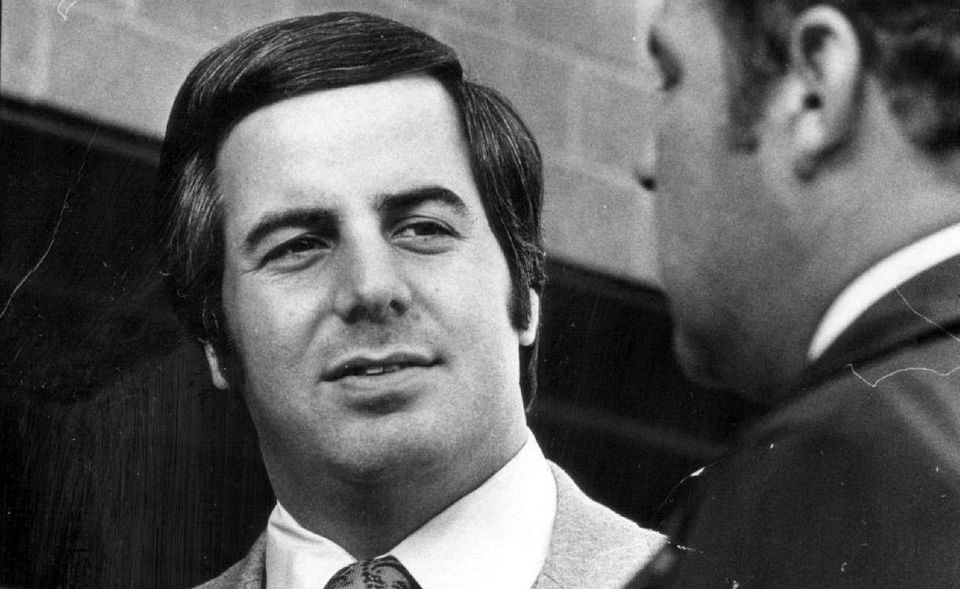
Gérard Soete: I cut Lumumba into 34 pieces
“I cut up and dissolved Lumumba's body in acid. In the middle of the African night, we started by getting drunk to have courage. We got rid of the bodies. The hardest part was cutting them into pieces with a chainsaw before pouring acid into them. There was almost nothing left, only a few teeth. And the smell! I washed three times and always felt like a barbarian dirty ”
These words are those of Gérard Soete, pronounced on 15 May 2002, forty years after the disappearance of the Congolese leader Patrice Lumumba.
The hell is empty the Devil’s are here. This is the people who want to teach us human rights.
Look at this guy.
- Faked being a pilot
- Faked being a doctor
- Faked being a lawyer
- Faked being a professor
He manipulated his way into millions.
Years later, the FBI caught him - then HIRED him for $10M/year
Here’s the insane story (and how you can apply his principles):
They basically leaked some of his personal information and did a rubbish analysis of his tweets. Do people understand that when your views aren’t aligned with the left, you are a walking target? Why put his life and family in more danger?
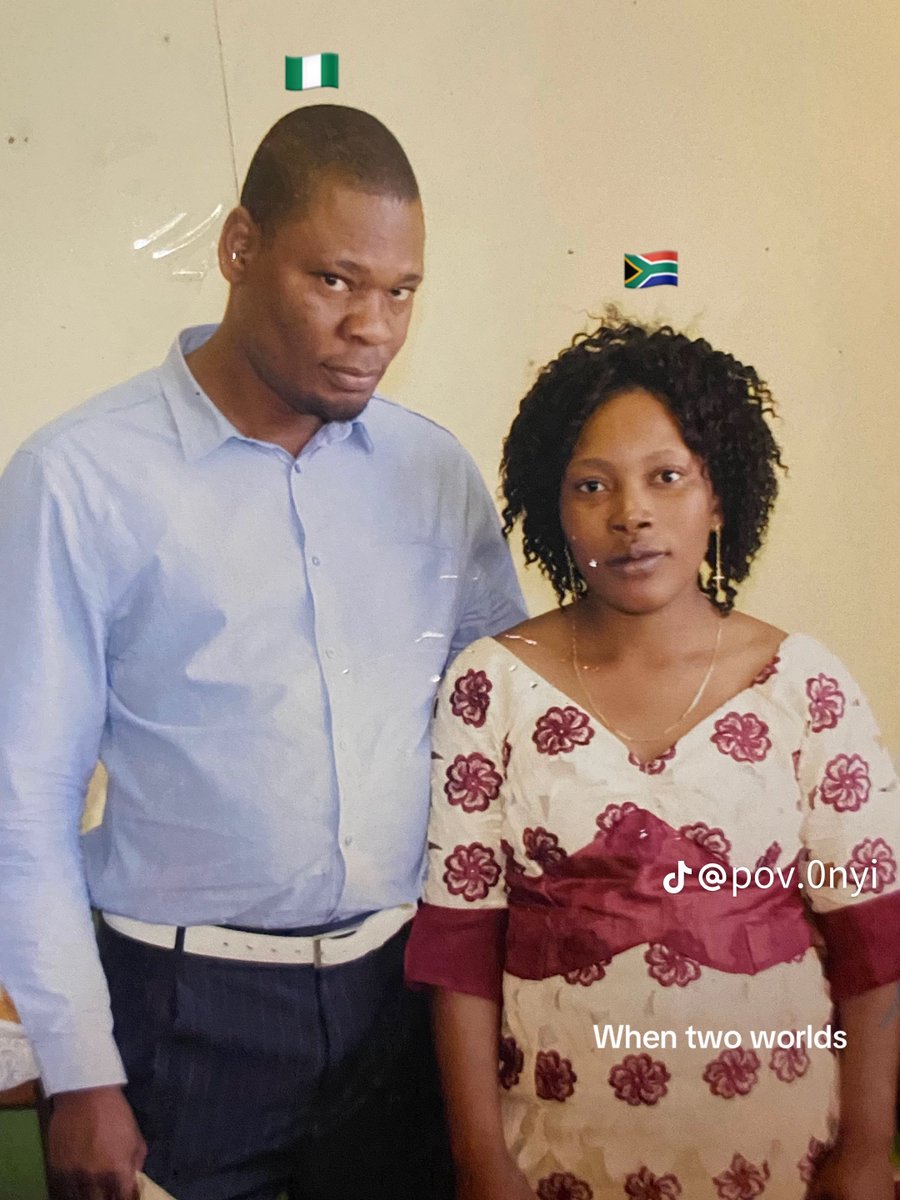
WATCH: Onyi a Nigerian Igbo child born to a woman who claims to be a South African calls herself a Southgerian something that does not exist, the is no tribe known as Southgerian in South Africa.
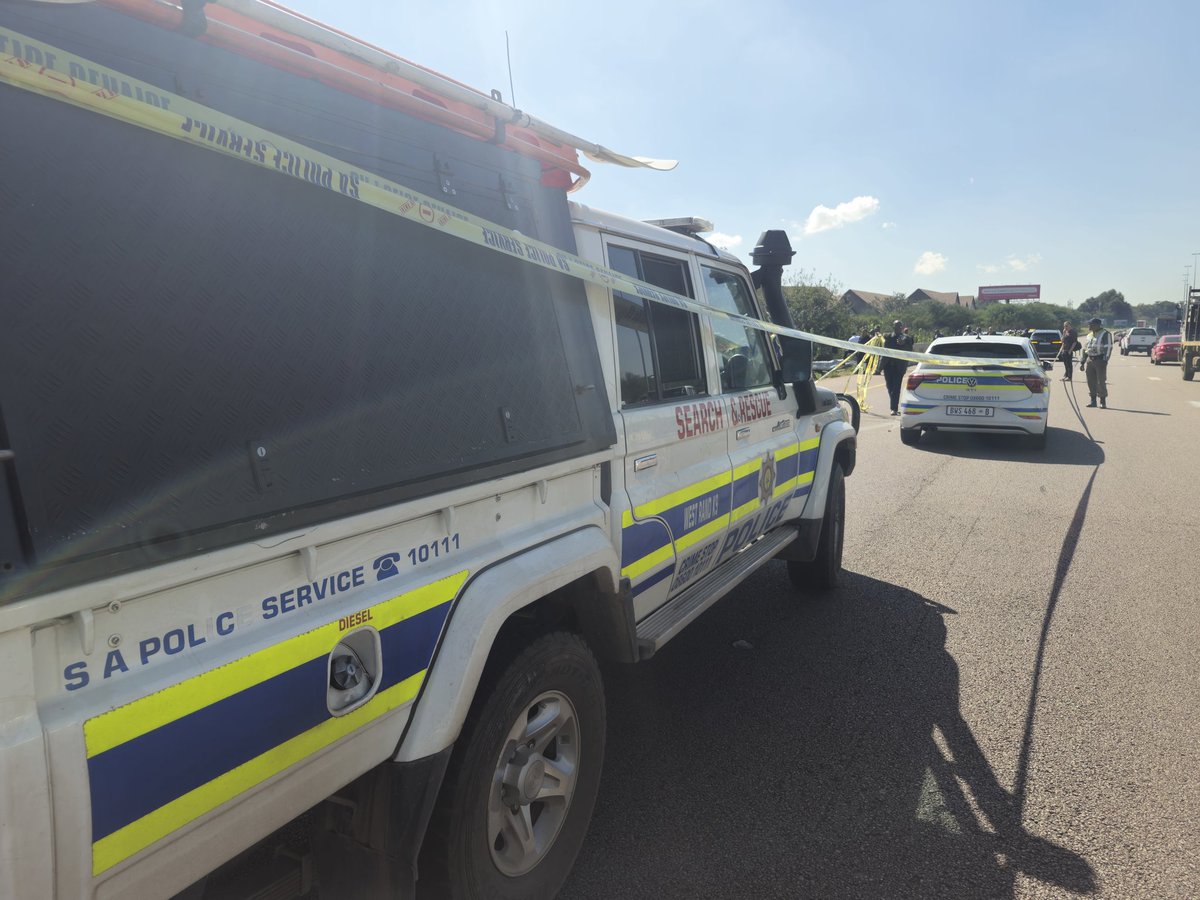
BREAKING| Police search and rescue members are scouring the #HennopsRiver in Centurion where for the bodies of three missing SAPS members from the Free State who went missing en route to Polokwane last week. Two bodies were recovered yesterday and positively identified. OS
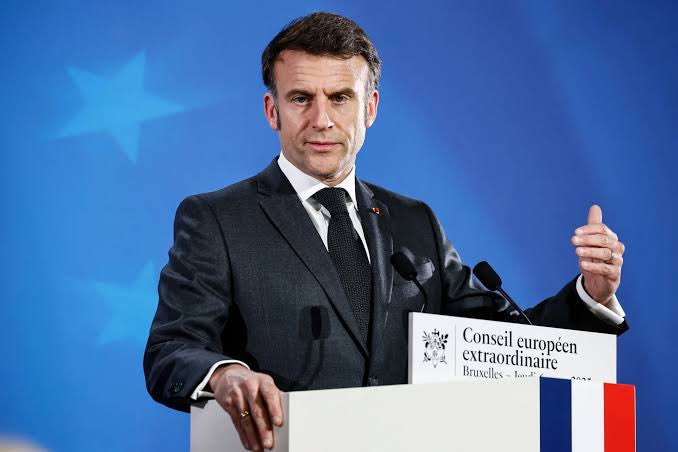
Emmanuel Macron makes a bold statement on Africa’s future. The French President has vowed that France will not abandon its former African colonies.
MACRON: 🗣️ “If we leave African countries to manage on their own, now is not the time. Africa remains the least developed continent, and history shows we have a role to play in supporting its growth. A complete withdrawal could halt progress. There is still much work for us to do in Africa, and we believe they are not fully ready to thrive without our involvement.”
But the truth is the devil hideouts (France) will soon crumble.. France 🇫🇷 just want to keep on looting Africa’s resources.
🇲🇱🗣️ President Assimi GOÏTA: Those who say that France has done nothing or that France must stay. I was at the front with them, I ate with them, I patrolled with them, I listened to their radio."
"What I heard was, if you were there, you would shoot at them. When we were on the ground, the French would put us in front of it, and if there was no danger, we would say, RAS."
"And if someone shot at us, they would say, 'That's war, right?' Many Malians would fall in front of us and we couldn't say anything."
"All you had to do was revolt and the next day Bamako would call you back. That is to say, if 100 Malian soldiers died, only one Frenchman fell or zero losses on the French side."
"I remember that famous day when we were 5 kilometers from Kidal, we could already see the rebels retreating. We said to ourselves that Kidal was going to fall. In no less than 15 minutes, a lieutenant colonel came to tell us that we were forbidden to return to Kidal. Me and 4 of my comrades wanted to force and disobey France."
"As we were moving forward, they clearly said, 'One more step and you'll each get a bullet in your head.' That was the day I cried like a baby.
And I called our superiors in Bamako, their only response was: "We must stay behind France."
"The next day, we saw these French people supplying the rebels in front of us. I even looked one of them in the eye and he smiled to mock me."
"After the resupply and the donation of eight pickup trucks, these French people told us they did it for peace between Azawad and Mali. I rebelled again; it was in this context that I saw myself handed over to these rebels one day."
"While they had given our position so that I and my fellow revolutionaries would be arrested."
"Indeed, we were arrested. And on the radio I heard Bravo and the other Gama in the basket...mission accomplished... That was the code with these French. We said to ourselves it was over for us. I started to think and I knew it's a source of pride to die for your country. And I laughed."
"On a day like that, we were told that we would be released, but during the stays we had with these people. The number of French generals and colonels who called each day was inestimable.
When I return, I see that I am being given training and grades."
"As Mali has always been my priority and everyone in the army knows it. I learned to protect my country, so I already know the north like the back of my hand. And I know who these French are and they know who I am."
"I'm a highly trained commando. I'm also a man who's always ready. If you see, we don't drop bombs on these jihadists, it's because when they take a village hostage, they use women and children as shields. For those who don't know war, how do you expect us to drop bombs on a village? Are you forgetting that there are women and children?
Are you forgetting that these women and children are innocent? In a war, one must be purely strategic and cautious.
I promise you that Mali will be free. With my colleagues, we will liberate Mali. We come from far away, and we are not politicians. We are liberators; those who want it to understand. Those who do not want it to go to the front can witness the phenomena. We have a very rich and immense land. We can make it perfect."
@AfricaFactsZone I don't know about Liberia, kodwa people let us talk about South Africa. Where do you get the stats? Cause I see people walking down and up on our streets till early hours of the morning without any fear.....so, which South Africa are we ref to.
MISSING: SAPS is appealing for assistance in finding three missing SAPS members.
The trio were last seen at Engen Grasmere Toll Plaza on 23rd April 2025. They were travelling in a white VW polo reg EZM728FS and were on their way to report for duty.
They never made it to Limpopo were they are deployed.
📰@AthlendaM
Gauteng Premier Panyaza Lesufi has taken decisive action following allegations of wasteful expenditure amounting to R34 million per month on leased office space for government offices.
https://t.co/4Wk1tl5VqN