Sem a l'acte de presentació de la commemoració del mil·lenari de les assemblees de pau i treva (1027-2027) al Parlament de Catalunya. Podeu seguir l'acte per la web del Canal Parlament: https://t.co/W9x9BQy1xu
Arxiu Gavín del #monestirdelesavellanes celebrem #SIA2026 amb l'exposició 'Banderins i fotografies antigues' on entre altres preservem un banderí de 1934.
Inaugurem avui a les 19h
Una Excel·lent notícia: https://t.co/jGN3wdRrEP
La @UdL_info crearà l’arxiu més gran del món sobre l’alta edat mitjana.
El projecte recopilarà fins a 40.000 pergamins dels segles VIII al XII de Catalunya!
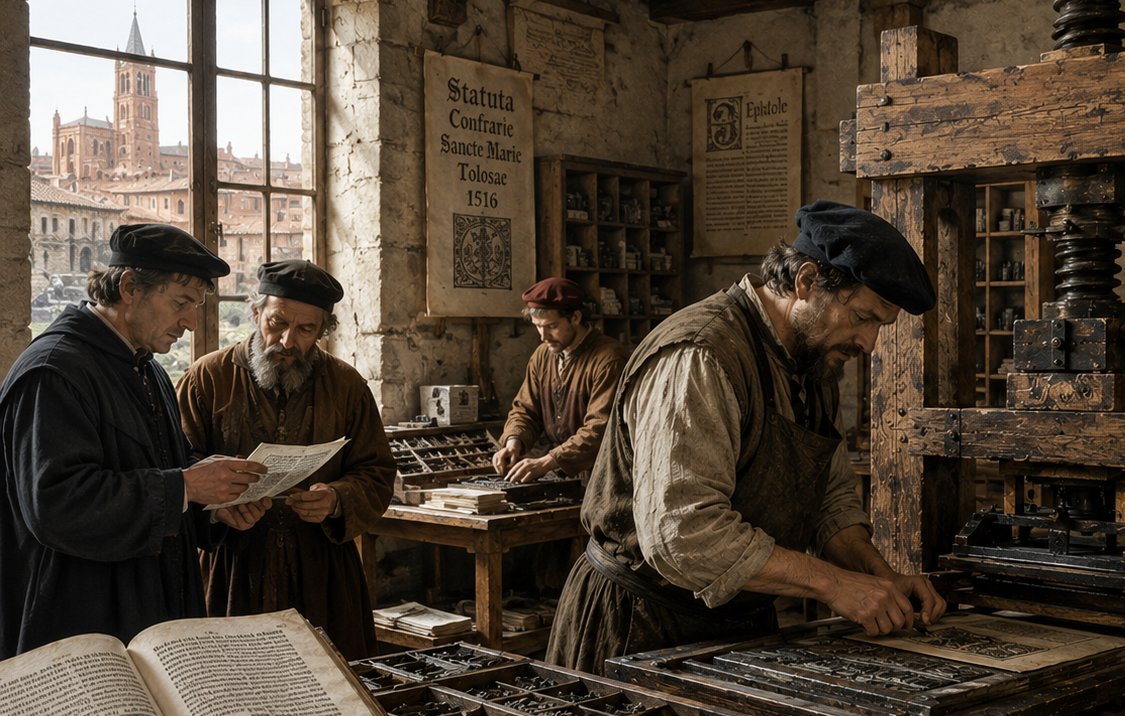
L’ARRIBADA DE L’ESTAMPARIÁ EN OCCITÀNIA (1475) Christian Andreu.- En 1450, Johannes Gutenberg descobriguèt una nòva tecnologia; cossí utilizar los caractèrs mobiles en una estampariá a Mainz. Çò qu’aviá descobèrt cambiariá per totjorn https://t.co/wFe4vKiXKM
Les tres ànimes del projecte del #monestirdelesavellanes, son l'espiritualitat (comunitat), els serveis d'acollida (Hostatgeria) i la cultura (rarxius i biblioteca) com L'Arxiu Gavín. Centre de Documentació de Cultura Popular i Religiosa de Catalunya.
https://t.co/KQaj8EJ7sY
ATENCIÓ!
Dissabte 30, 6 tarda, a @TuroSeuVella, “Del manuscrit al faristol: Un cantoral lleidatà de 1536".
A càrrec dls musicòlegs Jordi Cebolla i Josep M. Salisi, i el Cor de Cambra Absis d'Ivars d'Urgell.
L'estudi musicològic és un projecte d @museudelleida i @Horitzons2050
¿Qué ocurre cuando la inteligencia artificial fabrica representaciones del pasado sin archivos, fuentes o historiadores? Intento responder a esta pregunta en mi nuevo libro: “Pasado sintético: el desafío de la inteligencia artificial a la historia y la memoria”, en @marcialpons
#Bones_fonts «Project Gutenberg» Biblioteca digital amb més de 75.000 llibres lliures de drets d'autor. En català, 75. (Textos en format pla.) Projecte iniciat el 1971 (segurament, la primera iniciativa d’aquesta classe). En té cura una fundació privada.
https://t.co/hFA3lxKOQU
#Bones_fonts «Esbozo de una enciclopedia histórica del anarquismo español» Unes 15.500 entrades per a persones, entitats, publicacions i esdeveniments (sense bibliografia). En PDF (645 pàgines). És una obra de 2001, de Miguel Íñiguez.
https://t.co/pYdhmzLFQ8
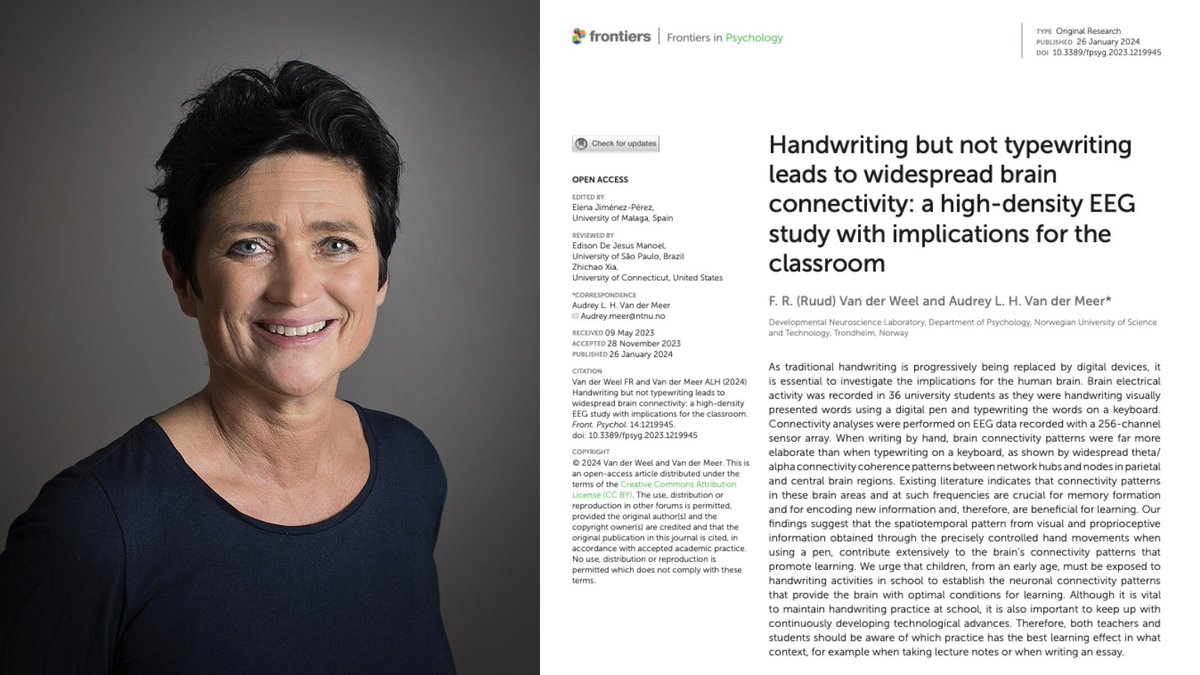
A Norwegian neuroscientist spent 20 years proving that the act of writing by hand changes the human brain in ways typing physically cannot, and almost nobody outside her field has read the paper.
Her name is Audrey van der Meer.
She runs a brain research lab in Trondheim, and the paper that closed the argument was published in 2024 in a journal called Frontiers in Psychology. The finding is brutal enough that it should have changed every classroom on Earth.
The experiment was simple. She recruited 36 university students and put each one in a cap with 256 sensors pressed against their scalp to record brain activity. Words flashed on a screen one at a time.
Sometimes the students wrote the word by hand on a touchscreen using a digital pen, and sometimes they typed the same word on a keyboard. Every neural response was recorded for the full five seconds the word stayed on screen.
Then her team looked at the part of the data most researchers had ignored for years, which is how different parts of the brain were communicating with each other during the task.
When the students wrote by hand, the brain lit up everywhere at once.
The regions responsible for memory, sensory integration, and the encoding of new information were all firing together in a coordinated pattern that spread across the entire cortex. The whole network was awake and connected.
When the same students typed the same word, that pattern collapsed almost completely.
Most of the brain went quiet, and the connections between regions that had been alive seconds earlier were nowhere to be found on the EEG.
Same word, same brain, same person, and two completely different neurological events.
The reason turned out to be something nobody had really paid attention to before her work. Writing by hand is not one motion but a sequence of thousands of tiny micro-movements coordinated with your eyes in real time, where each letter is a different shape that requires the brain to solve a slightly different spatial problem.
Your fingers, wrist, vision, and the parts of your brain that track position in space are all working together to produce one letter, then the next, then the next.
Typing throws all of that away. Every key on a keyboard requires the exact same finger motion regardless of which letter you are pressing, which means the brain has almost nothing to integrate and almost no problem to solve.
Van der Meer said it plainly in her interviews.
Pressing the same key with the same finger over and over does not stimulate the brain in any meaningful way, and she pointed out something that should scare every parent who handed their kid an iPad.
Children who learn to read and write on tablets often cannot tell letters like b and d apart, because they have never physically felt with their bodies what it takes to actually produce those letters on a page.
A decade before her, two researchers at Princeton ran the same fight using a completely different method and ended up at the same answer. Pam Mueller and Daniel Oppenheimer tested 327 students across three experiments, where half took notes on laptops with the internet disabled and half took notes by hand, before testing everyone on what they actually understood from the lectures they had watched.
The handwriting group won by a wide margin on every question that required real understanding rather than surface recall.
The reason was hiding in the transcripts of what the two groups had actually written down.
The laptop students typed almost word for word, capturing more total content but processing almost none of it as they went, while the handwriting students physically could not write fast enough to transcribe a lecture in real time, which forced them to listen carefully, decide what actually mattered, and put it in their own words on the page.
That single act of choosing what to keep was the learning itself, and the keyboard had quietly skipped the choosing and skipped the learning along with it.
Two studies. Two countries. Same answer.
Handwriting makes the brain work. Typing lets it coast.
Every note you have ever typed instead of written went into your brain through a thinner pipe. Every meeting, every book highlight, every idea you captured on your phone instead of on paper was processed at half depth.
You did not forget those things because your memory is bad. You forgot them because typing never woke the part of the brain that would have made them stick.
The fix is the thing your grandmother already knew.
Pick up a pen. Write the thing down. The slower road is the faster one.
Des de l'IRCVM donem l'enhorabona al Dr. Paul Freedman, de la Universitat de Yale, premi Joan B. Cendrós per la seva contribució a la renovació i interpretació de la història catalana, situant-la en els grans debats europeus, a la 75ª Nit de les Lletres Catalanes.
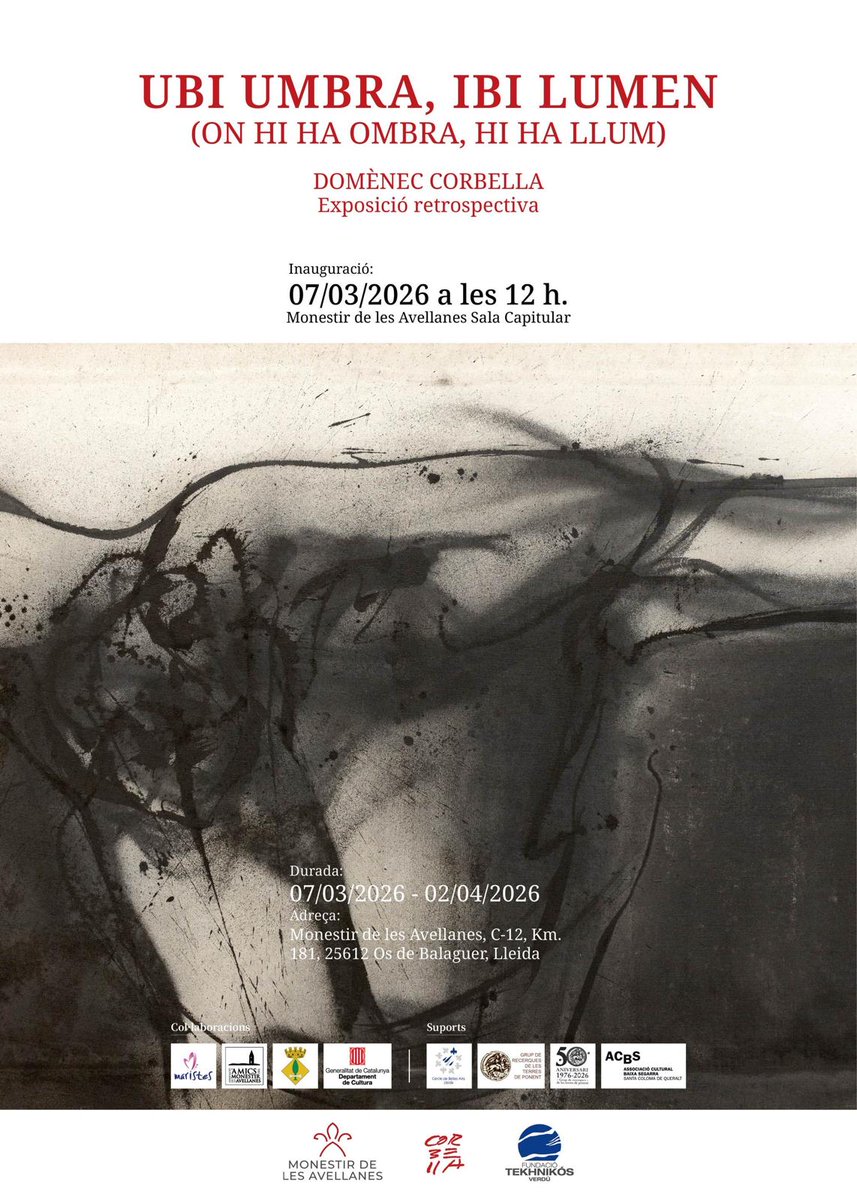
Aquest dissabte vinent, dia 7, a les 12h., inaugurem al @mavellanes l'exposició "Ubi umbra, ibi lumen" del pintor Domènec Corbella, amb presència de l'autor. Us hi esperem!!!!
@joanarimanyjuv És un 'soquet / esclopet', s'usava com a protector de dits en segar amb el volant (mena de falç sense tall dentat). Sovint s'hi posava un 'ram de Sant Pere', beneït a tal efecte per a protegir els conreus de les pedregades.
Agendeu la Jornada de Conservació i Restauració que tindrà lloc el proper 21 de febrer a Àger amb els millors especialistes del tema. Inscripcions al correu de la Fundació Arnau Mir de Tost.
ANABAD FEDERACIÓN organiza: Curso Conservación del Patrimonio Documental y Bibliográfico.
Curso en línea de 40 horas de duración
FECHAS: 2 al 27 de marzo de 2026.
Abierto plazo de inscripción.
https://t.co/JnovOjYdlQ