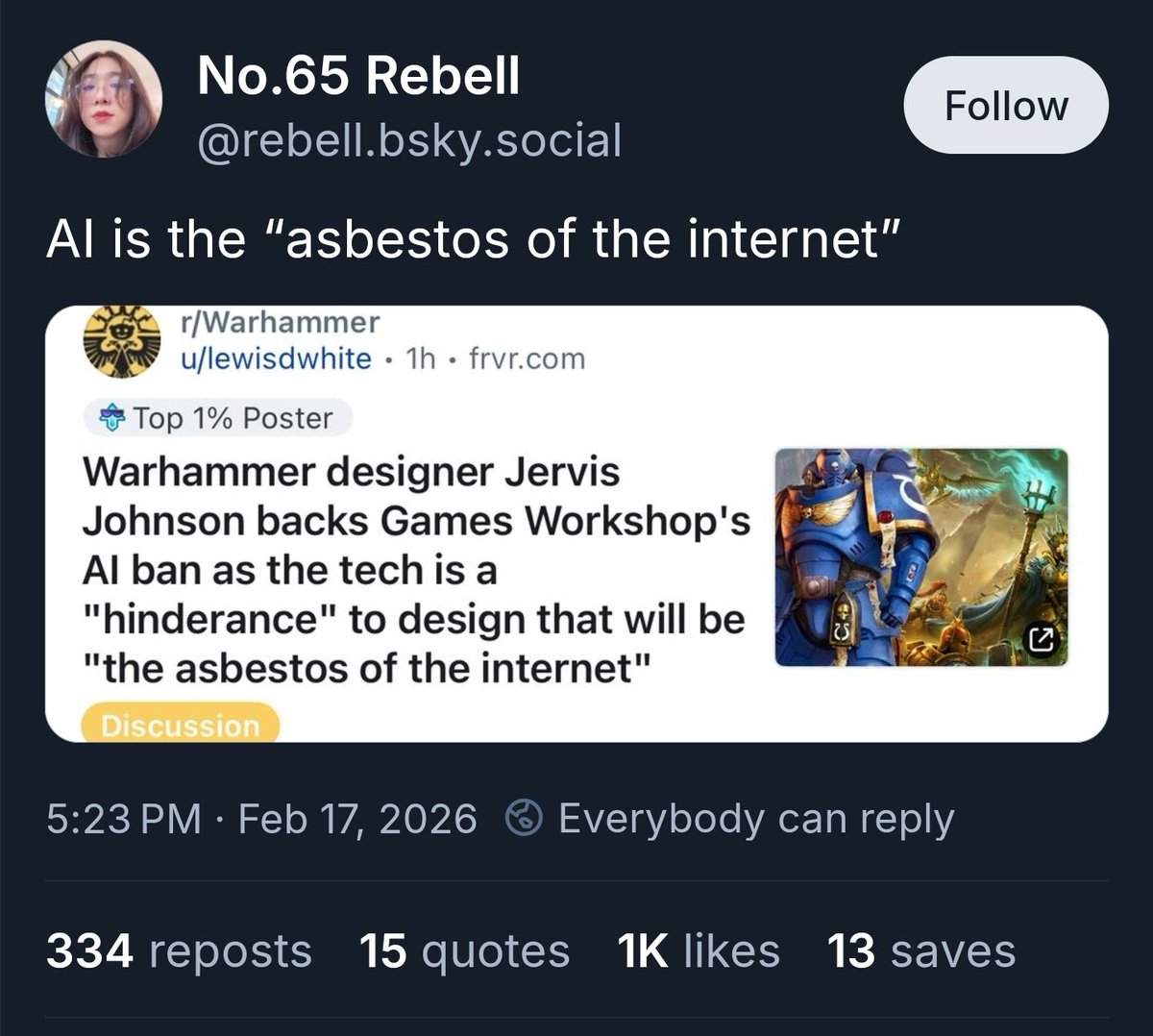
Honestly do enjoy how First Light is an AI story but it’s not the usual ‘AI goes evil and tries to take over’ and instead ‘it’s a flawed system that makes mistakes but it’s run by a bunch of idiots who can’t accept that fact and try to force its use regardless’
“Practice any art… no matter how well or badly, not to get money and fame, but to experience becoming, to find out what's inside you, to make your soul grow.”
- McKellen reciting Vonnegut
The math on this project should mass-humble every AI lab on the planet.
1 cubic millimeter. One-millionth of a human brain. Harvard and Google spent 10 years mapping it. The imaging alone took 326 days. They sliced the tissue into 5,000 wafers each 30 nanometers thick, ran them through a $6 million electron microscope, then needed Google’s ML models to stitch the 3D reconstruction because no human team could process the output.
The result: 57,000 cells, 150 million synapses, 230 millimeters of blood vessels, compressed into 1.4 petabytes of raw data. For context, 1.4 petabytes is roughly 1.4 million gigabytes. From a speck smaller than a grain of rice.
Now scale that. The full human brain is one million times larger. Mapping the whole thing at this resolution would produce approximately 1.4 zettabytes of data. That’s roughly equal to all the data generated on Earth in a single year. The storage alone would cost an estimated $50 billion and require a 140-acre data center, which would make it the largest on the planet.
And they found things textbooks don’t contain. One neuron had over 5,000 connection points. Some axons had coiled themselves into tight whorls for completely unknown reasons. Pairs of cell clusters grew in mirror images of each other. Jeff Lichtman, the Harvard lead, said there’s “a chasm between what we already know and what we need to know.”
This is why the next step isn’t a human brain. It’s a mouse hippocampus, 10 cubic millimeters, over the next five years. Because even a mouse brain is 1,000x larger than what they just mapped, and the full mouse connectome is the proof of concept before anyone attempts the human one.
We’re building AI systems that loosely mimic neural networks while still unable to fully read the wiring diagram of a single cubic millimeter of the thing we’re trying to imitate. The original is 1.4 petabytes per millionth of its volume. Every AI model on Earth fits in a fraction of that.
The brain runs on 20 watts and fits in your skull. The data center required to merely describe one-millionth of it would span 140 acres.
Just a kind reminder that in the past, it wasn't only the university-educated who read what we now consider classics. An astonishing number of people today seem oddly proud of flaunting their aversion to such literature. The average person in the past was far more well-read than the average person today, and it showed.
@liaminscoejones “I am, somehow, less interested in the weight and convolutions of Einstein’s brain than in the near certainty that people of equal talent have lived and died in cotton fields and sweatshops.”
― Stephen Jay Gould
my granddad was a factory worker all his life (as my brother still is) and my aunty once showed me the sketches her drew when he came home from work in the 1920s: beautiful, abstract geometries and fantasies landscapes straight out of HG Wells. working class people have always had as rich creative lives as anybody else, often more-so, but we aren’t given the resources to hone our craft professionally or the opportunities to share it with the world en masse
Lady in blue, "Will student loans be the next misselling scandal?" #BBCQT
Oli Dugmore, "My three year course, £9,000 a year for the tuition, on top of that a maintenance loan, I left uni with £37,500 of debt"
"From the day I was charged RPI interest"
"Since I went to uni in 2012, the amount of interest I have accrued is £32,000"
"Was it missold to me when I was told it would cost me £9,000 a year? Yes"
"On top of that its a regressive system"
"If you're wealthy enough to pay the fees up front, you don't get charged interest - if you're rich enough you don't pay the same as me"
"The government changed the terms of the agreement, I call that loan sharking"
Fiona Bruce, "How else would you pay for university?"
Oli Dugmore, "How did you guys pay for it?"
"The state paid for it, didn't they?"
Fiona Bruce, "They did"
Oli Dugmore, "Good enough for you, good enough for me?"
Because the first time you do it, you feel it in your body. You walk toward the venue and your hands feel slightly empty. You keep checking your phone even though nobody’s coming. You stand in line and suddenly you’re hyper aware of where to put your eyes. You’re scanning faces like you’re looking for someone to rescue you from looking like a person with no friends.
The brain does this stupid thing where it equates being alone with being unwanted.
Even when you chose it.
Even when you have people.
Even when the truth is just: your schedules don’t match, nobody answered in time, you don’t want to beg someone to live your life with you.
Still, the body feels it as exposure.
That’s why so many people would rather stay home.
They don’t want to miss the movie. They want to avoid the feeling of being visibly alone in public. They want to avoid that tiny sting when you sit down and there’s an empty seat next to you and you can feel other people’s laughter and you wonder if you look sad.
It’s pride. It’s fear. It’s that childhood wiring that says the herd equals safety.
Then you stay home and you scroll a feed of other people living.
You see couples at concerts. Friends clinking glasses. Someone posting museum photos. Someone at a cafe with a book and a cute pastry. You tell yourself they’re having a better life than you.
But half the time they’re just doing what you could have done, if you weren’t waiting for permission from someone else’s calendar.
Waiting is the quiet killer.
Not because friends are bad. Friends are great. Love is great. Shared memories are real.
The problem is when your entire life becomes contingent on other people’s availability.
You turn into this person who is always “down” but never actually doing. Always “we should.” Always “soon.” Always “when everyone is free.” You start stockpiling intentions like they’re experiences.
A year goes by that way so fast it makes you nauseous.
A lot of people don’t realize how much they’ve outsourced their living until they hit a wall.
They break up. Their best friend moves. Everyone gets busy. Someone has kids. Someone gets depressed. Someone becomes a work zombie. Suddenly the social engine that carried you stops. And you’re left standing there like a person who forgot how to walk without holding someone’s hand.
That’s when “go alone” stops sounding like empowerment and starts sounding like survival.
There’s a specific sadness in realizing you’ve been sitting in your apartment waiting for other people to press play on your life.
Like you’re paused until someone else is ready.
learn to go alone.
Not because it makes you edgy.
Because it keeps you from turning your life into a waiting room.
Going alone teaches you something your nervous system needs to learn: solitude is not rejection.
You walk into the coffee shop alone and nobody cares. The barista does not care. The couple at the corner table does not care. The guy on his laptop does not care. Most people are so wrapped up in themselves that your aloneness is invisible.
That’s the first relief.
The second relief is quieter: you start noticing what you actually like.
When you go with friends, you’re in group mode. Compromise mode. Conversation mode. Social performance mode.
Alone, you’re in attention mode.
You notice the light in the museum hitting the floor. You notice you want to stay five minutes longer in front of one painting. You notice which songs hit harder when you’re not trying to look cool about it. You notice you like sitting by the window. You notice you prefer earlier showtimes. You notice you like walking slowly after the movie instead of immediately debriefing it.
You start developing taste that isn’t filtered through anyone else.
That’s a form of adulthood people skip.
Also, going alone is a kind of quiet rebellion against shame.
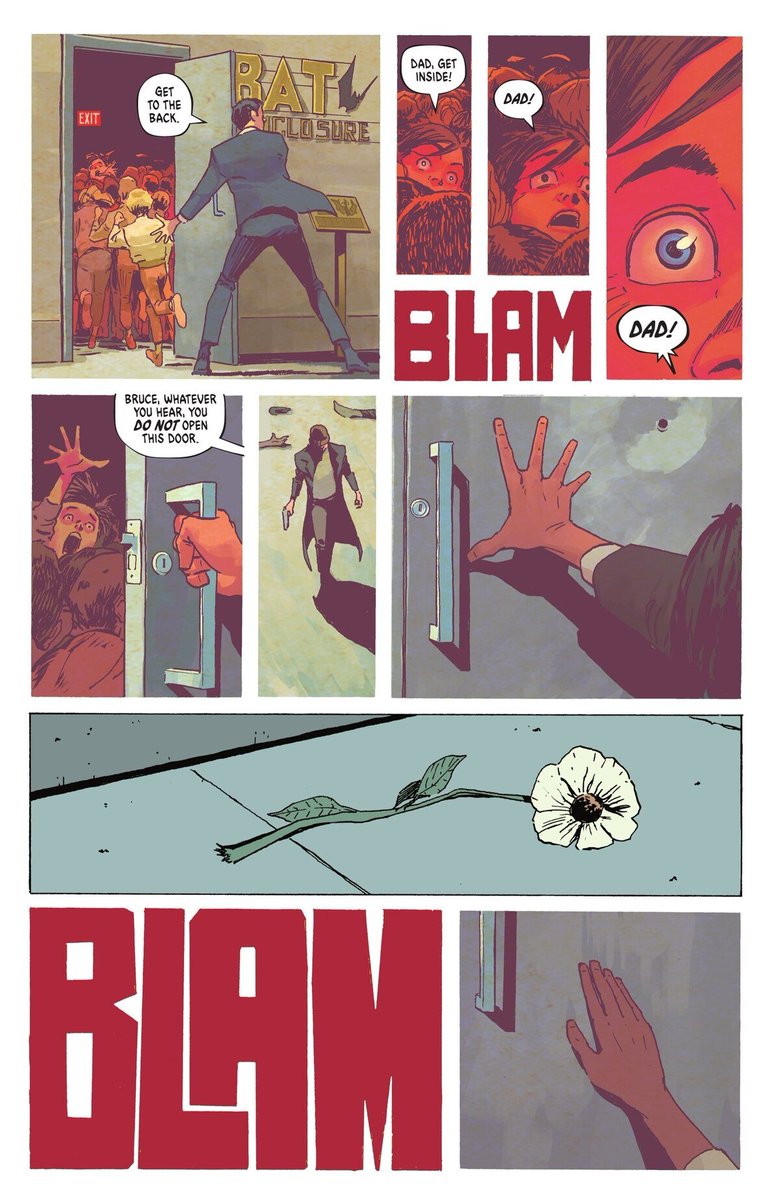
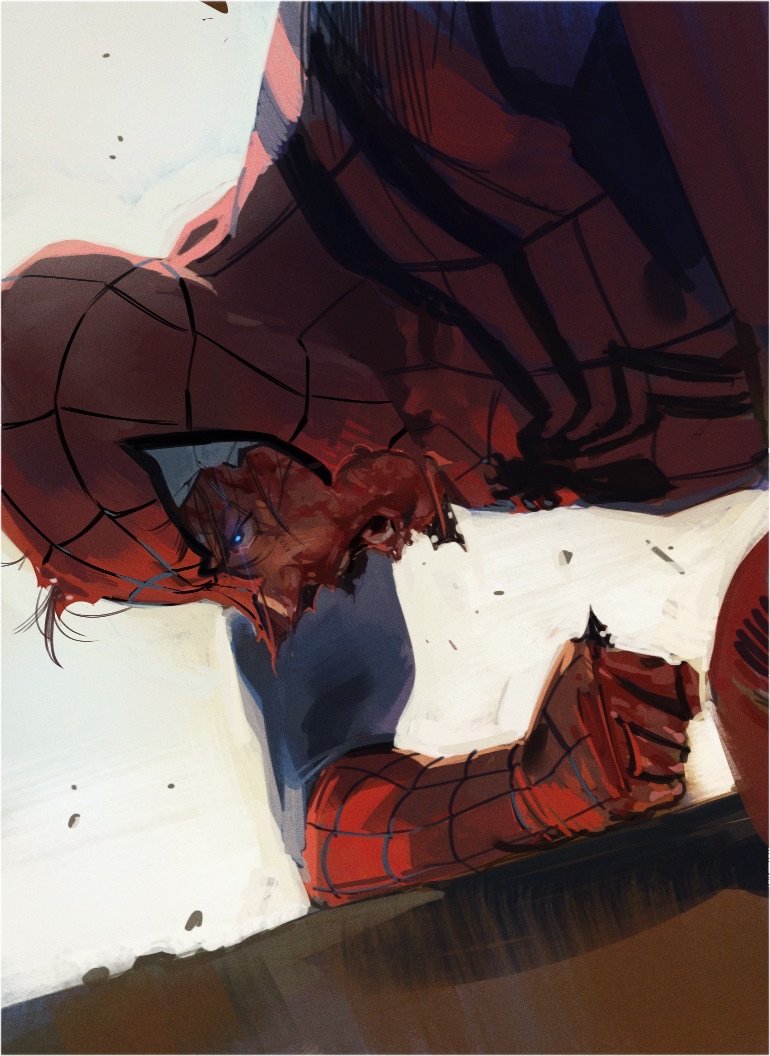
I don't mean to dunk on you, but this paneling is clearly from someone that uses the comic medium at its best
It is true that some writers/artists make their comics with adaptations in mind. Dragotta is not one of them
This is a Comic, with capital C
People are only just learning that “peter” is a verb. Yesterday someone was branded pretentious for using the word “foliage.” The dangerous thing about not reading is that it limits your communication, your imagination, and the scope of what’s possible. You inhabit a tiny world.
Re English degrees - as a student Katherine Rundell read Donne's most difficult poem. It gave her an idea for a children's book. Yesterday Disney announced a monster deal for that book. So that English degree will soon create and sustain thousands of highly skilled UK jobs.