Thrilled to share that our article, "Examining Journalists’ Adoption of Social Media Tools in Contexts of Precarity," is out! Huge thanks to @KafiliSoheil and @rmoon 🙏😊https://t.co/ugDzeePQFo @tandfonline@journstudies
@joshshepperd Freire's approach to critical pedagogy is one of the first things we discuss in the @iSchoolUI class I teach. We also assign writings by Robin Wall Kimmerer the very first week. These are undergrad students and they *love* it.
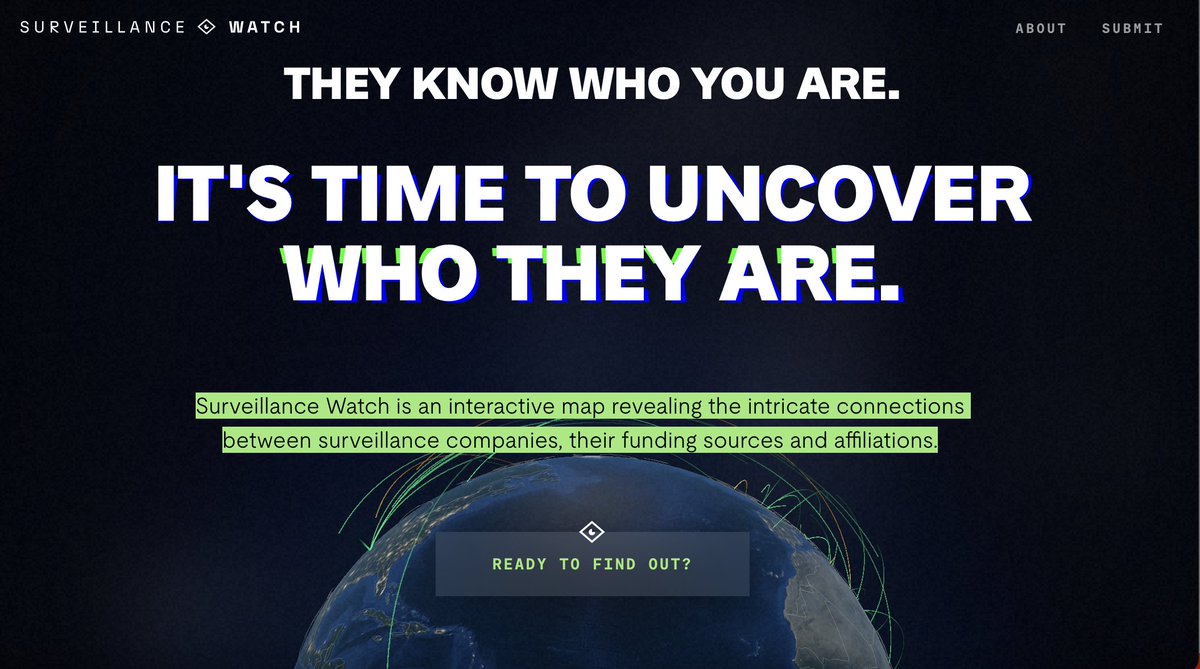
F-ing brilliant! The level of detail on the listed surveillance companies is impressive and so useful for my research. Not that you asked me, but great design as well, with maybe a few web accessibility issues. (Sorry, former front-end developer here.)
We, along with @AINowInstitute and
@logic_magazine, are proud to support Surveillance Watch: an interactive map revealing the intricate connections between surveillance companies, their funding sources and affiliations.
https://t.co/RzvlMp5WSz
I've been saying for a while now that the future of local news cannot depend on predatory platforms: In the world’s tech capital, Gazetteer SF is staying off platforms to produce good local journalism https://t.co/wpflxEqQOz via @NiemanLab
Important article by @CharisPapaev on Google & Facebook as "funding intermediaries" in journalism space, leading to increased power for the platforms. With actual data to back it up.
𝘋𝘐𝘎𝘐𝘛𝘈𝘓 𝘑𝘖𝘜𝘙𝘕𝘈𝘓𝘐𝘚𝘔 — NEWSLETTER ALERT! Check out our Issue 5 newsletter with article links from our latest special issue “Meso News-Spaces and Beyond”, and interviews with the guest editors and a first-time author.
➡️Click here to read: https://t.co/6fLB04ysAR
Yes and we need a broader understanding that technology may have certain affordances and limitations, but the impact it has on society is shaped by humans. We should think critically about what impacts we do and don't want from AI before allowing the industry to just let it loose
📣New! Despite its increasing adoption in AI governance and industry circles, the term “sociotechnical” is widely misunderstood. Our new brief aims to remedy that, explaining what a sociotechnical perspective is and why it’s so important in policy. 1/6 https://t.co/HE3e4Ktz7N
@willthewordguy Such a good analysis. I rebelled against saying "user" when designing websites & regarded people who came to the sites as "people." Instead of "user-friendly" why not "people-friendly"? Language matters, especially as we describe pattern-matching technologies as "intelligent."
@willthewordguy A great paper on an issue largely ignored in newsrooms. I wrote a non-academic screed on this a while back that got some attention in my own newsroom, but not much beyond: https://t.co/kKxyGUJzUT
@emilymbender I'm gonna use the phrase "synthetic text extruding machines" from now on. As in "we're pushing the envelope on innovating our news products by using synthetic text extruding machines."