You can build a remote call center, secure the labor at $3-$4/hour & then sell that labor for $12-$20/hour.
1 of these call centers alone will generate $2,000,000+ in ARR this year.
Here’s your exact 7-step plan to build your own:
(Bookmark this)
I’ll dumb this down for yall❗️
Mortgage backed securities are bonds backed by mortgage loans.
If the person can’t pay their mortgage, the MBS will decrease in value.
These interest only payments are usually payed out by high sales which are hard to come by.
Default inbound?
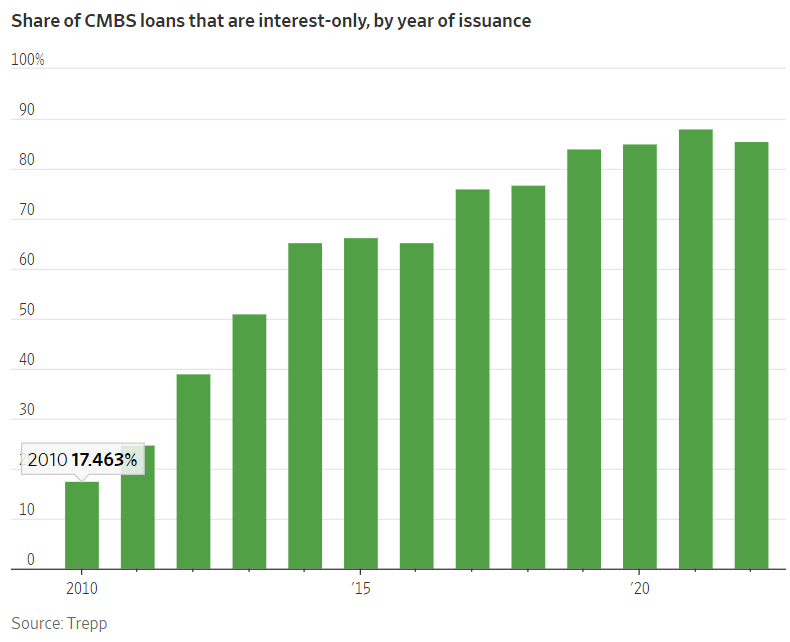
Interest-only loans as a % of new commercial mortgage-backed securities...
2010: 17%
2013: 51%
2016: 65%
2019: 84%
2021: 88%
An estimated $1.5 trillion in commercial mortgage loans are coming due over the next 3 years.
The most interesting housing market in America: Austin.
During the '00s housing crash, it took Austin 43 months to fall 8.5% peak-to-trough.
This time around, Austin has fallen 10.02% in just 9 months. https://t.co/Idv6ltSIvk
Yesterday $NVDA crushed earnings and their stock proceeded to run up nearly 30% after hours. If you held the $375 call expiring on 5/26 here’s how much you’d have woken up to today:
$1K -> $140,500
$10K -> $1,405,000
$100K -> $14,050,000
$7,117 turns to $1,000,000
Wild❗️
Example: If you have an investment with an annual growth rate of 6%, you can use the rule of 72 to estimate that it will take approximately 12 years (72 divided by 6) for the investment to double in value.
72! Something every investor should know!
The rule of 72 is a simple mathematical formula used to estimate the time it takes for an investment or debt to double in value or size.
A thread!
Rule: To apply the rule, divide 72 by the annual growth rate (or interest rate) of the investment or debt. The result is an approximate number of years it will take for the initial amount to double.
@maxfisherRE This might be helpful. Real estate could work as a good investment because it would absorb the interest rate rise and inflation through higher rent payments
10) Calls for Reform: The debt ceiling has faced criticism, with some experts arguing for its elimination or reform, suggesting alternative mechanisms to control government debt and spending.
9) Temporary Measures: In certain cases, the US Treasury has implemented extraordinary measures to temporarily avoid breaching the debt ceiling and continue meeting financial obligations.