The Giant 16th-Century 'Colossus' sculpture in Florence, Italy, is a remarkable masterpiece created by the renowned Italian sculptor Giambologna during the late 1500s. Designed as a representation of the rugged Appenine mountains that characterize Italy, this colossal statue named Appennino stands proudly at a height of 35 feet within the grounds of the Villa di Pratolino in Tuscany.
Beyond its majestic exterior, this monumental sculpture holds a captivating secret within its rugged form. Concealed within its hollow interior are several rooms, each serving different functions that bring this colossus to life. It is a testament to Giambologna's ingenuity and artistic vision that the sculpture not only captivates viewers from the outside but also invites exploration within.
One remarkable feature of the sculpture is the monstrous figure held in Appennino's left hand. This creature, whose purpose extends beyond mere decoration, spews water from an underground stream. It serves as a fascinating interactive element, where visitors can witness the spectacle of water flowing from the sculpture's hand, adding an element of surprise and enchantment to the experience.
Additionally, it is rumored that the interior of Appennino was ingeniously designed to accommodate various functionalities, further blurring the boundaries between art and utility. Within the massive head of the colossus, there is said to be space allocated for a fireplace. When lit, the flames would illuminate the interior and evoke an otherworldly ambiance. Furthermore, it is believed that the fireplace would blow smoke out of Appennino's nostrils, lending an awe-inspiring and almost mystical quality to the sculpture.
The hidden rooms within the Giant 16th-Century 'Colossus' sculpture create an immersive experience that transcends traditional sculptural boundaries. Giambologna's genius lies not only in his ability to craft a visually striking masterpiece but also in his incorporation of functionality and interactivity. By concealing these secret rooms within the sculpture, he invites viewers to explore and interact with his creation, fostering a deeper connection between art and observer.
Today, this awe-inspiring colossus continues to captivate visitors from around the world, allowing them to step into the world of Italian mythology and experience the union of art and engineering in a truly extraordinary way. The Giant 16th-Century 'Colossus' stands as a testament to the creativity and vision of Giambologna, forever reminding us of the remarkable wonders that can be born from the melding of artistic expression and architectural ingenuity.
Yesterday @DyfedPowys lost the hearts and minds of the community. A number of heavy handed and harsh arrests were made on protestors against the Stradey Migrant hotel. Here is some of the footage of the arrests and it does seem pretty concerning. @PatrickChristys@BadLawTeam
Remember in the movie The Matrix...
When Neo sees the black cat twice?
The experienced members understood that was indicative of agents on the move.
That is a "Macro".
Compare Western media covering Prigozhin - in a language & culture none of them understand - with the complete disinterest in covering the now nightly riots in France
Pro basketball player Óscar Cabrera was diagnosed with myocarditis in 2021 after collapsing during a game.
Cabrera said the heart condition was a result of the COVID jab, which he was required to get for work.
He died of a heart attack this week at 28.
https://t.co/lSGYFL2lSZ
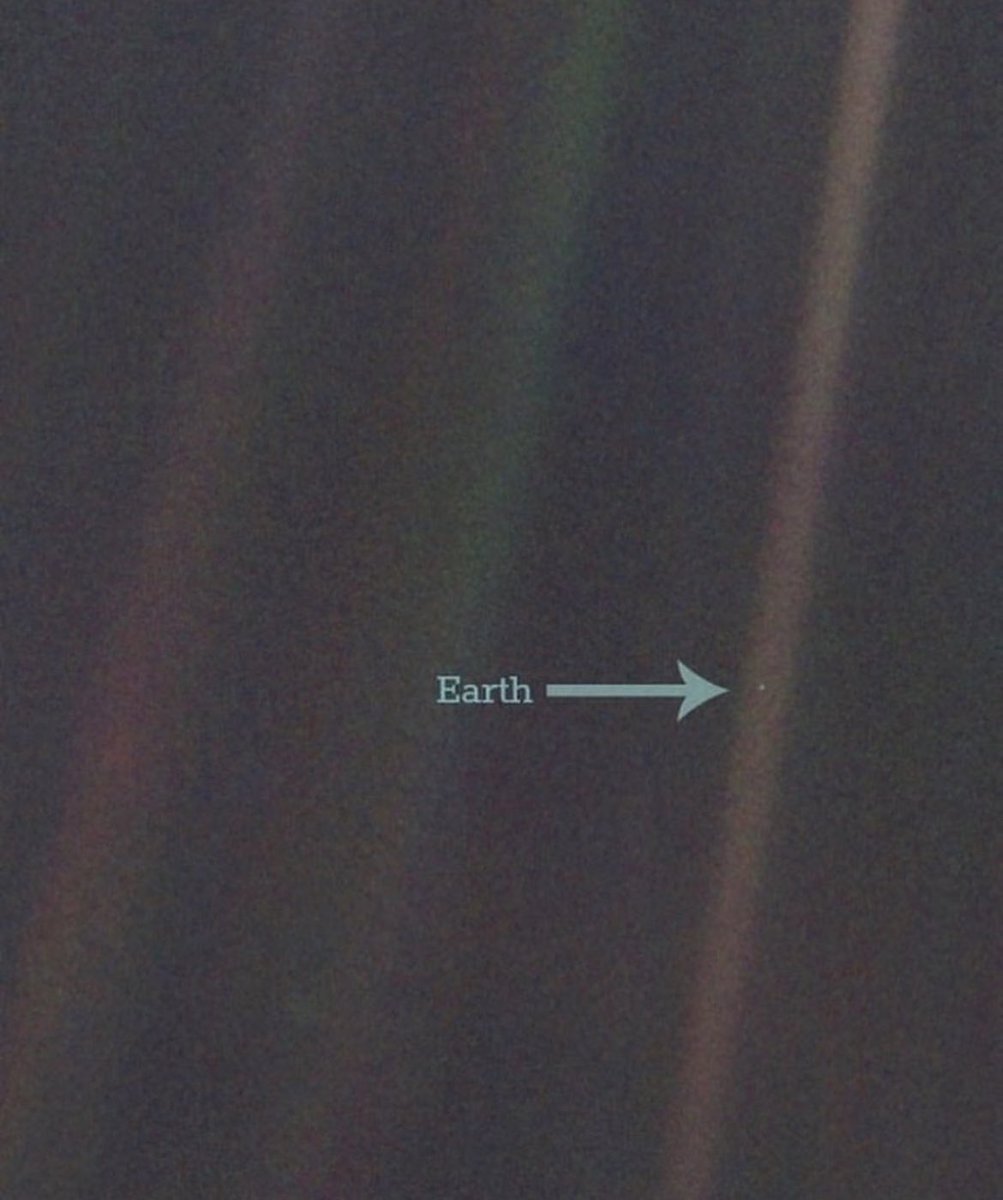
Pale Blue Dot is a photo of Earth that was taken by the Voyager 1 space probe in 1990 from a distance of about 6 billion kilometers (3.7 billion miles) as it was leaving our solar system. This is what Carl Sagan said about the photo:
"Look again at that dot. That's here. That's home. That's us. On it, everyone you love, everyone you know, everyone you ever heard of, every human being who ever was, lived out their lives. The aggregate of our joy and suffering, thousands of confident religions, ideologies, and economic doctrines, every hunter and forager, every hero and coward, every creator and destroyer of civilization, every king and peasant, every young couple in love, every mother and father, hopeful child, inventor, and explorer, every teacher of morals, every corrupt politician, every 'superstar,' every 'supreme leader,' every saint and sinner in the history of our species lived there — on a mote of dust suspended in a sunbeam.
The Earth is the only world known so far to harbor life. There is nowhere else, at least in the near future, to which our species could migrate. Visit, yes. Settle, not yet. Like it or not, for the moment the Earth is where we make our stand. It has been said that astronomy is a humbling and character-building experience. There is perhaps no better demonstration of the folly of human conceits than this distant image of our tiny world. To me, it underscores our responsibility to deal more kindly with one another, and to preserve and cherish the pale blue dot, the only home we've ever known.”