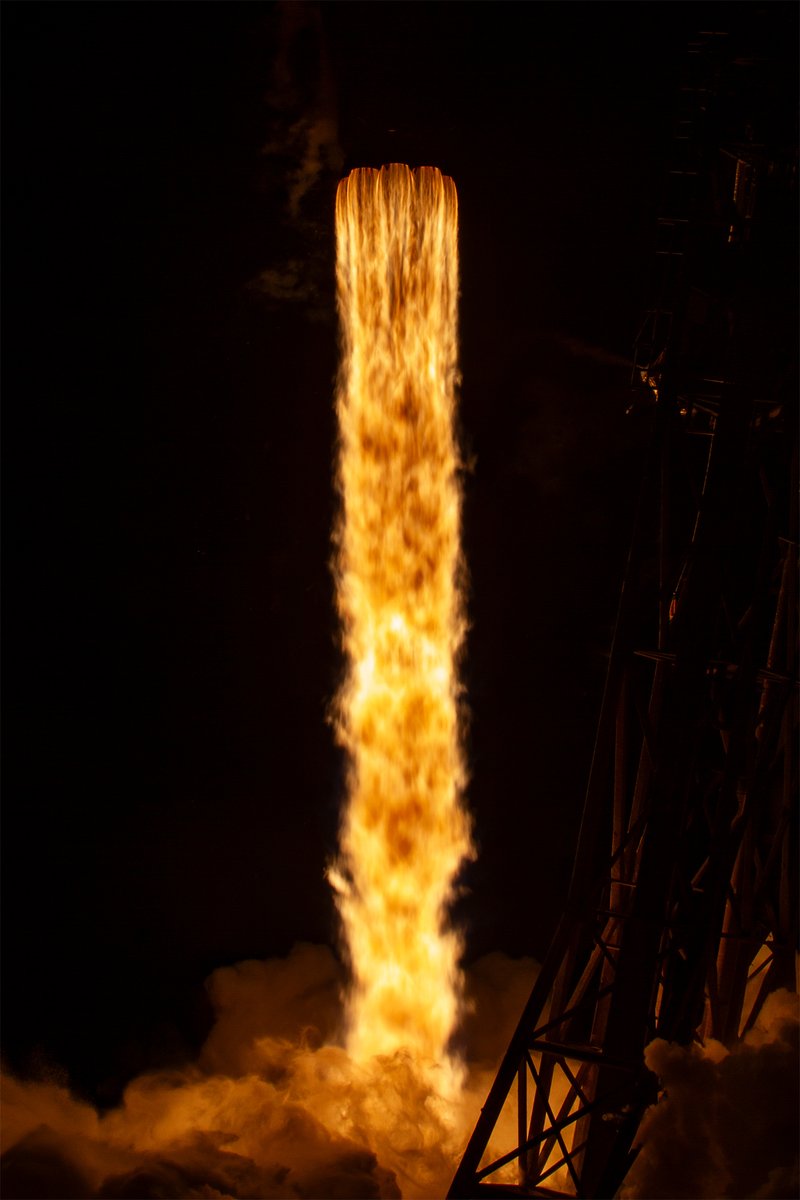
Separation confirmed! Dragon is performing four departure burns to move away from the @Space_Station. Splashdown in ~29 hours off the coast of California
SS United States during 1952 Builder's Trials on a power run making 22 knots in a rough sea. Though not her full power run during the Official Trials, it shows her speed and handling in heavy weather.
(Credit Newport News Shipbuilding & Dry Dock Co., circa 1952)
#SSUnitedStates
Is it possible that the cause was the modified oxygen valves reducing LOX flow to the BE-4s?
In this footage by @SpaceflightNow, you can see two red pulses at BECO, which suggests to me that both engines were running. A little bit fuel-rich?
Cause of ULA Vulcan Leo 1 mission failure TBD, but for context noting that the BE-4s were modified in response to the New Glenn hot fire anomaly, CEO Mark Peller said in a preflight interview. Excerpt:
Prior to Vulcan Leo 1, ULA incorporated modifications to the Blue Origin-provided BE-4 main engines that power the rocket’s first stage. The modifications were implemented following a BE-4 failure on a Blue Origin New Glenn rocket that exploded on its launchpad during a static fire test in May. That problem was traced to a BE-4 main oxidizer valve.
“That BE-4 engine and main oxidizer valve common to the BE-4s we fly on Vulcan,” ULA CEO Mark Peller said in a prelaunch interview. “They did develop a design improvement to that valve to mitigate that issue. We already had 15 ship-sets [30 engines] of BE-4s in our inventory—most of those installed on rockets—and so they developed a retrofit kit, tooling and procedures, and then qualified those processes and qualified that design change very rigorously through hot fire testing.”