My dad loved being a judge. When asked why, his answer usually involved talking literature with Richard Posner over lunch in the Dirksen Building Cafeteria.
Why is no one talking about the deal Huang and Trump made to give the US government 15% of China chip sales (later 25% on H200 chip, as announced by Trump in December)? This complicates the scandal in several ways: 1) H200 was the chip Lightspeed was buying - but Chinese companies were no longer prohibited from buying them directly. 2) Trump and Huang were business partners in these sales; Trump loved this deal-making role. 3) Did selling chips to China via Singapore let NVIDIA keep the government’s 25%?
House Democrats are in the fight to bring government back from the brink of authoritarianism. We will shine a light on President Trump's quid pro quo, coin-operated, pay-to-play corruption and renew American government as an instrument for the common good.
"Law firms that struck deals with President Donald Trump in early 2025 can expect to be subpoenaed by the House Judiciary Committee next year, Rep. Jamie Raskin (D-Md.) said."
https://t.co/4g2XwzDGfv
A lot of rats are going to pretend they didn’t spend the past few years whoring themselves out to Trump and it’s crucial not to let them get away with it.
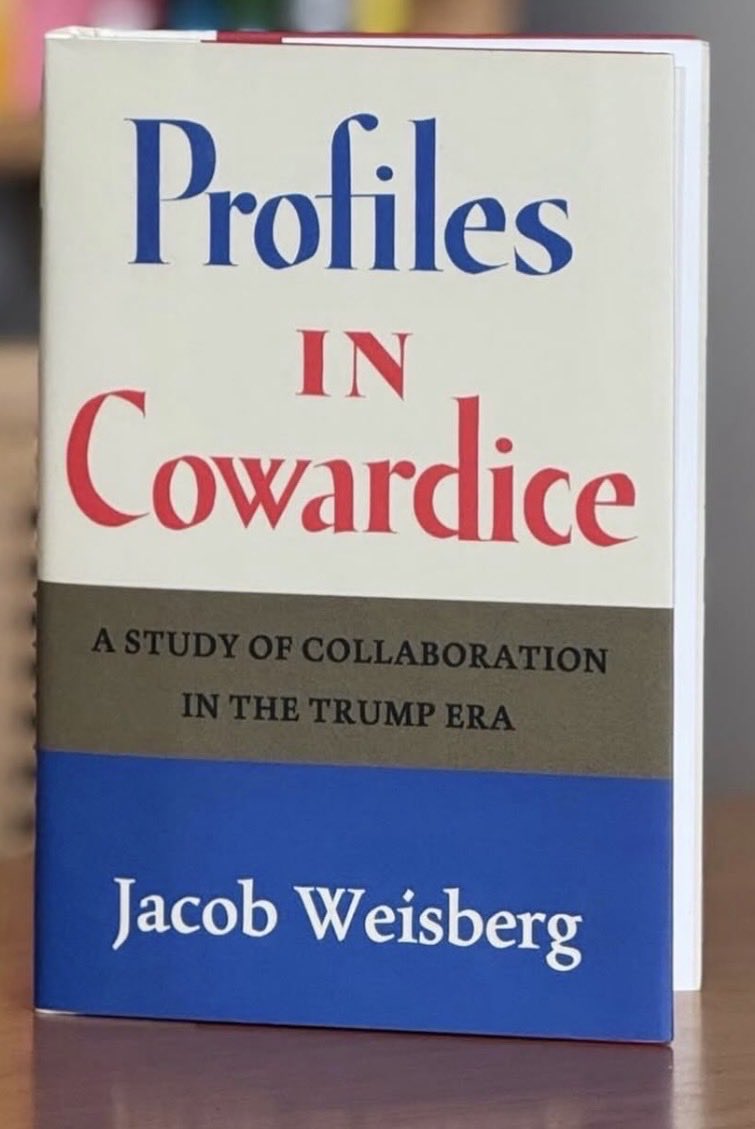
📺 @jacobwe and I talked about his @nytimes best-seller Profiles in Cowardice — who has bent the knee in the second Trump term, and how the midterms will affect what the next two years look like — for a new episode of @overheardpbs https://t.co/bH2hXxqmCY #txlege@austinpbs
Strongly agree with @paulkrugman. A private individual can’t be allowed to make national security decisions. Congress should nationalize Starlink (and pay fair compensation to @elonmusk) https://t.co/Yjq8Igr459
A fascinating essay by Adrian Wooldridge about the failure of elites that somehow manages to compare Profiles in Cowardice to Tacitus @opinion https://t.co/Vj18IbrHVx
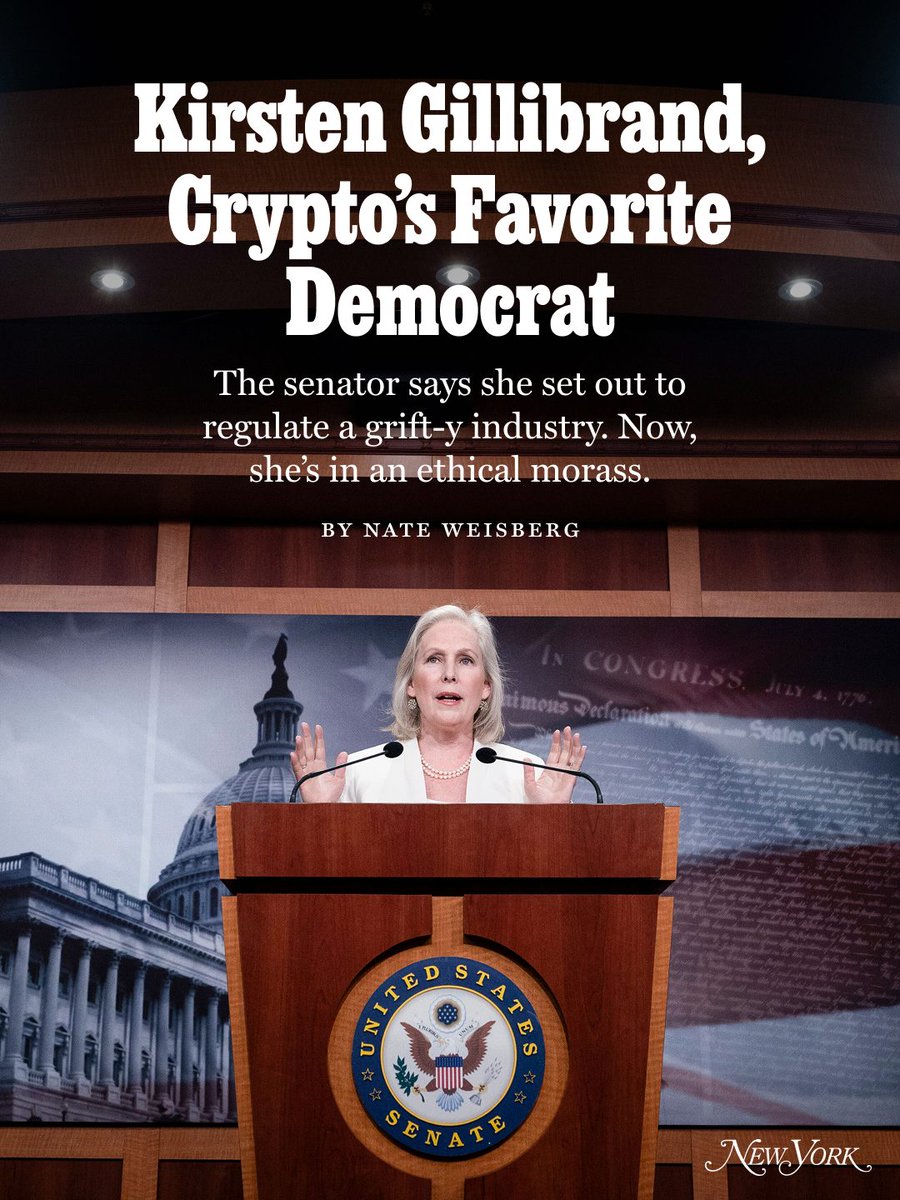
Crypto appeared on Senator Kirsten Gillibrand’s radar not long after her presidential campaign fizzled out in 2019. The more she learned, she said, the more frustrated she became that lawmakers seemed content to leave it alone.
In 2025, Gillibrand was the lead Democratic sponsor of the GENIUS Act, which laid down federal rules for stablecoins. This year, she played much the same role for the CLARITY Act, the crypto industry’s great unfinished legislative project, pressing fellow Democrats for their votes. The sweeping bill would have moved much of digital-asset trading out of the Securities and Exchange Commission’s securities-law regime and into a new framework overseen by the chronically underfunded and much weaker Commodity Futures Trading Commission.
“In my opinion, the CLARITY Act was a financial crisis waiting to happen,” says Lee Reiners, a former Federal Reserve Bank of New York official. When FTX collapsed in 2022, the damage remained largely contained within crypto because digital assets still had relatively few connections to banks and traditional markets. CLARITY, Reiners argued, would have helped erase that separation: “Certainly, if CLARITY had passed, it would have supercharged the integration of crypto into the financial system.”
Gillibrand now finds herself in a crypto-related ethical morass. Her 22-year-old son, Theo, is the head of a start-up backed in part by crypto investors — including one who donates to his mother — that is seeking regulatory approval to bring a crypto-native trading product into conventional financial markets. Her campaign coffers are stuffed with crypto money, while former aides have rotated between her office and the industry.
Nate Weisberg reports on one of crypto’s most important Democratic allies and what happens if Gillibrand succeeds in making crypto easier to use and more deeply embedded in ordinary finance: https://t.co/qdOjtGhlaQ