Gerhard Nesvadba
Austrian painter in the impressionistic style
I’ve picked two I haven’t posted before and I like these because of id love to walk down the paths in both these paintings
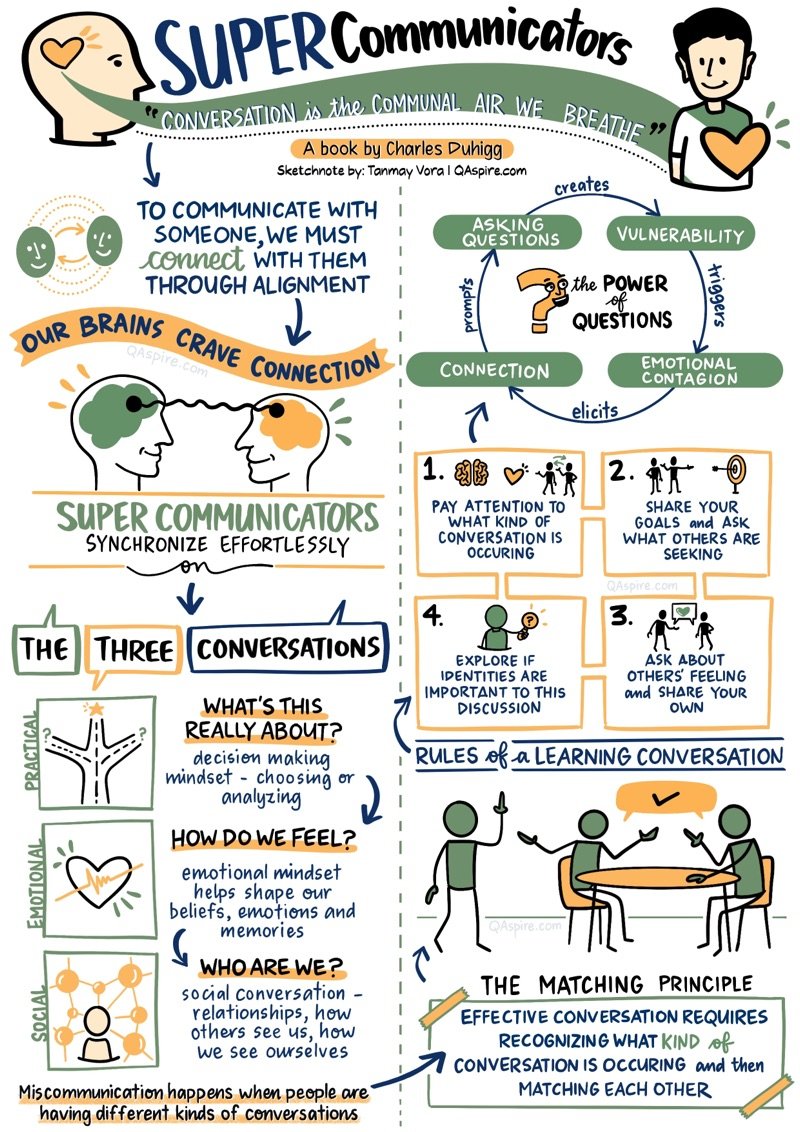
"Conversation is the communal air we breathe". A summary & sketchnote of "Supercommunicators" - a new book by @cduhigg. It sets out why some people ("supercommunicators") are able to connect with others, build consensus & influence people to join them. He suggests this can be replicated. The first step is working out what kind of conversation we are having. Is it:
1) analytical (What’s this really all about?)
2) emotional (How do we feel?)
3) identity based (Who are we?).
Only after recognising what type of conversation the other person wants to have can we connect:
https://t.co/8FUpyKDDn9. Blog & visual by @tnvora.
If we want to create change across systems, we need to shift the balance, with less focus on redesigning structures/processes & more focus on collaboration, empathy & genuine human connection. “The Human Heart of Systems Change” - a new report from CoCreative sets out learning from research with impact leaders.
Some of the key themes:
1) Managing complexity through collaboration: Leaders emphasise bridge-building, supporting collective knowledge that goes beyond organisational silos, & adapting solutions to local contexts.
2) Investing in "connective tissue": Relationship-building & coordination are often underfunded, but critical. These activities should be recognised & resourced as core strategic infrastructure.
3) Leveraging technology for transparency: There is an opportunity to leverage AI & visualisation tools to make complex, dynamic systems visible in real time—enabling leaders to see, understand & act on key leverage points.
4) Evolving measurement & accountability: Output-based metrics are often inadequate to show the impact of systems work. There needs to be a shift toward collective impact measurement—capturing changes in relationships, power dynamics & the capacity for systems thinking
5) Building a robust leadership ecosystem: Isolation and lack of ongoing support for leaders can hinder sustainable progress. There is a strategic imperative to invest in continuous learning, peer reflection & collective knowledge development—strengthening not just individuals but entire leadership ecosystems.
https://t.co/6Yvy6W6tjr
We can’t wait to welcome everyone to our Annual Education & Research Seminar 2026 tomorrow at 9am, Camden Court Hotel. View the full programme here: https://t.co/01wE71rp6a
#PallCareSem26
🚨 Booking now open!
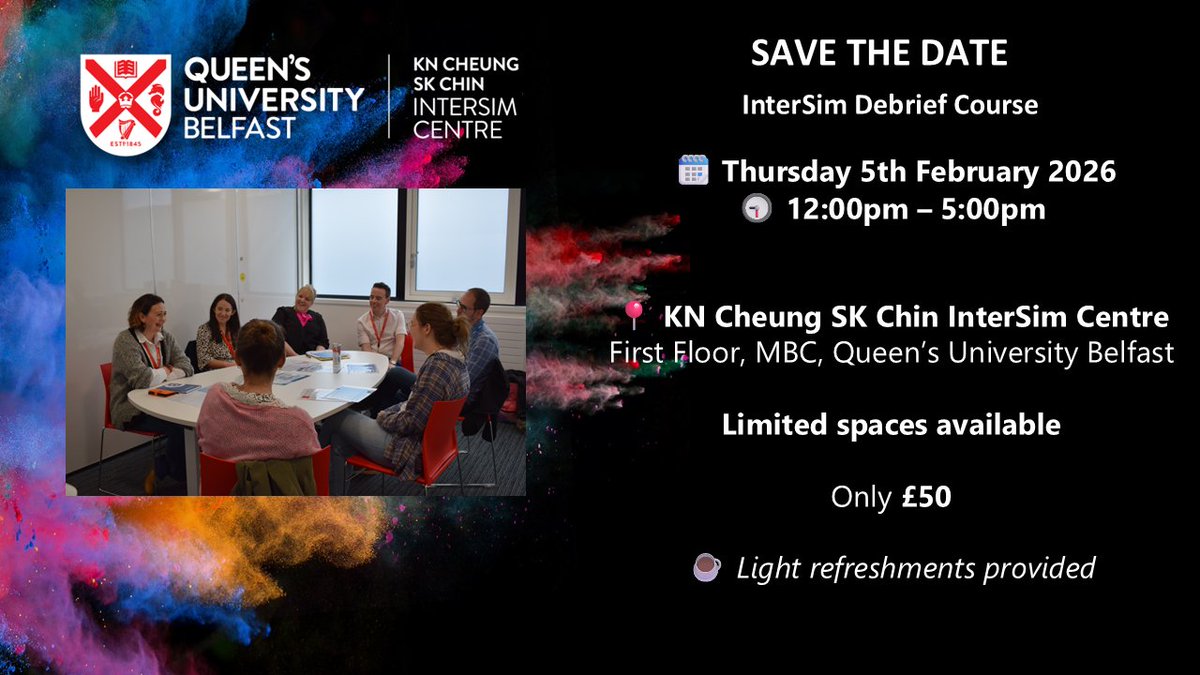
Join us at InterSim for our Debrief Course
Get hands-on with simulation & qualitative research.
🔗https://t.co/RkMmfSzGNv #debrief#research#simulation
📍 InterSim, QUB
📅 Thurs 5th Feb 2026
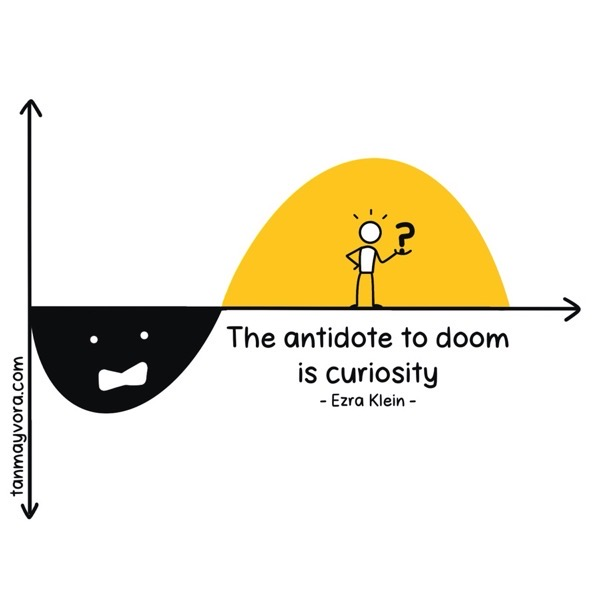
Curiosity is one of the most strategic capabilities that we need at times of profound change & uncertainty.
For leaders of change, I would define “curiosity” as engaging with uncertainty: focusing on gaps in our knowledge, exploring them with others, seeking other possibilities & using what we learn to adapt decisions, relationships & systems for better outcomes.
Uncertainty automatically triggers threat responses in our brains, narrowing attention and pushing us into “fight‑flight‑freeze” patterns that shut down creativity & collaboration. As leaders under rising pressure, we tend to seek quick closure, filter out disconfirming data & dig in with our initial interpretations, which is the opposite of what complex change requires.
Curiosity creates a different pathway. When we become genuinely interested in “what is really going on here?” we recruit neural networks linked to exploration, problem‑solving & reward. Leaders who show interest, ask open questions & tolerate “not knowing yet” help teams move from defensiveness to discovery. In practice, that can be as simple as shifting the first question in a crisis meeting from “How do we fix this?” to “What might we be missing about this situation?
Research on “information gaps” shows that curiosity is triggered when we become aware of something important we do not yet know; the gap itself generates energy to learn. People often feel most curious at moderate levels of uncertainty—enough ambiguity to stimulate interest, but not so much that the situation feels hopeless.
For change leaders, this means uncertainty gets reframed as a shared learning agenda: “Here is what we know, here is what we don’t, & here are the questions we need to explore together.” This approach treats ambiguity as a resource rather than a personal failure of leadership & invites collective sense‑making instead of people waiting for instructions or answers.
How to build a culture of curiosity in uncertain times:
1. Model visible curiosity every day: Regularly say “I don’t know yet”, “Tell me more” & “What am I missing?”, signalling that questions are welcome, not a weakness.
2. Design meetings around questions, not updates: Start sessions with 2–3 priority questions (e.g. “What’s the most important thing we don’t understand about this issue?”) instead of long slide decks.
3. Actively encourage questioning & learning: Publicly thank team members who raise awkward issues or ask clarifying questions, & link this to your values/behaviours framework.
4. Create simple learning & experimentation routines: Encourage small, safe‑to‑try tests of change & make it explicit that “failed” experiments are successes if they generate useful learning.
5. Bring in diverse perspectives by design: Mix roles & disciplines in problem‑solving sessions & deliberately ask “who else needs to be in this conversation?”.
Building a culture of curiosity is not about adding extra components on top of an already overloaded change agenda; it’s about changing the way we pay attention. In an uncertain world with shifting demands, shared curiosity is no longer a “nice‑to‑have”; it can be the difference between repeatedly coping & continuously improving.
See e.g., https://t.co/VkDEV5UBYS Performance Frontiers.
Post by inspired by this graphic from by @tnvora
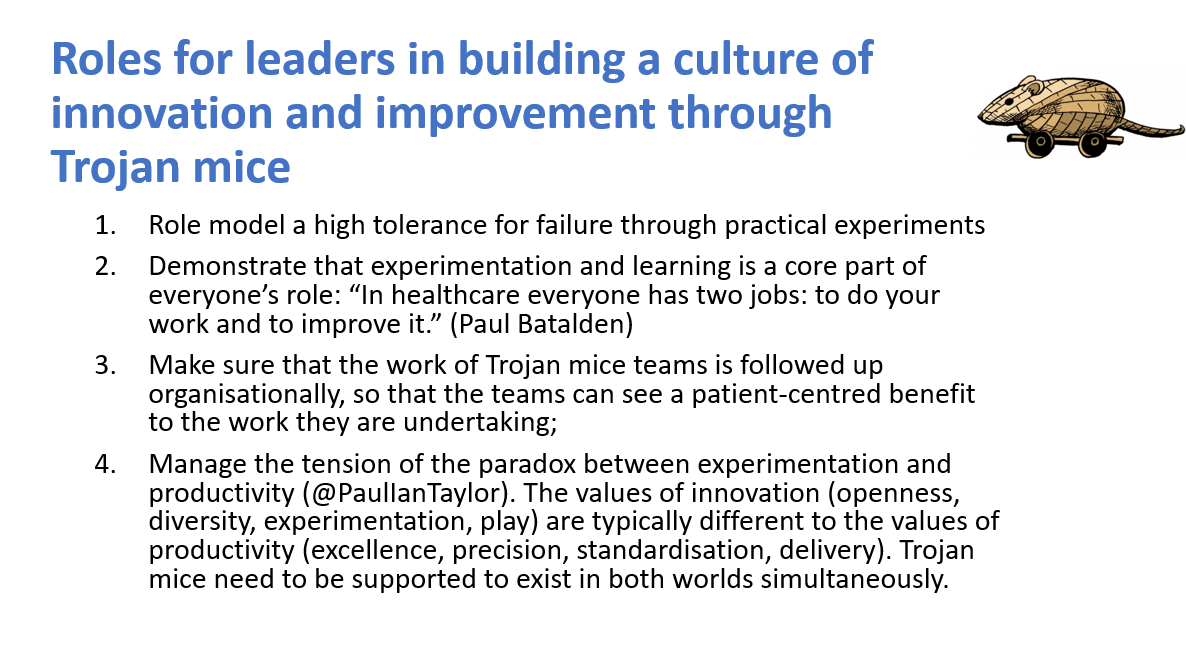
Today I spoke at the Drucker Global Forum about “Trojan mice” vs. “Trojan horses.”
Organisational change programmes often struggle to get results despite investment, careful planning & leadership commitment. Traditional "Trojan horse" initiatives (large scale pilot projects designed for eventual system-wide rollout) struggle against the complexity inherent in large systems. The alternative, "Trojan mice," offers a fundamentally different pathway: having many people across the system with the skills & agency to test out small, well-focused changes to address complex problems.
The choice between Trojan horses & Trojan mice isn't about abandoning ambition or settling for incremental tinkering. It's about recognising that in big systems, distributed action by skilled people with agency nearly always achieves more than centrally controlled, large-scale programmes. By cultivating many changemakers across the system & creating conditions where small, focused experiments can flourish, we can unlock the collective intelligence & energy needed for systemic change.
Three facts about Trojan mice:
1) They fail often, fail early, & learn greatly. The cost of failure occurs early in project timelines, rather than at launch when it's too late. This is in line with what @AmyCEdmondson calls "intelligent failure"—thoughtful experiments that result in useful learning & allow teams to move forward.
2) They capture what works in complex systems - local ownership, fast feedback, & momentum that scales organically. Because changes are small & focused, they can be genuinely owned by those implementing them, creating commitment rather than compliance.
3) Most organisations are built for consistency, not novelty. Trojan mice strategies bypass this structural resistance by building agency & capability throughout the system rather than concentrating change authority in a central team.
I learnt about Trojan mice from Chris Bolton @whatsthepont: https://t.co/twlfW03aos #DruckerForum
We encourage everyone to take part in the HIQA Assessment on #BowelScreen Extension.
Together, we can make a real difference in protecting people at risk of bowel cancer in Ireland.
Read our statement and have your say here:
https://t.co/UMMC5J5N3V
Today we are launching a public consultation for our draft assessment of extending the BowelScreen programme to people aged 50 to 54 years. If you would like to learn more or participate, you can here: https://t.co/DklyOXpPpw
Help needed 📢
Have you had #ColorectalCanceror are you living with an increased risk of developing it?
Would you like to join an awesome group and help shape relevant research, and consequently, earlier diagnoses and better outcomes?
Check it out 👇🤓
#CancerResearch#PPI
🚨 WANT 2 TICKETS TO COLDPLAY? 🚨
Coldplay have just announced 2 Irish dates on the 29th & 30th of Aug 2024 & we want to send YOU🎟
Simply:
💛 Like this post
🔁 Retweet
📱 Follow @todayfm
You can also register for presale at https://t.co/UMYmmq4JE1
T&Cs apply
#dublincoldplay