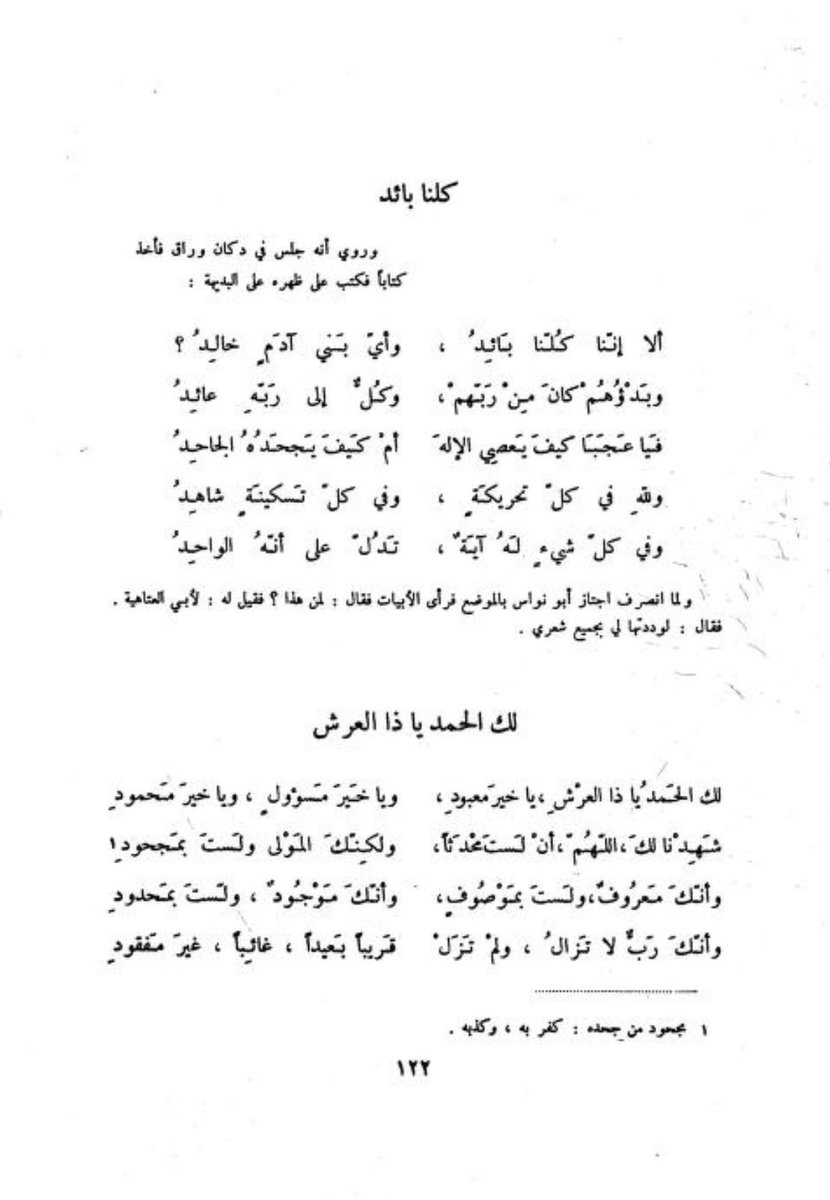
saw the verses. He asked, “Whose are these?” He was told, “They belong to Abul-ʿAtāhiyah.”
He then said, “I wish these verses were mine, even at the cost of all my poetry.”
Dīwān Abil-ʿAtāhiyah, p. 122.
It is narrated that Abū al-ʿAtāhiyah once sat in a bookseller’s shop. He picked up a book and spontaneously wrote on its back:
We shall all, indeed, perish; And which son of Ādam shall remain forever?
Their beginning was from their Lord, And everyone shall return to his Lord.
How astonishing! How can Allah be disobeyed? Or how can one who denies Him deny Him?
Allah has a witness in every movement, And in every stillness.
And in everything there is a sign for Him, Indicating that He is the One.
When Abū Nawās departed, he passed by that place and
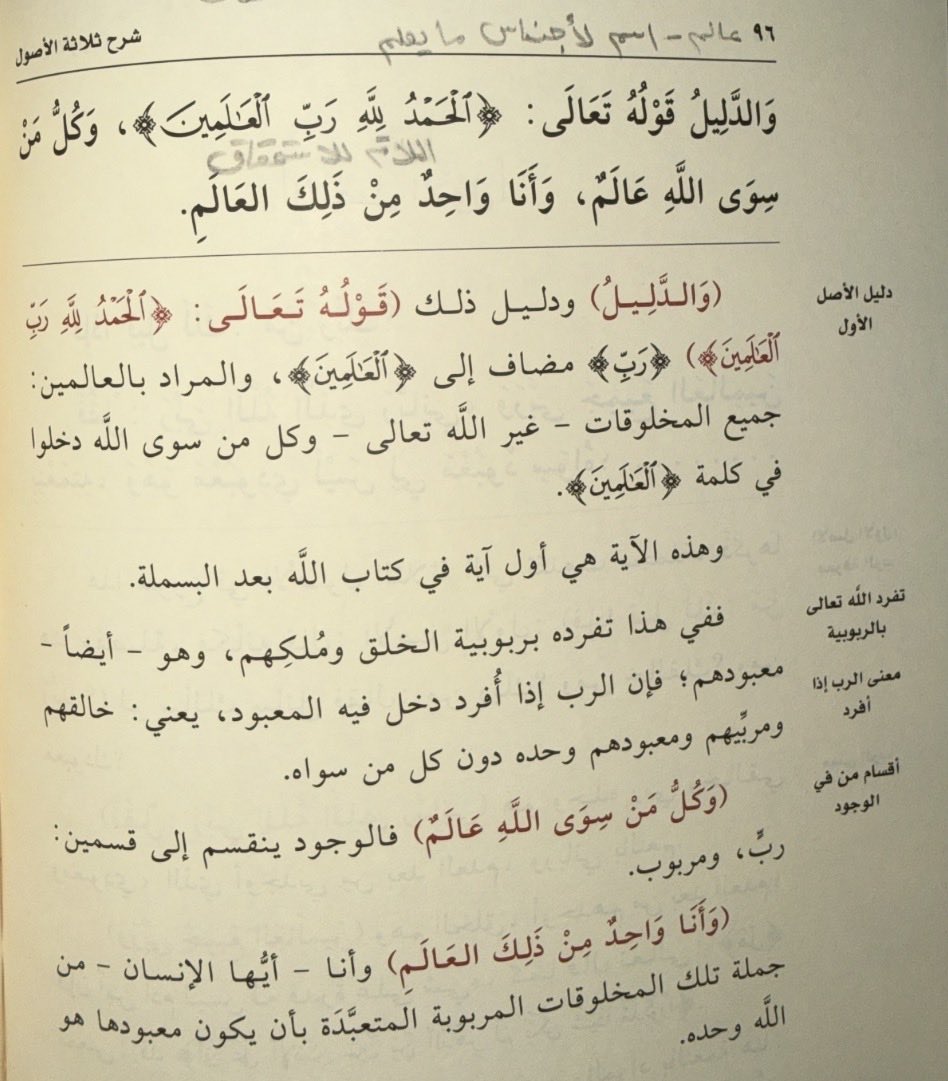
Shaykh Muḥammad Ibn Ibrāhīm Āl Ash-Shaykh رحمه الله said:
When the Rabb is mentioned exclusively (in a context), the One who is worshipped is included in its meaning; that is, He alone is their Creator, Sustainer, and the One deserving of their worship, to the exclusion of
Holidays on Friday
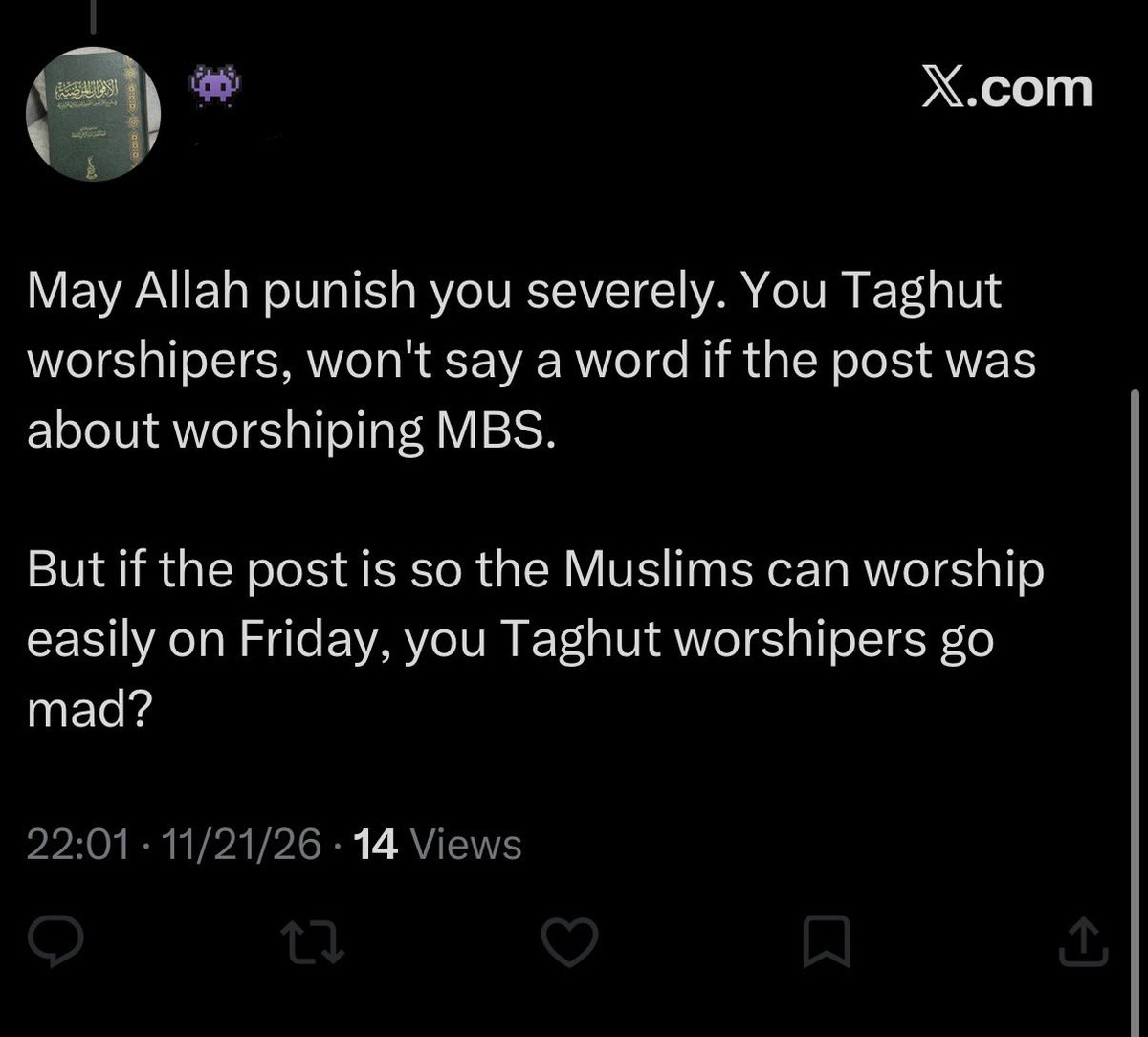
This Khārijī attacked me and called me a Ṭāghūt worshipper for simply saying that it is not obligatory for rulers to give holidays on Fridays.
No scholar to my knowledge has said that this is obligatory.
Some have merely permitted it while many others have
6. Shaykh ʿAbdur-Raḥmān Ibn Saʿd Ash-Shathrī حفظه الله wrote an entire book on this issue titled “The Sharʿī Evidences for the Prohibition of Imitating the Jews and Christians in Their Weekly Holiday.”
This book was introduced by Shaykh Ṣāliḥ Ibn Fawzān Al-Fawzān and Shaykh