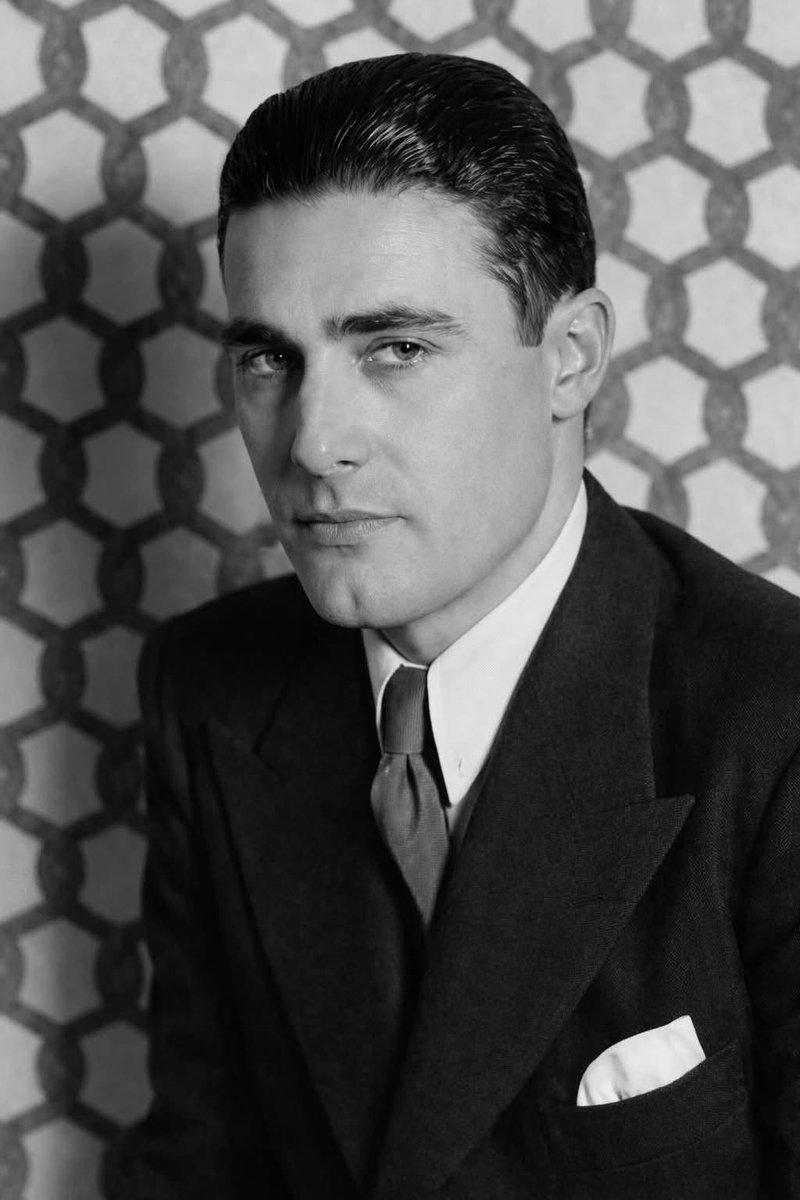
In 1942, a drunk German officer sat at dinner and bragged about the Jewish woman he had selected from the brothel the Nazis had forced open in town. He said her name out loud. The Tunisian Arab sitting across from him stayed calm, smiled, poured more wine, and finished the meal. Then he drove the officer home, sped through the dark streets, and knocked on a door close to midnight. That night, he hid 25 people for four months. He never spoke about it again.
His name was Khaled Abdul-Wahab. He was 31 years old, a wealthy Muslim Tunisian who had studied art and architecture in New York and spoke fluent German. Nazi officers trusted him. They invited him to their dinners.
Tunisia was the only Arab country directly occupied by Nazi Germany during the war. Jewish families were pushed from their homes. More than 5,000 Jewish men were sent to forced labor camps. Yellow stars marked every chest.
That December night in the coastal town of Mahdia, Khaled listened as the officer boasted. The woman he named belonged to a family Khaled had known all his life.
He left immediately. He drove through the night. He knocked on their door at midnight.
Pack nothing. Come now.
He gathered 25 people — mothers, fathers, cousins, and children — and drove them nearly 20 miles to his family farm, hiding them inside the olive press, stables, and storage buildings.
This was not one brave act. It was four straight months of courage.
He fed them while supplies grew scarce. He kept babies quiet. He trusted his servants to stay silent. When German soldiers arrived to count Jewish families, the hidden people pinned yellow stars onto their clothes and stood motionless. When the soldiers left, the stars came off again.
One night, a drunken soldier wandered onto the farm and discovered them. An eleven-year-old girl hiding under a bed watched him laugh and threaten to kill everyone there. Then Khaled appeared. She remembered him her entire life as a guardian angel. He calmly walked the soldier outside, took away his weapon, and sent him off the property.
Nobody on that farm died.
In May 1943, British forces liberated Tunisia. All 25 people returned home alive.
Khaled went back to a quiet life. He married, raised daughters, painted, and worked in government service.
He never told anyone what he had done. Not his wife. Not his children. No one.
He died on September 4, 1997, at the age of 86. His story was buried with him.
Ten years later, his daughter Faiza was sitting in a café in Paris reading a Sunday newspaper when she came across an interview with an American historian describing a Tunisian Arab who had hidden 25 Jews in 1942.
The historian mentioned her father by name.
She was 45 years old and had never heard the story before.
She contacted the historian. One of the children saved on the farm had left behind 83 pages of testimony before her death. Every detail matched.
“I rediscovered my father,” Faiza later said.
Khaled was nominated for Israel’s highest honor given to non-Jews who saved Jewish lives. He would have been the first Arab to receive it.
The committee declined, saying he had not risked his own life enough.
Faiza answered with a line history should never forget:
“My father opened his home to Jews. They did not open theirs to us.”
Today, the 25 people Khaled saved have hundreds of descendants living across Israel, France, America, and Tunisia. The little girl hidden beneath the bed grew up, moved to Paris, and built a family of her own. None of them would exist if Khaled had stayed silent that night.
He had everything to lose. He acted anyway. Then he spent the rest of his life saying nothing about it.
The world nearly forgot him twice. Now you know his name.
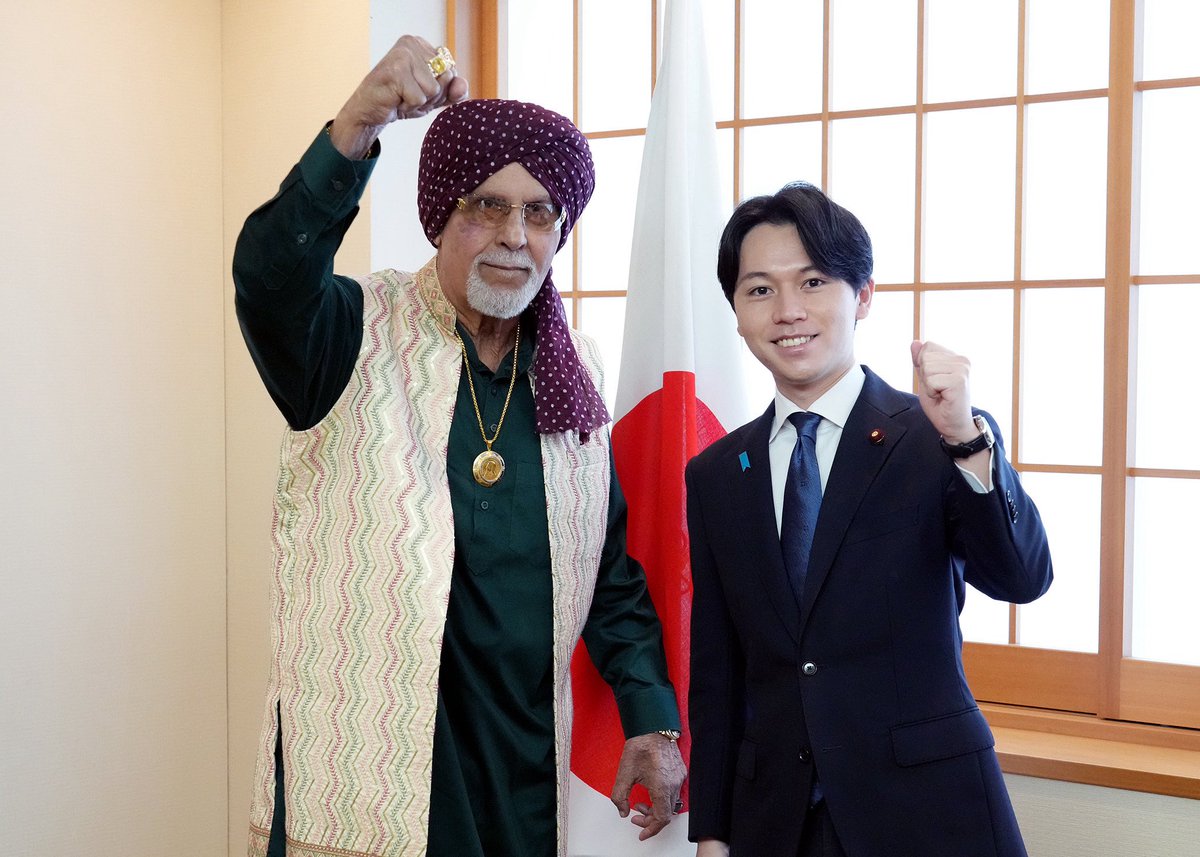
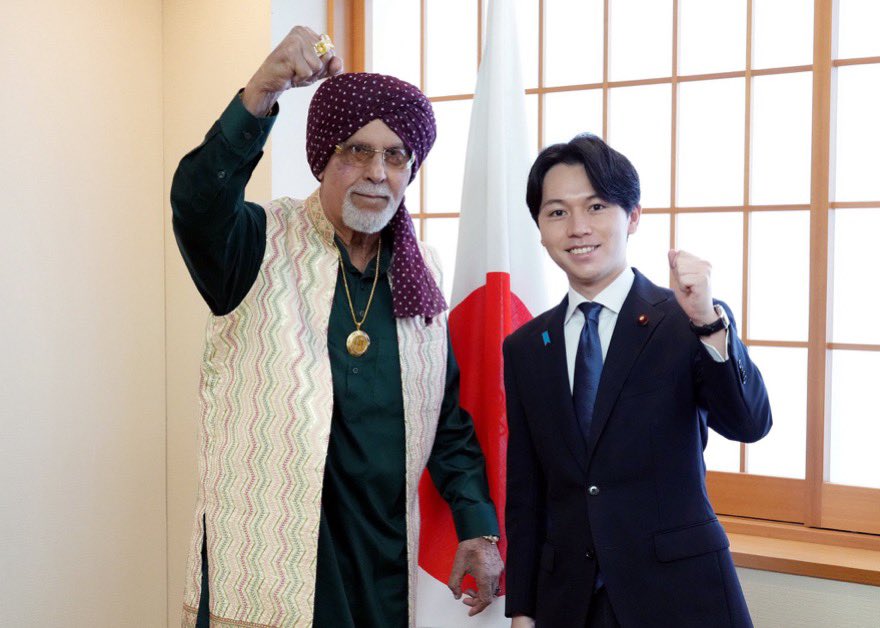
Tiger Jeet Singh spent his final morning in Japan at the Ministry of Foreign Affairs alongside Megumi Kudo, meeting Parliamentary Vice-Minister Koki Ozora - a self-declared pro wrestling fan.
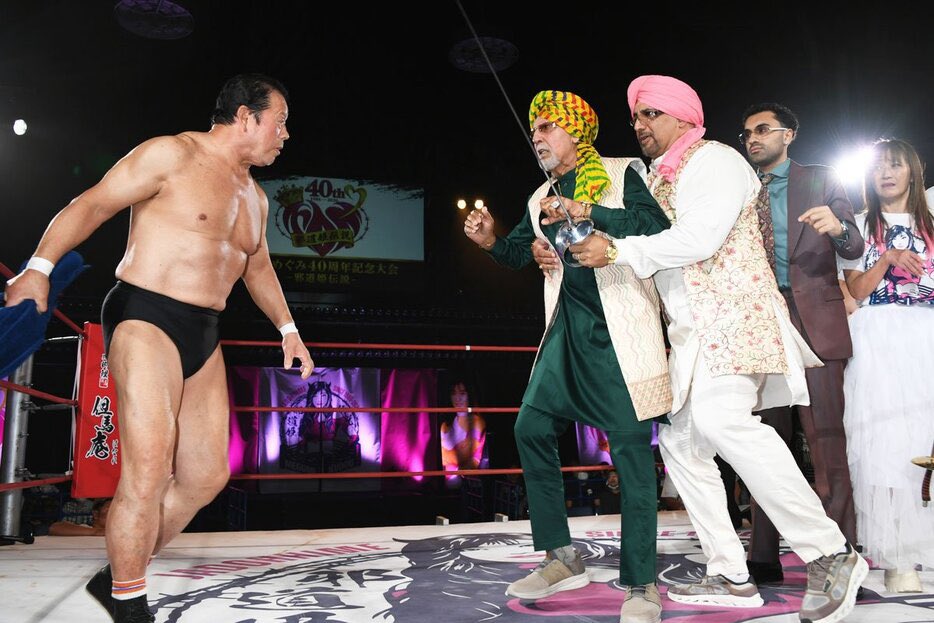
Singh spoke about his motivation for visiting Japan, his friendship with Kudo and the social welfare work carried out by his Canadian foundation, before presenting Ozora with his saber - the weapon that represents his very soul - and pledging to continue serving as a bridge between Japan and Canada.
That evening at Narita Airport, he had one final message: "For us, there is no such thing as 'never'! If it is for my dear legend Megumi-san, the living legend Tiger Jeet Singh will return to Japan again!"
@megumi_kudome
@dragondradition Thank you for the beautiful words 🙏❤️ Japan has always held a very special place in my father’s heart. It was a honour to share the ring with you!🇯🇵🐯🇮🇳
🇯🇵🇨🇦 A LEGENDARY HOMECOMING — A LEGACY BEYOND THE RING! 🙏🏽
An extraordinary honour as legendary professional wrestler and humanitarian Tiger Jeet Singh was warmly welcomed to Japan’s Ministry of Foreign Affairs by Parliamentary Vice-Minister Mr. Koki Oozora.
Welcoming the wrestling icon with the heartfelt words, “Welcome home to Japan,” the Vice-Minister congratulated Tiger on receiving Japan’s prestigious Order of the Rising Sun in 2024 and expressed his deep appreciation for the Tiger Jeet Singh Foundation’s humanitarian efforts, particularly its support for children affected by the Great East Japan Earthquake.
The memorable meeting celebrated decades of friendship between Japan and Canada, with heartfelt conversations about legendary wrestler Antonio Inoki, Japan’s youth, and Tiger’s remarkable journey extending well beyond the scheduled time.
In a truly unforgettable moment, Tiger presented the Vice-Minister with his iconic saber — a symbol of his legendary wrestling career — prompting the Vice-Minister to remark that it was possibly the first saber ever brought into Japan’s Ministry of Foreign Affairs! 🐅⚔️
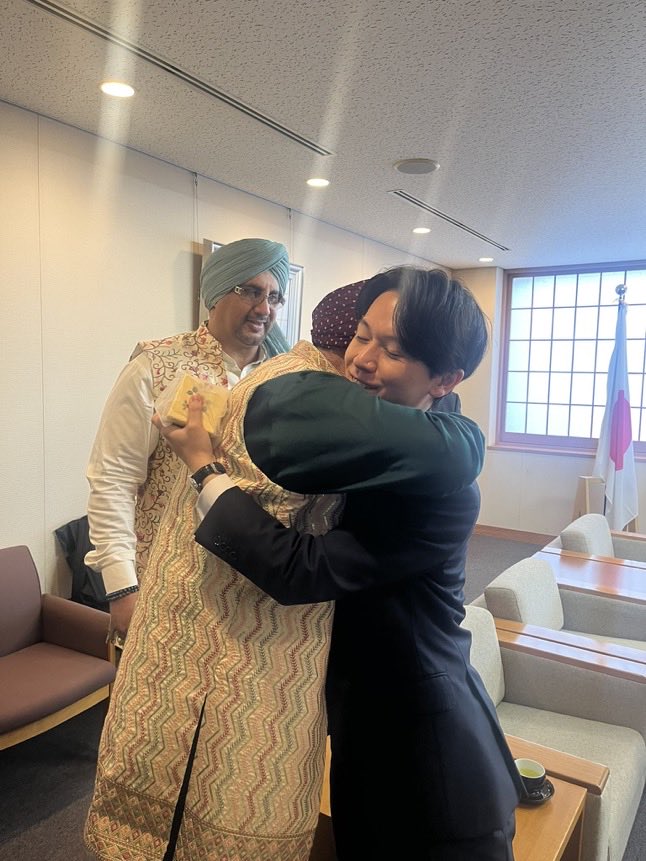
The visit concluded with a heartfelt embrace, reflecting the genuine affection and respect that transcend generations, cultures, and borders.
Once feared in the wrestling ring, forever respected for his contributions outside it.
A proud and humbling moment for the Tiger Jeet Singh Foundation and the enduring friendship between Japan and Canada. ❤️
#TigerJeetSingh #TigerJeetSinghFoundation #JapanCanadaFriendship #OrderOfTheRisingSun #SaberTiger #WrestlingLegend #Humanitarian #Japan