Aquí el audio -casi- completo.
Cuanto más sabemos, peor.
Y, como me dijo un alto mando, lo que se sabe es malo y feo, lo que hay es muchísimo peor y más feo aún.
¡Que viva honrada la Guardia Civil y libre de injerencias políticas!
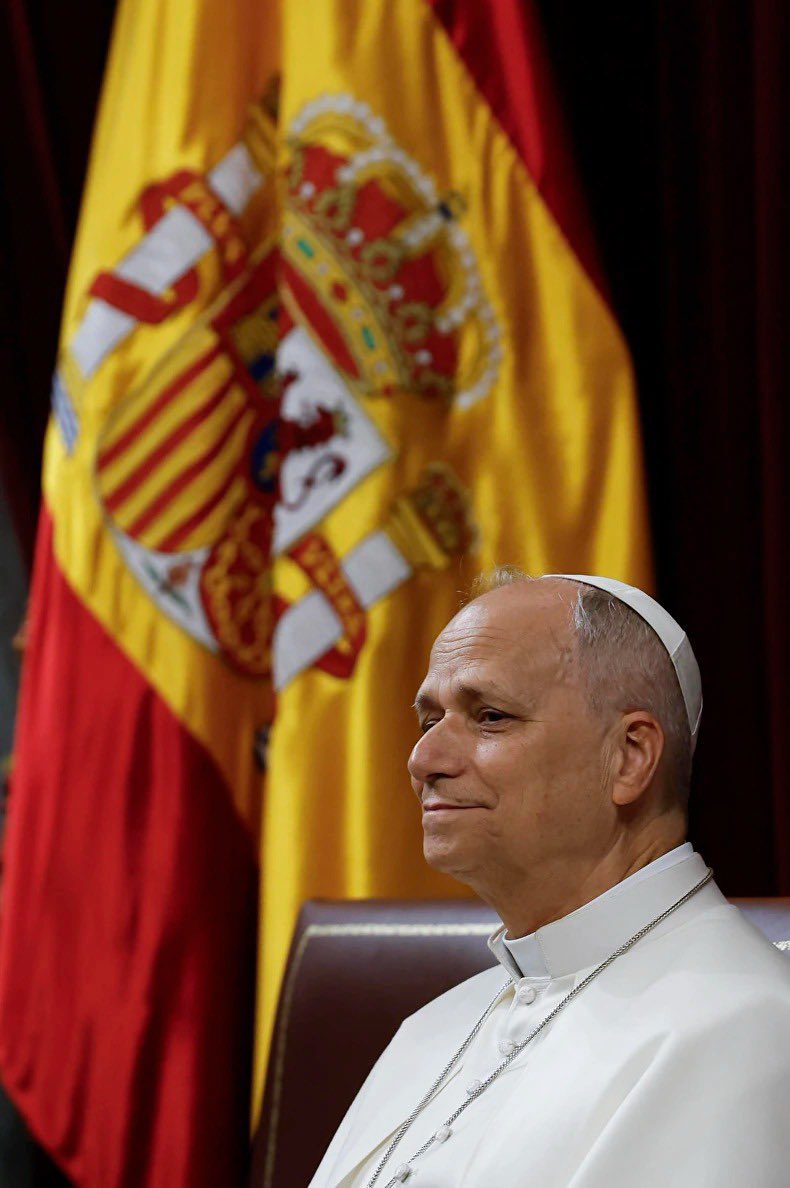
Expreso mi gratitud al Señor por el #ViajeApostólico que me ha permitido realizar en España. Agradezco al pueblo español, que me ha acogido con gran entusiasmo y devoción; y, de manera especial, a Su Majestad el Rey. Mi agradecimiento afectuoso va igualmente a los obispos, a las comunidades que he visitado y a toda la Iglesia que está en España. ¡Que Dios bendiga siempre a España!
Gracias a Policía Nacional y Mossos de Esquadra, ayer se evitó el mayor de los ridículos y despropósitos internacionales en el acto de la Sagrada Familia, delante del Papa y del Rey, y de más de 500 medios internacionales.
Se quiso boicotear el acto con esto 🔽🔽 Os cuento.
El cuadro rojo es el lugar exclusivo donde se celebrará el Corpus Christi con el Papa en Madrid.
Miles de personas quedaremos a cientos de metros de distancia, en calles aledañas, viendo todo a través de una pantalla.
¿Este era el mejor sitio de celebración? @archimadrid
Winston Churchill fought his depression with bricks. He'd lay them for hours at his country home in Kent. He joined the bricklayers' union. And in 1921 he wrote about why it worked. It took psychology another 75 years to catch up.
He called his depression the "Black Dog." It followed him for decades. His method for fighting it back was as basic as it sounds: laying brick after brick, hour after hour.
Churchill spelled out his theory in a long essay for The Strand Magazine. People who think for a living, he wrote, can't fix a tired brain just by resting it. They have to use a different part of themselves. The part that moves the eyes and the hands. Woodworking, chemistry, bookbinding, bricklaying, painting. Anything that drags the body into a problem the mind can't solve by itself.
Modern psychology now calls this behavioral activation. It's one of the most-studied depression treatments out there. Depression sets a behavior trap. You feel bad, so you stop doing things, and doing less means less to feel good about. Feeling worse makes you do even less. The loop tightens until you can't breathe inside it.
Behavioral activation breaks the loop from the action side. You schedule the activity first, even when every part of you doesn't want to. Doing it produces small rewards: a wall gets straighter, a painting fills in, a messy room gets clean. Those small rewards slowly rewire the brain. Action comes first, and the feeling follows.
Researchers at the University of Washington put this to the test in 2006. They studied 241 adults with major depression and compared three treatments: behavioral activation, regular talk therapy, and antidepressants. For the people who were most severely depressed, behavioral activation matched the drugs. It beat the talk therapy. A 2014 review of more than 1,500 patients across 26 trials backed up the result.
Physical work like bricklaying does something extra on top of this. It crowds out rumination, the looping bad thoughts that grind people down during the worst stretches of depression. Bricklaying needs both hands and gives feedback brick by brick: each one is straight or crooked. After an hour you can see exactly how much wall you built. No room left for the mental chewing.
The line George Mack used in his post, "depression hates a moving target," is good poetry. The science behind it is sharper. Depression hates a brain that has somewhere else to be.
Cristo resucitó.
Y esa es la respuesta a la pregunta más difícil que Jesús nos hace.
Me quiero referir a aquellos que dicen que "Jesús fue un buen maestro moral, un tipo extraordinario. Un gurú de la ética" (Una posición que yo sostenía hasta hace unos años).
Al leer los evangelios, nos damos cuenta que Jesús hace afirmaciones que no son propias de un simple "maestro con buenas ideas":
- "Tus pecados te son perdonados" (No "Dios te perdona"... ¡es Él mismo perdonando!)
- "Yo soy el camino, la verdad y la vida"
- "Antes de que Abraham existiera, yo soy"
- "Yo y el Padre somos uno"
- "Al final de los tiempos, todos los pueblos serán reunidos ante mí y yo los juzgaré"
¿Esto suena a un maestro moral? Jesús no es un maestro iluminado, es una propuesta diferente: Él dice ser el criterio mismo por el cual tu vida será evaluada.
C.S. Lewis, quien me inspiró enormemente en mi propio camino de fe, dice que una persona que hace dichas afirmaciones solo puede ser 1) un loco, 2) un tipo malo o 3) dice la verdad.
No se puede asomar la idea de ser Dios, estar equivocado y ser una fuente confiable de sabiduría moral.
Si alguien te dice que juzgará a toda la humanidad, que perdona tus pecados y que es uno con Dios, no dices: "Qué buenas ideas tiene este señor." Lo normal es concluir que esa persona no está bien.
Si todo lo que afirma es falso, pero lo dice de todas formas para engañar y crear un culto a su alrededor, mucho menos dirías que se trata de un "gran maestro". Esa persona sería, por lo menos, un estafador... un tipo carismático que quiere engañar.
Jesús, visto en detalle en los evangelios, es increíblemente consistente. Ante Pilato, sabiendo que va a morir, no se defiende ni suplica. Le dice al gobernador romano con total calma: "Mi reino no es de este mundo." Eso no es el comportamiento de un desequilibrado ni de un manipulador que quiere sobrevivir.
Esto no prueba que Jesús es Dios, ese no ese el punto de esta argumentación; lo que prueba es que aceptar a Jesús como un maestro moral, ignorando quién dice ser, es ilógico.
Acerca de Jesús podemos pensar muchas cosas. Sin embargo, vista la argumentación de C.S. Lewis, es muy difícil descartar que haya dicho la verdad. Y hoy celebramos que la tumba estaba vacía.
Y es una verdad que tiene que ver directamente con nosotros. Parafraseando a Eckhart, "si estás lleno de ti mismo, de tus planes, tu imagen, tu narrativa sobre quién eres, no hay espacio para que Dios entre".
"Dios no puede llenar lo que no está vacío"
Y como en todo lo que Jesús enseña, la pregunta es: ¿quién dices tú que soy yo?
Feliz Domingo de Resurrección!
Una familiar de las víctimas del accidente: "El único funeral que cabía en esta despedida, con la única presidencia que queremos a nuestro lado, es la del Dios que aquí hoy se ha hecho presente"
@JulioLlorente4@alfayomegasem Qué bonito escribir así de un amigo, y qué bonito describir así una vida (“sin aspavientos, como quien se sacude el polvo del abrigo”). Un abrazo.
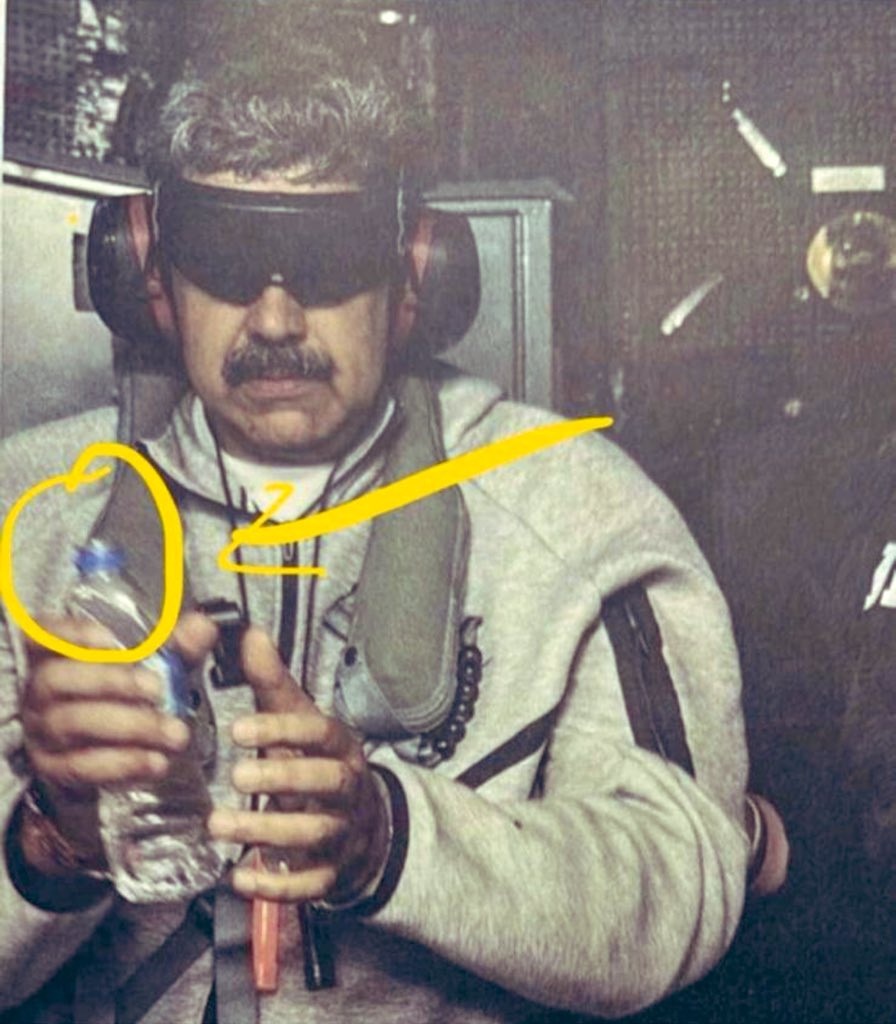
After carefully monitoring the situation in Venezuela for the last 24 hours, the EU has found out that the water bottle of Maduro did not have the EU-regulation approved attached cap.
@Springbok1973@IMOHQ It’s not because of the number of freighters, but because of the importance of its ports infrastructure (Valencia, Algeciras, Barcelona…)