Leyendo algunos artículos sobre inteligencia artificial, me encontré uno que me llamó la atención y pensé que sería buena idea dedicarle un post para extenderlo y dejar mi opinión en él.
Falta de estrategia tecnológica en las caídas de las aplicaciones bancarias como Bancolombia, Nequi, y Daviplata. Los reportes de la caída de AWS apuntan a la region us-east-1, eso demuestra que no tienen una estrategia sólida en nube ya sea multiregión o multicloud
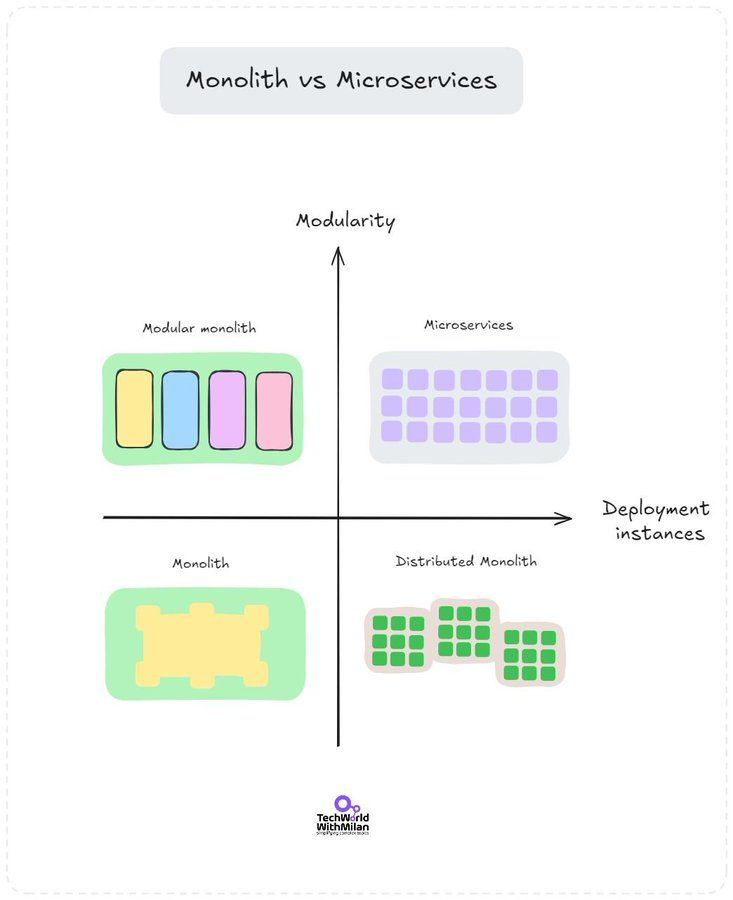
𝗔𝗿𝗲 𝗺𝗶𝗰𝗿𝗼𝘀𝗲𝗿𝘃𝗶𝗰𝗲𝘀 𝘁𝗵𝗲 𝗮𝗻𝘀𝘄𝗲𝗿, 𝗼𝗿 𝗰𝗮𝗻 𝗮 𝗺𝗼𝗻𝗼𝗹𝗶𝘁𝗵 𝗱𝗼 𝗶𝘁?
Let's compare both approaches:
𝗠𝗼𝗻𝗼𝗹𝗶𝘁𝗵 𝗽𝗿𝗼𝘀:
🔹 Single codebase and database
🔹 Easier deployments
🔹 In-process calls, fewer moving parts
𝗠𝗶𝗰𝗿𝗼𝘀𝗲𝗿𝘃𝗶𝗰𝗲𝘀 𝗽𝗿𝗼𝘀:
🔹 Independent deployments and scaling
🔹 Clearer separation of concerns
🔹 Smaller, focused teams
But microservices also bring:
🔸 Distributed complexity (network calls, data consistency)
🔸 More ops overhead (monitoring, orchestrating)
🔸 Potential silos if teams aren’t aligned
Ask yourself:
✅ Do I need each part of my system to scale separately?
✅ Is my team structured to handle multiple services?
✅ Can I manage distributed failures and versioning?
A solid monolith can be a good choice when you don’t need separate scaling or have a domain that’s not too large.
Microservices help when you have clear boundaries, independent release cycles, and a team set up for distributed systems.
𝗗𝗼𝗻’𝘁 𝗽𝗶𝗰𝗸 𝗺𝗶𝗰𝗿𝗼𝘀𝗲𝗿𝘃𝗶𝗰𝗲𝘀 𝗯𝘆 𝗱𝗲𝗳𝗮𝘂𝗹𝘁.
Pick the approach that fits your domain and your team.
Choose wisely.
#softwareengineering #programming #techworldwithmilan
I was working on this 20 years old codebase.
Debugging some stored procedures.
At first, I was like: "why doesn't this work"
A few hours later: "how did this ever work"
In high school, I used to write scripts, trying to make things work better. It was just me playing with a computer, like in old hacking movies. I never thought that being a software developer would imply not only coding skills or writing new code but also soft skills.
Even in the early years of university, I still had this thought.
In this article, I wrote my personal opinion about what software developers do these days, adding different suggestions to do in different daily situations, and putting interesting references to expand in each part.
My 5-step plan to help you improve your code quality:
1. Study OOP, functional programming, and design patterns
2. Now implement as many abstractions as possible
3. Have an epiphany all of a sudden
4. Strive to simplify my code
5. Prosper
This process takes a few years, as you can see in the graph.
The graph shows a code complexity curve across years of programming.
We all have to go through the phases of complexity to learn to appreciate simple code.
I'm somewhere past the epiphany phase, starting to appreciate simple code again.
I hope this is evident from the recent shift in my writing, advocating for simplifying things.
Of course, I still enjoy a good design pattern or two.
Who doesn't?
But at the end of the day, I strive to make my code only as complicated as it has to be.
Simple code will differ depending on your context and the application you're building.
Where are you on the code-complexity curve?
If you're past design patterns - hit that repost button to share this with your audience. ♻️
---
P.S. If you got value from this post and want to improve your software architecture skills, subscribe to The .NET Weekly - my newsletter with 35,000+ engineers.
Subscribe here → https://t.co/nbp02JQy95
Fuentes:
Google post: https://t.co/KZE3bvZOoK...
AWS post: https://t.co/rdFz5idnkP
Google Zero Day explaination: https://t.co/WY2SKOTJst...
Zero day reported: https://t.co/ZvNLvDVTWw
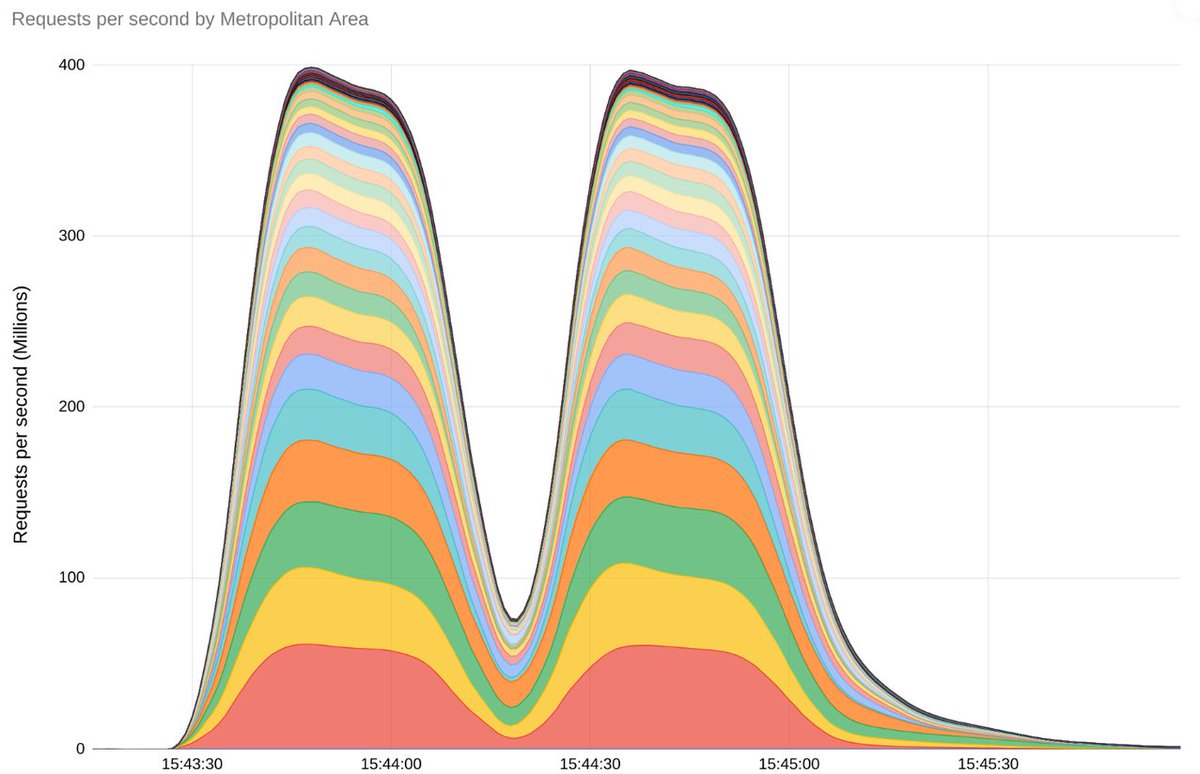
Recientemente, Google y AWS reportaron el más grande ataque DDOS mitigado hasta el momento (más de 300 millones de request por segundo) lo cual es 7½ más grande ataque mitigado en 2022 y del que se tenía reportado como el mayor por Google (46 Millones)
Adicionalmente, han salido algunas variantes del ataque, pero son más lentas y por las políticas implementadas se pueden bloquear usando diferentes filtros, Google también menciona que no se piensa que esto escale al HTTP/3 debido a como este funciona