Farmer, writer, speaker from Fillmore SK. Growing durum, canola, lentils, and flax. Director with Canadian Wheat Research Coalition & former chair of SaskWheat.
How do we engage with the vast majority of people that don't have any experience with farming?
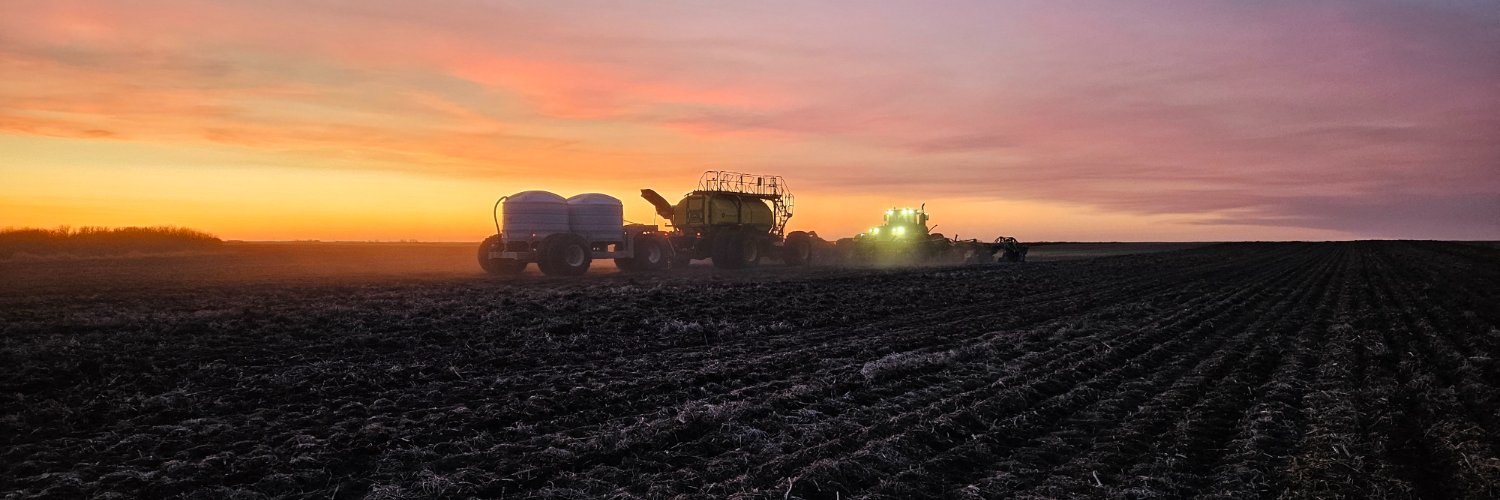
I really enjoyed the opportunity to share our farm's story during seeding this spring, and how we are working to bridge this gap.
Canadian Food Focus did an amazing job on this video - check it out!
https://t.co/KJZr3uMY1l
Is glyphosate poisoning freshwater streams and aquatic articles as activists—and someone’s here—like to claim?
The contention that glyphosate kills all plants and microorganisms with the shikimate pathway is scientifically false.
Glyphosate interferes with a process that plants and some bacteria use to produce essential nutrients. That's how it kills susceptible weeds. Many bacteria have natural resistance to glyphosate, even though they use that same process. Possessing the shikimate pathway does not establish that glyphosate will kill a microorganism. Your claim betrays a fundamental misunderstanding of how glyphosate works.
What about claims that glyphosate seriously damages human’s gut microbiome? Equally baseless. Some gut bacteria possess the shikimate pathway, but there is ZERO evidence that glyphosate residues in food damage the human gut microbiome or cause disease. Petri dish experiments exposing bacteria to glyphosate do not establish harm from dietary exposure. Tests on animals and humans show no effect. Dose and exposure matter. You can’t turn a high school-level laboratory observation into a frightening health claim without the science to support it.
The oft-cited declaration that glyphosate is an environmental disaster in America's freshwater streams is another gross distortion of the evidence. Glyphosate can enter streams through agricultural runoff, but detecting a chemical in water does not establish environmental harm.
A 2025 New York study found that glyphosate concentrations in surface water posed no ecological risk. A 2021 scientific review reached the same conclusion: Glyphosate concentrations in surface water pose minimal to no risk to aquatic organisms.
Now consider one of the most used organic chemicals in the world: copper sulfate. It’s a copper-based fungicide widely used in farming, mostly organic but conventional on some crops, like grapes. Almost all the wine in the world comes from grapes grown with one of the more toxic chemicals in agriculture.—and it’s 100% organic.
Copper sulfate is highly toxic to fish and aquatic invertebrates. Copper persists in the environment, accumulates in sediments and can damage aquatic ecosystems. EPA records have identified thousands of river and stream segments impaired by copper.
The idea that glyphosate is devastating America's waterways while pesticides used in organic farming are environmentally benign is scientific nonsense. The presence of a chemical is not the same as proof of harm. We need to take into account the importance of exposure, and challenge those who manipulate science turning basic biochemistry into environmental scare tactics.
First time Agri-Trade for me.
I'll be on a panel called Passing the Torch Thursday at 1pm at the Centrium Stage. Looking forward to that and potentially some beverages with friends in the ag world!
Make sure to direct all hard questions to @stampgreg
Not a useless post. In the south we have never really gotten the big yields. 40 bushel canola is still a good average crop for us and has been for the past decade or more.
Seed prices have doubled but yields have stagnated for 10-15 years.
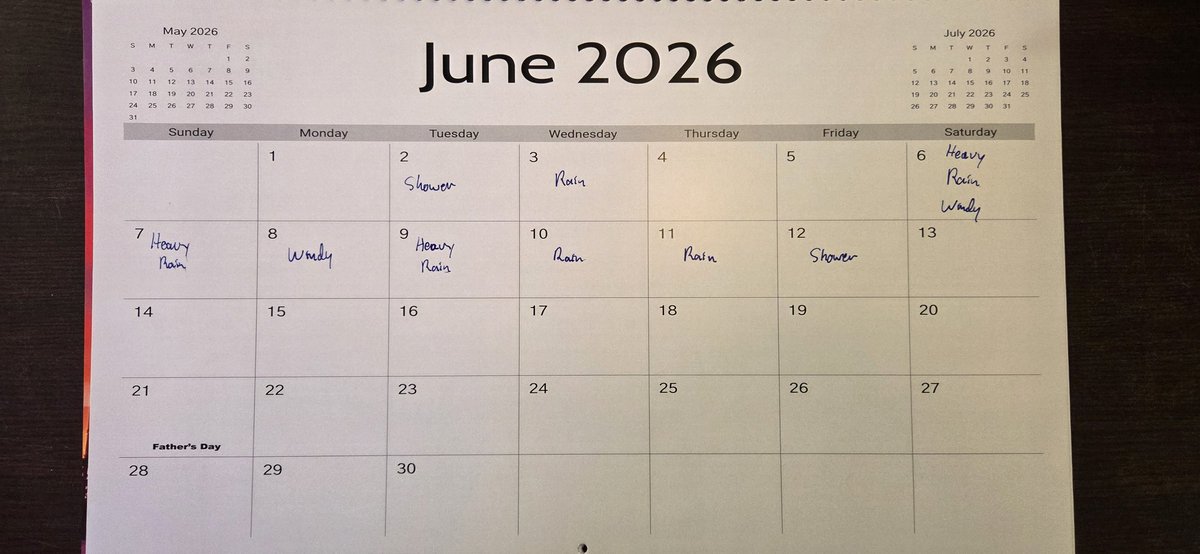
Hot summers lately haven't helped but it's sure time to overcome that.
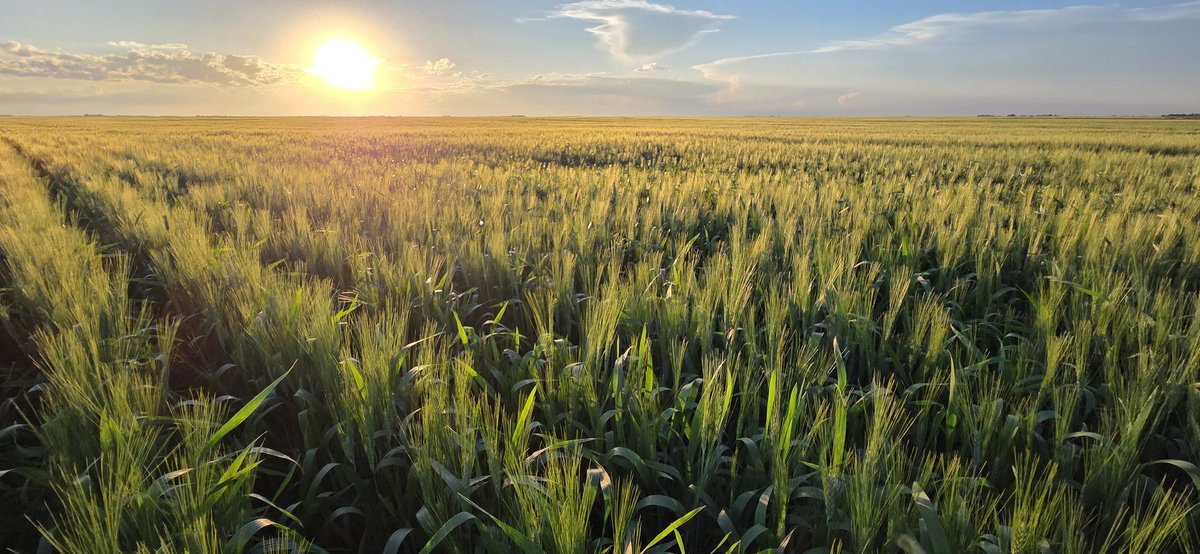
The beauty of farming is sometimes overwhelming.
It's easy to take it for granted. I see it every day. But there are some days I just... see it.
Some days, it's simply stunning. You just have to stop and look.
📣Sask Wheat is deeply concerned about the loss of 665 positions at AAFC and research station closures. These cuts and related impacts at research stations threaten Canadian agricultural research capacity and the long-term effectiveness of farmer investments in public research. AAFC is a key research partner for Sask Wheat and Saskatchewan farmers, and AAFC needs to immediately engage with funders to implement contingency plans to ensure critical research, varietal development, and variety registration work for 2026 will continue.
Watch Sask Wheat Board Chair, Jocelyn Velestuk's appearance as a witness before the Standing Committee on Government Operations and Estimates where she provided input to their study of the Government’s Comprehensive Expenditure Review (CER) and the cuts to Agriculture and Agri-Food Canada (AAFC). #CdnAg #SaskAg
https://t.co/5aUpt8fhZA
So many of us in ag wonder: there are so many challenges. And they aren't small.
How can I make a difference?
Well, it really doesn’t matter if it's a commission, or to run for high levels of government, or even to a municipal, minor sports, or recreation board. They all need people who want to make a difference.
The truth is, we all can be one of those people.
I spent eight years as a director, and eventual chair, of @SaskWheat. It changed my life in so many ways. All for the better. I am so grateful I had that opportunity.
Click below for more.
https://t.co/CPXFHpRfGi
NEWS RELEASE: CWRC review of Canadian wheat breeding innovation system confirms significant gaps and risks
Read more: https://t.co/h1p8Med7qm
#cdnag#westcdnag#wheatresearch
@BHill51508128 No. Just no. Preharvest gly is not used much, and where it is, it's past physiological maturity. No impact on the plant.
And also no, a small amount or large amount being unsafe is not an automatic problem. Again, a glass of table salt can kill you. Dose makes poison.
RFK Jr has some opinions about pesticides.
Fortunately, facts don't care about his opinions.
I've written a lot about glyphosate and other pesticides over the years.
Spoiler alert - they're safe. Here's one worth reading:
https://t.co/poGddrbC53
I will always tell the American people the truth.
Pesticides and herbicides are toxic by design, engineered to kill living organisms. When we apply them across millions of acres and allow them into our food system, we put Americans at risk. Chemical manufacturers have paid tens of billions of dollars to settle cancer claims linked to their products, and many agricultural communities report elevated cancer rates and chronic disease.
Unfortunately, our agricultural system depends heavily on these chemicals. The U.S. represents 4% of the world’s population, yet we use roughly 25% of its pesticides. If these inputs disappeared overnight, crop yields would fall, food prices would surge, and America would experience a massive loss of farms even beyond what we are witnessing today. The consequences would be disastrous.
I support President Trump’s Executive Order to bring agricultural chemical production back to the United States and end our near-total reliance on adversarial nations. His EO protects two pillars of national strength: our defense readiness and our food supply. When hostile actors control critical inputs, they directly threaten the security of the American people. The Trump administration will secure these supply chains to eliminate that vulnerability.
President Trump did not build our current system — he inherited it. For decades, Washington designed modern agriculture. Policymakers wrote farm policy, directed research dollars, structured subsidies and crop insurance, and shaped commodity markets to reward monocultures and maximum yield. Those deliberate choices locked farmers into chemical dependence and prioritized short-term output over long-term soil vitality and human health.
We are now changing course — without destabilizing the food supply.
Alongside @USDA@SecRollins, we are accelerating the transition to regenerative agriculture by expanding farming systems that rebuild soil, increase biodiversity, improve water retention, and reduce reliance on synthetic chemicals, including pre-harvest desiccation.
We are also driving the rapid adoption of next-generation technologies, including laser-guided weed control, electrothermal and electrical systems, robotics, precision mechanical cultivation, and biological controls that replace blanket spraying with precision intervention.
These solutions are not theoretical. Farmers are already putting them to work. Markets are scaling them. Now the federal government will act with urgency to expand their reach and accelerate adoption nationwide.
I have met with hundreds of farmers and agricultural leaders across the country. They understand the pressures firsthand. Chemical inputs cut into margins. Chemical-resistant pests are spreading. Soil health is declining. Foreign markets are shutting out American produce. Farmers want workable alternatives, and they want policies that support transition without threatening their livelihoods.
At HHS, I am leading a coordinated effort grounded in gold standard science. I am working with Secretary Rollins and @EPALeeZeldin to expedite a better future where a thriving agricultural system is less dependent on harmful chemicals. We are sharing data, coordinating strategy, and supporting farmers through a practical transition.
The Make America Healthy Again agenda forces us to challenge long-standing assumptions about how we grow food, structure markets, and measure success in this country. Reform at this scale will test entrenched interests, and it will not move in a straight line.
President Trump has opened the door to this debate and backed meaningful change — not only in policy, but in the national conversation about health and agriculture.
American farmers stand at the center of this movement. They deserve policies rooted in rigorous science and economic reality. Our children deserve a food system that protects and strengthens their health.
With President Trump’s leadership, we are securing critical supply chains, confronting the health risks embedded in our current system, and deploying every available tool to build a stronger, safer, more resilient American food supply.
After an audit of the Liberal's On-Farm Climate Action Fund revealed there was no strategy to achieve its promised outcomes, poor results management, unreliable and incomplete data, and exaggerated performance targets.
And yet, this Liberal government continues to pour hundreds of millions into programs with no credible metrics, while cutting and sacrificing the vital, proven work of our agricultural research centres.