Steal, delay steal, vault steal, bunt, contact play, doubles hustled out of box, fake steal, fake bunt. Hard to measure that at a showcase. Oklahoma is wide open right now. That’s development.
This player flew in from Alabama this weekend.
Something interesting happened.
Every time he made a bad swing...
he had something to say.
Every time he missed a ball...
he had an explanation.
Every time something went wrong...
he gave it attention.
But every time he smoked a line drive...
nothing.
No reaction.
No acknowledgment.
No credit.
After our session, we went to grab lunch.
And while we were talking, I asked him:
"Do you feel confident?"
He said:
"I don't know. I haven't played a game yet."
That answer stopped me.
Because he was waiting for a game to tell him how to feel about himself.
The truth is:
He wasn't his biggest fan.
He was his biggest critic.
And my coach at UCLA used to say:
"You cannot outperform your self-image."
If you spend all your time talking about what's wrong...
don't be surprised when you stop seeing what's right.
So I gave him one assignment:
The next time you do something well...
say it.
Out loud.
-Good swing.
-Good take.
-Good adjustment.
-Good barrel.
Most athletes are comfortable criticizing themselves.
Very few are comfortable encouraging themselves.
Try this tonight.
Every time you catch yourself saying something negative...
find one thing you did well and say it out loud.
You might discover the conversation holding you back isn't coming from a coach, a parent, or an opponent.
It's coming from you.
Thank you for reading,
Jermaine Curtis
P.S. - if you enjoyed this, share it. This tells me you want more content like this.
There’s a difference between talent… and calling.
Talent is something you’re given.
Calling is something you’re led into.
The hard truth: not everyone is called to the same role, the same level, or the same path… and that’s okay.
Some are called to lead.
Some to encourage.
Some to grind behind the scenes where no one’s watching.
Every role matters.
God didn’t make a mistake when He gave you your gifts or your path.
So don’t compare. Don’t chase someone else’s lane.
Play where you’re planted.
Grow where you’re called.
That’s where purpose lives.
#playwithpurpose
#sportandfaith
If you want to:
✅ Go somewhere where you’re supported.
✅ Play in front of a big crowd every game.
✅ Compete for championships every year.
Consider Omaha 🤘🏼
Ben McCollum shares what it feels like to be around first-place people and a first-place culture.
"I went to Northwest Missouri State, and my first practice with Steve Tapmeyer - best coach I've ever been around - I sat there and I'm like, 'This is what first place feels like. This is what a first-place culture feels like. This is what first-place people feel like.'"
That was the wake-up call. He realized what first-place people have:
"They've got an extreme work ethic. They've got an edge to 'em that other people don't - a competitive spirit."
Then he quoted John Thompson:
"You can tame a fool a lot quicker than you can resurrect a corpse...We want guys with a little edge to 'em."
You can coach skills, but you can't coach competitive spirit. You don't want to consistently coach their effort and attitude.
The last thing they look for: Energy givers.
"Over the years, we found that guys that are moody don't make it in our program."
"If you're moody, if you have low energy, if you suck the life out of the building - you don't make it."
Talent isn't enough. Your energy matters. Your attitude matters.
Successful people have a competitive edge, they bring energy, and they look to consistently get better.
They raise the standard through what they do.
(🎥 Watts Happening Podcast)
When I was a high school principal, I interviewed a teacher named Jake Huggins. He seemed like a good candidate—friendly, experienced, and thoughtful. I believed he could be a solid addition to our faculty. But any lingering doubt disappeared when he answered one particular question. It has always been my favorite.
I asked him, “Jake, in every school in America, you can place teachers on a continuum. On one end are those who don’t seem to want to be there. They’re always complaining. Their colleagues wonder why they haven’t retired yet. They drain the energy of the building. But on the other end are teachers who are excited to come to work. They love their students. They value their colleagues. They lift the spirits of everyone around them. When graduates come back, these are the teachers they want to see.
So Jake… what’s the difference between these two teachers? What is the X factor? Because that’s what we’re looking for.”
Most teachers answer that question by talking about passion. Or purpose. Or the desire to make a difference rather than just earn a paycheck. Those are good answers. But Jake said something different—something I’ve never forgotten.
He said, “I think almost every teacher starts out idealistic. They love kids. They want to change the world. But after a few years, you hit a wall. You realize how hard this job really is. There are endless papers to grade. Some students make it incredibly challenging to teach. And parents aren’t always supportive.
Some teachers never move past that reality check. They burn out. But others do. They keep their sense of purpose in spite of the challenges. The work is hard, but they remain convinced it matters. Some students are difficult, but they know those students need someone who refuses to give up on them. They face adversity, but they don’t let it steal their passion. Those are the teachers who make a difference year after year.”
We hired Jake.
A few years later he was named the school’s Teacher of the Year.
So today, I salute Jake—and every educator who has faced that “reality check” and chosen to keep going. The ones who remember their whyon the hard days. The ones who refuse to let frustration turn into cynicism. The ones who continue to believe, even when the work is exhausting.
Because those are the teachers who change lives.
And they do it… year after year.
Cheers,
Danny
Kurt Warner shares the lesson that changed his entire career and it applies to everything.
He sat on the bench for 4 years in college. When a friend asked the coaches why he wasn't playing, the answer wasn't what he expected:
"The reason I wasn't playing was because I was not very good in practice."
His first reaction? Allen Iverson mode.
"Practice? What're you talking about, practice?"
But then he did the math.
"In college we play 12 games in 365 days. In the NFL we play 16 games in 365 days."
That's less than 5% of your year.
"95% of our lives are lived in practice. And the biggest impression we make on people, the way people can understand and really realize who we are, is what we do every day in practice."
This is the 95% Rule. And it applies to everything - sports, business, relationships, life.
1: Show Up With Your Best Effort - Compete and give your best every single day. People can't question how you show up - your effort, attitude, and actions. Consistency removes doubt.
2: Trust Is Built In Practice, Not Games - Trust is earned in the thousands of moments before it's given. Before you can be trusted, people want to know you're dependable. Every day. Not just when it matters.
3: Master Daily Consistency - Success isn't about intensity - it's about consistency. Your habits compound. What you do daily defines who you become.
4: Big Moments Are Earned In Small Moments - The little details make the biggest difference. Greatness starts with preparation - it's earned in the boredom of doing the work when no one's watching.
Excellence isn't an event - It's a habit.
Practice is where trust is built.
How you show up daily is who you really are.
(🎥 Passing the Torch Podcast)
(🎥 @kurt13warner)
Leadership is Easy, Until…
Until you have to hold someone accountable.
Until you face criticism for doing the right thing.
Until you have to make a tough decision with no easy answer.
Until you take the blame for a mistake you didn’t make.
Until you have to lead people who don’t want to be led.
Until you’re expected to stay calm when everything is falling apart.
Until you have to sacrifice for the good of the team.
Leadership isn’t about a title. It’s about showing up when it’s hard.
That’s when real leaders stand out.
Choose to lead.
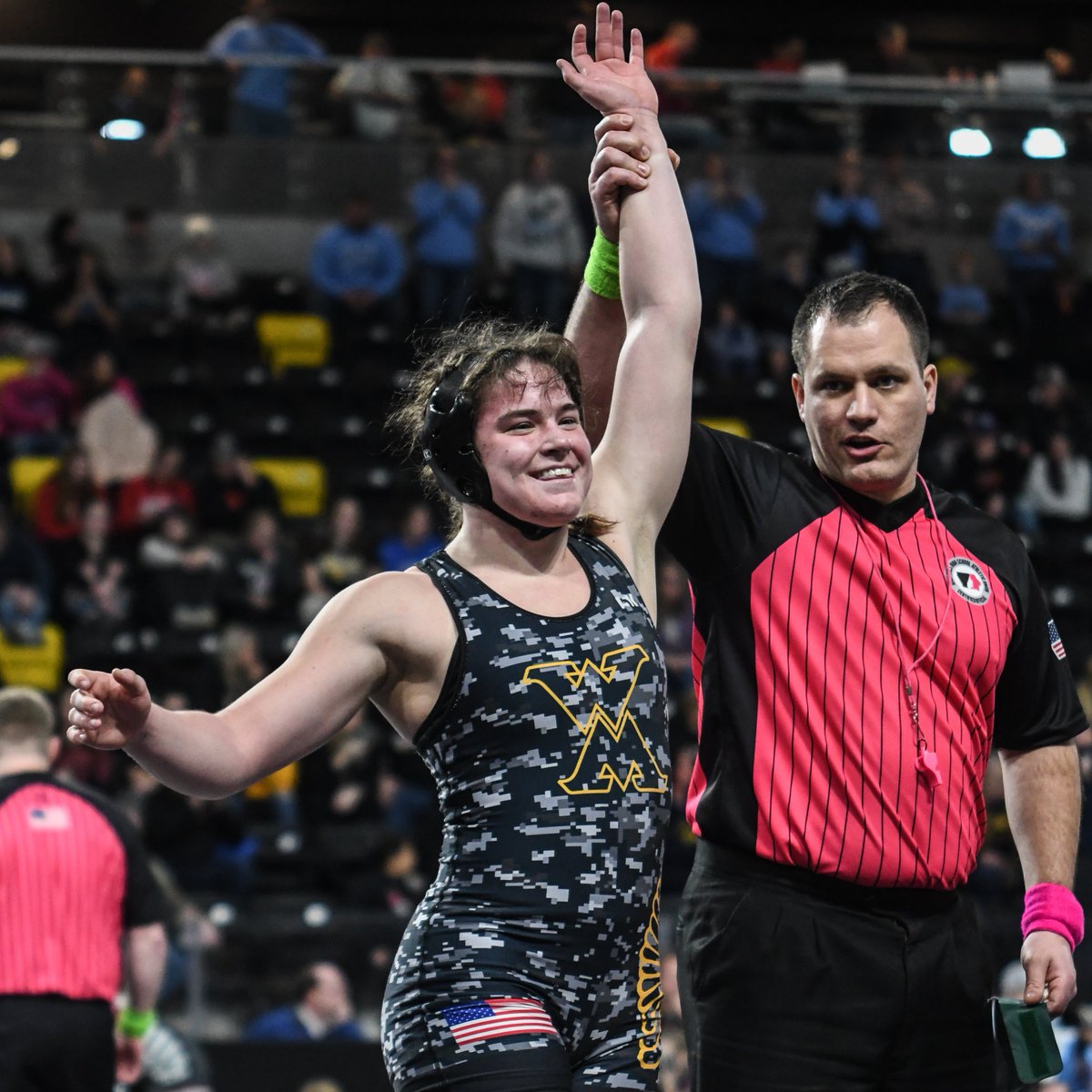
West Marshall's Averie Wittkop won her 170-pound quarterfinal by 7-2 decision over Izzy Strickert (Independence); Wittkop is the Trojan girls' first-ever IGHSAU state semifinalist #iahswr
@jayborschel From a previous interview … curious if your response to “ask on Twitter” is related to this thread as well?? …. As a Junior you did not place at NCAA’s–then as a Senior you win it all and were undefeated. What changed that allowed you to have that success your Senior year?