In December 1968, 20-year-old Barbara Jane Mackle endured one of the most terrifying ordeals in criminal history. Kidnapped from a motel in Georgia, she was sealed inside a specially built fiberglass coffin and buried alive underground.
In December 1968, 20-year-old Barbara Jane Mackle endured one of the most terrifying ordeals in criminal history. Kidnapped from a motel in Georgia, she was sealed inside a specially built fiberglass coffin and buried alive underground.
Her kidnappers demanded a $500,000 ransom. For 83 agonizing hours, Barbara battled panic and despair, holding onto hope while a massive search unfolded on the surface.
On December 20, more than 100 FBI agents located and frantically dug up the coffin. When they finally pried it open, Barbara emerged alive, dehydrated and exhausted, but remarkably unbroken in spirit.
Her captors were eventually caught and convicted. Barbara later transformed her harrowing experience into a powerful book, 83 Hours Till Dawn, sharing her story of courage and resilience in the face of unimaginable terror.
@nxrstudios Give me a break.
Ridiculous to extrapolate from anecdotal incidents.
Never abused, no trauma, just trying to always accept my circumstances.
The best exercise for the brain you’ve probably never seen.
According to Michael J. Lavery’s book “Whole Brain Power”, using a 4-pound sledge hammer to bounce a golf ball up and down dramatically amplifies both your neurological and physical demands
Massive Central Nervous System (CNS) Activation
The sheer weight of a 4-lb sledge forces the CNS to fire at a much higher intensity.
To keep a lively golf ball bouncing on a heavy, rigid piece of steel, your brain has to send incredibly powerful, rapid-fire signals to your muscles.
This level of resistance forces maximum motor unit recruitment, teaching your nervous system to fire more efficiently under tension.
Elite Grip and Forearm Strength
Lavery heavily emphasizes the link between hand/grip strength and brain health, viewing the hands as the direct external extension of the central nervous system.
Bouncing a ball requires a loose, reactive wrist to absorb and redirect impact, but holding a 4-lb hammer requires immense isometric grip strength.
Managing that weight leverages extreme stress onto the forearms, wrists, and fingers, building dense, functional grip strength that standard lifting rarely touches.
Accelerated Neuroplasticity via Forced Focus
With a light hammer, you can cheat the movement or rely on casual reflexes.
With a 4-lb sledge, there is zero room for error.
The high penalty for a missed bounce (the heavy hammer dropping or completely throwing off your rhythm) forces the brain into a state of hyper-vigilance and deep cognitive focus.
This intense concentration triggers a higher release of acetylcholine and dopamine, the exact neurotransmitters required to stimulate neuroplasticity and forge new neural pathways.
Overcoming Hemispheric Dominance (Ambidexterity)
When you transition the 4-lb sledge to your non-dominant hand, the challenge scales exponentially.
Because the non-dominant hemisphere of your brain isn't used to managing that much weight combined with fine motor precision, the drill forces rapid communication across the corpus callosum (the bridge connecting the left and right sides of the brain).
It quickly exposes and corrects deep-seated muscular and neurological imbalances between your two sides.
Cortical Mapping and Joint Stability
Holding a heavy weight at the end of a lever arm requires all the stabilizing micro-muscles in your wrist, elbow, and shoulder rotator cuff to fire simultaneously.
This builds incredible joint integrity while expanding your brain’s "cortical map"—its internal blueprint of where your body is in space (proprioception).
Benefits:
- Maximum Central Nervous System Recruitment
- Dense Grip and Forearm Strength
- Forced Cognitive Focus & Neuroplasticity
- Rapid Dual-Hemisphere Brain Activation
- Enhanced Proprioception & Joint Integrity
- Growth Hormone (GH) and Testosterone
- “ Fountain of Youth" Endorphins
- Dopamine and Acetylcholine
- Insulin Sensitivity and Blood Sugar Regulation
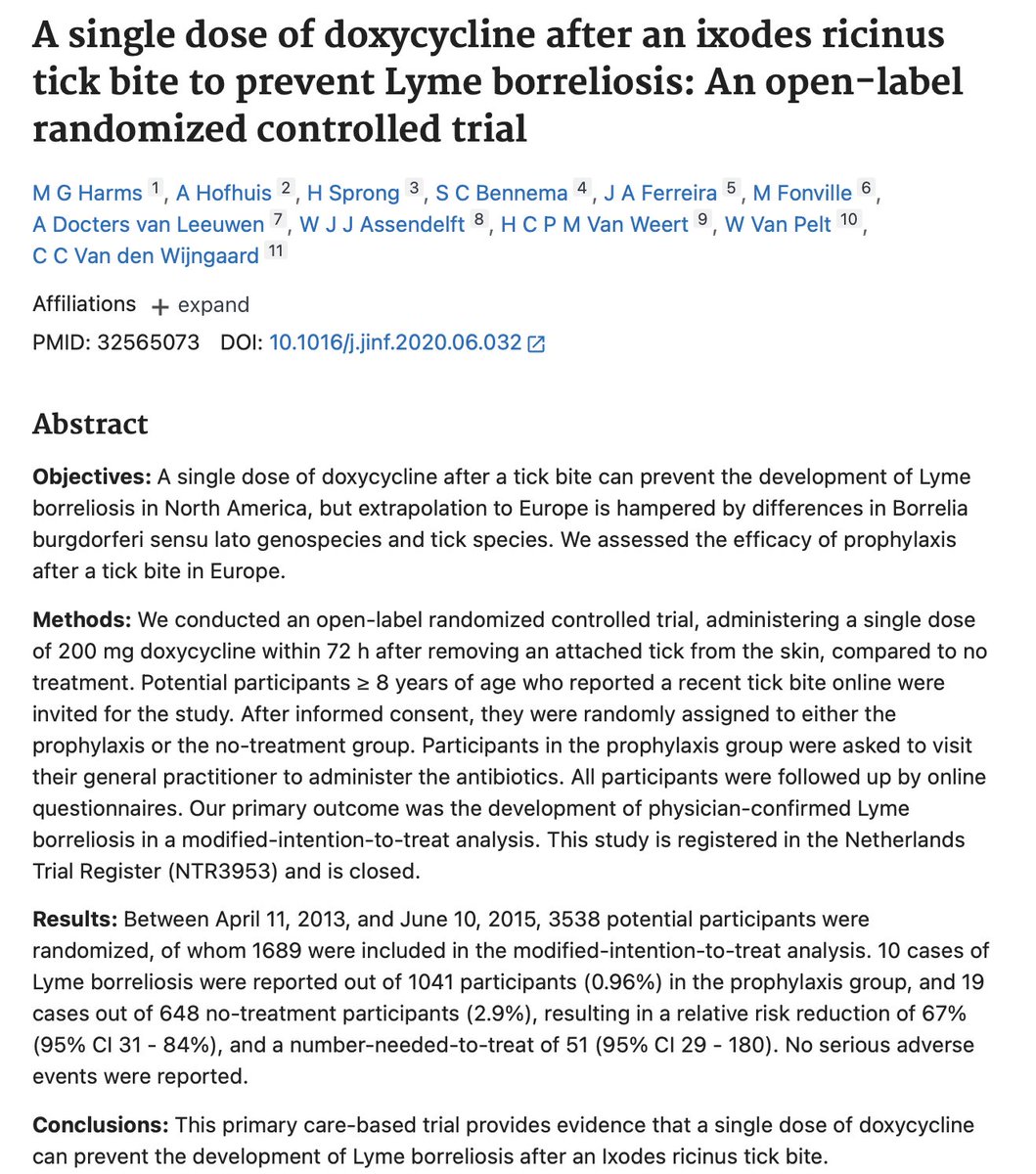
A single dose of doxycycline can decrease the risk of contracting Lyme disease after a tick bite from 3% to 1%.
Allergic reactions to doxycycline are extremely rare - the lowest of all antibiotics.
@US_FDA should make single-dose doxycycline available to the public without a prescription.