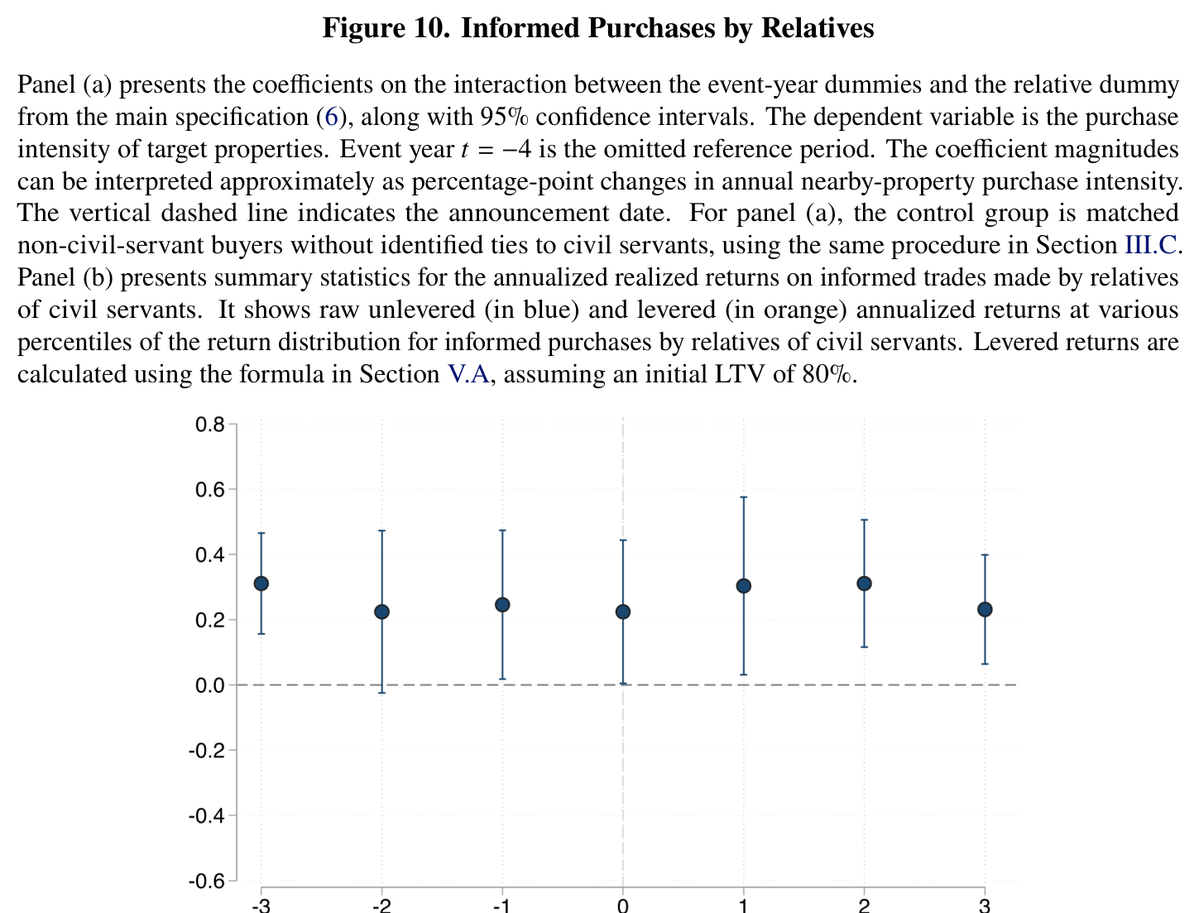
Fui ler o paper do NBER que tá sacudindo Singapura. Pesquisadores de Stanford e Columbia usaram IA pra varrer TODAS as transações imobiliárias do país entre 1995 e 2019 e cruzaram com o cadastro de 141 mil servidores públicos.
Funcionários compravam imóveis perto de futuras estações de metrô 1-2 anos ANTES do anúncio oficial. 60% acima da taxa normal. Não pagavam mais caro na compra, mas revendiam com retorno de 12% ao ano. Os parentes faziam a mesma coisa. S$270 milhões no total.
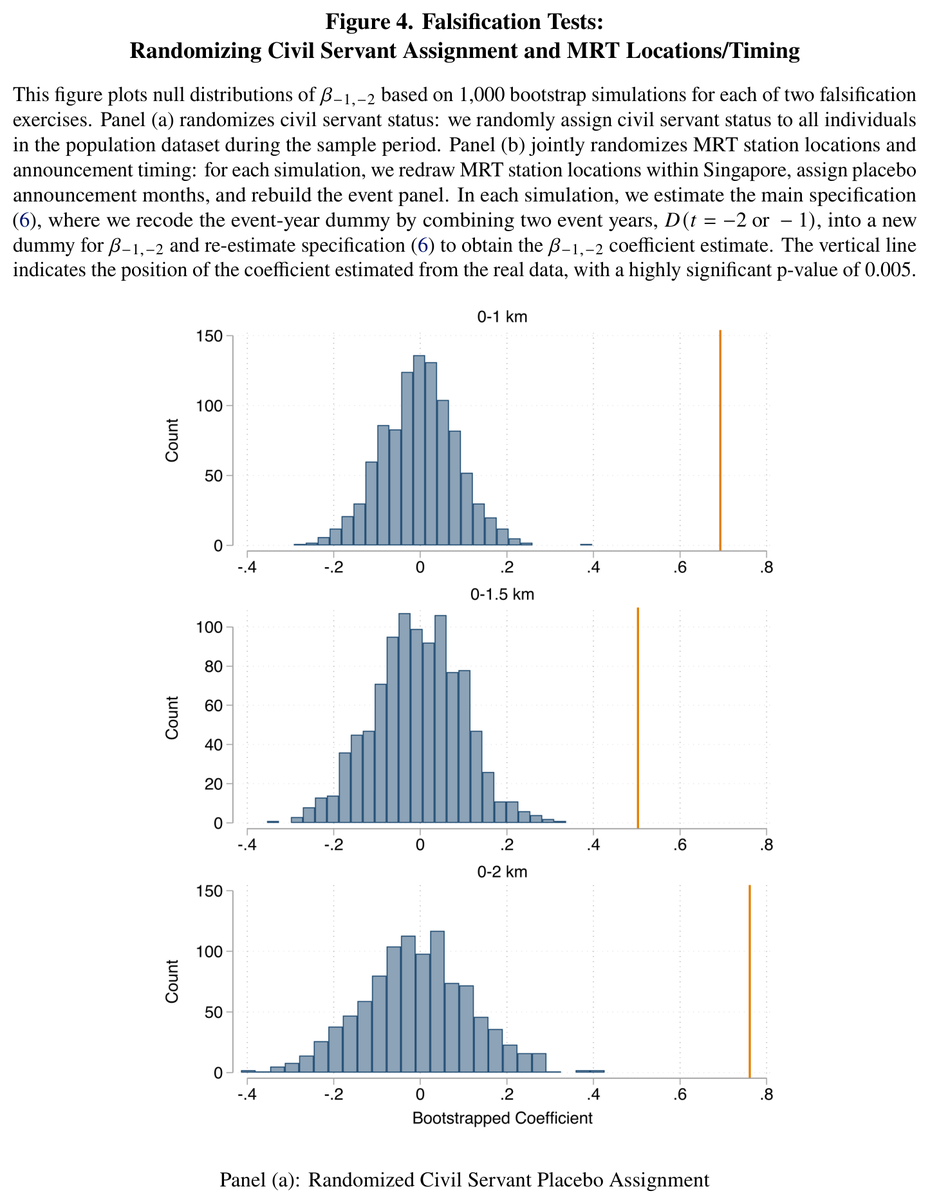
Pra descartar que fossem só mais espertos, compararam com corretores de imóveis e diretores de empresa. Nenhum dos dois mostrou o mesmo padrão. Rodaram 1.000 simulações aleatórias e o efeito real ficou totalmente fora da distribuição.
Quem mais operava? Gerentes médios do planejamento de transporte. Cargo suficiente pra saber, baixo o bastante pra ninguém olhar.
Em 2012, Singapura apertou a fiscalização com novas leis e punição de casos de alto escalão. O padrão sumiu, dos funcionários e dos parentes.
Singapura é top 5 em transparência no mundo. Norma social sozinha não segurou.
fonte: NBER WP 35756
A fundamental lesson from my posts these last two weeks on modernization, industrial policy, and development is that development economics should be about understanding why South Korea got rich but Bolivia did not.
The current field has largely given up on that question. Sharply identified RCTs on small micro programs are a fine way to publish in the AER and get tenure at a fancy university, but a profession that knows everything about microfinance impact evaluations and almost nothing about industrialization has misallocated its own intellectual capital on a pretty heroic scale.
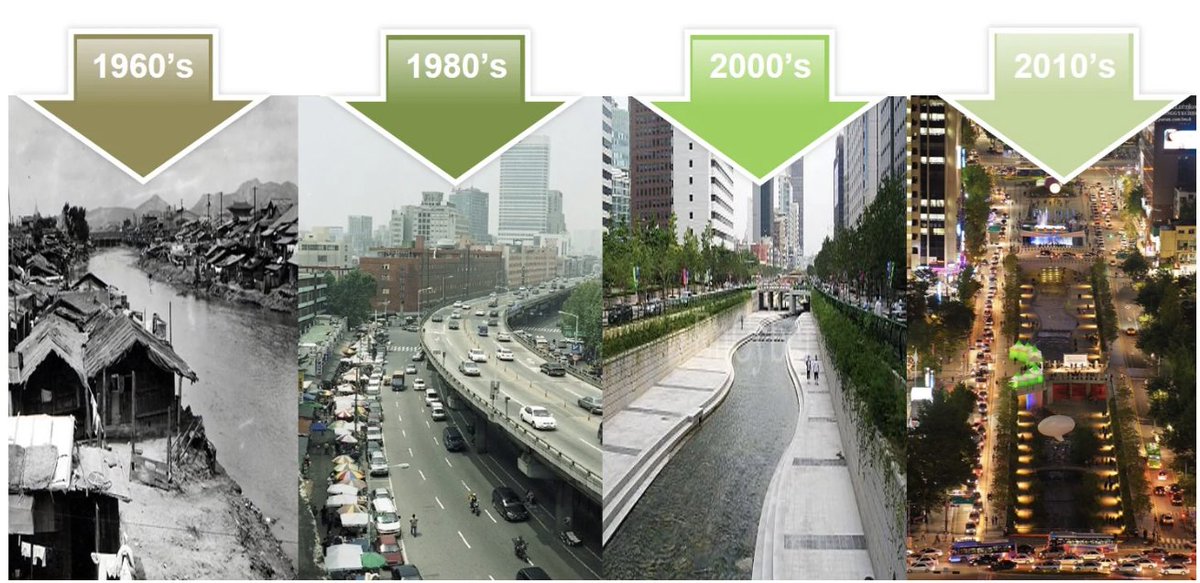
Four images of Seoul:
"The perfect is the enemy of the very good."
Joel Mokyr gives some important advice that can be applied to most subjects aside from mathematics – don't expect perfection. He says he does his best, acknowledges what he does not know and moves on.
Mokyr was awarded the 2025 prize in economic sciences for having identified the prerequisites for sustained growth through technological progress.
Watch our full interview: https://t.co/vXnLKNsHEZ
This is my new favorite paper for teaching diff-in-diff in development.
Are MLB academies causing mass high school dropout in the Dominican Republic?
Probably not. Super clear paper, multiple control groups, very visual, classic paper challenging the folk wisdom. 1/
🆕 The development economics I’d like to see
I recently attended the Growth Summit in Morocco. It was the best conference I’ve ever attended.
My main takeaway was that development economics is missing a whole ecosystem of organisations working on growth: https://t.co/6294bMAbXZ
Useful paper in the "Journal of Economic Literature" on how artificial intelligence may change the research process in economics, describing several use cases (e.g. ideation and feedback, writing, background, research, data analysis, coding, and mathematical derivations).
When this is Figure 1 of your paper you know that you have a killer paper.
"All fields, EXCEPT FOR ECONOMICS, exhibit a low and decreasing concentration, which suggests a trend toward decentralized knowledge production."
https://t.co/aL0Ejg904U
Forthcoming in the AER: "Status Externalities in Education and Low Birth Rates in Korea" by Seongeun Kim, Michèle Tertilt, and Minchul Yum. https://t.co/dsNhSBgvfT
🔜 Join us next Tuesday, February 7th, 5PM CET to discuss "Paving the Road to Prosperity? Infrastructure Investments and the Bottleneck to Growth" a paper by Jeongkyung Won (Sogang University)
We are thrilled to welcome Dave Donaldson (MIT) as a chair!
See you online! 🚀