@zoomafrika1 The most cost-effective method to prevent excessive frostbite in Capra hircus kids during the winter months. It is a practice frequently observed among goat owners in the Kalahari and the Southern region of Namibia.
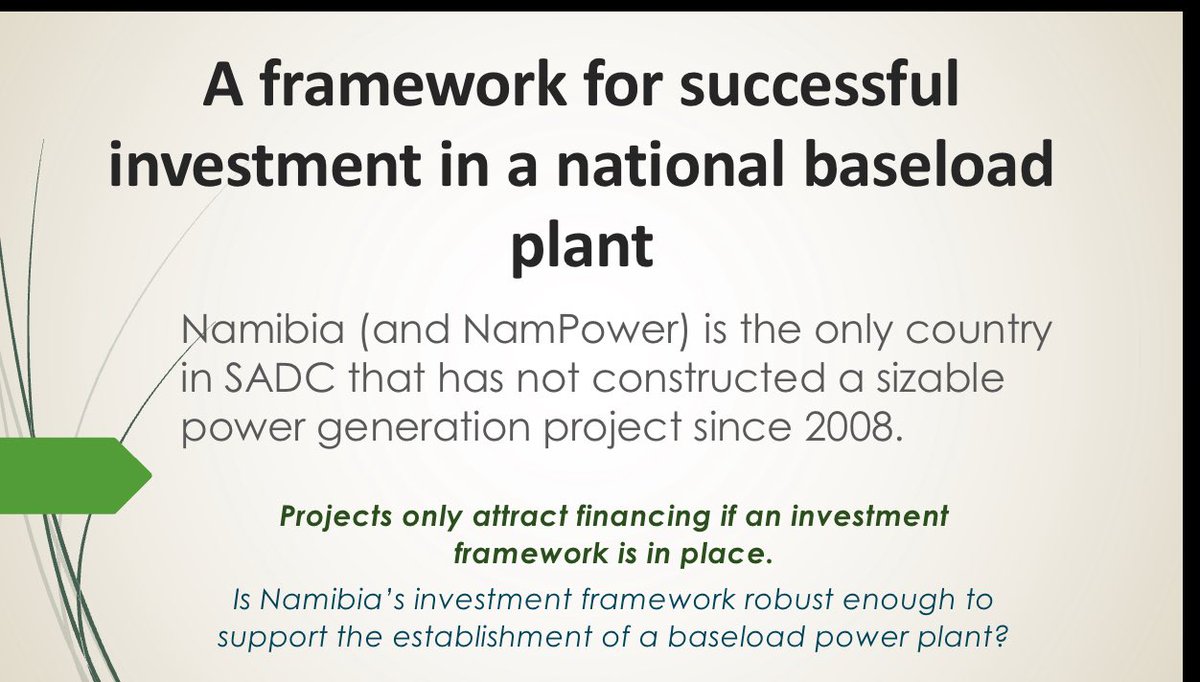
Today, Angola (RNT-EP) and Namibia (NamPower) have signed a Power Purchase Agreement (PPA) and a Joint Development Agreement (JDA) to enable the supply of electricity from Angola to Namibia and other Southern African Development Community (SADC) member states. This will be achieved through the construction of a 400 kV transmission interconnector line between the two countries. The project marks Angola's reintegration as a fully operational member of the Southern African Power Pool (SAPP) for the first time in thirty years.
It is one matter for the government to express its commitment to a project; however, it is an entirely different scenario when the project, utility, and government collaborate to allocate risks within a framework that is conducive to a bankable project.
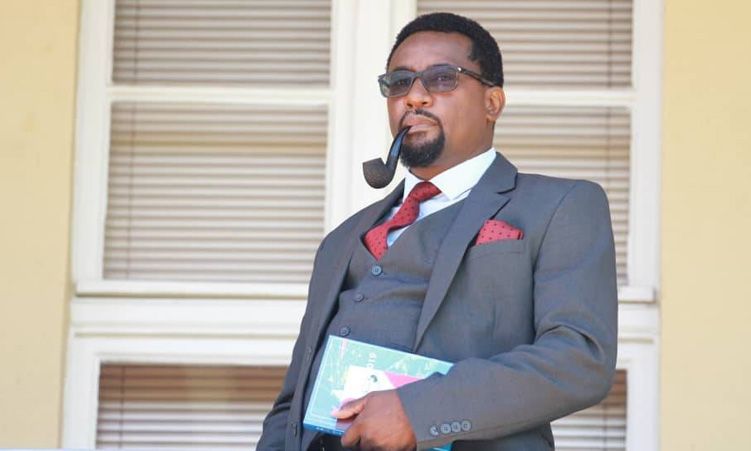
This morning, I awoke in Lusaka to a flurry of enthusiastic messages from friends, colleagues, and even a few competitive peers, all buzzing with anticipation: "Did you see the advert…? Are you going to apply…?" My response is a firm and unequivocal "Noohhh…!" My aspirations for the future reach far beyond the role of leading a parastatal.
I find it quite perplexing that the individual responsible for crafting the advertisement would overlook the inclusion of Ohm’s Law as a fundamental qualification for such a prestigious position within Namibia's State-Owned Enterprises (SOEs). For an organization whose primary mandate is to generate, transmit, distribute, supply, and trade electricity—serving as the essential supplier of last resort for the entire country—it is crucial that candidates not only possess advanced degrees in management, finance, and leadership but also have a solid grasp of key technical principles like Ohm’s Law. Such knowledge is vital in the context of the electrical and engineering fields directly relevant to the role.
Instead, the advertisement prioritizes an MBA as the baseline qualification—an accolade that, regrettably, can be obtained by anyone, even a grade 10 dropout, provided they have the financial means to enroll in programs offered by institutions like Damelin, IUM, Triumphant, MANCOSA, and others.
This raises significant concerns regarding the validity and rigor of the hiring criteria for such an essential position within our nation. The glaring omission in the advertisement highlights a disconcerting trend in our approach to leadership within pivotal industries, suggesting a troubling disconnect between the qualifications sought and the complex demands of the roles that drive our economy.
Sorrie ngoohh….!! Selfs al gee hulle my daardie posisie gratis, sal ek dit nie aanvaar nie..!!
🐍🐍Chef d'Okaku, l'homme-serpent🐉🐉
“The absence of noise is no indication that the work is not done.”
Throughout my professional journey as an engineer at one of the nation’s foremost state-owned enterprises, I have come to appreciate the transformative impact of mentorship on my personal and professional growth. From the very beginning, I was fortunate to have exceptional mentors who not only recognized the vast potential in young professionals like myself but also devoted their time and energy to nurturing that talent. Their guidance left a lasting impression on me, shaping my own approach to leadership in the years that followed.
In a world where authentic support has become increasingly rare, many organizations have sadly traded genuine mentorship for hollow platitudes, engaging in behavior that can best be described as “licking and kissing the fleshy parts of the body located on the posterior of the pelvic region, between the lower back and the perineum.” This unfortunate trend highlights a disturbing shift away from meaningful connections.
Today, only a few rare leaders possess the true artistry of mentorship, skillfully weaving guidance, support, and inspiration into the fabric of their teams, fostering an environment ripe for genuine growth and accomplishment. However, it is not uncommon to observe seasoned leaders who have overstayed their welcome, desperately clutching at the straws of their positions as they appeal to boards of directors for contract extensions. They often lament that their tenure was inadequate for developing the next generation of leaders, all the while functioning more as tormentors than as mentors, leaving a trail of disheartened subordinates in their wake.
The unsettling reality reveals that numerous leaders across organizations succumb to a toxic culture brimming with gossip, backstabbing, and character assassinations. This behavior exposes a disheartening propensity for toxicity, painting a stark portrait of tormentors masquerading as true leaders. The once cohesive corporate glue that united executives in their shared mission of steering their organizations toward success has all but disintegrated, leaving behind a chaotic jungle devoid of order or guiding principles for survival. This pervasive negativity not only undermines team cohesion but also stifles both personal and professional development, fostering an environment that hinders progress and breeds despair.
Addressing these harmful dynamics is not merely an advantage but a vital necessity for cultivating a healthier and more productive workplace. In such an environment, individuals can thrive, and organizations can flourish, rekindling the spirit of genuine collaboration and mentorship that once defined successful enterprises.
🐍🐍 Chef d'Okaku, l'homme serpent 🐉🐉
Only a handful of countries within the Southern African Development Community (SADC) have successfully achieved what is known as Cost Reflectivity in their electricity pricing. During the early 2000s, the SADC region underwent significant reforms in the Electricity Supply Industry (ESI) alongside the establishment of comprehensive electricity regulations. At that time, the SADC Heads of States initiated a focused effort to attain Cost Reflectivity in electricity tariffs by the target year of 2013-2014. Ultimately, only Namibia and South Africa reached this crucial milestone, signifying that the electricity prices in these nations are no longer subsidized by their governments. In contrast, countries like Angola and Botswana continue to heavily subsidize their electricity supply, resulting in lower prices for end users. Consequently, electricity in Botswana appears more affordable compared to that in Namibia.
Moreover, the introduction of Regional Electricity Distributors (REDs) has introduced an additional layer of costs to the tariffs imposed by generators and transmission companies, or primary bulk supply entities such as NamPower.
This development has further complicated the pricing landscape, making it essential to consider the underlying factors that influence electricity costs in the region.
The significance of energy security and national security often becomes apparent during critical disruptions—when the electricity supply is interrupted, resulting in darkened screens and inoperable data networks. This scenario is currently being observed in Spain, Portugal, and parts of France.
In contrast, Namibia has maintained a stable energy supply for the past four decades, and such widespread outages have not occurred. This stability underscores the value of consistent energy management and infrastructure resilience.
The question at hand is how long NamPower can maintain a stable electricity supply for the nation while relying on imported energy.
As I always advocate, renewable energy sources, particularly from Green Hydrogen, have the potential to position Namibia as a significant exporter of energy in the region. However, this will not lead to true self-sufficiency.
To ensure stability in the national grid and interconnectors, Namibia requires power plants with inertia, such as the Baynes, Kudu, coal, and nuclear power facilities. Without these, we risk further instability in our energy system.
Please do not say, I didn't warn ⚠️ 🚧 you, when I am eating biltog out of my pocket from my farm….!!
What you may not be informed about...
An off-grid solar PV system, rated at 12 kW and designed for a 3-phase configuration with battery storage, has the capability to supply electricity to (16 - 20) rural households daily, depending on actual usage and system inefficiencies.
(See the System Overview below…!👇🏾👇🏾👇🏾)
By integrating a borehole with centralized gravity water distribution, this solar installation can serve approximately 10 to 13 households, contingent on the specifications of the water pump employed. The average cost for such a system is around N$250,000.00. In a scenario involving 10 households, each would be required to make a one-time capital investment of N$25,000.
For ongoing operation and maintenance, as well as equipment replacement, system upgrades, and future expansions (essentially depreciation costs), each household could incur a fixed charge of N$1.30 per kWh, reflecting the current average energy retail price. With an estimated monthly energy consumption of 100 to 250 kWh per rural household, this would result in costs ranging from N$130 to N$330 per month, depending on each household's energy usage.
[Please note that this example is for illustrative purposes only…!]
Namibia has the potential to exemplify a narrative of success where resources unite citizens, foster innovation, and embody sustainability.
Let us shape a future where:
· No Namibian child should lack electricity, while foreign corporations profit.
· Fair Compensation for Displacement: Families are not displaced without just compensation.
· Ethical Leadership: Leadership prioritizes long-term generational wealth over short-term gain.
“From the depths of our oceans to the vastness of our deserts, Namibia’s energy potential is limitless". Let us harness it—for our people, our planet, and our legacy.
Namibia's energy future is not simply a choice between nuclear energy, fossil fuels (coal, oil, and gas), and renewables (solar, wind, and hydro). Instead, it is a matter of finding a balance between pragmatism and vision. Our only real choice is whether to be spectators in the global energy transition or to take the lead in this transformation.
Let us use the revenues from our fossil fuels (coal, oil, and gas) to lay a solid foundation, while our nuclear and renewable energy sources secure our legacy. Let us choose audacity.
BOTTOMLINE | “Africa, and in particular Namibia, must produce its own electricity; we cannot afford to remain dependent on external sources while our citizens face rising tariffs and unreliable access.”
https://t.co/yBsyVdOkVt
Overview of Land Ownership Inequality in Namibia
Historical context reveals that Namibian ancestral farmland was seized by white settlers through armed conflict. Currently, over 70% of the nation's arable land is controlled by a mere 6-7% of the white minority, raising significant questions about equity in land ownership. Efforts by the government, including the resettlement program and the poorly executed AGRIBANK Affirmative Loans Scheme, aimed at reclaiming this historically appropriated land, have largely failed to benefit disadvantaged Black Namibians seeking access to commercial land.
A critical issue arises: why are Black Namibians, who are attempting to reclaim commercially viable land—land that was taken from their ancestors—subjected to prime interest rates through commercial banks and AGRIBANK?
Furthermore, we must question why land in Namibia has become a commodity predominantly accessible only to the elite and affluent.
Consider a 15,000-hectare farmland where three distinct farmers reside:
1. A farmer who inherited land that was forcibly acquired by his or her great-grandparents.
2. A neighbor who benefits from government resettlement initiatives due to political connections.
3. Another neighbor whose ancestral land was taken but who has the determination to purchase commercial land at market rates, incurring prime interest rates over a 20-year loan period, while the first two neighbors operate free from such financial burdens.
To rectify this disparity, it is essential to propose that commercial land purchases by Black farmers should be subjected to significantly reduced fixed interest rates of 2-3% for the duration of their loans, regardless of the financial institution involved.
I urge you, respected colleagues Mac and Raphael, to advance this proposal through parliamentary processes for necessary amendments and debate. It is imperative that this initiative is tabled at Omukuanangombe's desk and executed as an Executive Order to ensure equity in land ownership in Namibia - Trump Style.
I submit…!! Jakuaa