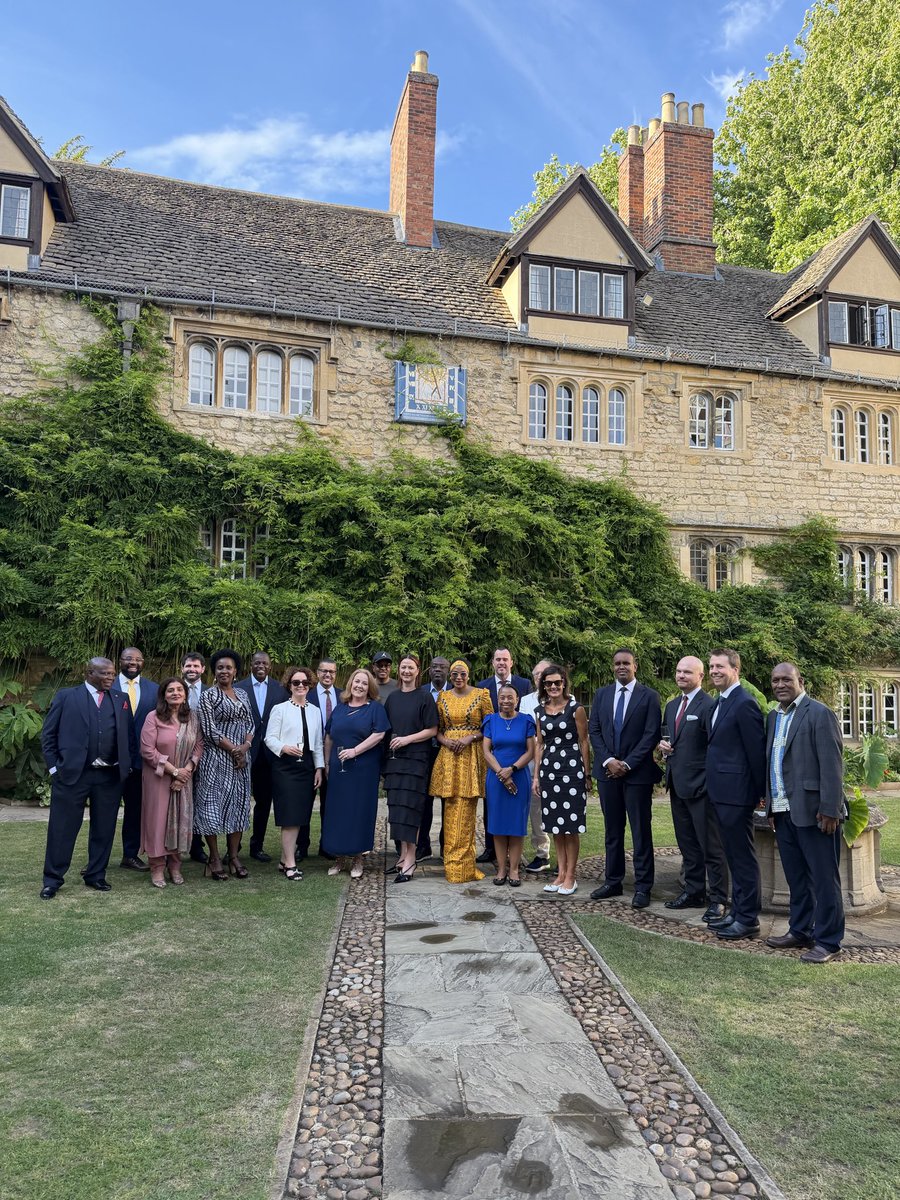
I am delighted to have completed the Executive Public Leaders Programme at the Blavatnik School of Government, University of Oxford.
The programme brought together senior public leaders from across the world to explore one central question: how can governments lead more effectively in an increasingly complex, uncertain, and rapidly changing world?
Through intellectually rigorous discussions and highly practical learning, we examined some of the most pressing issues confronting today’s public leaders, including governing in times of change, political morality, strengthening public institutions, integrity in public life, decision-making under pressure, relationships between politicians and career officials, cyber risk and technology leadership, responsible adoption of artificial intelligence, strategic negotiation in the public interest, and the power of narratives in shaping public trust and policy outcomes.
What distinguished the programme was its practical orientation. Real-world case studies, interactive simulations, peer learning, individual coaching, and collaborative problem-solving ensured that every session translated into actionable leadership insights.
Equally valuable was the opportunity to engage with an exceptional cohort of senior leaders from diverse countries, sectors, and institutions. Learning from one another’s experiences reinforced that, despite differing contexts, many of the challenges facing public leaders are shared—and so too are the opportunities to innovate, collaborate, and strengthen public service.
I leave Oxford with renewed perspectives, stronger leadership capabilities, and an expanded global network. My sincere appreciation to the faculty, programme team, and fellow participants for an enriching and inspiring experience.
The real value of leadership programmes is measured not by the certificate received, but by how the lessons learned are translated into better institutions, better decisions, and better outcomes for the people we serve.
SNBS was honoured to receive a high-level delegation from UNFPA Somalia, led by Resident Representative Mr. Judicaël Elidje & accompanied by Ms. Mariam Alawi, Head of Population & Development Unit. The delegation was welcomed by SNBS Director General, Dr. Abdisalam Mohamed, alongside senior Bureau officials.
Discussions revolved around the strong & enduring partnership between SNBS & UNFPA, which has spanned more than a decade & played a pivotal role in rebuilding Somalia’s national statistical system, strengthening institutional capacity, & advancing production of quality official statistics to support statistics-based policymaking & national development.
SNBS highlighted the significant progress achieved through this collaboration, particularly in population & social statistics, including preparations towards Somalia’s first Population & Housing Census in over five decades. The Bureau also underscored implementation of the recent Socio-Demographic Survey in five districts, conducted in partnership with UNFPA & Gates Foundation, covering approximately 50,000 households, utilizing a combination of traditional survey methods & advanced geospatial technologies to improve population estimation & data coverage, designed for hard-to-reach areas.
Both institutions reaffirmed their keenness to continue strengthening National Statistical System, building statistical capacity at federal & state levels, enhancing data systems & utilization, as well as advancing preparations for 🇸🇴’s participation in the 2030 Round of Population & Housing Censuses.
SNBS extends profound appreciation to UNFPA for its steadfast partnership & technical support towards bolstering Somalia’s statistical development over the years. @AbdisalamHumbul@abdirahm_omar
I am pleased to share that our article titled "Prevalence and Determinants of Disability among the Adult Population Aged 18+ Years in Somalia: Evidence from the 2022 Somali Integrated Household Budget Survey" has been published in Frontiers in Public Health. please refer here.
Strengthening Migration & Displacement Data Systems in Somalia
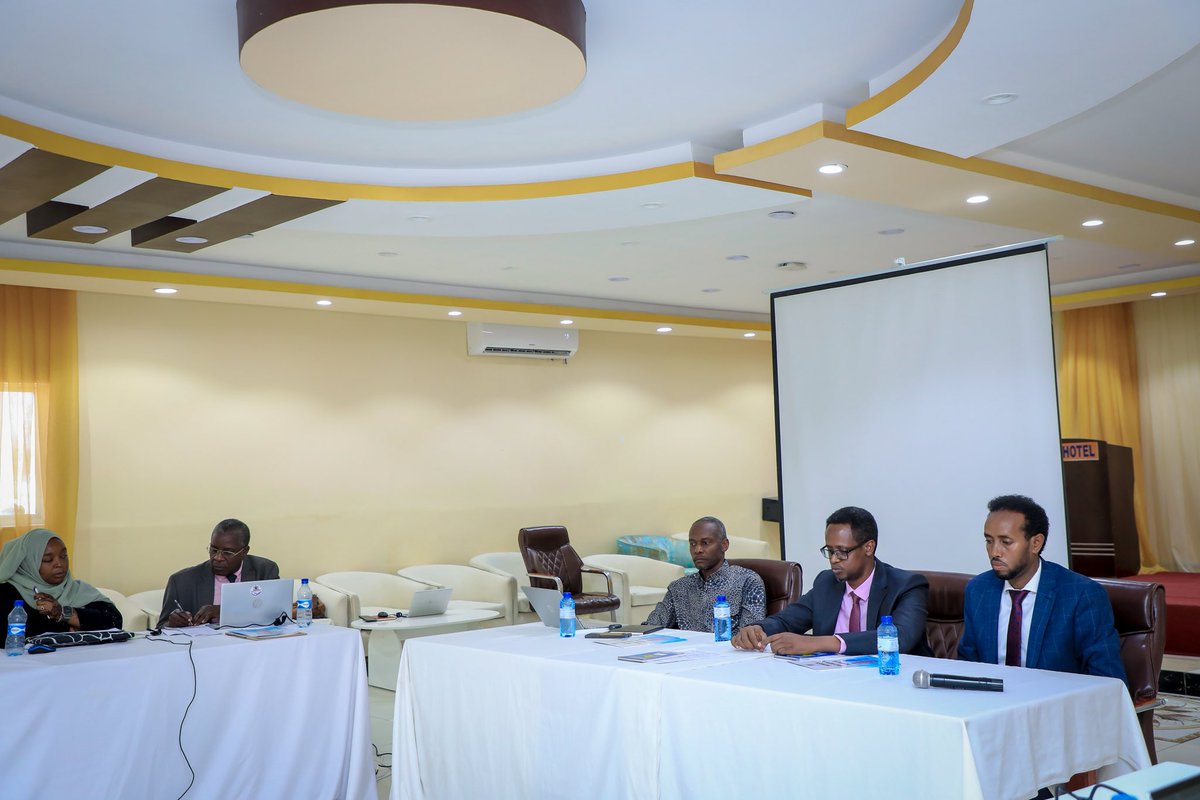
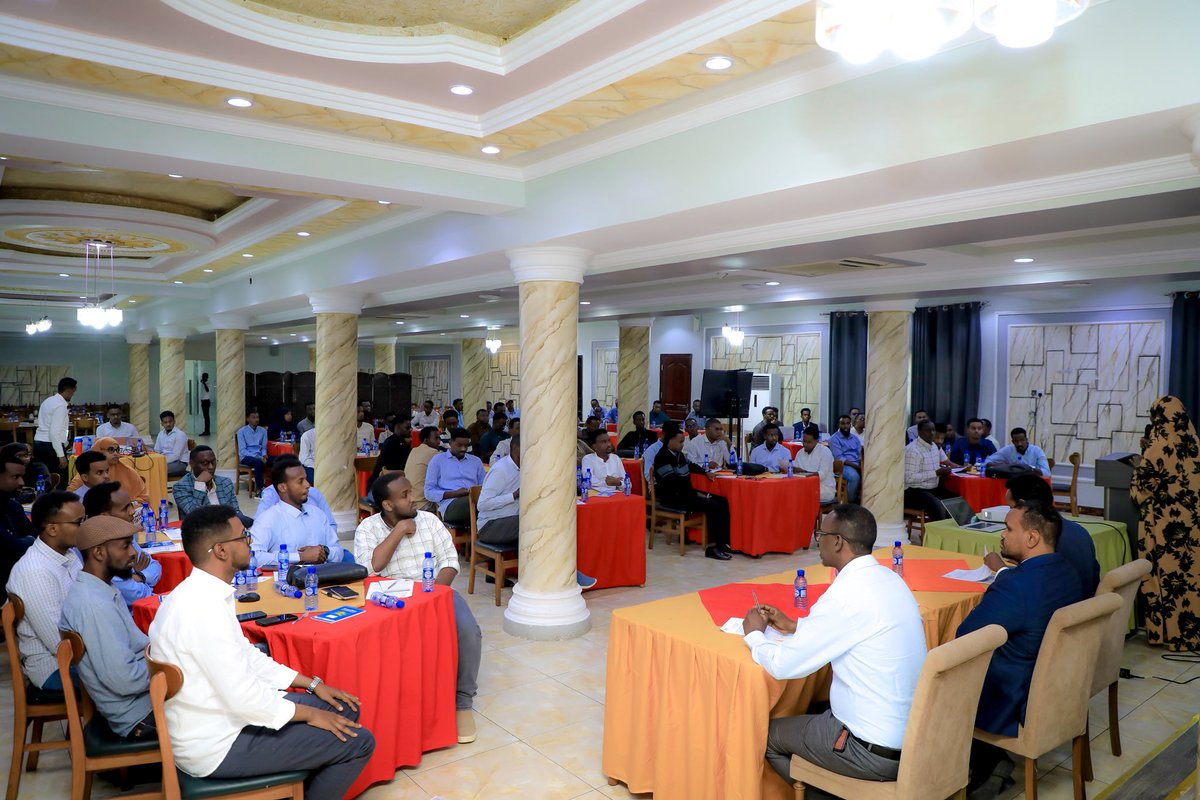
SNBS convened a three-day Technical Working Group (TWG) consultation on migration & displacement statistics in Mogadishu, bringing together key government institutions, with support from IGAD Secretariat & participation from International Organization for Migration (IOM), to enhance coordination and data harmonization.
The consultation reviewed findings & recommendations of Migration & Displacement Statistics Report 2025 (Second Edition) as it assessed existing administrative data systems, identifying data gaps & strengthening institutional collaboration among Ministries, Departments & Agencies.
Participating institutions included National Commission for Refugees and IDPs (NCRI), Office of Special Presidential Envoy for Migration, Returnees & Children’s Rights, Ministry of Labour & Social Affairs, Immigration & Citizenship Agency, Ministry of Foreign Affairs, National Centre for Rural Development & Durable Solutions, Central Bank of Somalia, Ministry of Education & Ministry of Health.
Discussions focused on agreeing upon concrete actions, clarifying institutional roles in data production & developing a roadmap for preparation of the third edition of Migration & Displacement Statistics Report, to improve data quality, consistency & coverage.
This engagement reinforces SNBS’s leadership in coordinating Somalia’s National Statistical System & advancing reliable, harmonized migration & displacement statistics to inform policy, planning & sustainable development. @AbdisalamHumbul@abdirahm_omar
SNBS participated in the Second Global Workshop for Voluntary National Reviews in Brasília 🇧🇷, convened by United Nations Department of Economic & Social Affairs & hosted by Government of Brazil, in preparation for the High-Level Political Forum on Sustainable Development.
The workshop provided a valuable platform for peer learning & exchange as countries prepare their 2026 VNRs, with a focus on more robust, evidence-based & policy-driven reviews. Somalia is preparing to present its second VNR later this year.
During the sessions, SNBS presented Somalia’s SDG data journey, highlighting progress in strengthening administrative data systems, enhancing national coordination, expanding SDG data coverage & advancing use of data for informed policy and decision-making.
Somalia values the rich discussions & collaboration with countries across regions working towards stronger, more inclusive & transparent SDG reporting. We extend our sincere appreciation to the people of Brazil for their warm welcome & generous hospitality. @AbdisalamHumbul@abdirahm_omar
#SDGs #VNR #HLPF2026 #DataForDevelopment #OfficialStatistics
Significant milestone as SNBS launches Second Edition of Migration Statistics Report-2025.
This statistical publication underscores SNBS’s continued advancement of evidence-based policymaking through production of reliable, timely & high-quality migration data to inform national development planning.
Migration is a defining feature of Somalia’s demographic & socio-economic landscape, shaped by humanitarian, economic & environmental drivers. The report provides insights into refugees, asylum seekers, returnees, internally displaced persons, labor migration, cross-border mobility & remittances. Findings highlight rising trends in displacement & migration, alongside increasing labor migration & remittance flows—contributing over 20% of GDP & supporting millions of households.
This Second Edition shows strengthened institutional coordination among Ministries, Departments & Agencies, under the leadership of SNBS & Technical Working Group on Migration & Displacement Data. Key MDAs whose cooperation was instrumental to the realization of this report include National Commission for Refugees & IDPs @NCRIsom, Office of Special Presidential Envoy for Migration, Returnees & Children’s Rights, Ministry of Labor & Social Affairs, Immigration & Citizenship Agency, Ministry of Foreign Affairs & International Cooperation, National Centre for Rural Development & Durable Solutions and Central Bank of Somalia. It showcases notable progress in data quality, harmonization & alignment with global frameworks such as Global Compact for Migration, noting that persistent gaps exist in coverage, digitalization & data disaggregation, hence require continued investment.
SNBS extends sincere appreciation to all government institutions, partners & stakeholders who contributed to this achievement. Special recognition goes to the International Organization for Migration, @iom_somalia, for its invaluable partnership and support. This report serves as a critical tool for policy, planning & action, reaffirming SNBS’s resolve to deliver accessible, high-quality data to improve lives countrywide. For more, visit our website at: https://t.co/Gp8go3CK3J
@AbdisalamHumbul@abdirahm_omar
Somalia is a country of origin, transit & destination for migrants.
Understanding these dynamics is vital to shaping policies that support stability, development & resilience.
IOM is proud to support Somalia in strengthening migration data systems & evidence-based policymaking.
Somalia National Bureau of Statistics, in collaboration with the EAC Secretariat, conducted a week-long national training on men & women Statistics in Mogadishu. The workshop brought together 21 technical staff from Federal Member States & Federal MDAs.
The training strengthened participants’ understanding of global, continental & EAC gender frameworks, enhancing technical capacity in the production of harmonized & comparable statistics aligned with EAC guidelines and best practices.
Participants also built practical skills in sex-disaggregated data, including survey design, sampling, analysis and computation of the EAC Harmonized Minimum Set of Gender Indicators, to support evidence-based policymaking.
Closing the workshop, SNBS Deputy Director General Abdirahman Omar applauded the strong partnership between SNBS and the EAC Secretariat & commended participants for their active engagement, underscoring a shared commitment to strengthening national statistical systems & mainstreaming men & women statistics. @AbdisalamHumbul@abdirahm_omar
Somalia National Bureau of Statistics launches MICS7 Household Listing Training in Mogadishu, bringing together 100 participants from Federal Government & Federal Member States. The four-day training strengthens technical capacity in household listing, GPS mapping and digital data collection to establish a reliable sampling frame for the survey.
This critical phase ensures generation of accurate, nationwide, high-quality data on the well-being of women and children, supporting evidence-based planning, national policy formulation, the National Transformation Plan and monitoring progress towards Sustainable Development Goals. @AbdisalamHumbul@abdirahm_omar
Somalia’s private sector has shown remarkable resilience despite decades of conflict, yet businesses still face challenges such as limited access to finance, poor infrastructure, and fragmented regulatory systems. Many of these businesses are largely informal, operating outside the formal regulatory and tax framework.
The Somalia Integrated Business Establishment Census (SIBEC 2024), conducted by the Somalia National Bureau of Statistics (SNBS), provides the most comprehensive picture of business activity across 16 major urban centres.
In my latest analysis, “Business Formality in Somalia: What the 2024 Business Establishment Census Reveals for Growth, Revenue, and State-Building”, I examine how formality, enterprise viability, and targeted policy interventions can unlock economic growth, expand the tax base, and strengthen the fiscal social contract.
Read the full insights and data here: https://t.co/KGqBMYy0v5
SNBS today convened a national dissemination event to present key findings from 2025 Comprehensive Food Security & Vulnerability Assessment (CFSVA), a nationwide study led by Government of Somalia in partnership with @WFPSomalia@FAOSomalia & @WorldBank. The event brought together government institutions, development partners & stakeholders to reflect on evidence-based approaches to strengthening food security & resilience.
The CFSVA provides a national overview of food security, livelihoods & vulnerability patterns across Somalia. Findings indicate approximately 29% of households experience food insecurity, while about 35% face multidimensional vulnerabilities, influenced by shocks, displacement, livelihood constraints & access to essential services.
The assessment reveals variations among regions, population groups & livelihood systems, including differences among urban, rural & displaced populations. It underscores role of climate-related pressures, market access & broader socio-economic conditions, reinforcing importance of coordinated investments in resilience, social protection & sustainable livelihoods.
The dissemination marks an important step in strengthening evidence-informed policymaking. Insights from CFSVA will support national planning, humanitarian & development programming & implementation of Somalia’s development priorities, in alignment with National Transformation Plan, Vision 2060 & pathways towards zero hunger. @AbdisalamHumbul@abdirahm_omar
SNBS convened dissemination workshop on the findings of Somalia’s Child Poverty Analysis using Multidimensional Overlapping Deprivation Analysis (MODA) framework. Drawing on data from Somali Household Budget Survey, study provides evidence on child deprivation in key dimensions to inform policies, programs & SDG monitoring.
The workshop brought together government MDAs, international partners, academia & civil society to examine the findings, discuss policy implications & strengthen use of MODA evidence in planning. It also advanced national dialogue on institutionalizing child poverty measurement within Somalia’s official statistics system.
SNBS appreciates the strong collaboration with UNICEF, under whose partnership the workshop was convened, and thanks all stakeholders for technical engagement & commitment to evidence-based decision-making to improve child well-being in Somalia. @AbdisalamHumbul@abdirahm_omar
#DataForDevelopment
Somalia & France Strengthen Statistical Partnership
Somalia National Bureau of Statistics & France’s National Institute of Statistics & Economic Studies (INSEE) have entered into Memorandum of Understanding, in a show of commitment towards advancing official statistics via international cooperation.
The MoU establishes structured framework to support Somalia’s National Statistical System, with collaboration spanning statistical governance, methodology, economic & social statistics, data communication & dissemination in line with international standards & best practices.
Under the agreement, cooperation will focus on capacity building through expert missions, tailored training, study visits, methodological support & exchange of statistical documentation & best practices. SNBS Deputy DG, Abdirahman Omar Dahir, @abdirahm_omar, represented the Bureau at the signing ceremony, while INSEE was represented by Olivier Biau, Head of Department of Statistical & International Coordination.
This partnership underscores shared dedication to strengthening high-quality, reliable statistics as a foundation for evidence-based policymaking, effective economic governance & sustainable development in Somalia. @AbdisalamHumbul@InseeFr@InseeFr_News
Somalia & Switzerland Launch Pilot Project on Strengthening National Statistical Capacity
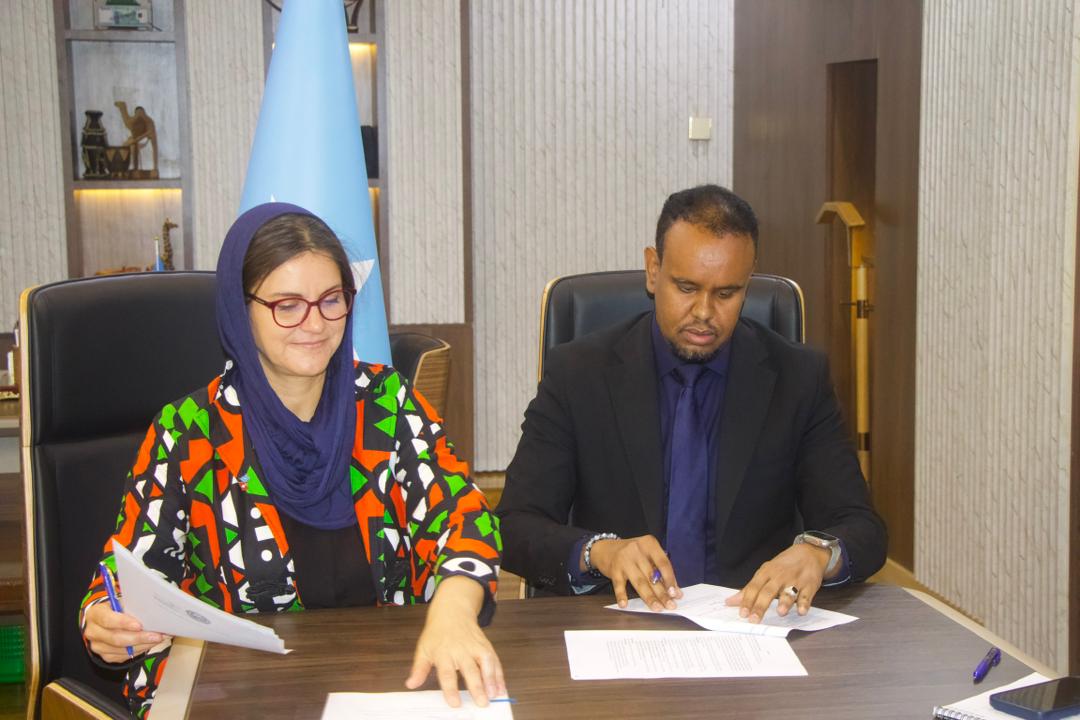
Somalia National Bureau of Statistics & Swiss Development Cooperation, today signed a partnership agreement to launch the Pilot Project on Strengthening National Statistical Capacity. The ceremony was officiated & formally signed by Federal Minister of @MoF_Somalia, H.E. @BihiEgeh on behalf of the Federal Government. DG Dr. Abdisalam Mohamed @AbdisalamHumbul signed for #SNBS, while Ms. Martina Durrer, Regional Head of International Cooperation at the Embassy of Switzerland (Horn of Africa), signed for @SwissDevCoop.
This pilot marks a major milestone as it will be implemented through country systems, with SDC channeling project funds directly through the Federal Government Treasury. SNBS is proud to be the first national institution to deliver a project under this modality—manifestation of growing international confidence in Somalia’s public financial management & institutional systems.
The initiative strengthens use of official statistics in academic research & evidence-based policymaking nationwide. Through capacity-building for university faculty & students, improved data access & joint research programs, the project will expand the use of key SNBS datasets, including SHDS, SHIBS, SIBEC & Labour Force Survey.
Through stronger collaboration between academia, policymakers & the public, the partnership promotes data-driven dialogue & annual research-policy forums aligned with national priorities. SNBS welcomes this important cooperation with the Government of Switzerland, which will enhance national capacities, deepen research engagement & advance Somalia’s commitment to a more data-literate & evidence-driven society. @abdirahm_omar
SNBS has released September 2025 National Consumer Price Index, which tracks changes in retail prices of goods & services purchased by households nationwide. The data show sustained price pressures across several key sectors, mirroring broader market dynamics. CPI rose by 3.9 percent over the twelve months to September 2025, indicating moderate annual inflation, while prices increased by 0.6 percent compared to August 2025.
Main annual price increases were recorded in Personal Care, Social Protection & Miscellaneous Goods & Services (+7.9%), Recreation, Sports & Culture (+7.1%), Education Services (+6.0%), Food & Non-Alcoholic Beverages (+4.8%), & Health (+4.5%). Price declines in Information & Communication (-5.2%) & Transport (-0.6%) helped ease overall inflationary pressures. Regionally, the strongest increases were observed in South-West State (+7.5%), followed by Banadir (+5.3%), Hirshabelle (+5.1%), Jubaland (+4.7%), & Galmudug (+4.3%), while Puntland (-4.0%) recorded a price decline, moderating national average.
CPI is Somalia’s key measure of inflation, hence vital for understanding changes in cost of living. It informs government, business & policy decisions on purchasing power, wage adjustments & fiscal planning. Full details of Sept 2025 CPI & accompanying methodological note are available on SNBS website via the link below. https://t.co/hyp9dfAaad
@AbdisalamHumbul@abdirahm_omar
Director General of Somalia National Bureau of Statistics, Dr. Abdisalam Mohamed, is representing Somalia at the 14th Session of the OIC Statistical Commission (OIC-StatCom), held from 1–3 October 2025 at SESRIC Headquarters in Ankara, Türkiye.
The session brings together National Statistical Offices, Islamic Development Bank (IsDB), international organizations & OIC institutions to review 2021–2025 Programme of Action & adopt the 2026–2030 vision. Key discussions center on digital transformation of NSOs, data for energy transitions & strengthening SDG reporting—particularly on education (SDG 4).
Somalia’s participation points to the rapid progress of its National Statistical System, with SNBS emerging as a credible contributor in regional & global forums. Through platforms like OIC-StatCom, SNBS reinforces Somalia’s role in advancing data-driven policies, regional cooperation & production of high-quality statistics to support sustainable development. While great strides have been made in building reliable national statistics, this forum also provides an opportunity to share Somalia’s achievements & learn from the experiences of other National Statistical Offices of OIC Member Countries. SNBS is determined to further strengthen the use of digitalization, AI, geospatial analysis & big data to drive evidence-based decision-making.@AbdisalamHumbul@abdirahm_omar
Somalia National Bureau of Statistics welcomed DG @Yusuf_Wadani of @SomaliaMolsa to its Mogadishu headquarters today as part of routine stakeholder engagements. Discussions focused on strengthening institutional collaboration, particularly on the upcoming Labour & Migration Survey, social protection data as well as initiatives leveraging mobile phone data for evidence-based policymaking. @AbdisalamHumbul@abdirahm_omar
Today, SNBS Deputy DG, Abdirahman Omar welcomed Mr. Dominic Allen, Deputy Regional Director of UNFPA Arab States, alongside the @UNFPA_SOMALIA team, to the Bureau’s headquarters. Discussions focused on aligning statistical priorities with the new #CPD 2026–2030 & advancing 🇸🇴’s data ecosystem.
Key updates included the ongoing socio-demographic survey, SNBS GIS innovations & the Population Development Composite Index (PDCI) report. UNFPA reaffirmed its support for Somalia’s census preparations to strengthen national data for evidence-based planning. @AbdisalamHumbul@abdirahm_omar
At the Government’s Exhibition, held to review Dan-Qaran’s achievements over the past three years, SNBS showcased its tremendous progress from 2022–2025 — presenting nearly 30 high-quality statistical reports across economic, social, demographic, financial, food security, production and governance sectors.
From national surveys to policy briefs and bulletins, SNBS data is shaping Somalia’s National Transformation Plan, advancing Vision 2060 & aligning with continental & global development agendas.
During his tour, H.E. the President, Dr. @HassanSMohamud, accompanied by the Prime Minister, H.E @HamzaAbdiBarre, commended the Bureau’s remarkable achievements following a comprehensive presentation by SNBS Deputy DG, Abdirahman Omar Dahir.
Reliable, timely and policy-driven statistics — powering Somalia’s pursuit of nationwide growth & sustainable development. @AbdisalamHumbul@abdirahm_omar