BBC journalists try to do the 'Asian squat', a resting position frequently used by people in places like China, Japan, and much of Asia.
🎧 Click for more on cultural traditions around the world https://t.co/xhk2tqvQ2X
🚨 NASA’S PARKER SOLAR PROBE IS NOW FLYING THROUGH THE SUN.
Not orbiting near it.
Not observing from a safe distance.
It’s actually moving through the Sun’s outer atmosphere the corona at 430,000 mph.
Fast enough to cross the entire continental United States in about 20 seconds.
Yet the front of the spacecraft is glowing at 2,500°F (hotter than molten lava) while the delicate instruments behind its heat shield remain near room temperature.
Why this matters:
For decades one of the biggest unsolved mysteries in physics has been the Sun’s corona.
It reaches temperatures of millions of degrees while the visible surface below it is far cooler.
That’s like standing farther from a campfire and suddenly feeling hotter.
Parker is now flying directly through the region where that mystery is born.
It’s already revealing:
• Strange magnetic “switchbacks”
• Unexpected solar wind structures
• Jagged boundaries where the Sun’s atmosphere escapes into space
• Plasma behavior never seen before in human history
The deeper implication is staggering:
Everything on Earth depends on the Sun our weather, climate, satellites, power grids, even life itself.
Yet we’ve spent most of human history studying it from 93 million miles away.
For the first time… we’re touching the atmosphere of a star.
What do you think Parker will discover next something expected… or something that forces us to rewrite solar physics entirely?
Follow for more frontier physics and cosmic discoveries.
BREAKING: MICROSOFT JUST ANNOUNCED TO BAN ITS OWN ENGINEERS FROM USING AI DUE TO THE COST OF USING IT.
VP OF NVIDIA SAID, “THE COST OF AI FOR MY TEAM WAS MORE THAN HUMANS”
“AI CAN COST MORE THAN HUMAN WORKERS NOW”
.@danshipper: "The AI jobpocalypse is not a thing.
The mass unemployment thing that AI lab CEOs are talking about—that's not going to happen.
AI models make yesterday's human competence cheap.
But what's interesting is that since everyone's using the same models, it all looks the same. So it becomes commoditized. It's not valuable anymore.
And what humans do is we go in there, and we're like, yeah, we have all this frozen human competence from yesterday, how do I use this to make something new and interesting, today?"
London Underground station flooding has reportedly been reduced by around 90% thanks to a group of engineers: beavers.
After conservationists reintroduced a family of beavers into a nearby city park, the animals built dams and restored wetlands that now absorb and slow floodwater naturally.
Authorities had planned major man-made flood infrastructure, but the beavers effectively created their own system — while also boosting biodiversity and restoring the ecosystem around them.
In Finland, a new generation of energy-efficient data centers is transforming how cities manage heat.
Data centers have transformed urban heat management by recovering waste heat from servers and funneling it into the country's extensive district heating networks. This innovative system turns an energy byproduct into a vital resource, significantly reducing reliance on fossil fuels for heating.
This ingenious solution addresses two major challenges: the growing energy demands of data storage and urban heating needs. Instead of releasing heat into the environment, Finland’s system recycles it, creating a closed-loop energy network that benefits both technology and society.
If you care about AI, you need to read this Om Malik piece.
It’s the first writeup I’ve seen that explains the physical reality behind the AI boom.
We keep arguing about models, agents, and apps, like the whole story is software.
@om shows the story underneath the story. AI is forcing a new internet into existence. Private, machine-native, optimized for GPUs talking to GPUs and clusters talking to clusters.
That framing instantly makes a bunch of “why is this happening?” questions click.
Why hyperscalers are spending like it’s a land grab.
Why fiber is suddenly strategic.
Why the hottest battleground is inside data centers and between them.
The best part is he doesn’t hand-wave. He gives you a map. He walks from east-west traffic inside AI data centers (the inversion most people miss), up through the metro and long-haul buildout, to what he calls an “Internet of AI.”
When you finish it, you’ll start seeing that AI is rebuilding the internet.
Read it. https://t.co/50cLmgg9bn
whatever you think about clavicular, his supposed fame is a sham. true social media ‘stardom’ simply hasn’t existed since the 2010s (before the word ‘influencer’ entered common lexicon).
Demis Hassabis says he plays chess with Gemini to trace the model's chain-of-thought.
As a former chess prodigy, he can tell when the model starts reasoning itself into trouble. Sometimes it sees a blunder, searches for something better, then plays the blunder anyway.
That’s what jagged intelligence looks like.
Sci-Hub is an evil website that pirated 85M+ research papers and made them freely available
And now they've added AI to their database to make Sci-Bot.
It answers your questions using latest, full-text articles.
But DO NOT use it. We should all try to make billion-dollar academic publishers richer.
I'm putting the link below so you know how to avoid it.
Eurail demanded passport numbers to sell train tickets. Now 308,777 of those passports are on the dark web, and victims are paying out of pocket to replace them. Every mandatory ID scheme rests on this same fantasy: that the database won't get breached. They always do.
https://t.co/SqVeH1gi8O
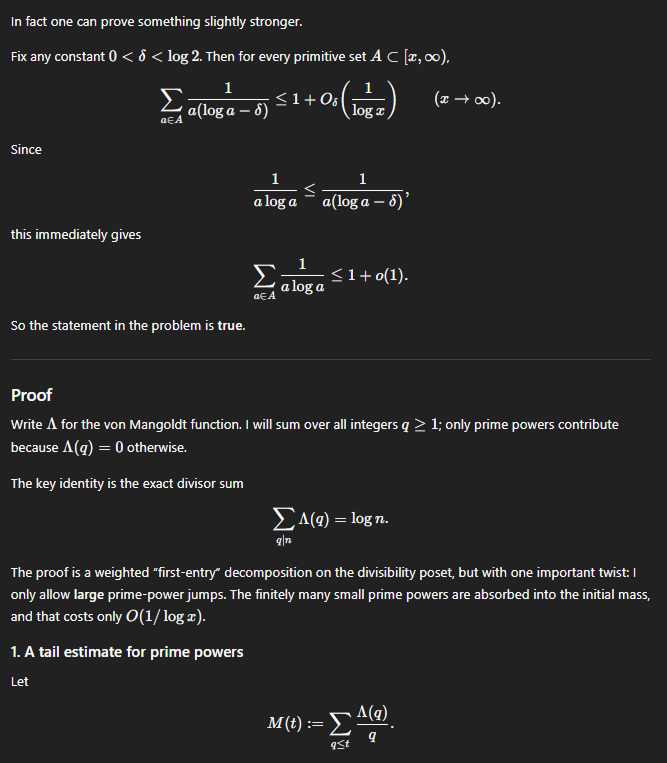
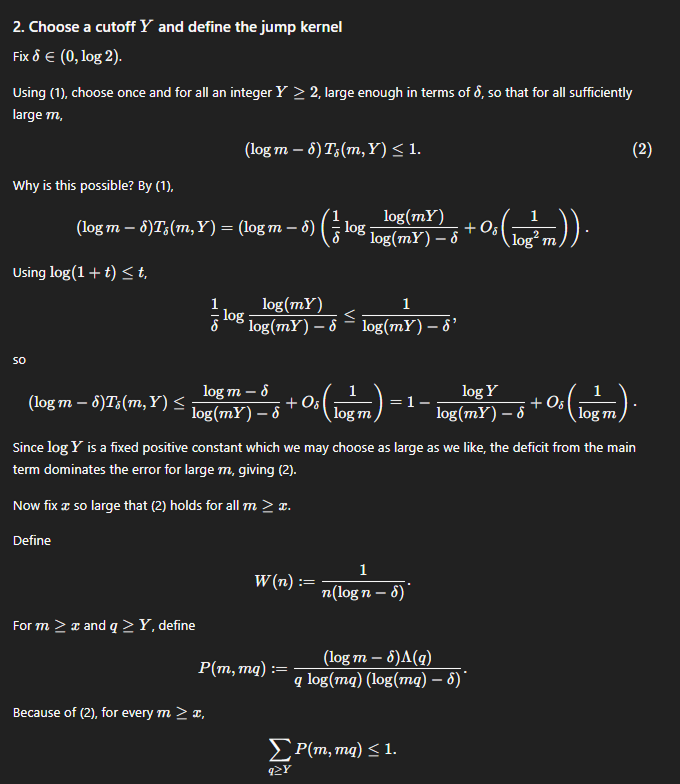
🚨do you understand what just happened to mathematics..
A 23 year old with ZERO math degree opened ChatGPT on a Monday afternoon out of boredom.
80 minutes later - a 60-year-old unsolved problem was dead.
The problem? World's top mathematicians had tried for decades. Failed..
The tool? A $20/month subscription..
The effort? One single prompt..
And here's the wild part - the AI used a method everyone already knew existed. Nobody just thought to apply it HERE.
Terence Tao (literally the greatest living mathematician) called it "a meaningful contribution that goes well beyond solving this one problem"
We are not ready for what's coming next..
The post-quantum cryptography debate has reached a tipping point. We still don't know when, or even if, a cryptographically relevant quantum computer will arrive. But one thing is certain: the transition to post-quantum cryptography is inevitable.
The traditional world has a clear roadmap. The timeline is largely set by NIST, which mandates the deprecation of vulnerable algorithms by 2030 and their full disallowance by 2035. Major enterprises and government agencies are already preparing, aiming to be migration-ready as early as 2029. The undertaking is massive, and, in my view, still underestimated. Remember the Y2K bug? Expect the same debate, several orders of magnitude bigger.
Encryption and key exchange will transition to ML-KEM (formerly CRYSTALS-Kyber). This is the most urgent front. The reason is straightforward: encryption is vulnerable to a "harvest now, decrypt later" attack. Adversaries can record encrypted traffic today and decrypt it once a sufficiently powerful quantum computer becomes available. Every day of delay widens the window of exposure. That said, encryption is largely a non-issue in the blockchain world, where the primary cryptographic primitive is the digital signature.
For signatures, two families dominate the PQC landscape:
- Lattice-based signatures (ML-DSA) — formerly CRYSTALS-Dilithium
- Hash-based signatures (SLH-DSA) — formerly SPHINCS+
Most of the industry outside blockchain will adopt ML-DSA, often in a hybrid configuration alongside traditional ECC. In the blockchain world, though the discussion is far from settled, sentiment is leaning toward hash-based signatures.
Why the divergence?
🔹ML-DSA is fast and produces compact signatures, but it relies on the hardness of structured lattice problems, a mathematical foundation that is comparatively young. The cryptographic community does not yet have decades of confidence in its security assumptions. The concern is not that a flaw has been found, but that the algebraic structure could conceal one.
🔹SLH-DSA produces significantly larger signatures and is slower to sign, but its appeal lies in simplicity and maturity: hash functions are among the best-understood primitives in cryptography. There is no hidden algebraic structure to exploit, hashes simply mix bits, and we have strong, long-standing confidence in their security.
For blockchains, where signature verification sits on the critical path and long-term trust assumptions are paramount, the conservative choice of hash-based signatures carries real weight, even at the cost of performance.
There is, however, a critical challenge that neither family handles well: multi-party computation (MPC) and threshold signatures. ML-DSA's rejection sampling makes secret-shared signing awkward, and SLH-DSA's structure is fundamentally built around a single signer with full state. For an industry whose security model rests on MPC custody, that gap may be the most underappreciated risk of the PQC transition.
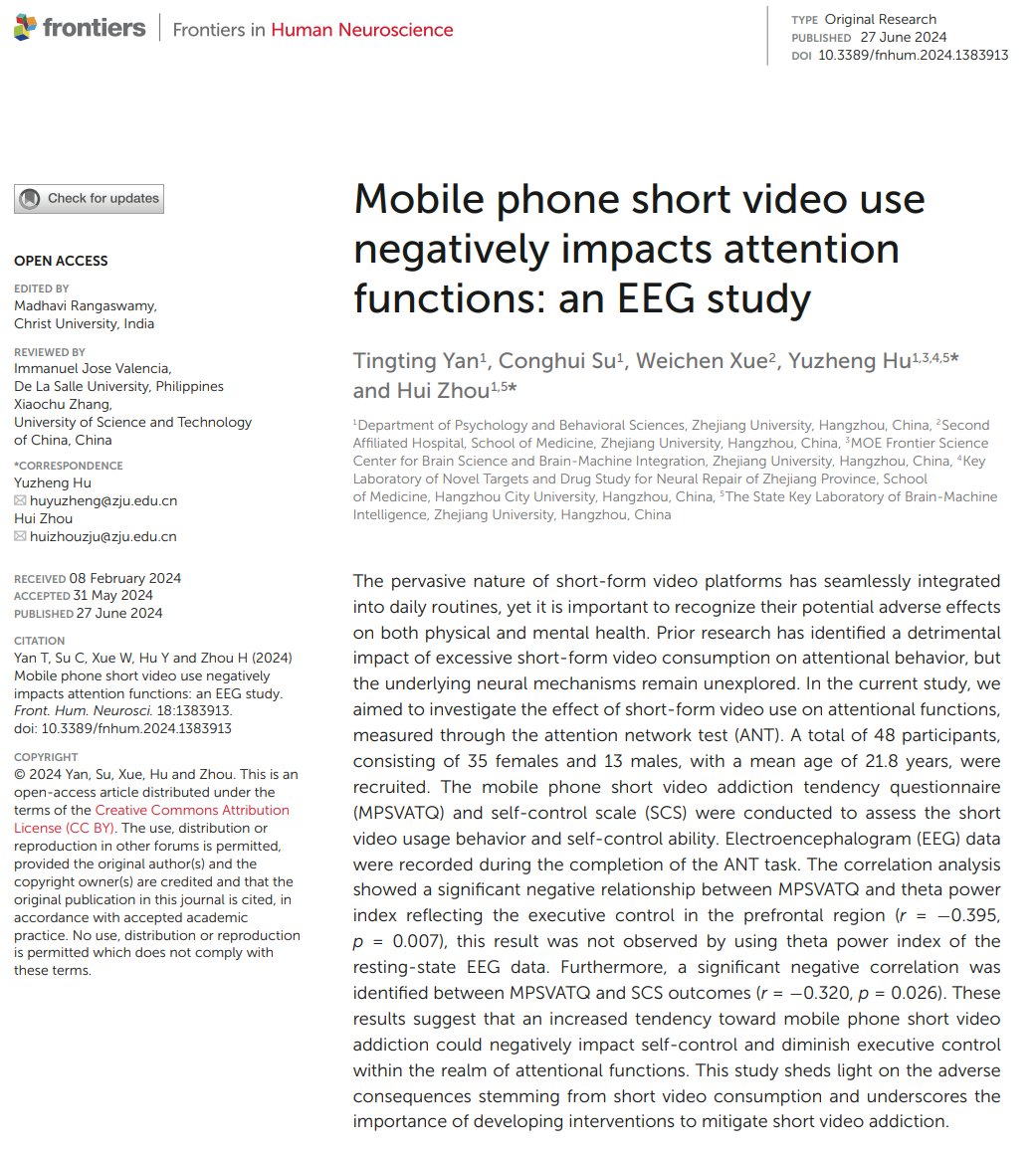
The internet is about to become a minefield for AI agents, and the success rate for attackers is 86%.
Hidden prompt injections in HTML successfully commandeer agents in 86% of scenarios. Not in a lab. Not with custom exploits. Just instructions hidden in a webpage that the agent reads and the human never sees.
And memory poisoning? It takes 0.1% contaminated data to permanently corrupt an agent's knowledge base with 80%+ success rates. That means 1 bad document out of 1,000 rewrites everything the agent believes.
DeepMind identifies six attack categories, each targeting a different layer of the agent stack: perception, reasoning, memory, action, multi-agent coordination, and the human supervisor. The co-author said every single category has documented proof-of-concept attacks. These aren't theoretical.
The scariest part is the systemic trap. DeepMind draws a direct line to the 2010 Flash Crash, where one automated sell order triggered a feedback loop that erased nearly $1 trillion in 45 minutes. Now imagine thousands of AI trading agents parsing the same fabricated financial report simultaneously.
OpenAI admitted in December 2025 that prompt injection will probably never be completely solved. And yet every major lab is racing to ship agents with access to email, banking, and code execution.
The entire agentic AI thesis assumes the information environment is neutral. This paper proves it can be weaponized at every layer, from the HTML the agent reads to the human who rubber-stamps its output.
We're building autonomous systems that trust the internet. The internet has never been trustworthy.
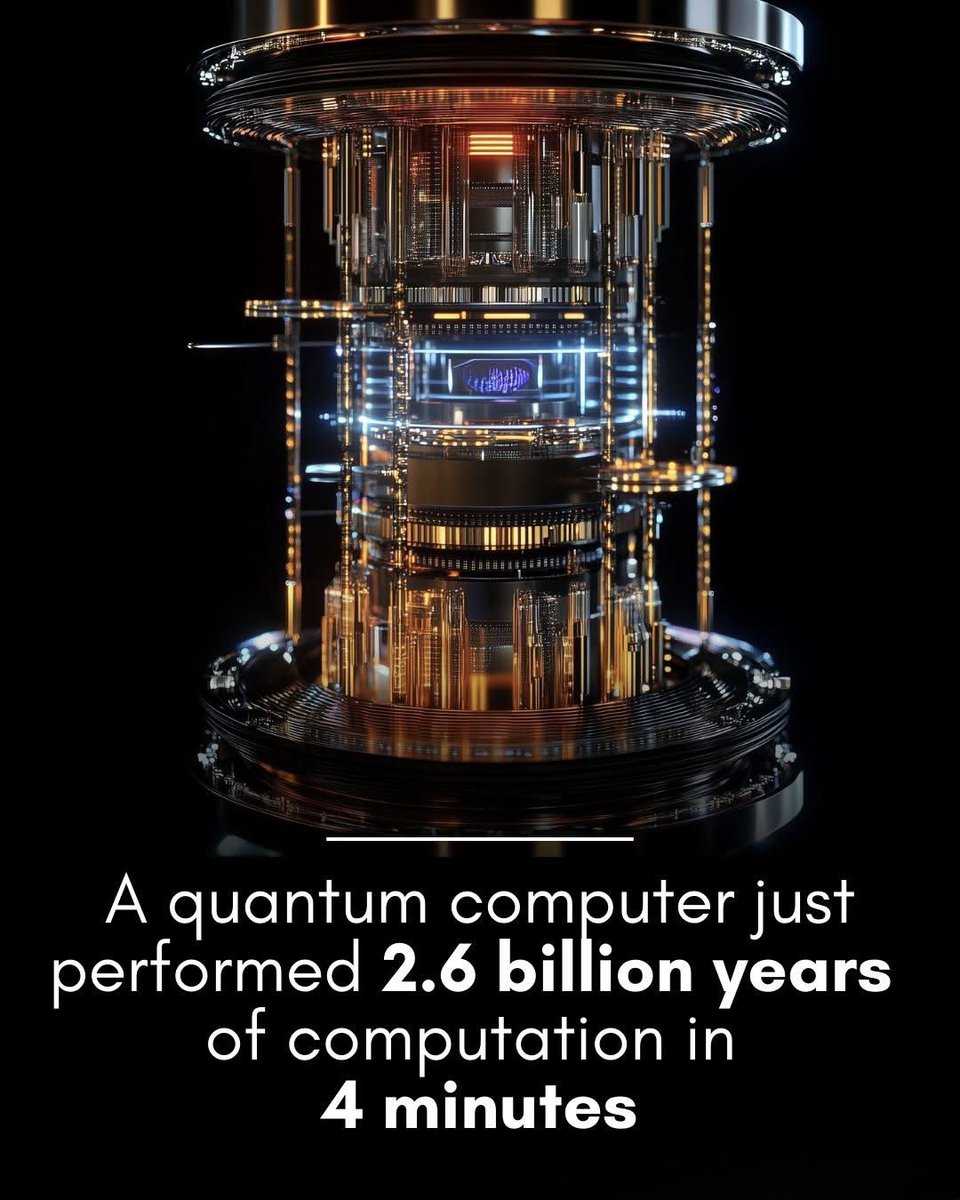
China’s quantum computer completed a task in 4 minutes that would literally take a supercomputer billions of years.
Chinese researchers have achieved a monumental breakthrough in quantum computing with their prototype, Jiuzhang. By counting 76 photons through Gaussian boson sampling, the system completed a calculation in four minutes that would take a traditional supercomputer billions of years. This achievement shatters the previous classical record of five photons, demonstrating how an intricate array of lasers and mirrors can outperform traditional silicon bits in complex processing tasks.
This milestone is more than just a speed record; it proves the viability of photon-based quantum mechanics in solving real-world challenges. From revolutionizing quantum chemistry to laying the groundwork for a secure, large-scale quantum internet, the principles of superposition and entanglement are moving from theoretical physics into functional technology. This shift promises to redefine our global computational limits, offering answers to mathematical problems once considered impossible to solve within a human lifetime.
source: Zhong, H.-S., Wang, H., Deng, Y.-H., Chen, M.-C., Peng, L.-C., Luo, Y.-L., ... & Pan, J.-W. (2020). Quantum computational advantage using photons. Science.