From all of us at Ensembl, we wish you holidays filled with "ATGGAACGCCGCATTATGGAAAACACCGCGAACGATCCGGAAGCGTGCGAA"
May your celebrations be as perfectly in‑frame as your favourite gene.
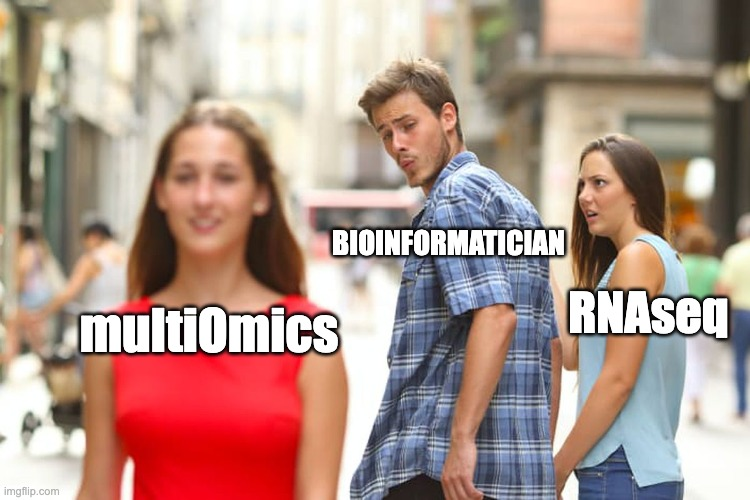
Thread: Multi-omics sounds cool—until you actually try it. Here's are the nuances.
1/
You’ve got RNA-seq.
Methylation.
Proteomics.
Time to “integrate” the data.
But how? And why?
Let’s break it down.
Nature is widely considered one of the most prestigious scientific journals in the world.
Here is a template by Nature on how to craft a masterpiece abstract for your paper:
Squidiff: Generative diffusion models for predicting cell fate and perturbation responses
Single-cell sequencing lets us observe how individual cells differ, evolve, and respond to their environment. But while we can measure these transcriptomic states, predicting how a cell will change under a new stimulus — a gene knockout, a drug, or even something as complex as radiation exposure — remains extremely difficult. Experiments are slow, expensive, and often impossible to run at the scale needed for mechanistic insight.
Squidiff proposes a different path. This framework combines a semantic encoder with a conditional diffusion model, enabling the generation of new transcriptomic profiles by iteratively denoising from latent space. The key idea is that cellular identity and environmental cues can be captured as smooth, manipulable vectors in a shared latent representation. By shifting these vectors, Squidiff can navigate cellular state trajectories: from pluripotent stem cells into differentiated lineages, across gene perturbations, or along drug-response gradients.
What makes this interesting is not just that Squidiff generates realistic single-cell data — many generative models attempt that — but that it captures transient cell states and developmental trajectories that are often inaccessible experimentally, including intermediate stages and nonlinear responses. The diffusion process encodes the underlying stochasticity, while the semantic space carries the structured biological signal, enabling controlled interpolation across time and condition.
The authors demonstrate this on multiple fronts: predicting iPSC differentiation into germ layer lineages; modeling non-additive gene perturbations without graph priors; reconstructing cell-type-specific drug responses; and, remarkably, predicting the effects of neutron irradiation and the protective effects of G-CSF in blood vessel organoids. In the organoid system, Squidiff recovered not only cell-type-specific damage signatures but also the dynamic progression of vascular disruption, and how G-CSF shifts these trajectories toward recovery — all from sparse experimental sampling.
This suggests something important. Instead of treating single-cell sequencing as a static snapshot technology, we may be moving toward generative, predictive models of cellular development, where experiments guide the model, and the model guides the next experiment. Squidiff does not replace data — it amplifies the value of each dataset, enabling in silico hypothesis generation and perturbation screening before wet-lab validation.
Paper: https://t.co/JOf6A1RT3I
Lactate, a metabolite with big capacities to regulate its own metabolism. Why has lactate this “metabolic power”?
Check the following paper titled “Lactate homeostasis is maintained through regulation of glycolysis and lipolysis.”
Well done to authors!
https://t.co/fVL7TrBxRA
Predicting protein-protein interactions in the human proteome
Predicting which human proteins shake hands—and how—is a longstanding bottleneck. Proteins rarely act alone; they assemble into complexes that drive immunity, metabolism, signaling, and disease. But testing hundreds of millions of possible pairs experimentally is slow, expensive, and blind to many weak or transient interactions.
Jing Zhang, Qian Cong, David Baker and coauthors tackle this with a smart AI + data pipeline. First, they amplify evolutionary “clues” by assembling omicMSAs—deep multiple sequence alignments mined from petabytes of raw eukaryotic genomic data—so coevolution across species pops out. Second, they train a fast interaction model, RoseTTAFold2-PPI, not just on scarce complex structures, but on domain–domain contacts distilled from ~200M AlphaFold monomers—a huge synthetic training set that teaches the network what real interfaces look like.
The payoff is big: a proteome-scale screen over ~200M human pairs yields ~18,000 PPIs at ~90% precision (and ~29k at 80%), including ~3,600 not previously reported. The method excels on transmembrane interactions, a class that’s notoriously hard in the lab, and produces 3D complex models—so you don’t just get a yes/no, you see the interface. Mapping human variants onto these models flags ~4,950 PPIs with disease mutations at the contact surface, offering concrete hypotheses for mechanism.
Beyond pairs, the team reconstructs higher-order assemblies and nominates new components for well-studied complexes (e.g., telomere maintenance, GPI-GnT, cilia/flagella machinery), and highlights GPCR partners and mitochondrial modules that have been hiding in plain sight.
Stepping back: this is a credible path toward a computed 3D human interactome—faster, cheaper, and increasingly comprehensive as more genomes and structures arrive. It doesn’t replace experiments; it prioritizes them, focusing bench time where the biology is richest.
Paper: https://t.co/IphUI7KEQT
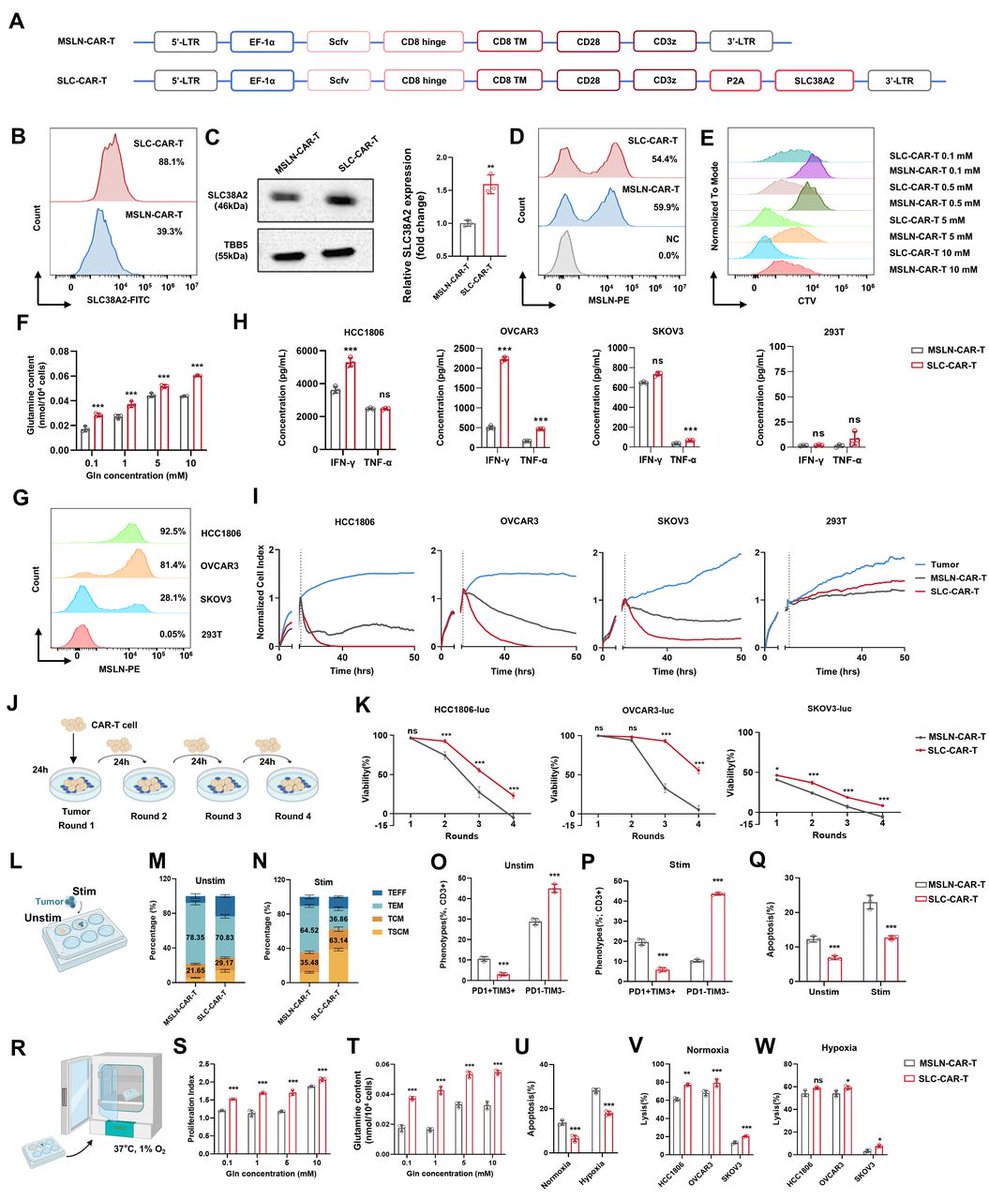
New #JITC article: Envirotune-CAR-T: a hypoxia-responsive and glutamine-enhanced CAR-T cell therapy for overcoming tumor microenvironment-mediated suppression https://t.co/NESZ0VBVXQ
Woody Johnson on what he would say to the fans that have lost hope:
"If they're a true Jets fan, that's not a question you ask. They've been at it for a long time. They know exactly what's going on. I think they're the smartest fans in the world because they know what's going on."