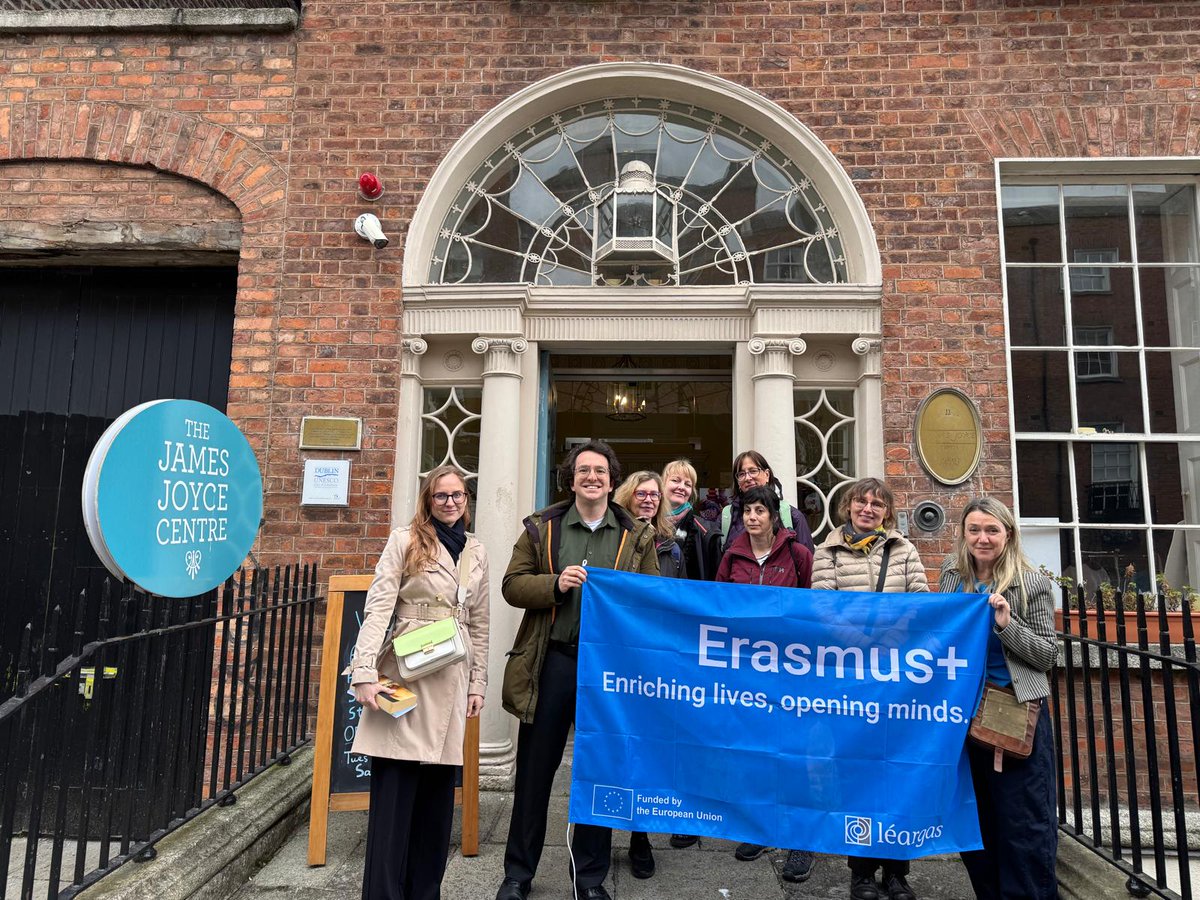
On 5-10 May 2026, The James Joyce Centre hosted curators from The Under and Tuglas Literature Institute of the Estonian Academy of Sciences and The Petőfi Literary Museum for an invited experts programme. The programme was part of an @EUErasmusPlus short-term mobility project, “Digital Transformation in European Writers’ Museum."
The six-month project aims to improve digitisation competences, facilitate the accessibility and usability of collections, reach a wider audience through online platforms, enable an exciting museum experience for all people, expand the circle of cooperation partners and present the project results internationally. The project hopes to significantly improve the digitisation knowledge and skills of memory institutions in order to present the literary and cultural history of 20th-century Europe in a broader and more inclusive way.
You can read more about our experiences in our blog published in EPALE: https://t.co/bQ07JUivlC
Our special thanks to the curators and @Leargas for their support. The project is funded by the European Union.
#ErasmusPlus #europeanunion #leargas
Livia Records in association with the James Joyce Centre presents JOYCE NOTES, performed by the Conor Guilfoyle Septet with Barry McGovern on Thursday, 3 September at 7.30pm in the Whyte Recital Hall, Royal Irish Academy of Music.
JOYCE NOTES, legendary Irish jazz guitarist Louis Stewart’s six-part suite based on scenes from James Joyce’s groundbreaking novel, Ulysses, will be performed for the first time since 1993, coinciding with the release of the original performance recording on Livia Records earlier this year.
JOYCE NOTES was first performed at the Cork Jazz Festival in 1982 by an Irish-American octet led by Louis Stewart with readings from actor Eamon Morrissey. Following its premiere in Cork, JOYCE NOTES was performed just twice more in the 1990s, once in Oslo with a local band and Norwegian text and once in Dublin in 1993.
For this performance, veteran Jazz and Latin drummer and band leader Conor Guilfoyle will lead his Septet with renowned actor Barry McGovern delivering the Joyce lines.
"It's as if Louis Stewart and James Joyce were kindred spirits." The Irish Times
"a bold, adventurous work that’s fully the equal of Stan Tracey’s Under Milk Wood as an example of jazz meets modern literature. . ." Jazz Journal
"a triumph in every aspect – composition, arrangement and performance!" JazzViews
Tickets are €25: https://t.co/bmmYlYbEiz
The James Joyce Centre is supported by the Department of Culture, Communications and Sport.
@LiviaRecords
@LiviaRecords in association with the James Joyce Centre presents JOYCE NOTES, performed by the Conor Guilfoyle Septet with Barry McGovern on Thursday, 3 September at 7.30pm in the Whyte Recital Hall, Royal Irish Academy of Music.
JOYCE NOTES, legendary Irish jazz guitarist Louis Stewart’s six-part suite based on scenes from James Joyce’s groundbreaking novel, Ulysses, will be performed for the first time since 1993, coinciding with the release of the original performance recording on Livia Records earlier this year.
JOYCE NOTES was first performed at the Cork Jazz Festival in 1982 by an Irish-American octet led by Louis Stewart with readings from actor Eamon Morrissey.
Following its premiere in Cork, JOYCE NOTES was performed just twice more in the 1990s, once in Oslo with a local band and Norwegian text and once in Dublin in 1993.
For this performance, veteran Jazz and Latin drummer and band leader Conor Guilfoyle will lead his Septet with renowned actor Barry McGovern delivering the Joyce lines.
"It's as if Louis Stewart and James Joyce were kindred spirits"
The Irish Times
".. a bold, adventurous work that’s fully the equal of Stan Tracey’s Under Milk Wood as an example of jazz meets modern literature.." Jazz Journal
"a triumph in every aspect – composition, arrangement and performance!" JazzViews
Tickets are €25: https://t.co/bmmYlYbEiz
The James Joyce Centre is supported by the Department of Culture, Communications and Sport.
"I smiled at him. America, I said quietly, just like that. What is it?" - Ulysses
James Joyce's relationship with the United States was as complex as the nation itself. Some of Joyce's closest supporters were American. Ezra Pound, for example, was an early admirer of Joyce whose guidance was instrumental in the publication of Dubliners and A Portrait of the Artist as a Young Man. Ulysses was first published serially in The Little Review magazine in New York by Margaret Anderson and Jean Heap. The first edition of the complete novel was published by Shakespeare & Company in Paris by Baltimore-born Sylvia Beach. American philantropists such as Edith Rockefeller and John Quinn provided crucial financial support to Joyce. The American literary community could not get enough of him. Ernest Hemingway, F. Scott Fitzgerald, T.S. Eliot, Gertrude Stein, John Dos Passos, and Thornton Wilder were just some of his contemporaries who expressed their admiration and were influenced by his work. William Faulkner said that Joyce was "electrocuted by the divine fire."
At the same time, some of the biggest opposition to his work came from the United States. Joyce faced resistance in the country throughout his career. Beach, Anderson and Heap dealt with tremendous legal and financial risks in publishing Ulysses. Anderson and Heap were arrested and fined for doing so. Ulysses was banned in the United States in the infamous obscenity trial in 1921. Copies of the novel had to be smuggled into the country. There were also pirated versions circulated by Samul Roth with which Joyce, to his great dismay, had to content. Ulysses would not become legal until 1933. Even after this, his work faced censorship and banning in various forms well into the 21st century.
Joyce, for his part, did not write much about the United States, nor did he express any interest in visiting. He was much more invested in Ireland and Europe. Nevertheless, the country is referenced in all four of his major works. It even appears on the first page of Finnegans Wake: "nor had topsawyer’s rocks by the stream Oconee exaggerated themselse to Laurens County’s gorgios while they went doublin their mumper all the time." This is, obviously, a reference to Dublin, Laurens County, Georgia, on the Oconee River and to Tom Sawyer.
Despite the hardships, Joyce's popularity and influence in the United States has endured for more than a century. Some of the earliest and most prominent scholarship on Joyce were done by Americans. Richard Ellmann's 1959 biography remains one of the most influencial biographies of the 20th century. American universities and museums preserve considerable amounts of his materials, such as the Rosenbach in Philadelphia and the University at Buffalo. Important research on Joyce and Irish studies are still conducted in the United States. The James Joyce Quarterly at the University of Tulsa and the Florida James Joyce Series publish some of the world's leading research on Joyce studies.
Moreover, Joyce's influence on American literature remained strong after his passing. Writers as diverse as Cormac McCarthy and Thomas Pynchon to Toni Morrison and Don DeLillo, among many others, have Joycean traces in their work. Just this year, the Pulitzer Prize for Fiction was awarded to "Angel Down" by Daniel Kraus. The novel is written as a single uninterrupted sentence, beginning and ending in midsentence. Imitation, as they say, is the sincerest form of flattery.
Joyce's relationship with the "Unique Estates of Amessican" (Finnegans Wake) was never sentimental. Yet it has, in its own unique way, contributed to his art and influence -- and will continue to do so in the years to come.
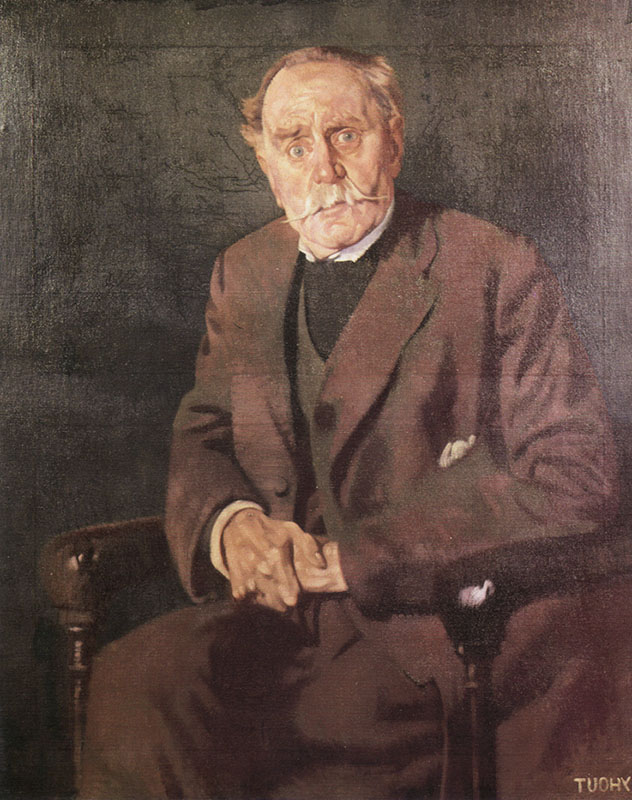
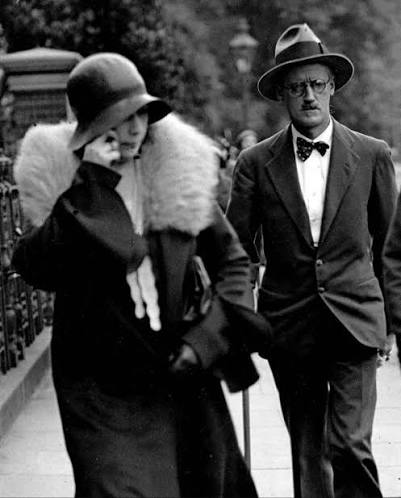
This day is important for many reasons, two of which are directly related to Joyce. #OTD in 1849, Joyce's father, John Stanislaus, was born (second photo). In 1931, Joyce got married to Nora Barnacle in London. You can see the happy couple in the third photo.
To all our American friends, have a Happy Fourth of July 🇺🇸
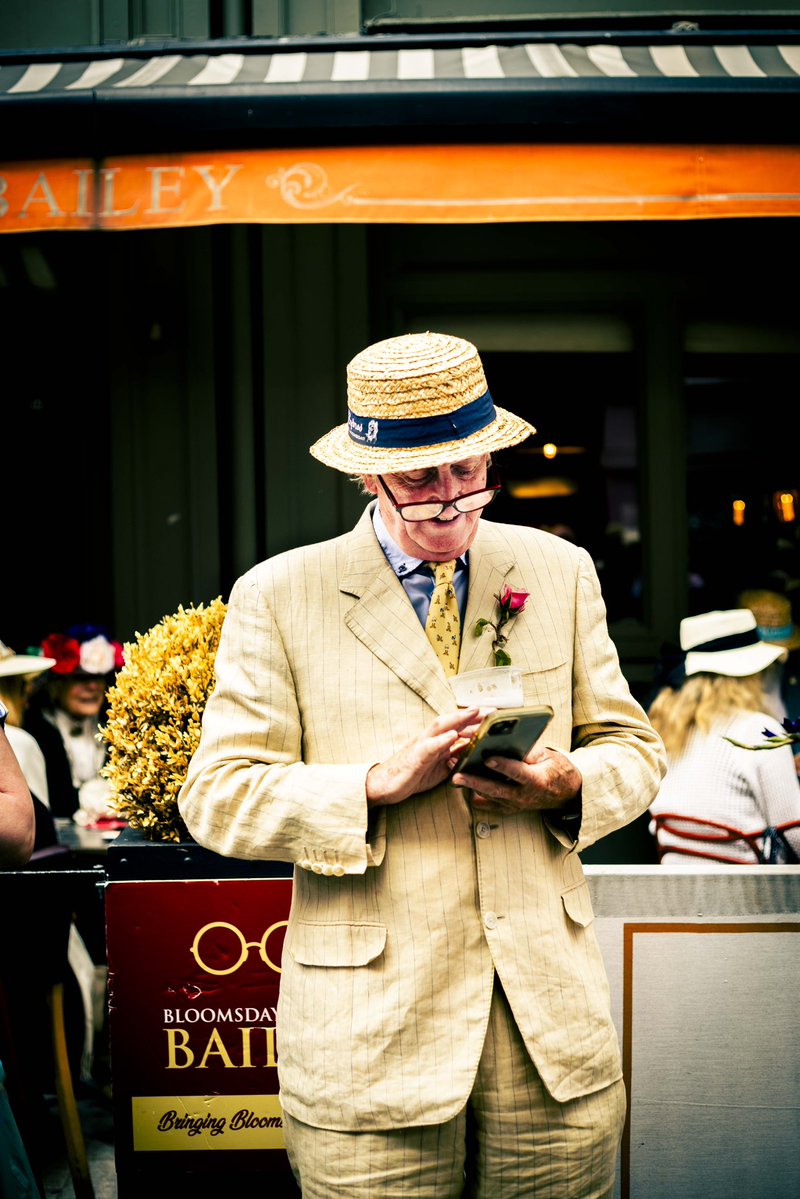
Bloomsday celebrations at Davy Byrne’s.
📸: Marcelline Roulleau
#bloomsday#bloomsdayfestival
In collaboration with The James Joyce Centre and supported by Fáilte Ireland and The Department of Culture, Communications and Sport
Former @SenDavidNorris officially opened our first #LiteraryFestival back in 2014 and his story of how he and others started the @bloomsdayfest is certainly an inspiration to our organisation.
https://t.co/lhtyhXUqOb
Archival footage of Dublin in 1915, capturing the city's streets, trams, horse drawn carriages and people going about their daily lives before the Easter Rising.
Footage: J. Gordon Lewis for British Pathe
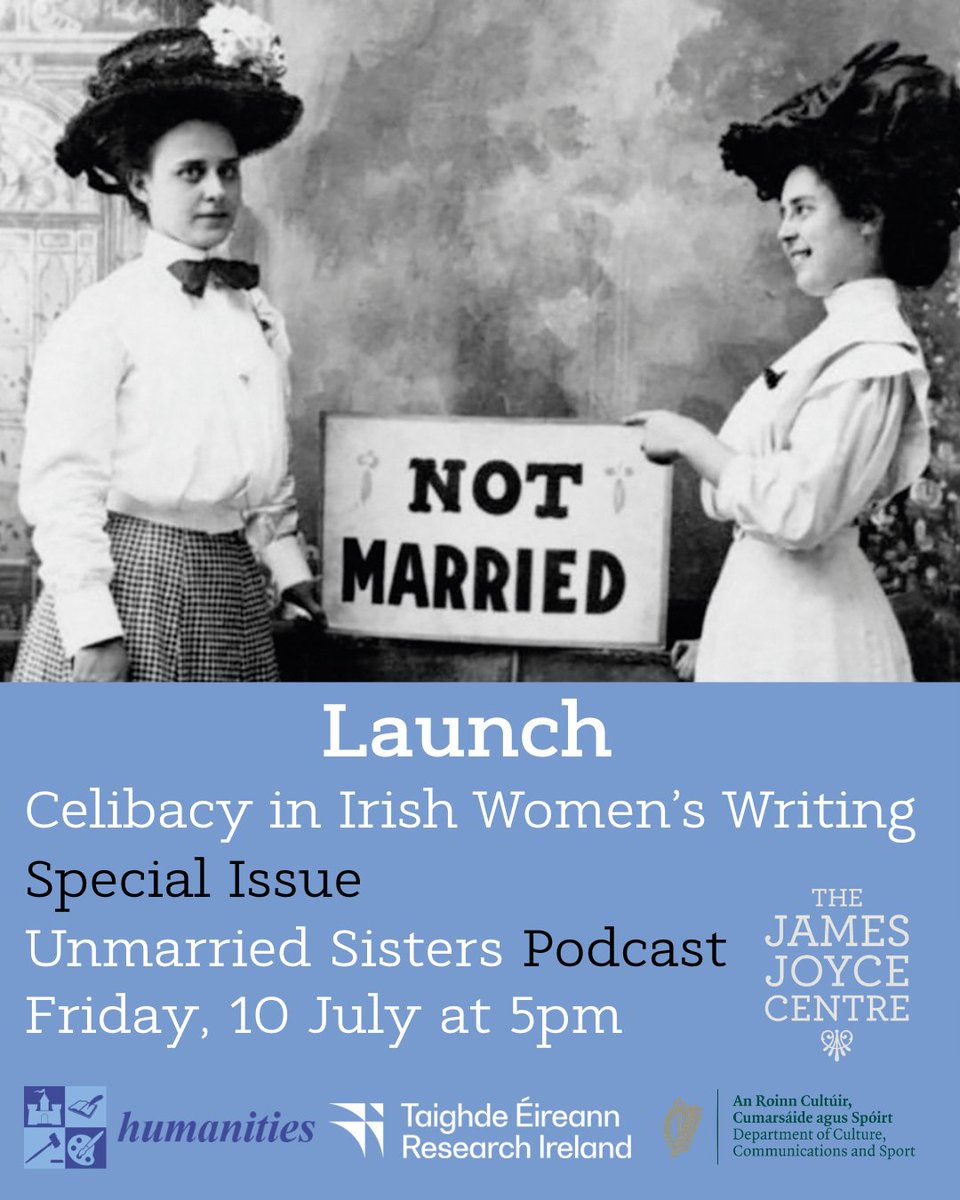
Please join us for the launch of a new special issue and podcast series dedicated to the untold history of Ireland's unmarried women on Friday, 10 July at 5pm.
Celibacy in Irish Women's Writing, edited by Dr. Paul Fagan, is an open-access @MDPIOpenAccess Humanities special issue dedicated to less familiar feminist, queer, and activist versions of celibacy in Irish women’s movements and literature. Boasting new research from leading experts in Irish women's writing, the essays explore representations of unmarried and widowed women in writing by Elizabeth Bowen, Kate O’Brien, Mary Lavin, Molly Keane, Eva Gore-Booth, Edna O’Brien, and more, in order to better understand the historical trajectories of the 'female celibate' as a political and cultural figure in Ireland.
In the accompanying podcast series Unmarried Sisters, Paul speaks to leading figures in Irish, gender, and sexuality studies to learn more about historical collaborations and the bonds formed between differently celibate Irish women—whether in friendships, romantic relationships, creative collaborations or forms of political and revolutionary organisation—and to explore celibacy’s imbrications with first-wave feminist politics, patterns of queer kinship, and Irish literary modernism.
The special collection and podcast will be launched by Prof. Katherine Ebury (incoming UCD James Joyce Chair), with additional remarks by the editor Dr. Paul Fagan (University of Vienna) and contributors Prof. Anne Fogarty (UCD), Prof. Maureen O'Connor (UCC), Dr. Deirdre Foley (TCD) and Dr. Fae McNamara (Teesside University).
The special issue and podcast series were made possible by the support of the @Researchirel project Celibacy in Irish Women’s Writing, 1860s–1950s (GOIPD/2022/634).
Refreshments will be provided. The event is free but booking is essential.
The James Joyce Centre is supported by the Department of Culture, Communications and Sport.
https://t.co/JEmsvB754P
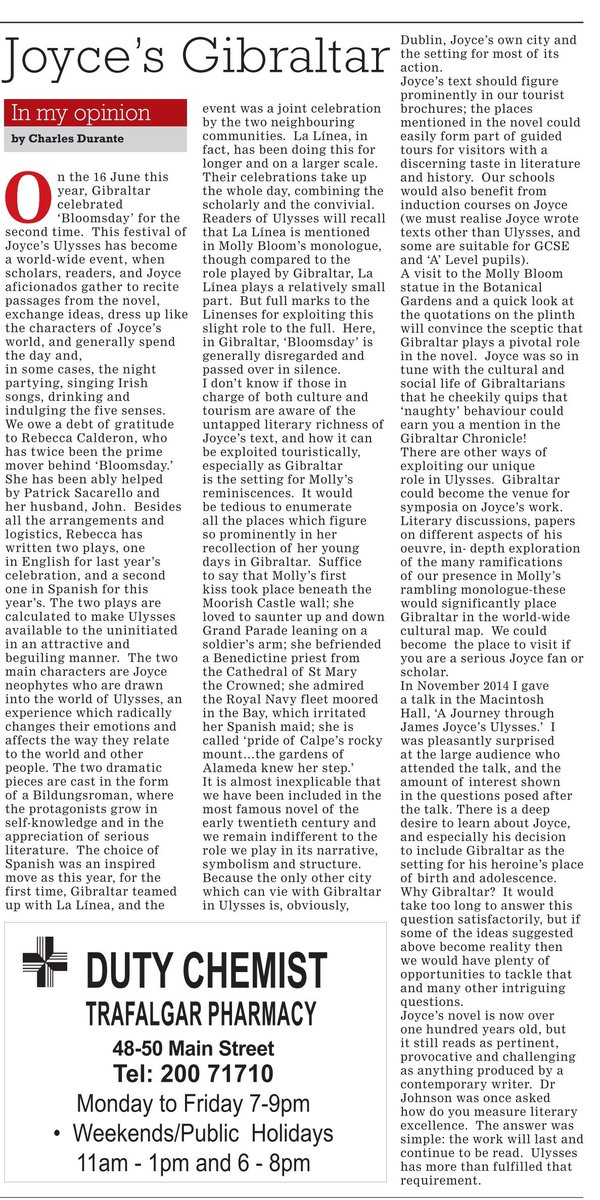
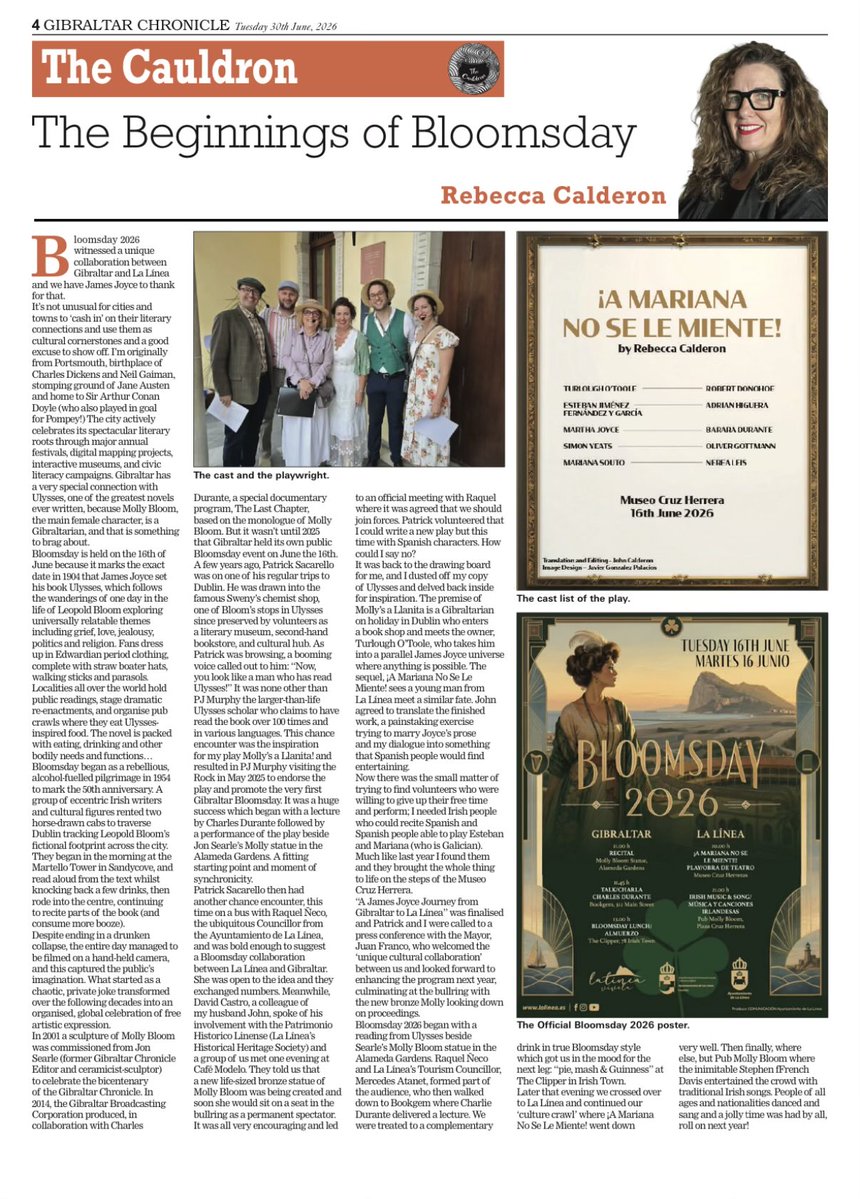
Great @reb_calderon plus have taken up #Bloomsday@GibChronicle 2001 celebration that noted mention in Molly’s soliloquy. Apart from dad Jon’s sculpture - with @cortes_john support broke military mould - we premiered Danis Rose play Molly ‘Bloom’s last words’ @JamesJoyceCentr
A few photos from last night's launch of the collaboration between the James Joyce Centre and The Write Stuff for Dublin by Dusk, in partnership with
@DeptCultureIRL@Failte_Ireland@DubCityCouncil and
@DublinTown.
On the last Thursday of every month, we gather storytellers, poets, and showcase musicians for a themed performance, delivering a continuous, collaborative flow of original work.
Our special thanks to Steve O'Toole, Eddie Winston, Tom Tierney, Kaycii and Two Prong for their inspiring acts. Check out The Write Stuff's website at https://t.co/kU6kLjydkp
Our next Dublin by Dusk event will be on 30 July. Stay tuned for more info!
We partnered with Vintage Tea Trips to host a series of special Bloomsday Afternoon Tea Trips celebrating all things Dublin and James Joyce!
#vintageteatrips#bloomsday#bloomsdayfestival
In collaboration with The James Joyce Centre and supported by Fáilte Ireland and The Department of Culture, Communications and Sport.
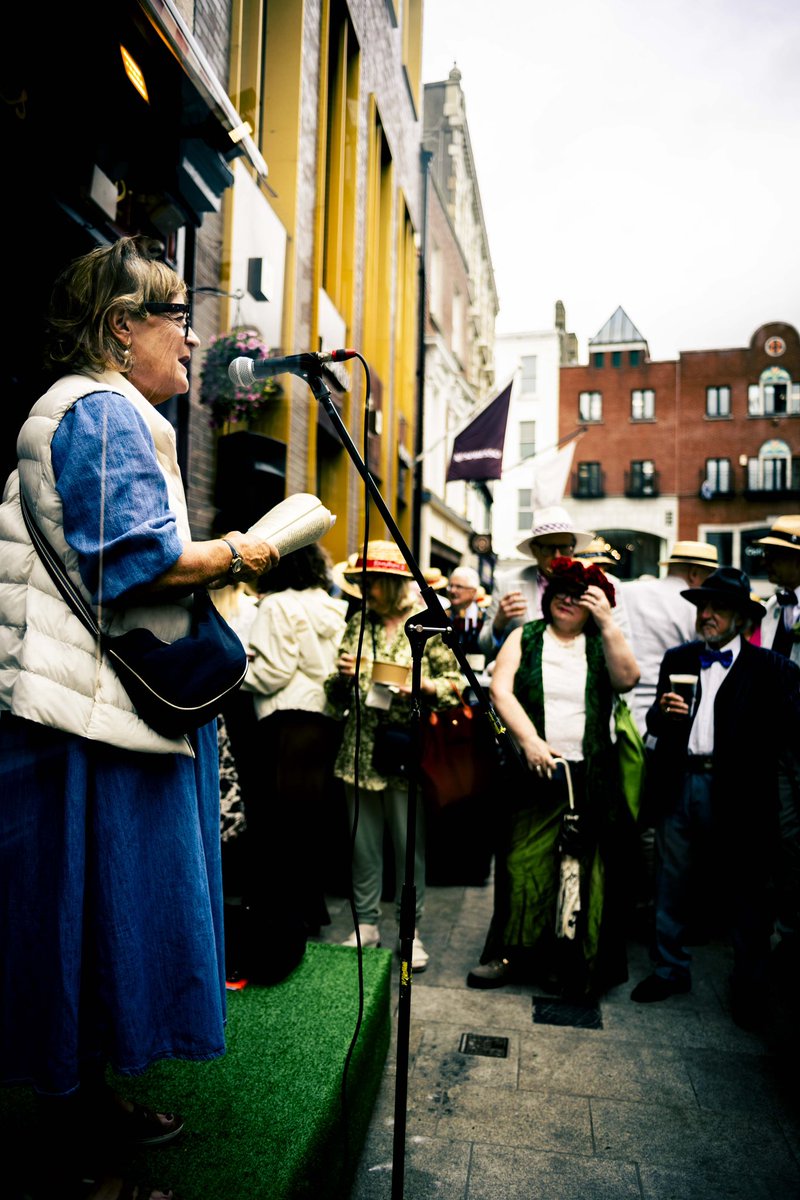
Some portraits of some of our readers from Bloomsday’s Readings and Songs this year.
#bloomsday#bloomsdayfestival
In collaboration with The James Joyce Centre and supported by Fáilte Ireland and The Department of Culture, Communications and Sport
📸: Robert Patynski
🚨 🛠️ Due to a maintenance issue, the James Joyce Centre will be closed today and tomorrow. The walking tours will continue as scheduled.
Our apologies for any inconvenience. Many thanks for understanding.
The University of Nairobi Travelling Theatre brought to life James’s ‘Ulysses’ book with a dramatic adaption that explored the themes of urban life, human connection and modernity. The performance reflected James Joyce’s enduring influence in literature. #bloomsday@uonbi