a.k.a F-Bizzy 😎 Opinions expressed here are solely mine and do not reflect the views or beliefs of my affiliates, partners, clients, employers or employees.
Whenever we talk about Africa's developmental dilemma, we often hear that the problem is weak institutions. But this raises an important question.... how do strong institutions come into being in the first place?
What is lost on most people is that the Western liberal democracies that we desperately admire and are attempting to emulate did not start as full democracies. They conveniently want us to forget that until a few decades ago many of them were ruled by monarchs. Their state capacity was built through earlier periods of consolidation brought about by royal/imperial decree.
This is not a trivial issue.
Indeed, Europe's states were hammered into shape over centuries through monarchies and empires that centralized authority, imposed common laws, built taxation systems, and forged national identities through violence and coercion.
The same is true for East Asia. Japan's Meiji Restoration in the late 1800s concentrated authority in the hands of the Emperor who drove rapid institutional and economic reform before mass democracy took hold. Even China, after decades of fragmentation and war, achieved territorial and administrative reconsolidation under a strong centralized state. In their case they are yet to be fully democratic so maybe I shouldn't even bring them up.
But we could add Malaysia, South Korea, Singapore to the list. Malaysia and Singapore both started as parliamentary democracies post independence but realised it didn't work so they both became single party de facto dictatorships.
Mahathir Mohamad built a strong Malaysian state apparatus, a development bureaucracy, industrial policy, and planning bodies that did outlast him. Lee Kuan Yew and his government built a state that didn't depend on Lee personally. He left office, and the machinery kept running - with a capable civil service, strong agencies, and statutory boards.
South Korea was authoritarian for decades and only made a democratic turn in 1987. Today they more more democratic and have strong institutions.
As you can see, historically, concentrated power has almost always preceded the creation of the very institutions that later make stable democracy possible.
Africa skipped this stage completely.
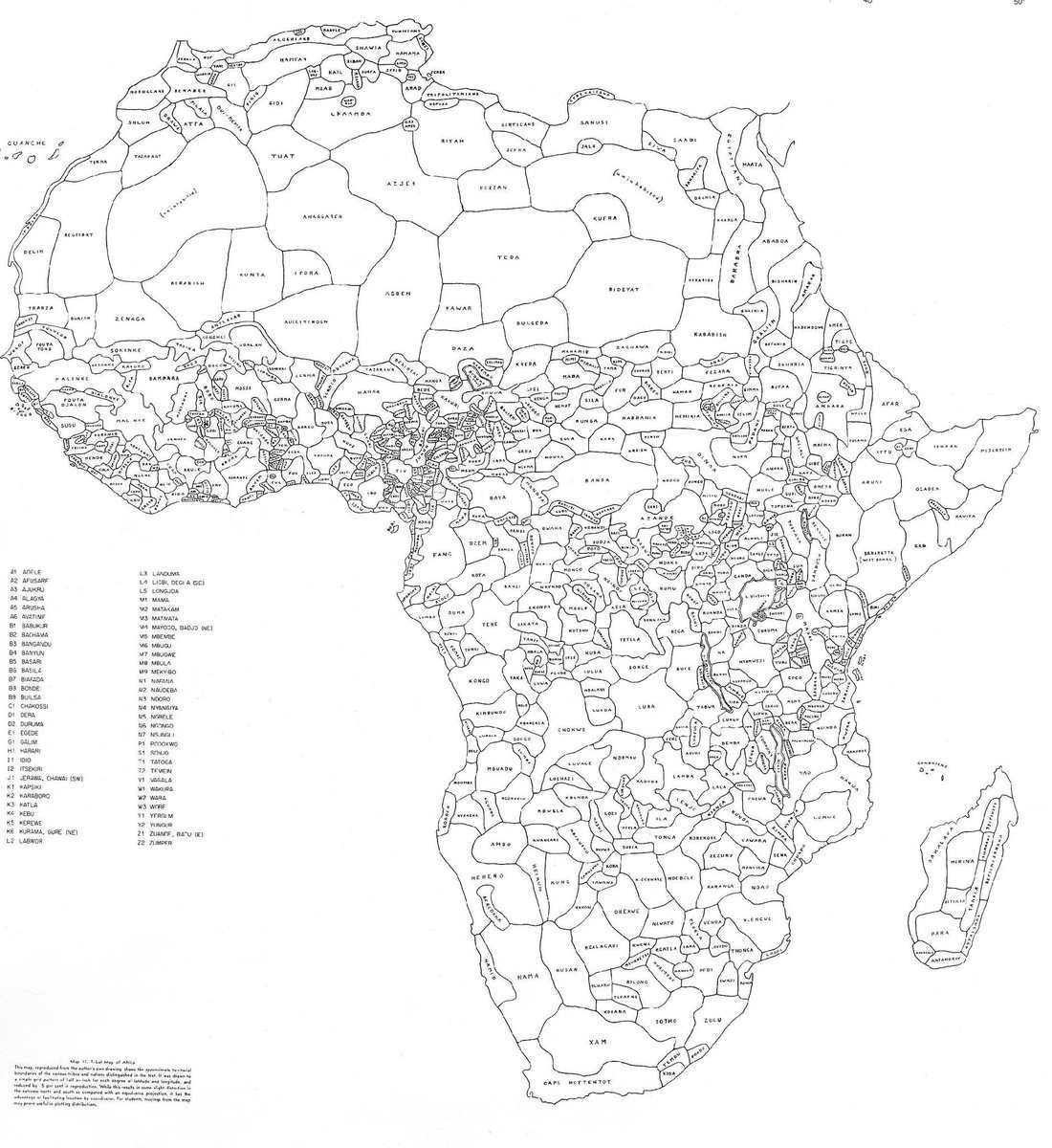
Colonial borders created African states that contain many peoples of varying ethnicities, with distinct languages, histories, and loyalties. Independence delivered the States, but not Nations in the deeper political sense. African countries are being expected to democratise, build national identity, extend state authority, build institutions, and deliver development all at once. This is like asking a baby to run a marathon before it can even crawl!
Family, clan, and tribe have thus unfortunately remained the most reliable institutions of trust in Africa. Why? Because when the state feels fragile, distant, or incompetent, people will naturally gravitate towards those age-old networks. And once you introduce electoral politics under these conditions, patronage and nepotism become survival strategies that inevitably undermine the building of impartial national institutions that are necessary for a functional democracy.
Why didn't Africa have its Lee Kuan Yew?
Post independence Africa DID produce its own would-be nationbuilders. Leaders who sought to break with colonial legacies, and wished to rapidly transform their countries. But many of these revolutionary projects were built around that single leader's vision. And when that leader fell, whether through death, overthrow, or exit, there was no institutional foundation to carry forward and sustain what little progress was achieved under his rule. Our countries thus fell into a repeating pattern... each presidential successor, convinced that his vision alone is what will redeem the state, dismantles what came before. So the country hits reset, again and again, repeatedly rebuilding the machinery of state instead of accumulating institutional momentum.
Uganda, Rwanda and Burundi shouldn't even be separate countries. Rwanda is practically a small town. Chairman Mao would have merged all three into one motherland. What is Museveni waiting for? 🤣
The Prime Minister of Haiti, Alix Didier Fils-Aimé, and the President of El Salvador, Nayib Bukele, must ensure that all operations conducted by Salvadoran forces in Haiti comply with international human rights law.
https://t.co/kbr0SQdJ2J
Nou kenbe pwomès nou…
Nou detwi kay Lanmò San Jou ak katye jeneral gang 400 Mawozo a.
Pifò ladan yo kouri ale san yo pa menm eseye goumen.
Ala lach yo lach! 🥲
Fast-growing Brazilian Pastor is going viral for having a 95% male attendance. In the words of Kellis, her milkshake brings all the boys to the church 😳
A lot of Black folks talk about Charlie Kirk like he was Hitler. What he actually told people was to go to church and take care of their kids.
"If that's extreme, this civilization is cooked. We're cooked. It's over. Pack your bags."
Good systems don’t fall from the sky; they are deliberately built by the people who inhabit a society. A society is ultimately a reflection of its people, their values, their collective choices, and their willingness to demand accountability. If a society consistently fails to build and sustain functional institutions, it must confront the uncomfortable reality of its own shortcomings.